Troubleshooting
Why is my aquarium filter not working?
Start by answering one question: is it running but moving no water, or not running at all? Those are different faults with different fixes, and almost nobody checks which they have first.
Fin & Filter earns a commission when you buy through the links on this page. It costs you nothing and it does not decide what we rank. How we’re funded.
We have not used any of this gear. Every pick below is chosen from published manufacturer specifications and the arithmetic on how we pick, which you can re-run yourself.
Answer one question first: is it running but moving no water, or not running at all? A filter that hums with no flow has almost always lost its prime — the housing has drained and the pump is spinning in air. Refill the housing with tank water and restart it; that fixes most cases in under a minute. If it still will not move water, the impeller is fouled or unseated — pull it, rinse it, reseat it. If the flow has faded gradually rather than stopped, the media is clogged and needs rinsing in old tank water. If nothing runs at all, check the outlet before the filter. The one thing not to do is rinse anything in tap water, which kills the bacteria colony and turns a mechanical problem into a cycling problem.
The reassuring part, before the procedure: a filter being off for an hour or two is not an emergency. Your fish are not in immediate danger, and the thing genuinely at risk is the bacteria living inside the filter, not the animals in the tank.
Quick picks
What fixes it, in order of what it probably is
| # | Product | Best for | Price |
|---|---|---|---|
| 1 | 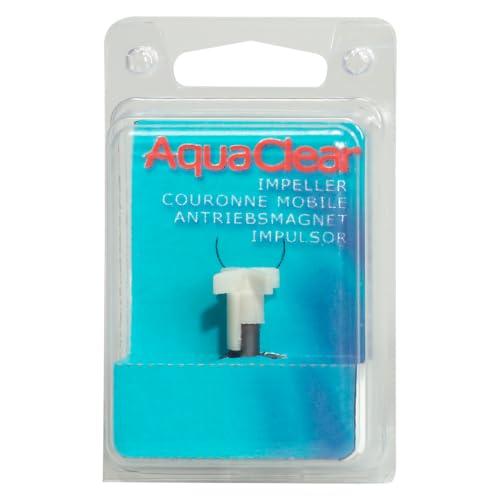 Hagen A632 AquaClear Impeller Assembly for 30 Power Filter The spinning part that actually moves the water, and the commonest genuine failure. Model-specific. | A filter that hums or rattles but moves no water, after the prime has been ruled out | $13.49 on Amazon #ad How we’re funded · price as of November 10, 2026 |
| 2 | 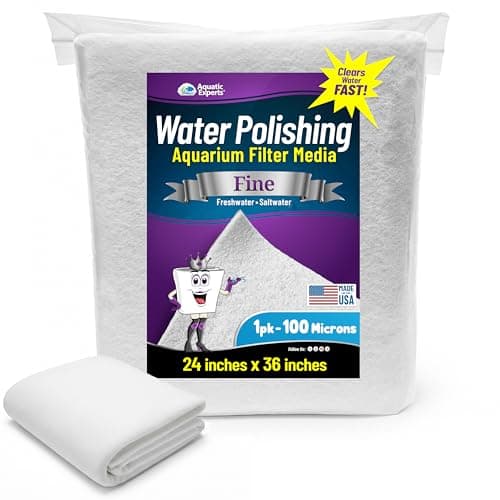 Aquatic Experts Aquarium Polishing Filter Pad Clogged mechanical media is the third cause and the most common of the three overall. Fresh polishing pad, cut to fit. | Flow that has faded gradually rather than stopped suddenly | $16.99 on Amazon #ad How we’re funded · price as of November 10, 2026 |
| 3 | 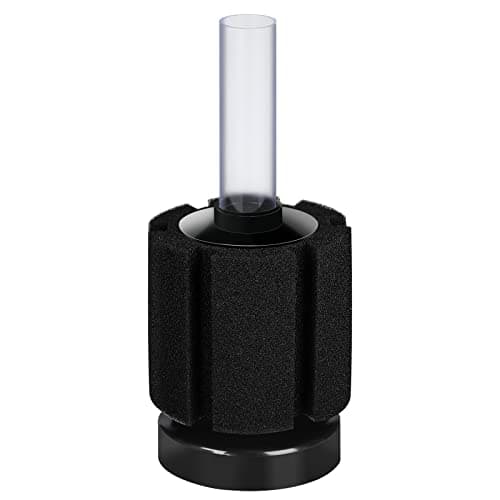 AQUANEAT Bio Sponge Filter (nano, up to 10 gallons) Air-driven, so there is no prime to lose and no impeller to jam. The one filter a power cut does not stop. | Keeping the tank filtered while you fix the main filter — and the backup that cannot fail this way | $5.98 on Amazon #ad How we’re funded · price as of November 10, 2026 |
| 4 | 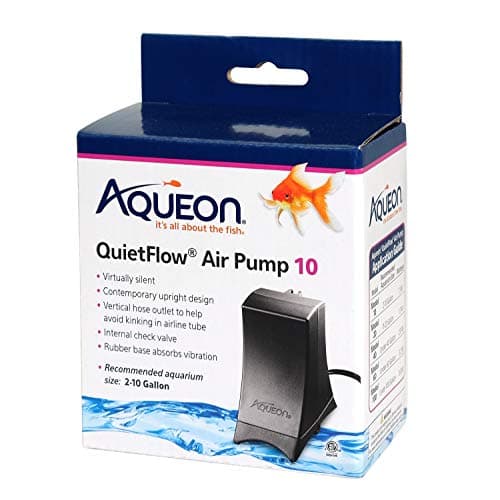 Aqueon QuietFlow Air Pump 10 (2-10 gallon tanks) A single-outlet pump rated for 2 to 10 gallon tanks. Also the emergency aeration if the filter is down for hours. | Driving that backup, and keeping the surface moving while the filter is off | $10.25 on Amazon #ad How we’re funded · price as of November 10, 2026 |
| 5 | 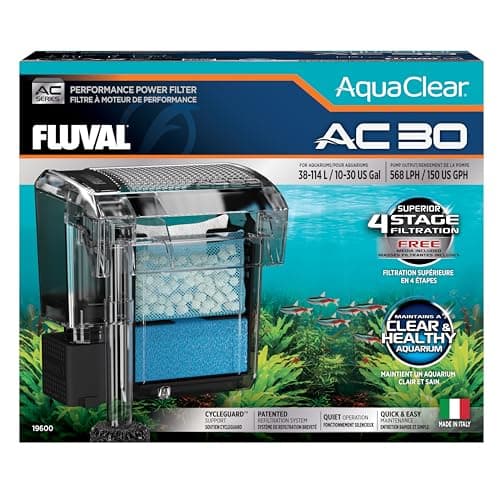 Fluval AquaClear 30 Power Filter The replacement we recommend most often: adjustable flow, a refillable basket and a pre-filter sponge in the box. | When it is genuinely dead, and the tank is 10 to 30 gallons | $49.98 on Amazon #ad How we’re funded · price as of November 10, 2026 |
| 6 | 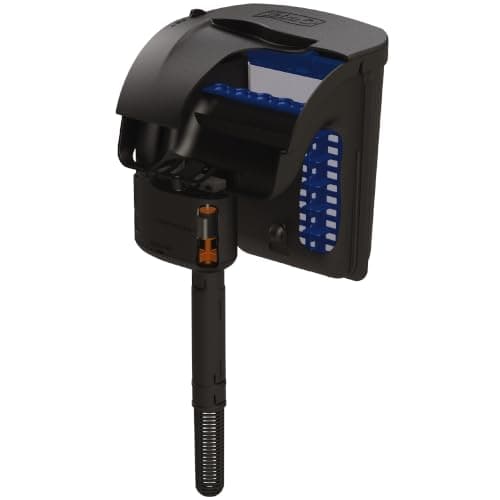 Tetra Whisper IQ 20 Power Filter A fraction of the price with a stabilizing base plate — and a cartridge habit you will be paying for indefinitely. | The cheapest competent replacement, if the budget is the deciding factor today | $23.17 on Amazon #ad How we’re funded · price as of November 10, 2026 |
| ! | 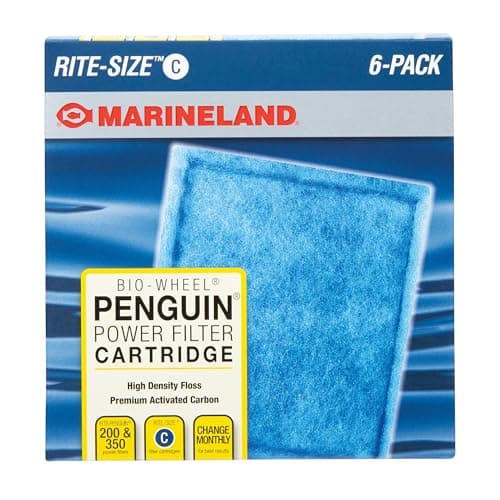 Marineland Penguin Rite-Size C Filter Cartridge, 6 Count Replacing a clogged cartridge throws away your bacteria colony. Rinse it instead, until it physically falls apart. Skip this one — see why below | Not the fix for weak flow, however much the packaging implies it | $19.97 on Amazon #ad How we’re funded · price as of November 10, 2026 |
Rows link to the full write-up further down this page. Prices come from the live price layer only; where there is no live figure the button reads “Check price” rather than showing a remembered number.
How we judged this, before any recommendation
The ordering of this page is the diagnosis. Cheapest and commonest first — the prime costs nothing to check and explains most cases, so it goes before any part. Rule out the free fix before buying a part — an impeller that needed rinsing does not need replacing. Protect the colony above the hardware — every step below is written to avoid the one irreversible mistake, which is killing the bacteria while fixing the pump. And know when to stop: a seized motor on a filter at this price is not economically repairable.
The checks, in order
- Is there power at all? Check the outlet with something else before you open anything. If the filter is on a timer or a power strip with a switch, check that too — and if it is on a timer, take it off one. Filters run 24 hours a day.
- Is it running but moving no water? This is the lost-prime case and it is the most common of all. Unplug it, fill the housing with water from the tank, plug it back in. A hang-on-back that ran dry after a water change is the classic version.
- Pull and rinse the impeller. Unplug first. It is a small magnet on a shaft in a chamber behind the motor; slime, grit or a stray grain of substrate is enough to stop it. Rinse it in tank water, check the shaft is not snapped, and seat it properly on restart.
- Check the intake and the media for a clog. A gradual decline in flow is almost always this. Rinse the mechanical media in old tank water in a bucket — never under the tap — and squeeze rather than scrub.
- Check the water level. A hang-on-back needs the water high enough to reach its intake. Evaporation over a week or two is enough to drop the level below the point where it can draw, and the symptom looks exactly like a broken filter.
- Listen to it. A rattle usually means the impeller is unseated or worn. A loud hum with no flow means air. A grinding noise means something hard is in the impeller chamber, and running it will damage the part.
- If the power was off for hours, do not just switch it back on. Open it, discard the stagnant water, rinse the media in tank water, then restart — the full reasoning is on our power-outage page.
Symptom to cause, at a glance
| Symptom | Most likely cause | Fix |
|---|---|---|
| Hums, no water moving | Lost its prime — pump spinning in air | Unplug, fill the housing with tank water, restart |
| Hums, still nothing after priming | Impeller fouled or unseated | Unplug, pull the impeller, rinse in tank water, reseat |
| Flow faded gradually | Clogged media or intake | Rinse media in old tank water; check the intake for a blockage |
| Rattling or grinding | Impeller worn, unseated, or something hard in the chamber | Unplug immediately. Inspect before running it again |
| Nothing at all, silent | No power, or a dead motor | Check the outlet first. If powered and silent, the motor is likely gone |
| Stopped after a water change | Water level below the intake, or lost prime | Top up the tank; re-prime |
| Stopped after a power cut | Lost prime, or a non-self-priming pump | Re-prime — and rinse the media first if it sat still for hours |
| Weak flow right after cleaning | Media repacked too tightly, or impeller not fully seated | Loosen the media; re-seat the impeller |
Our own diagnostic ordering for beginner hang-on-back and internal filters. A canister adds its own possibilities — air trapped in the hoses being the common one — but the first three causes are the same.
"Will my fish die?" — the honest answer
Almost certainly not, and the panic is usually pointed at the wrong risk. Fish do not depend on the filter for oxygen directly; oxygen enters at the water surface. A filter that is off for an hour, or an evening, or even a day in a lightly stocked tank is a nuisance rather than a crisis.
What is genuinely at risk is the bacteria colony inside the filter, which needs oxygenated water flowing through it. The longer the media sits still, the more of that colony you lose — and the consequence arrives days later as an ammonia reading rather than immediately as a sick fish.
- Under an hour: do nothing special. Fix it and carry on.
- A few hours: keep the surface moving if you can — an air stone, or pour water back from a height. Do not feed.
- Overnight or longer: treat the media as suspect. Rinse it in tank water before restarting rather than pushing stagnant water into the tank.
- Several days: expect a small cycle when the filter comes back. Test daily for a week and treat any reading above zero as a fish-in cycle — how to lower ammonia fast covers it.
- Do not feed while the filter is down. Uneaten food becomes ammonia with nothing processing it.
The same reasoning in more detail, including why a long outage needs the media rinsed before the filter is restarted, is on what to do with a fish tank in a power outage.

When it is actually dead
Stop troubleshooting and replace the unit when: the motor is silent with confirmed power at the outlet; the impeller chamber is visibly damaged or the shaft has snapped and the part is no longer made for your model; or the filter ran dry long enough to cook the motor, which usually announces itself as a burnt smell.
When you do replace it, move the old media across into the new filter. That media is your bacteria colony, and carrying it over is the difference between an uneventful swap and a tank that cycles again from scratch. Size the replacement properly rather than buying the same box — the arithmetic is on how to size an aquarium filter, and the per-size shortlists start at the best filter for a 10 gallon tank and the best filter for a 20 gallon tank.
And if the noise rather than the failure is what brought you here, that is a different page: the quietest aquarium filter covers which designs are quiet by construction and what the sound you are hearing actually is.
Pick 1
Hagen A632 AquaClear Impeller Assembly for 30 Power Filter
A filter that hums or rattles but moves no water, after the prime has been ruled out
The number
Part A632, for the AquaClear 30 Power Filter, per the Amazon listing.
If the motor hums and nothing moves, and refilling the housing did not fix it, the impeller is the next suspect. It is a small magnet on a shaft, it sits in a chamber that collects slime and grit, and it is the only moving part in the whole device.
Most of the time it does not need replacing — it needs pulling out, rinsing, and reseating, because a single grain of substrate or a build-up of slime is enough to stop it turning. Replace it when the fins are visibly chipped, the magnet is cracked, or it still will not spin after a clean.
This is the assembly for the AquaClear 30, which is the hang-on-back this site recommends most often.
The honest costs. It is a part, not a diagnosis: a filter that hums and moves no water is more often air-locked than broken, and swapping an impeller that was never the fault wastes the money. Impellers are model-specific — the 20, 50 and 70 take different assemblies, so match the number on your filter before ordering. And the shaft it rides on is a separate part again, and is the piece that more often snaps.
| Part number | A632, per the Amazon listing |
|---|---|
| Fits | AquaClear 30 Power Filter |
| What it is | The magnetic impeller assembly — the spinning part that actually moves the water |
| What it does not do | It is a part, not a fix for every symptom: a filter that hums but moves no water is usually air-locked rather than broken, and swapping an impeller that was never the problem wastes the money. Check the prime first. Impellers are also model-specific — this one is the AquaClear 30, and the 20, 50 and 70 take different assemblies, so match the number on your filter before ordering. The shaft it rides on is a separate part again and is the thing that more often snaps. |
Specs from Hagen A632 AquaClear Impeller Assembly for 30 Power Filter, Amazon listing. We have not used this unit.
#ad How we’re funded · price as of November 10, 2026
Pick 2
Aquatic Experts Aquarium Polishing Filter Pad
Flow that has faded gradually rather than stopped suddenly
A filter that is running, moving water, and simply moving less of it than it used to is almost never broken. It is blocked, and the block is in the first thing the water meets.
This is also the failure that does the most quiet damage, because reduced flow means reduced biological capacity long before anything looks wrong in the tank.
The right move is to rinse the existing mechanical media in old tank water first and only replace it when it is physically falling apart. Keep a pad in the cupboard so the choice is never between a clogged filter and a trip to the shop.
The honest costs. It is a mechanical medium only — it polishes water and does nothing biological or chemical. You cut it to fit, which means a pair of scissors and a slightly annoying five minutes. Packed too tightly it becomes the clog rather than the cure. And it is a consumable, so this is a recurring cost in a way that rinse-and-reuse foam is not.
| Stage | Fine mechanical polishing, fitted after the coarse foam |
|---|---|
| Form | Cut-to-fit pad, so it suits any filter |
| Job | Catches the fine particles a coarse sponge passes, which is what makes water look hazy |
| What it does not do | Genuinely disposable, unlike the rest of this page — fine floss clogs quickly and is not worth rinsing and reusing many times. It is a polish, not filtration capacity: it will not fix a tank that is under-filtered or overstocked. |
Specs from Aquatic Experts Aquarium Polishing Filter Pad, Amazon listing. We have not used this unit.
#ad How we’re funded · price as of November 10, 2026
Pick 3
AQUANEAT Bio Sponge Filter (nano, up to 10 gallons)
Keeping the tank filtered while you fix the main filter — and the backup that cannot fail this way
The number
No published GPH figure: output depends on the air pump you pair with it. Mechanical and biological only.
Every fault on this page is a fault of powered filters: losing prime, jamming an impeller, air-locking after a clean. A sponge filter has none of those parts and therefore none of those failures.
Running one permanently alongside your main filter means that the hour you spend with the hang-on-back in pieces is an hour the tank is still being filtered, and that the bacteria colony is not sitting entirely in a device you have just opened.
It is also the cheapest insurance against the failure that is not the filter's fault at all — a power cut, covered on our outage page.
The honest costs. No pump, airline or check valve in the box, so the real purchase is three or four items and the pump is the noisiest thing in the setup. It is visible inside the tank. No mechanical polish, so fine particles stay suspended. And it is a nano device: on a stocked 20 or 30 gallon tank it supplements a main filter rather than replacing one.
| Flow rating | Not published. Air-driven sponge filters carry no manufacturer GPH figure; output depends on the air pump you pair with it. |
|---|---|
| Filtration | Mechanical and biological. No chemical stage unless you add one. |
| Running cost | No cartridge. The sponge is rinsed in old tank water and reused. |
| What it does not do | No air pump, no airline and no check valve in most listings, so budget for all three. No chemical filtration, and there is no hiding it behind the hardscape. |
Specs from Fluval, AquaClear 20 product page (the hang-on-back flow comparison). We have not used this unit.
#ad How we’re funded · price as of November 10, 2026
Pick 4
Aqueon QuietFlow Air Pump 10 (2-10 gallon tanks)
Driving that backup, and keeping the surface moving while the filter is off
The number
Sold by tank-size range rather than by a published airflow figure.
Worth owning for a second reason this page cares about: if the filter is going to be off for more than an hour or two, the thing the fish actually need is surface movement, not filtration.
A small pump with an air stone covers that for the length of any repair, and costs less than the part you are probably about to order.
The honest costs. No airline tubing and no check valve included, and the check valve is not optional — a stopped pump will siphon tank water down the airline onto the floor. No flow control. And the diaphragm is the wearing part, so expect to replace the unit rather than service it.
| Purpose | Drives a sponge filter or an air stone |
|---|---|
| Rating | Sold by tank-size range rather than by a flow figure |
| What it does not do | Airline tubing and a check valve are usually sold separately. Without a check valve, a power cut can siphon tank water back down the airline onto the floor. |
The manufacturer does not publish a full spec sheet for this item, so nothing beyond the figures above is stated. We have not used this unit.
#ad How we’re funded · price as of November 10, 2026
Pick 5
Fluval AquaClear 30 Power Filter
When it is genuinely dead, and the tank is 10 to 30 gallons
The number
Rated 568 L/h (150 US GPH) for 38 to 114 L (10 to 30 US gallons) at 7 W, with adjustable flow.
A motor unit that is seized, burnt out or has been run dry long enough to cook is not economically repairable on a filter at this price, and that is the point to stop troubleshooting.
The reason this is the default replacement rather than the cheapest one is the basket: you rinse and reuse the media instead of buying cartridges, which is the difference between a filter that costs nothing to own and one that costs a few dollars a month forever.
If you are replacing rather than repairing, move as much of the old media as you can into the new filter. That media is your bacteria colony, and transferring it is the difference between a seamless swap and a small cycle.
The honest costs. At full output on a 10 gallon tank it is more current than a planted nano or a betta wants, so the flow knob is not optional there. No published minimum flow figure, so you cannot check where that knob lands. The cascade return is a surface-churner by design. And rated flow is measured with clean media and no head height, so the real figure is lower — our method divides by 0.7 to allow for it.
| Rated output | 568 L/h (150 US gal./h) |
|---|---|
| Stated tank range | 38-114 L (10-30 US gallons) |
| Power draw | 7W at 120 V / 60 Hz |
| Media | Pre-filter sponge, Bio-Foam, BIOMAX, activated carbon |
| What it does not do | No heater, no test kit, no substrate. At full rated output this is more flow than a betta or a shrimp tank wants, so the flow control is not optional there. |
Specs from Fluval, AquaClear 30 Power Filter product page. We have not used this unit.
#ad How we’re funded · price as of November 10, 2026
Pick 6
Tetra Whisper IQ 20 Power Filter
The cheapest competent replacement, if the budget is the deciding factor today
The number
Tetra states 130 GPH for aquariums up to 20 US gallons.
Included because a filter failing is an unplanned expense, and the honest cheapest option that still works belongs on the page rather than only the one we would pick ourselves.
On a lightly stocked 20 gallon tank it does the job, and the base plate that braces it against the glass is a genuine contributor to how quietly it runs.
The honest costs. It is cartridge-based, so every replacement discards the bacteria living on that cartridge and the recurring cost never ends. No published minimum flow. And at 130 GPH on a fully stocked 20 it is short of the 170 our method asks for, so treat it as a filter for a lightly stocked tank.
| Rated flow | 130 GPH, per the Amazon listing title |
|---|---|
| Model | Whisper IQ 20 — the model number tracks the tank size it is named for |
| Cartridge | Whisper Bio-Bag with Stay Clean, Large size |
| Biological stage | Bio-Scrubber |
| Noise | Tetra states less than 40 dB |
| What it does not do | Named for a 20 gallon tank, but at 130 rated GPH it is about 24% short of the 170 our method asks for on a fully stocked 20 gallon community tank. Monthly cartridge replacement per Tetra. No published flow-control figure. No heater, no test kit. |
Specs from Tetra Whisper IQ 130 GPH Power Filter, Amazon listing; Tetra Whisper IQ, Feeders Pet Supply listing (cartridge size per model, SoundShield). We have not used this unit.
#ad How we’re funded · price as of November 10, 2026
Skip this
Marineland Penguin Rite-Size C Filter Cartridge, 6 Count
Not the fix for weak flow, however much the packaging implies it
The skip entry, and it is here because it is the single most common wrong response to this page's problem.
Flow drops, the owner looks at a dirty cartridge, and the instructions on the box say replace monthly. So they replace it — and discard, in one motion, a large share of the nitrifying bacteria that were keeping the tank safe. The flow comes back. A week later the tank has an ammonia reading nobody can explain.
The correct move with a clogged cartridge is to rinse it in **old tank water** and put it back, repeatedly, until it is physically disintegrating. A cartridge that looks terrible and still passes water is doing two jobs; a brand-new one is doing one.
If you must replace it, do it in stages — new alongside old for a few weeks — so the colony has somewhere to live in the meantime.
The honest costs of the skip. Cartridges are genuinely convenient, and a keeper who will not do media maintenance may get better results from a cartridge they actually change than a basket they ignore. The objection is to replacing on a calendar rather than on condition, and to doing it as a response to weak flow.
| Fits | Penguin 200, 275, 350 and 375, per the compatibility listing. The 150 takes Rite-Size B; the 75 and 100 take Rite-Size A |
|---|---|
| Stages | Mechanical floss and activated carbon in one frame; the Bio-Wheel is separate and is not part of the cartridge |
| Pack | 6 cartridges. The Penguin 350 takes two at a time |
| What it does not do | This is the running cost of the line and it never stops. Buy the size your model takes — the three sizes are not interchangeable. Because the Bio-Wheel carries a separate biological colony, replacing this cartridge is less damaging to a cycle than a whole-cartridge change on a filter with no other biological stage, but the cartridge still holds bacteria and should be rinsed and reused rather than swapped on a strict schedule. |
Specs from Marineland Bio-Wheel Penguin Rite-Size C Cartridge 6 Count, Amazon listing; Marine and Reef, Penguin cartridge compatibility by model. We have not used this unit.
Questions people actually ask
Frequently asked questions
+ Why is my aquarium filter not working?
+ My filter is running but no water is coming out. What do I do?
+ Why did my filter stop working after cleaning it?
+ Will my fish die if the filter stops working?
+ Can I rinse my filter media under the tap?
+ Why is my fish tank filter making a rattling noise?
+ How often should filter media actually be replaced?
+ Do I need to re-cycle my tank after the filter was off?
Where the numbers came from
Sources
- Hagen A632 AquaClear Impeller Assembly for 30 Power Filter, Amazon listing
- US EPA, Chloramines in Drinking Water — why many utilities use chloramine rather than free chlorine, and that it does not dissipate the way free chlorine does
- Fluval, AquaClear 30 Power Filter — published output, tank range and power draw
- AquaClear 30 Power Filter listing (568 L/h / 150 US GPH, 10-30 US gal, included media)
- Tetra Whisper IQ 130 GPH Power Filter, Amazon listing
- Aquifarm, aquarium filter flow rate guidance (turnover multiples)
Read next
Related on Fin & Filter

How to size an aquarium filter
Tank gallons times turnover, divided by 0.7. The formula, worked examples, and the table for every common size.

What to do with a fish tank in a power outage
Stop feeding, keep the surface moving, insulate the tank, and never restart a long-dead filter blind. Plus the backup pump that arms itself.
The quietest aquarium filter
One maker publishes a decibel figure; nobody else does. What the noise actually is, and the filters that make least of it.