Emergency
What to do with a fish tank in a power outage
Your fish are not the first casualty of a blackout — your filter is. Here is the order to do things in, and the mistake that turns a survivable outage into a tank crash.
Fin & Filter earns a commission when you buy through the links on this page. It costs you nothing and it does not decide what we rank. How we’re funded.

We have not used any of this gear. Every pick below is chosen from published manufacturer specifications and the arithmetic on how we pick, which you can re-run yourself.
Fish survive a power cut far better than most people fear — hours, and often a couple of days in a cool room. The two things that actually kill them are a still water surface (oxygen enters at the surface, and a warm room makes it worse) and a filter that sat dead for hours and then got switched back on without being rinsed. In the first hour: stop feeding, cover the tank to hold heat, get the surface moving, and leave the filter alone until you have read the restart rule below. The one purchase that matters is a battery pump that arms itself — the Penn-Plax Silent Air B11 sits plugged in, monitors the mains and starts on its own when the power drops.
Most outage advice online is about the fish. The fish are usually fine. The thing that quietly fails is the biological filter, and it fails in a way you do not see until two days after the lights come back.
Quick picks
What to own before the lights go out
| # | Product | Best for | Price |
|---|---|---|---|
| 1 | 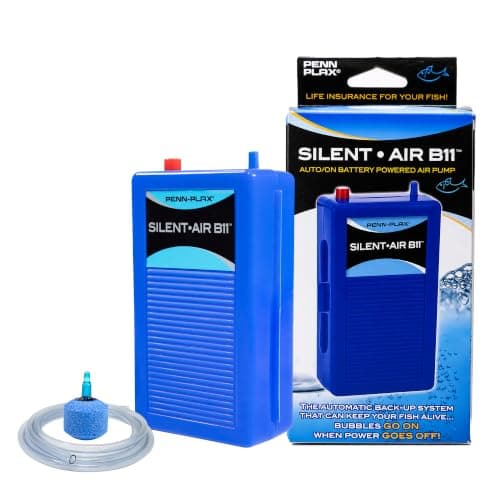 Penn-Plax Cascade Silent Air B11 Battery Air Pump It stays plugged in, monitors the mains, and starts itself when the power drops. That is the whole point. | The outage that happens while you are asleep or out of the house | $27.99 on Amazon #ad How we’re funded · price as of November 3, 2026 |
| 2 | 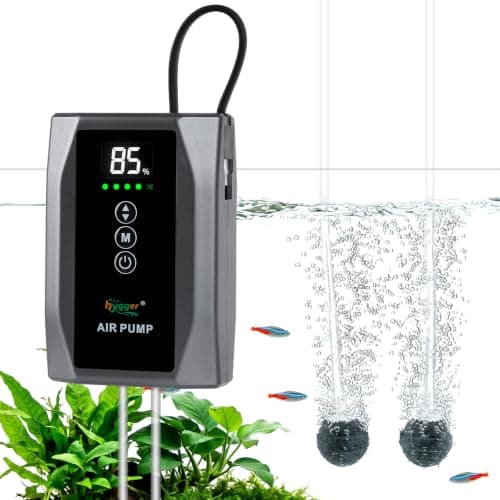 hygger Battery Powered Aquarium Air Pump, up to 100 Gallons USB rechargeable with a digital display and a far larger stated capacity — but you have to switch it on yourself. | A bigger tank, or someone who would rather charge than buy batteries | |
| 3 | 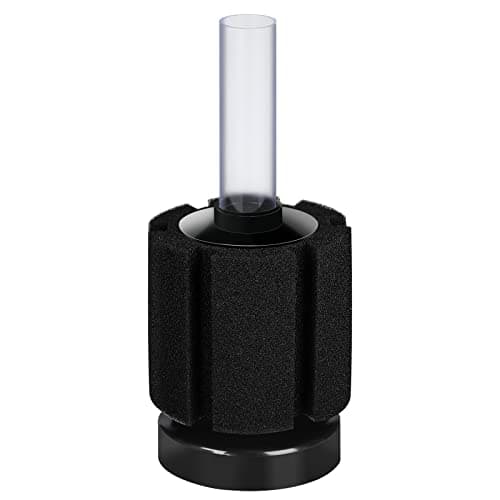 AQUANEAT Bio Sponge Filter (nano, up to 10 gallons) Air-driven, so a battery pump keeps it filtering. The only filter on your tank that survives a blackout. | Keeping your biological filter alive through the outage, not just the fish | $5.98 on Amazon #ad How we’re funded · price as of November 3, 2026 |
| 4 | 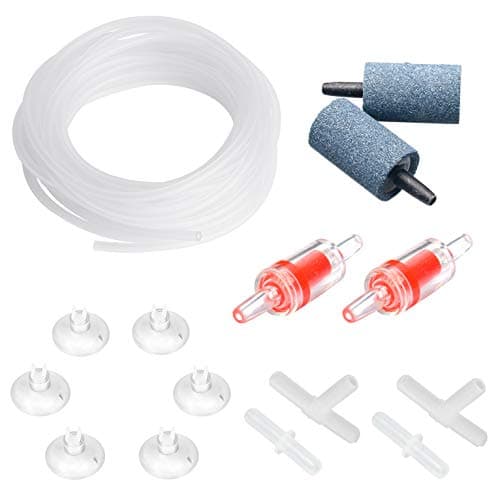 Pawfly Airline Tubing with Check Valves and Air Stones Airline and check valves. More important with a battery pump than with a mains one, not less. | Stopping the backup pump from siphoning your tank onto the floor | $6.99 on Amazon #ad How we’re funded · price as of November 3, 2026 |
| 5 |  Pawfly Aquarium Air Stone, 1 inch A one-inch stone breaks the air into fine bubbles that lift water to the surface. Cheap, and it wears out. | Turning a trickle of air into actual surface movement | $3.99 on Amazon #ad How we’re funded · price as of November 3, 2026 |
| 6 | 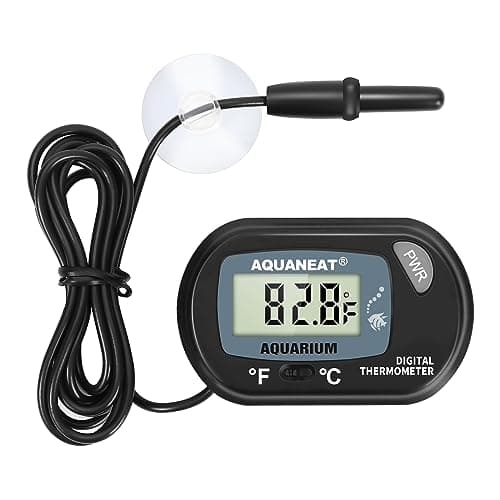 AQUANEAT Digital Aquarium Thermometer A few dollars, and the only way to tell a slow drift from an emergency without opening the lid. | Knowing whether the temperature is actually a problem yet | $5.45 on Amazon #ad How we’re funded · price as of November 3, 2026 |
| 7 |  Seachem Prime Seachem states it detoxifies ammonia, nitrite and nitrate for up to 48 hours — a window that matches an outage well. | The ammonia that shows up because the filter stopped | $16.62 on Amazon #ad How we’re funded · price as of November 3, 2026 |
| 8 | 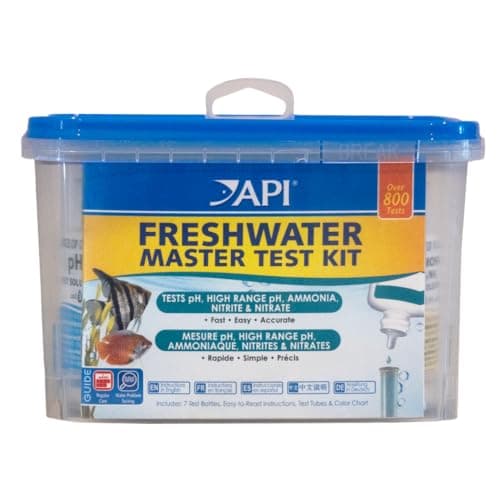 API Freshwater Master Test Kit Over 800 tests. The outage is survivable; the mini-cycle afterwards is what needs watching. | The days after the power comes back, which is when tanks actually crash | $35.98 on Amazon #ad How we’re funded · price as of November 3, 2026 |
| ! | 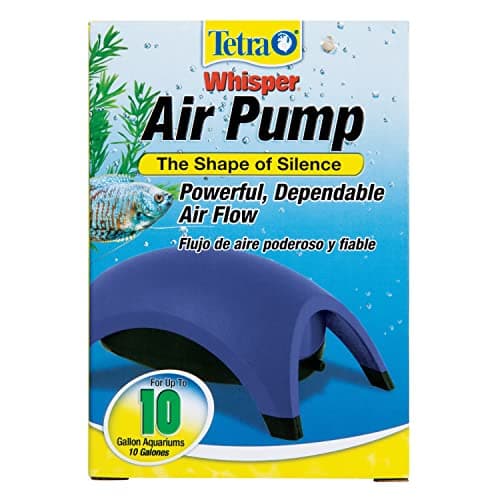 Tetra Whisper Air Pump, up to 10 gallons A good mains air pump, and completely inert in a blackout. Included because many readers own one and assume it helps. Skip this one — see why below | Not an outage. This is the pump that stops when the power does. | $17.39 on Amazon #ad How we’re funded · price as of November 3, 2026 |
Rows link to the full write-up further down this page. Prices come from the live price layer only; where there is no live figure the button reads “Check price” rather than showing a remembered number.
How we judged this, before any recommendation
Four criteria, and the first one rules out most of what gets recommended elsewhere. Does it work unattended? — a power cut at 3am is the normal case, not the exception. Does it run long enough? — a device that covers two hours covers almost nothing. Does it protect the biological filter, or only the fish? — those are different jobs and only one of them has a long tail. Is it cheap enough to own before you need it? — the best backup is the one bought in advance, and nothing on this page is worth buying during an outage.
The first hour, in order
- Stop feeding. Completely. Uneaten food becomes ammonia, and there is no filter running to process it. A healthy adult fish loses nothing by not eating for several days — that is the same arithmetic as a week away on vacation.
- Leave the lid on and cover the tank. A blanket or towels over the glass slows heat loss substantially, and water holds heat far better than air. Do not cover an open-topped tank so completely that you seal the surface — gas exchange has to carry on.
- Get the surface moving. This is the single highest-value action. A battery air pump with an air stone is the easy version; failing that, scoop water with a clean jug and pour it back from a height every hour or two.
- Do not open the canister or restart a filter that has been off for hours. Read the restart rule below first. This is the step people get wrong.
- Do not do a big water change in the dark. Tap water that is colder than the tank, dosed by candlelight, is a second emergency. Small and conditioned, or not at all.
- Write down the time the power went out. How long the filter has been dead decides what you do with it later, and in the morning you will not remember.
Oxygen is the clock that runs fastest
The USGS puts the physics plainly for natural water: oxygen enters mainly from the atmosphere, rapidly moving water tends to hold a lot of dissolved oxygen while stagnant water holds less, and cold water can hold more dissolved oxygen than warm water. An aquarium with no filter running is, by that description, the hard case: small, still and warm.
That is why surface movement is the first thing to restore and why the room temperature matters so much. The same outage is a minor inconvenience in a cool room with a lightly stocked tank and a genuine emergency in a hot one with a full load of fish.
| Situation | How worried to be | What to do first |
|---|---|---|
| Cool room, lightly stocked, under 4 hours | Barely | Stop feeding. Leave everything else alone |
| Cool room, lightly stocked, overnight | Low | Cover the tank; agitate the surface by hand a few times |
| Warm room or heavily stocked, any length | This is the urgent case | Surface movement now — battery pump, or pour water from a height |
| Any tank, over about 12 hours | Moderate, and rising | Battery aeration, no feeding, and plan the filter restart carefully |
| Any tank, over 24 hours | The filter is now the main problem | Keep aerating; expect a mini-cycle when power returns |
| Fish gasping at the surface, all at once | Act immediately | Maximum surface agitation. This is oxygen, not hunger |
| Winter, unheated room, long outage | Temperature joins oxygen as a problem | Blankets over the tank; do not add warm water straight from a kettle |
Our own judgment for a beginner freshwater tank, built on the USGS statements about dissolved oxygen cited at the foot of this page. No published figure gives a safe number of hours, and we are not going to invent one — your room temperature and stocking level move it a long way in both directions.
Heat, and what not to do about it
Your heater is off and nothing is going to change that. What you can change is the rate of loss: keep the lid on, drape blankets or towels over the glass and leave them there, and close the curtains in the room. A larger tank cools more slowly than a small one, which is one more quiet argument for the bigger first tank.
- Do not pour hot water into the tank. A kettle of boiling water does not warm a tank evenly, it cooks whatever is nearest. If you must add warm water, warm a sealed bottle and float it instead.
- Do not move the fish into a smaller container to keep them warm. A smaller volume cools faster, not slower, and it concentrates ammonia at the same time.
- A slow drift of a few degrees is survivable; a fast swing is the thing fish tolerate least well. Insulation buys you slow.
- Do not run the heater off a small generator or power bank alongside everything else. If you have limited backup power, spend it on aeration first — the filter and the heater both draw far more, and oxygen is the shorter clock.
- When the power returns, let the heater catch up on its own. Do not turn it up to recover faster; you will overshoot into a swing that undoes the careful part.

After the power comes back
- Rinse the filter media in tank water before restarting, if the outage was more than a few hours. Never under the tap — chlorine kills whatever colony survived.
- Restart the filter and check it is actually drawing. A hang-on-back that lost its prime can run dry and noisy; a canister may need priming again.
- Dose a conditioner that addresses ammonia for the full tank volume as a hedge while the colony recovers.
- Test ammonia and nitrite the same day, then daily for a week. This is the step that matters most, and the one people skip because the tank looks fine.
- Treat any reading above zero as a fish-in cycle: small, frequent, conditioned water changes, no feeding for a day or two, and no new fish. The procedure is on how to lower ammonia in a fish tank fast.
- Feed lightly for the first few days, and only once the numbers are at zero.
- Expect cloudy water for a few days after a long outage. A bacterial bloom while the colony re-establishes is normal and usually fixes itself — why is my fish tank water cloudy tells the harmless kind from the kind that needs action.
If the tank was already struggling before the outage, or if you lose fish in the days afterwards, start the diagnosis at why do my fish keep dying rather than assuming the blackout explains everything. And if the outage exposed that you have no second filter, the cheapest fix for next time is a sponge filter running permanently alongside your main one — the shortlist is on the best sponge filters, and the pump that drives one is covered on do I need an air pump.
Pick 1
Penn-Plax Cascade Silent Air B11 Battery Air Pump
The outage that happens while you are asleep or out of the house
The number
Penn-Plax states it runs on two D batteries, operates only when there is no AC electricity, and gives 72 hours or more depending on the batteries. That Pet Place's listing for the same pump states up to 48 hours. Stated for tanks up to 29 gallons.
Almost every power cut that kills fish happens when nobody is standing in front of the tank. That is the problem this pump solves and the reason it is first here: it lives plugged into the wall with its ON button pressed, it watches for the mains to disappear, and it starts on its own.
A rechargeable pump in a drawer is a better pump that does nothing at 3am. This one is a worse pump that is already running by the time you wake up.
Penn-Plax puts a box of useful detail on the record: two D cells, 72 hours or more depending on the batteries, up to 29 gallons with larger tanks needing two or more units, and tubing, an air stone and a mounting clip in the box.
The honest costs. The batteries are not included and the AC plug charges nothing — that plug is a power sensor, not a charger, so the cells sit slowly discharging for months until the night you need them. Penn-Plax's own advice is to test it periodically by unplugging it from the wall, and a backup you never test is a backup you do not have. The two published runtime figures disagree (72 hours from the maker, 48 from a retailer), so plan on the lower one. It is rated to 29 gallons. And it only aerates — it does not heat, filter or circulate anything.
| Power | Two D batteries. Penn-Plax states they are not included |
|---|---|
| How it switches on | It plugs into an outlet and monitors power. Penn-Plax states it will only operate when there is no AC electricity, and that pressing the ON button lets it activate automatically in the event of a power failure |
| What the AC plug does NOT do | The retailer spec states the plug is for power detection only: it does not operate the pump and does not charge the batteries |
| Stated runtime | Penn-Plax states 72 hours or more depending on the batteries used; That Pet Place's listing for the same pump states up to 48 hours depending on battery quality and operating conditions. Both figures are quoted here because they disagree |
| Stated tank size | Up to 29 gallons, with Penn-Plax stating larger aquariums should use two or more units |
| In the box | Pump, flexible air tubing, air stone and a metal mounting clip |
| Maker's testing advice | Penn-Plax states to test periodically by unplugging it from the wall outlet |
| What it does not do | No batteries, which is the one thing it cannot work without — buy them with the pump and write the date on them. The AC plug charges nothing, so this is not a rechargeable device: the batteries sit there losing charge for months until the night you need them, which is why the maker's advice to test it by unplugging the pump is not optional. One outlet. And it aerates: it does not heat, filter or circulate the tank, so it addresses exactly one of the things a power cut takes away. |
Specs from Penn-Plax, Cascade Silent Air Battery Air Pump 11 (SAB11) product page (2 D batteries not included, monitors power and only operates when there is no AC electricity, ON button for automatic activation on power failure, 72 hours or more depending on batteries, up to 29 gallons, box contents, periodic testing advice); Penn-Plax Silent Air B11, That Pet Place listing (requires two D batteries; AC plug is for power detection only and does not operate the pump or charge the batteries; up to 48 hours depending on battery quality and operating conditions); Penn-Plax Silent-Air B11 Battery Powered Aquarium Air Pump, up to 29 gallons, Amazon listing. We have not used this unit.
#ad How we’re funded · price as of November 3, 2026
Pick 2
hygger Battery Powered Aquarium Air Pump, up to 100 Gallons
A bigger tank, or someone who would rather charge than buy batteries
The number
USB rechargeable, stated up to 100 gallons with a digital display, per the Amazon listing.
The honest case for this one is capacity and running cost. If your tank is well past 29 gallons, one small battery pump is not enough air, and a rechargeable cell means no trip to buy D batteries in a storm.
It is the right answer for a planned outage you know about, a holiday weekend, or anyone who is reliably home.
The honest costs. It does not arm itself. No power-failure detection is claimed on the listing, so if the power goes at 3am this pump is a torch with no one holding it. The capacity and display claims are the listing's own rather than a manufacturer document we can check, and hygger is a marketplace brand. A rechargeable cell self-discharges too, so it still needs a charging routine you will actually keep.
| Power | USB rechargeable internal battery, per the Amazon listing |
|---|---|
| Stated capacity | Up to 100 gallons, per the Amazon listing title |
| Display | Digital display, per the listing |
| How it switches on | Manually. No power-failure detection is claimed on the listing, so this is a pump you turn on yourself rather than a backup that arms itself |
| What it does not do | It does not arm itself. If the power fails while you are out or asleep, a rechargeable pump sitting in a drawer does nothing — that is the whole difference between this and an auto-on backup pump. The capacity and display claims are the listing's own rather than a manufacturer document we can check, and hygger is a marketplace brand, so expect less support continuity than a legacy name. A rechargeable cell also self-discharges, so it needs topping up on a schedule you will have to remember. |
Specs from hygger Battery Powered Aquarium Air Pump up to 100 Gal with digital display, USB rechargeable, Amazon listing. We have not used this unit.
Pick 3
AQUANEAT Bio Sponge Filter (nano, up to 10 gallons)
Keeping your biological filter alive through the outage, not just the fish
The number
No published GPH figure: output depends on the air pump driving it. Mechanical and biological only, with no chemical stage.
This is the pick that addresses the part of a power cut nobody worries about until afterwards. Your hang-on-back or canister stops dead, and the bacteria inside it begin to suffer in still, un-oxygenated media.
A sponge filter driven by a battery pump does not stop. It keeps water moving through media that holds a share of your colony, which means that when the power returns, you still have a working biological filter rather than a tank that behaves like a new one.
Running one permanently as a second filter is cheap insurance for exactly this, and it is the same spare sponge that cycles a quarantine tank in thirty seconds.
The honest costs. No pump, airline or check valve in the box, so the real purchase is several items. It is visible inside the tank. It offers no mechanical polish, so fine particles stay suspended. And on its own it is a nano device: on a stocked 20 or 30 gallon tank it is a supplement to your main filter rather than a replacement for it.
| Flow rating | Not published. Air-driven sponge filters carry no manufacturer GPH figure; output depends on the air pump you pair with it. |
|---|---|
| Filtration | Mechanical and biological. No chemical stage unless you add one. |
| Running cost | No cartridge. The sponge is rinsed in old tank water and reused. |
| What it does not do | No air pump, no airline and no check valve in most listings, so budget for all three. No chemical filtration, and there is no hiding it behind the hardscape. |
Specs from Fluval, AquaClear 20 product page (the hang-on-back flow comparison). We have not used this unit.
#ad How we’re funded · price as of November 3, 2026
Pick 4
Pawfly Airline Tubing with Check Valves and Air Stones
Stopping the backup pump from siphoning your tank onto the floor
A check valve matters on any air-driven setup, and it matters more here because of how a battery pump is used: it runs for a day or two and then stops when the mains comes back or the cells die.
Every one of those stops is a moment when the airline can siphon tank water backwards, down the tube, through the dead pump and onto the floor. A valve fitted above the water line makes that impossible.
The honest costs. They are directional, and fitted backwards they block the air entirely, which looks exactly like a flat battery. They stiffen and clog over a year or two, so treat them as a consumable. And a valve does not excuse routing the airline below the water line in the first place.
| What the check valve does | Allows air one way only, so tank water cannot siphon back down the airline when the pump stops |
|---|---|
| Placement | In the airline between the pump and the tank, above the water line |
| What it does not do | Not usually included with an air pump, which is exactly why it gets forgotten. A check valve is directional and fitting it backwards blocks the air entirely. |
The manufacturer does not publish a full spec sheet for this item, so nothing beyond the figures above is stated. We have not used this unit.
#ad How we’re funded · price as of November 3, 2026
Pick 5
Pawfly Aquarium Air Stone, 1 inch
Turning a trickle of air into actual surface movement
The bubbles are not what oxygenates the tank — the column of water they drag up to the surface is. A stone does that job far better than an open airline, which releases a few large bubbles that rise too fast to move much water.
In an outage, that difference is the difference between a token stream and a working gas exchange.
The honest costs. Air stones clog gradually, and a clogged stone makes any pump work harder — which on a battery pump directly costs you runtime. Replace it rather than fighting it. It also needs to sit deep to lift a full column of water, which in a shallow tank limits what it can do.
| Purpose | Breaks the air stream into small bubbles, which increases surface agitation |
|---|---|
| Note | Gas exchange happens at the water surface, so the useful work is the surface movement the bubbles cause rather than the bubbles themselves |
| What it does not do | Clogs over months as mineral deposits build up, and output drops gradually enough that you will not notice. Treat it as a consumable. |
The manufacturer does not publish a full spec sheet for this item, so nothing beyond the figures above is stated. We have not used this unit.
#ad How we’re funded · price as of November 3, 2026
Pick 6
AQUANEAT Digital Aquarium Thermometer
Knowing whether the temperature is actually a problem yet
The number
A digital thermometer with a submerged probe, reading the water rather than a dial.
The heater is off and there is nothing you can do about that, so the useful question becomes how fast the tank is actually cooling — and the answer depends on your room, your tank's volume and whether it is covered.
A thermometer turns that from anxiety into a number you can check twice a day, and it is what tells you whether blankets are working.
The honest costs. It reads one spot, and a tank with no filter running has genuinely less mixing than usual, so give it time to settle. The suction cup eventually fails. Button batteries are not replaceable on some models, which makes it disposable. And it reports the problem rather than fixing it.
| Why it matters | A heater dial is a setting and a thermometer is a reading. They disagree more often than beginners expect. |
|---|---|
| What it does not do | Stick-on strip thermometers read the glass rather than the water, so room temperature pulls them off. |
The manufacturer does not publish a full spec sheet for this item, so nothing beyond the figures above is stated. We have not used this unit.
#ad How we’re funded · price as of November 3, 2026
Pick 7
Seachem Prime
The ammonia that shows up because the filter stopped
The number
Published dose: 1 capful (5 mL) per 200 L (50 US gallons) of new water. Seachem states the binding lasts up to 48 hours.
A filter that is not running is not processing ammonia, and the fish carry on producing it. On a lightly stocked tank for a few hours that is nothing. On a stocked tank over a long outage it is the second clock running against you.
This is the specific situation Prime's binding claim was made for, and the 48-hour window happens to line up with the length of a serious outage.
The honest costs. It does not remove ammonia, it binds it, and your test kit will still read it afterwards. The window is a window: if the outage outlasts it, you are into water changes rather than dosing. It smells strongly of sulfur. And dosing it is never a substitute for the water change itself once you can do one safely.
| Dose | 1 capful (5 mL) for each 200 L (50 US gallons) of new water |
|---|---|
| Removes | Chlorine, chloramine |
| Detoxifies | Ammonia, nitrite and nitrate |
| Binding duration | Seachem states it binds those compounds for up to 48 hours |
| What it does not do | It does not remove ammonia. It binds it into a less toxic form for up to 48 hours, and your test kit will still read the ammonia as present. It is not a bacteria product and it will not cycle a tank. |
Specs from Seachem, Prime product page. We have not used this unit.
#ad How we’re funded · price as of November 3, 2026
Pick 8
API Freshwater Master Test Kit
The days after the power comes back, which is when tanks actually crash
The number
Over 800 tests per kit, covering pH, high-range pH, ammonia, nitrite and nitrate.
The part of this page most worth acting on is the part that happens after the lights come back. A filter that sat still for a long outage comes back with a reduced bacterial colony, and the tank can run a small cycle for several days while it recovers.
That is invisible without a test kit and obvious with one. Test daily for a week after a long outage, and treat any reading above zero exactly as you would in a new tank.
The honest costs. It does not test hardness, chlorine or alkalinity. It is slower and fiddlier than strips, the nitrate test needs the second bottle shaken hard and then a wait, and the color card is hard to read between adjacent shades in warm light — which, during an outage, is the only light you have. Reagents expire.
| Tests | pH, High Range pH, Ammonia, Nitrite, Nitrate |
|---|---|
| Capacity | Over 800 tests per kit |
| Contents | 7 bottles of test solution, 1 color card, 4 glass tubes with caps, holding tub |
| Type | Liquid reagent |
| What it does not do | Does not test hardness, chlorine or alkalinity. It is slower than strips, the nitrate test needs vigorous shaking of the second bottle and a wait, and the color card is genuinely hard to read between adjacent shades. |
Specs from API Freshwater Master Test Kit, Amazon listing; API Freshwater Aquarium Master Test Kit, PetSmart listing. We have not used this unit.
#ad How we’re funded · price as of November 3, 2026
Skip this
Tetra Whisper Air Pump, up to 10 gallons
Not an outage. This is the pump that stops when the power does.
The skip entry, and it is here to correct a specific and common assumption rather than to criticise the product.
A standard aquarium air pump is a mains appliance. It has no battery and no power-failure detection, and in an outage it is a paperweight attached to an airline. Owning one changes nothing about your readiness.
On a normal day it is a perfectly good pump — Tetra states a dome shape, a suspended motor and sound-dampening chambers, and it drives one sponge filter nicely.
What it does do for you here is cheaper than a second pump: the airline, the check valve and the air stone you already bought for it all transfer straight onto a battery pump. Buy the backup; keep the kit.
The honest costs of the skip. None as a pump. The only failure is one of expectation, and the fix is to own something that arms itself before the night you need it.
| Stated tank size | Aquariums up to 10 US gallons |
|---|---|
| Outlets | One |
| Noise design | Tetra states a patented dome shape, a suspended motor and sound-dampening chambers to reduce turbulence |
| Tubing | Takes standard-size aquarium airline |
| Published output | Tetra sells this line by tank-size range. No airflow figure appears on the listings we could reach, so none is quoted here |
| What it does not do | No airline tubing, no check valve and no air stone in the box on most listings, and all three are needed before it does anything. A pump this size drives one sponge filter, not two. |
Specs from Tetra Whisper Air Pump for aquariums up to 10 gallons, Walmart listing. We have not used this unit.
Questions people actually ask
Frequently asked questions
+ How long can fish survive without power?
+ What should I do first in a power outage?
+ Will my filter bacteria die during a power outage?
+ Should I restart my filter after a long power cut?
+ Do battery powered air pumps work for aquariums?
+ Should I feed my fish during a power outage?
+ How do I keep a fish tank warm without electricity?
+ Should I do a water change during an outage?
Where the numbers came from
Sources
- USGS Water Science School, Dissolved Oxygen and Water (oxygen enters a stream mainly from the atmosphere; rapidly moving water holds more dissolved oxygen than stagnant water; cold water can hold more dissolved oxygen than warm water)
- Penn-Plax, Cascade Silent Air Battery Air Pump 11 (SAB11) product page — two D batteries not included; the pump plugs into an outlet and monitors power and "will only operate when there is no A.C. electricity"; the ON button lets it activate automatically in the event of power failure; 72 hours or more depending on the batteries used; up to 29 gallons, with larger aquariums needing two or more units; test periodically by unplugging it from the wall outlet
- Penn-Plax Silent Air B11, That Pet Place listing — requires two D batteries; the AC plug is for power detection only and does not operate the pump or charge the batteries; up to 48 hours depending on battery quality and operating conditions
- Seachem Prime — product page (dose, what it removes, what it detoxifies, 48-hour binding claim)
- US EPA, Aquatic Life Criteria for Ammonia — toxicity and its dependence on pH and temperature
- API Freshwater Master Test Kit, Amazon listing
Read next
Related on Fin & Filter
Do I need an air pump for my fish tank?
The ten-second surface test, the four situations that genuinely need air, and what to buy for each.
How to lower ammonia in a fish tank fast
The emergency protocol in order: water change first, conditioner second, stop feeding, and what not to do.
The best sponge filters
The cheapest biological filtration there is, and the gentlest. What to buy, and the three parts never included.