The method
How to read aquarium test results
Every beginner learns to run the tests before they learn to read them. This is the second half: what the colors mean, which readings are emergencies, and what to do about each one.
Fin & Filter earns a commission when you buy through the links on this page. It costs you nothing and it does not decide what we rank. How we’re funded.
We have not used any of this gear. Every pick below is chosen from published manufacturer specifications and the arithmetic on how we pick, which you can re-run yourself.
Read the vial against a white background in daylight, hold it next to the card rather than above it, and respect the wait times printed in the instructions — a color read early is a different color. Shake nitrate bottle #2 hard, for as long as the instructions say, or the nitrate result will read low. Then act on what you have: ammonia above zero and nitrite above zero are both water-change situations, nitrate climbing past roughly 40 ppm means the water changes are falling behind, and pH matters mainly for being stable rather than for hitting a particular number.
Running the tests is the easy half. Most beginners get a tube of colored water, hold it up to a chart, decide it is somewhere between two squares, and then have no idea what that means for the fish. This page is the second half: how to take a reading you can trust, and what each result actually tells you to do.
First, take a reading you can trust
Four things produce most wrong results, and none of them are the kit's fault.
- Shake what the instructions tell you to shake. The nitrate test uses two reagents, and the second one settles in the bottle. API's instructions are specific about shaking bottle #2 hard before use and about shaking the filled vial. Skip it and nitrate reads low — which is the single most common false reassurance in this hobby.
- Wait the stated time, then read immediately. Each test has its own development time. Read early and the color is still forming; leave it on the windowsill for an hour and it keeps developing.
- Use daylight and a white background. Hold the vial against white paper near a window, not under a warm kitchen bulb and not against the tank. Artificial light shifts yellows and oranges, which is exactly the range the ammonia and nitrate cards live in.
- Keep the vials clean and separate. Rinse with tank water, not tap, and do not dry them with a towel that has been through fabric softener. A vial that held the nitrate reagent will skew the next test.
Quick picks
What you need to test, and what to do about the answer
| # | Product | Best for | Price |
|---|---|---|---|
| 1 | 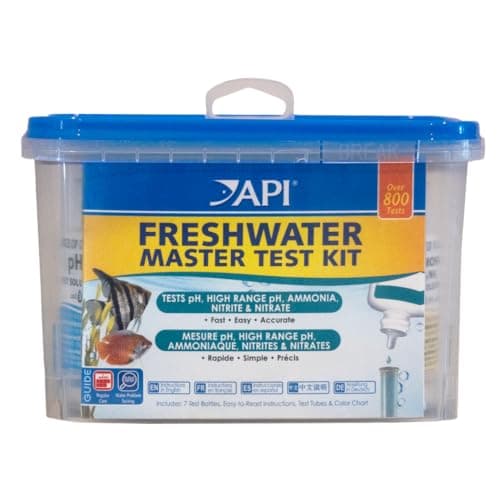 API Freshwater Master Test Kit The liquid kit that tests the four parameters a cycling tank lives and dies by, including the one most strips leave out. | The readings this page is about | $35.98 on Amazon #ad How we’re funded · price as of November 3, 2026 |
| 2 | 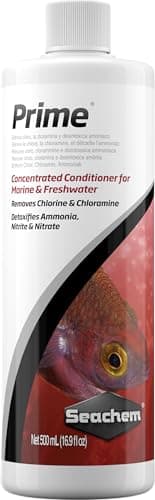 Seachem Prime A conditioner Seachem states detoxifies ammonia and nitrite — a stopgap between the reading and the water change, not a fix. | The bottle to reach for when ammonia or nitrite reads above zero | $16.62 on Amazon #ad How we’re funded · price as of November 3, 2026 |
| 3 | 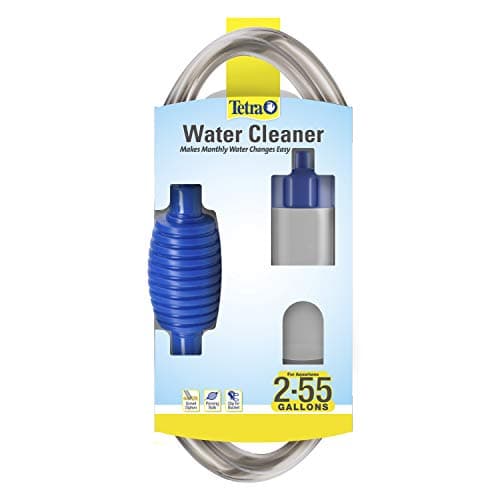 Tetra Water Cleaner Gravel Siphon A water change is the response to almost every result on this page, and the siphon is how you do it properly. | The thing you actually do about a bad reading | $10.29 on Amazon #ad How we’re funded · price as of November 3, 2026 |
| 4 | 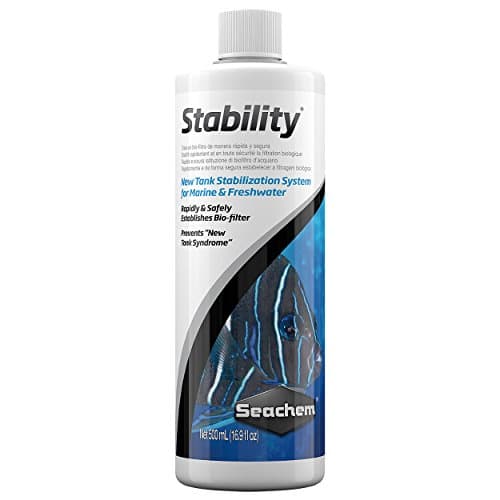 Seachem Stability Bottled nitrifying bacteria, which genuinely helps a stalled cycle and genuinely does not replace testing. | A stalled cycle, when the numbers have not moved in two weeks | |
| ! | 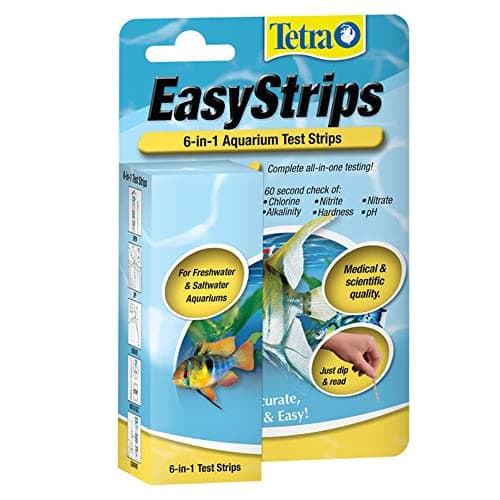 Tetra EasyStrips 6-in-1 Test Strips Six parameters, and the one that kills fish in a new tank is not among them. Skip this one — see why below | Not the kit for a cycling tank | $14.97 on Amazon #ad How we’re funded · price as of November 3, 2026 |
Rows link to the full write-up further down this page. Prices come from the live price layer only; where there is no live figure the button reads “Check price” rather than showing a remembered number.
What each result means, and what to do
| Parameter | What you want | What a high reading means | First action |
|---|---|---|---|
| Ammonia | 0 | The filter cannot keep up, or the tank is not cycled | Water change now, stop feeding, then dose a conditioner that detoxifies ammonia |
| Nitrite | 0 | The cycle is halfway: ammonia is being converted, nitrite is not yet | Water change, keep feeding light, and wait — this stage is the long one |
| Nitrate | Low and falling after each water change | Water changes are falling behind the bioload, or the tank is overstocked or overfed | Bigger or more frequent water changes; feed less; add plants |
| pH | Stable, whatever it is | A swing matters more than the value; a sudden change points at the tap, a new rock or a buffer product | Do not chase it with chemicals — identify what changed |
| High range pH | Used when normal-range pH reads at the top of its scale | The normal test has run out of range, not that the water is dangerous | Re-test with the high range reagent to get a real figure |
Targets reflect the standard for a stocked freshwater community tank. The actions assume a tank with fish in it; a fishless cycle deliberately runs ammonia high on purpose.
Ammonia above zero
This is the reading that matters most and the one strips usually omit. API states plainly that ammonia should be removed as soon as it is detected, that it damages gill membranes and harms respiration, and that even small amounts stress fish and suppress their immune systems. The EPA's aquatic life criteria add the part that makes it unpredictable: ammonia toxicity rises with pH and temperature, so the same reading is more dangerous in warm, alkaline water than in cool, acidic water.
What to do, in order: change 25 to 50% of the water with dechlorinated, temperature-matched water; stop feeding for a day or two; dose a conditioner that detoxifies ammonia; and test again the next day. If the tank is new, you are not dealing with an accident — you are dealing with new tank syndrome, and the full emergency routine is on how to lower ammonia fast.
Nitrite above zero
Nitrite appearing is progress — it means the first group of bacteria is working — and it is still toxic. The second group, which converts nitrite to nitrate, is slower to establish, so this stage lasts longer than people expect and is where most fishless cycles appear to stall.
Treat it like ammonia: water change, light feeding, patience. Do not add more fish and do not clean the filter while nitrite is present — you would be removing the bacteria you are waiting for.
Nitrate climbing
Nitrate is the end product, and in a cycled tank it only goes one way between water changes. A rising trend is not a crisis; it is a message that the water-change schedule is not keeping pace with what goes in.
The fix is upstream: a larger or more frequent water change, less food, fewer fish, or more plants, which consume nitrate directly — how to set up a low-tech planted tank covers that. Test the tap water too; some municipal supplies arrive with nitrate already in them, and if yours does, no water change will take the tank to zero.
pH, and the high range test
API describes pH as the measure of acidity, with 7.0 neutral, higher alkaline and lower acidic, and notes that different species suit different levels. The practical reading for a beginner is simpler: stability beats any particular number. Community fish sold in shops are kept in ordinary tap water and adapt to most of it; what they do not tolerate is a pH that moves.
The high range test exists because the standard pH reagent runs out of scale at the top. If the normal test reads at its maximum, re-run it with the high range reagent — that is not a sign of a problem, just a different ruler.
Resist pH-adjusting products. They move the number, the number drifts back, and the swing does more damage than the original reading. If pH changed suddenly, look for a cause: a new decoration, a buffer substrate, a change at the water utility, or a tank that has not had a water change in a long time.
Reading the set together: is the tank cycled?
One reading on its own says little. The pattern across all three nitrogen parameters is what tells you where the tank is.
| Ammonia | Nitrite | Nitrate | What it means |
|---|---|---|---|
| High | 0 | 0 | Cycle has not started. The first bacteria group has not established |
| Falling | High | 0 or trace | Halfway. The second group has not caught up — the longest stage |
| 0 | Falling | Rising | Nearly there. Keep testing daily |
| 0 | 0 | Present | Cycled. This is the pattern you are waiting for |
| 0 | 0 | 0 | Either a brand-new tank with nothing happening yet, or a testing error — check the nitrate shake |
The last row is worth knowing: zero across the board in a tank that has been running for weeks usually means the nitrate test was not shaken properly.
The finish line for a fishless cycle is specific: dose ammonia, wait 24 hours, and read 0 ammonia and 0 nitrite with nitrate present. Fishless cycle step by step runs that process; how long does it take to cycle a fish tank sets expectations for the timeline.
When the reading disagrees with the fish
Sometimes the numbers look fine and a fish is clearly unwell. Three things to check before assuming the kit is wrong.
- Reagent age. Bottles have a shelf life, and the nitrate reagents are the ones most often found expired in a drawer. An old bottle reads low.
- The sample. Take water from mid-tank, not from the surface and not from the filter outflow.
- Everything the kit does not measure. Temperature, oxygen, chlorine from an unconditioned top-up, and medication residue are all invisible to these four tests. Why do my fish keep dying works through the rest of the list.
And if the numbers look fine because you dosed a conditioner an hour ago, remember what that product does: Seachem states Prime detoxifies ammonia rather than removing it, so a liquid kit can still read it. A reading after dosing is not a clean reading.
Pick 1
API Freshwater Master Test Kit
The readings this page is about
The number
Tests pH, high range pH, ammonia, nitrite and nitrate. API states the kit lets you test pH as often as needed and that ammonia must be detected and removed before it damages gill membranes.
Everything below assumes a liquid reagent kit, because the ammonia test is the one that matters most while a tank is cycling and the common multi-parameter strips do not include it.
Liquid results are bands of color rather than digits, which is the thing this page exists to explain. A band is enough: you are looking for zero, not-zero, or climbing.
The honest costs. It is the most expensive way into testing, the reagents expire, and reading colors against a card is genuinely harder in artificial light. It is also the purchase this site would keep if it could keep only one.
| Tests | pH, High Range pH, Ammonia, Nitrite, Nitrate |
|---|---|
| Capacity | Over 800 tests per kit |
| Contents | 7 bottles of test solution, 1 color card, 4 glass tubes with caps, holding tub |
| Type | Liquid reagent |
| What it does not do | Does not test hardness, chlorine or alkalinity. It is slower than strips, the nitrate test needs vigorous shaking of the second bottle and a wait, and the color card is genuinely hard to read between adjacent shades. |
Specs from API Freshwater Master Test Kit, Amazon listing; API Freshwater Aquarium Master Test Kit, PetSmart listing. We have not used this unit.
#ad How we’re funded · price as of November 3, 2026
Pick 2
Seachem Prime
The bottle to reach for when ammonia or nitrite reads above zero
A positive ammonia or nitrite reading is a water-change problem first. This is what you dose afterwards, while the filter catches up, and what you use on the replacement water anyway.
Seachem's own claim is detoxification rather than removal: the ammonia is still in the tank and still shows on a test, which is exactly why a reading taken after dosing can confuse people.
The honest costs. It does not cycle a tank, it does not replace a water change, and it is not a reason to delay one. Whether it earns its premium over a basic dechlorinator is argued on our is-Prime-worth-it page.
| Dose | 1 capful (5 mL) for each 200 L (50 US gallons) of new water |
|---|---|
| Removes | Chlorine, chloramine |
| Detoxifies | Ammonia, nitrite and nitrate |
| Binding duration | Seachem states it binds those compounds for up to 48 hours |
| What it does not do | It does not remove ammonia. It binds it into a less toxic form for up to 48 hours, and your test kit will still read the ammonia as present. It is not a bacteria product and it will not cycle a tank. |
Specs from Seachem, Prime product page. We have not used this unit.
#ad How we’re funded · price as of November 3, 2026
Pick 3
Tetra Water Cleaner Gravel Siphon
The thing you actually do about a bad reading
Ammonia above zero, nitrite above zero, nitrate climbing: the first action in all three cases is the same, and it is mechanical rather than chemical.
Vacuuming the substrate as you siphon removes the waste that is producing the reading, rather than just diluting what it has already produced.
The honest costs. It is a chore, and on a small tank a siphon empties water faster than you expect — have the replacement water dechlorinated and temperature-matched before you start. The routine is on our water-change page, linked below.
| Type | Manual siphon into a bucket |
|---|---|
| Cost | The cheapest way to do a proper gravel-vac water change |
| What it does not do | You carry the water. On a 10 or 20 gallon tank that is fine. The moment the tank gets big, it is the reason people quietly stop doing water changes. |
The manufacturer does not publish a full spec sheet for this item, so nothing beyond the figures above is stated. We have not used this unit.
#ad How we’re funded · price as of November 3, 2026
Pick 4
Seachem Stability
A stalled cycle, when the numbers have not moved in two weeks
If ammonia has been sitting at the same reading for a fortnight with no nitrite appearing, the colony is not establishing. A live bacteria culture is a reasonable thing to add at that point.
What it cannot do is skip the process or substitute for the readings. You will still be testing daily to see whether it worked.
The honest costs. It is a live culture, so storage and age matter, and results vary for reasons you cannot see from the shelf. Our honest assessment of the whole category is on the bottled-bacteria roundup.
| Bacteria | A synergistic blend of aerobic, anaerobic and facultative bacteria |
|---|---|
| Day 1 dose | 1 capful (5 mL) for each 40 L (10 US gallons) |
| Days 2 to 7 | 1 capful for each 80 L (20 US gallons), daily, for 7 days |
| Manufacturer claim | Seachem states it establishes the biofilter and prevents new tank syndrome |
| What it does not do | It is not a water conditioner and it does not detoxify ammonia; that is Prime's job, and the two products are routinely confused. Seachem does not publish the bacterial species or strains. |
Specs from Seachem, Stability product page. We have not used this unit.
Skip this
Tetra EasyStrips 6-in-1 Test Strips
Not the kit for a cycling tank
The skip entry is here because it is the most-bought test product in the hobby and the most commonly misread. These strips test six parameters; ammonia is not one of them.
In a cycling tank that is the gap that matters. A strip can show acceptable nitrite, nitrate, pH, hardness and alkalinity while the ammonia that is actually burning your fish goes unmeasured.
They are genuinely useful later, for a quick weekly nitrate trend on an established tank, and they are far easier to read than a color card. As the only test in a new tank, they are the wrong tool.
The full comparison is on test strips versus liquid test kits.
| Tests | Nitrate, nitrite, water hardness, chlorine, alkalinity, pH |
|---|---|
| Does NOT test | Ammonia |
| Read time | 60 seconds after dipping |
| What it does not do | No ammonia test. Ammonia is the compound that kills fish in a new tank, so these strips cannot see the one thing a new fishkeeper buys them to see. Treat them as a fast check on a tank you already know is cycled. |
Specs from Tetra, EasyStrips 6-in-1 product page; Tetra EasyStrips 6-in-1, Chewy listing. We have not used this unit.
Questions people actually ask
Frequently asked questions
+ How do I read the API master test kit color chart?
+ Why does my nitrate test always read zero?
+ How long do I wait before reading an aquarium test?
+ What should my ammonia and nitrite readings be?
+ What nitrate level is too high?
+ Should I adjust my pH?
Where the numbers came from
Sources
- API, Freshwater Master Test Kit product page and FAQ (parameters tested; why ammonia must be removed as soon as it is detected; pH scale explanation)
- API Freshwater Master Test Kit — Amazon listing (parameters tested, test count, contents)
- API Freshwater Aquarium Master Test Kit — PetSmart listing
- US EPA, Aquatic Life Criteria for Ammonia — toxicity, and its dependence on pH and temperature
- Seachem Prime — product page (ammonia detoxification claim and dose)
- Seachem Stability — product page (dosing schedule and manufacturer claim)
- Tetra EasyStrips 6-in-1 — product page (the six parameters, ammonia absent)
Read next
Related on Fin & Filter
API Freshwater Master Test Kit review
What is in the box, what 800 tests really means, and the three ways beginners get a wrong reading from it.
The best aquarium test kits
The kit that reads ammonia, the strips that quietly do not, and why that distinction decides everything.

How to cycle a fish tank
What cycling actually is, the fishless method start to finish, and the exact test result that means it is done.