Head to head
Test strips vs liquid test kits
The usual verdict is that strips are less accurate. The real problem is more specific: they fail precisely at the reading a new tank depends on, and some do not take that reading at all.
Fin & Filter earns a commission when you buy through the links on this page. It costs you nothing and it does not decide what we rank. How we’re funded.
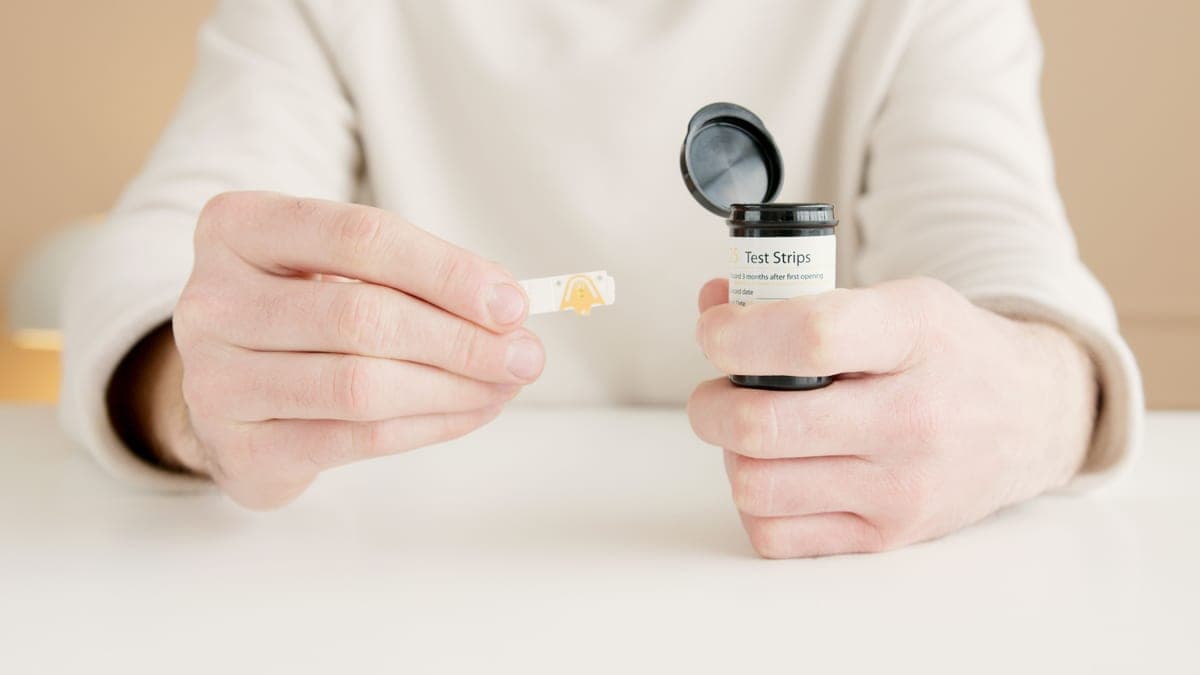
We have not used any of this gear. Every pick below is chosen from published manufacturer specifications and the arithmetic on how we pick, which you can re-run yourself.
Use a liquid kit for cycling and any situation where the number matters. Strips are fine as a fast confirmation on an established tank. But the decisive point is not accuracy at all: the common six-in-one strips do not test ammonia, so they cannot see the compound that kills fish in new tanks.
This comparison is usually settled with "strips are inaccurate", which is unfair and, more importantly, not the reason a beginner should avoid them.
Quick picks
Test strips vs liquid test kits
| # | Product | Best for | Price |
|---|---|---|---|
| 1 | No image API Freshwater Master Test Kit Fine-increment readings on the three parameters that decide whether fish live. | Cycling a tank, and any situation where the number matters | |
| ! | No image Tetra EasyStrips 6-in-1 Test Strips Fast and genuinely useful for hardness, chlorine and alkalinity. Does not test ammonia. Skip this one — see why below | A settled tank, alongside an ammonia test — never instead of one | |
| 3 | No image Various Ammonia test strips Covers the gap the 6-in-1 leaves, in bands rather than increments. | A 15-second confirmation on a tank you already understand |
Rows link to the full write-up further down this page. Prices come from the live price layer only; where there is no live figure the button reads “Check price” rather than showing a remembered number.
The parameter problem
Start with what each format measures, because on the deciding parameter this is not a matter of degree.
| Parameter | API Master Kit | Tetra EasyStrips 6-in-1 | Matters when |
|---|---|---|---|
| Ammonia | Yes | No | Always. This is the one that kills. |
| Nitrite | Yes | Yes | During and just after cycling |
| Nitrate | Yes | Yes | Weekly, to check the water change schedule |
| pH | Yes | Yes | Ammonia toxicity rises with pH |
| High-range pH | Yes | No | Hard or alkaline tap water |
| Hardness | No | Yes | Species with specific requirements |
| Chlorine | No | Yes | Troubleshooting a water supply |
| Alkalinity | No | Yes | Diagnosing an unstable pH |
Parameters as published by API and Tetra, linked at the foot of this page. Neither product is hiding anything — the gap is in what people buy them for.
That table also shows why this is not simply liquid-beats-strips. The strips test three things the liquid kit does not. They are complementary products that happen to overlap, and only one of them covers the beginner's critical parameter.
The resolution problem
Set the missing parameter aside and suppose you buy ammonia-specific strips. There is still a reason they are the wrong tool for a cycling tank, and it is worth being precise about because it is not a general accuracy complaint.
Strips report bands. A typical ammonia strip distinguishes something like 0, 0.5, 1, 3 and 6 ppm. On an established tank that is plenty — you are confirming a zero.
During cycling, the entire question is whether ammonia has reached zero within 24 hours of a dose. A tank reading a genuine 0.25 ppm is close but not finished; adding fish to it exposes them to measurable ammonia. On a banded strip, 0.25 ppm and 0 ppm look the same. The test cannot answer the question you are asking it.
Where strips genuinely win
- Speed. 60 seconds versus several minutes. On a weekly check that difference is the difference between doing it and not.
- Simplicity. Dip, wait, compare. No drop-counting, no vigorous shaking, no reagent technique to get wrong.
- Parameters the liquid kit lacks — hardness, chlorine and alkalinity are real measurements with real uses.
- Portability. A tube of strips travels; seven glass reagent bottles do not.
- No wasted reagent. A strip is one test. A liquid test uses reagent whether or not you needed the precision.

What to own
- A liquid master kit, first. It covers ammonia, nitrite and nitrate, which is the cycling set, and over 800 tests means the per-test cost is negligible. See best aquarium test kits.
- Strips later, optionally, once the tank is settled and you want a 60-second weekly check — or if you specifically need hardness, chlorine or alkalinity.
- Never strips only, on a new tank. If the six-in-one is all you have, you are flying blind on ammonia.
Then use the thing: how to cycle a fish tank is what the readings are for, and new tank syndrome is what they let you avoid.
Questions people actually ask
Frequently asked questions
+ Are aquarium test strips accurate enough?
+ Which test strips test ammonia?
+ Can I use test strips to cycle my tank?
+ Do test strips expire?
+ Should I own both?
Where the numbers came from
Sources
Read next
Related on Fin & Filter
The best aquarium test kits
The kit that reads ammonia, the strips that quietly do not, and why that distinction decides everything.

How to cycle a fish tank
What cycling actually is, the fishless method start to finish, and the exact test result that means it is done.
How to lower ammonia in a fish tank fast
The emergency protocol in order: water change first, conditioner second, stop feeding, and what not to do.