Buying guide
The best aquarium filter media
Most filters ship with a cartridge that combines three jobs into one disposable unit, and then ask you to throw it away monthly. Separating those jobs is cheaper, and it stops you discarding your cycle.
Fin & Filter earns a commission when you buy through the links on this page. It costs you nothing and it does not decide what we rank. How we’re funded.
We have not used any of this gear. Every pick below is chosen from published manufacturer specifications and the arithmetic on how we pick, which you can re-run yourself.
Stack media in flow order: coarse foam first for mechanical capture and the bulk of your bacteria, fine floss second to polish, porous biological media third, and a chemical stage last if you want one at all. Rinse foam and biological media in old tank water and reuse them — replace only the fine floss and, occasionally, the chemical media. The one habit to break is replacing a whole cartridge on a schedule, which throws away the colony your tank depends on.
Filter media is where the most expensive long-term mistake in fishkeeping hides, and it is disguised as routine maintenance. A cartridge filter combines mechanical, chemical and biological media into one disposable unit and prints a replacement schedule on the box. Follow that schedule and you are throwing away live filtration every month, then buying it back.
Quick picks
The best aquarium filter media
| # | Product | Best for | Price |
|---|---|---|---|
| 1 | 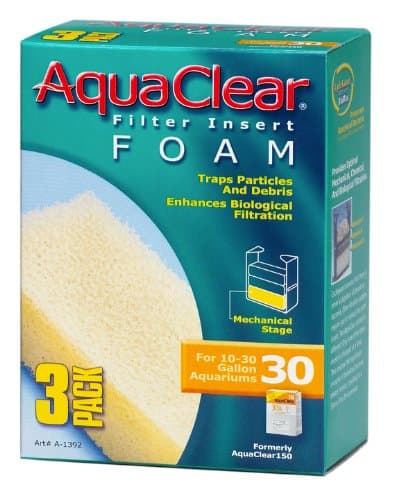 Fluval AquaClear 30 Foam Inserts, 3-Pack Coarse foam is the first thing water should hit and the single most important piece of media in the filter. | The mechanical stage, and most of your bacteria | $4.99 on Amazon #ad How we’re funded · price as of September 14, 2026 |
| 2 | 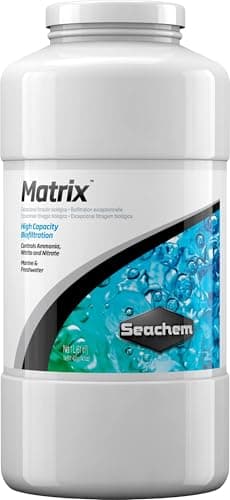 Seachem Matrix Biological Media, 1 L Seachem states over 700 m2 of surface per liter, and that it need never be replaced. | The biological stage, once the foam is doing its job | $18.74 on Amazon #ad How we’re funded · price as of September 14, 2026 |
| 3 | 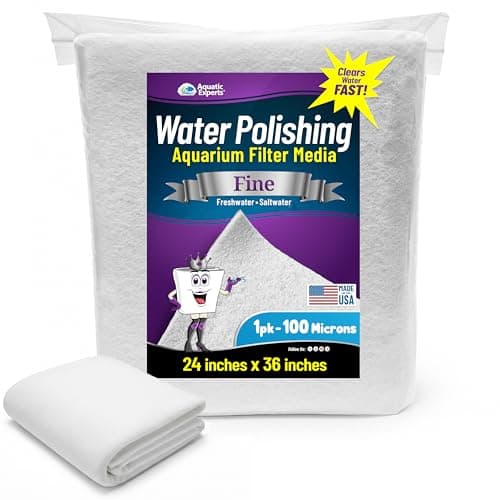 Aquatic Experts Aquarium Polishing Filter Pad Fine floss catches the haze a coarse sponge passes, and it is the one media here that is genuinely disposable. | The polish that makes water look genuinely clear | |
| 4 | 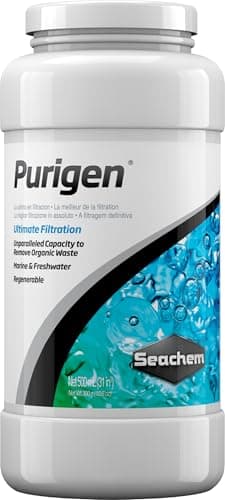 Seachem Purigen Organic Filtration Resin, 500 mL Removes dissolved organics before they become ammonia, is regenerable with bleach, and is entirely optional. | An optional chemical stage on a tank that already works | $29.01 on Amazon #ad How we’re funded · price as of September 14, 2026 |
| ! | 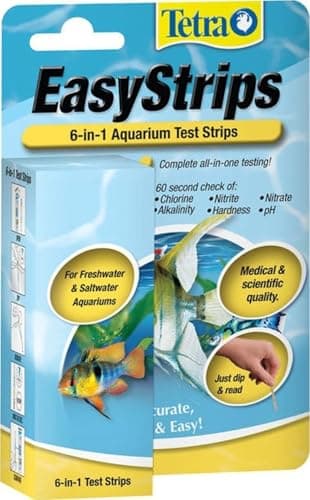 Tetra EasyStrips 6-in-1 Test Strips Six parameters, and the one that would tell you the biological media is failing is not among them. Skip this one — see why below | Nothing that tells you whether your media is working | $14.97 on Amazon #ad How we’re funded · price as of September 14, 2026 |
Rows link to the full write-up further down this page. Prices come from the live price layer only; where there is no live figure the button reads “Check price” rather than showing a remembered number.
The three stages, and what each is actually for
| Stage | What it does | Examples | Replace it? |
|---|---|---|---|
| Mechanical | Traps visible debris. Also, in practice, carries the largest share of the bacteria colony in a typical filter. | Coarse foam, sponge, filter floss | Rarely. Rinse in old tank water and reuse until it disintegrates |
| Biological | Provides high-surface-area habitat for the nitrifying bacteria that convert ammonia to nitrite to nitrate. | Porous ceramic, sintered glass, Matrix, BioMax | Essentially never. Rinse gently when dirty |
| Chemical | Adsorbs or removes dissolved compounds — odors, tannins, organics, medications. | Activated carbon, Purigen | Yes, periodically — or regenerate it. Optional stage |
| A combined cartridge | All three at once, in a disposable frame. | Most kit filters | This is the problem. Replacing it discards live filtration |
Water should meet these in the order listed. Anything fine placed before something coarse clogs immediately.
That last row is the one that matters most for a beginner. A cartridge is a convenience product and its convenience is real, but the schedule printed on the box is written for the manufacturer's revenue rather than your cycle. The fix is not to buy a different cartridge — it is to stop treating replacement as routine.
How we judged these
- Does it do one job well, rather than three jobs disposably? Separated stages can be serviced independently, which is the entire argument against cartridges.
- Is the specification published? Surface area for biological media, micron rating or density for mechanical, capacity for chemical. Seachem publishes figures for Matrix and Purigen; most of this category publishes nothing, and where that is true we say so.
- What does servicing it cost your cycle? Media you rinse and reuse costs nothing. Media you replace wholesale costs you bacteria, and on a small tank that is the difference between a stable tank and an ammonia reading.
What we did not judge on: bacterial colony counts or comparative nitrification rates. Those require controlled testing we have not done and nobody has published in a citable form. We have not used these media and do not claim to have; the specifications quoted are the manufacturers' own. The method is on how we pick.
Pick 1
Fluval AquaClear 30 Foam Inserts, 3-Pack
The mechanical stage, and most of your bacteria
The number
Sold as a replacement insert for the AquaClear 30. It is the stage that both traps debris and carries the largest share of the colony in that filter.
If you buy one thing from this page, buy foam. It does two jobs at once and beginners usually only know about the first.
The obvious job is mechanical: coarse foam catches visible debris before it reaches anything finer, which keeps the rest of the filter from clogging. The job that keeps fish alive is biological — that same foam, once colonized, carries the largest share of the nitrifying bacteria in a typical hang-on-back. The brown gunk in it is not dirt to be scrubbed away, it is the filter working.
That is why foam belongs first in the flow path and why it should almost never be replaced. Rinse it in a bucket of old tank water when flow drops, squeeze it a few times, and put it back. Replace it only when the material is physically falling apart, which takes years.
The honest costs. It is sized to one filter family, so check your model before ordering — an AquaClear 30 insert does not fit an AquaClear 50. And the real warning is behavioral rather than technical: if you are replacing foam monthly because a schedule told you to, you are discarding the colony rather than maintaining it.
| Stage | Mechanical, and the main bacterial surface in an AquaClear basket |
|---|---|
| Fits | AquaClear 30 (sold as the 30-gallon insert) |
| Service | Rinsed in old tank water and reused; replaced only when it falls apart |
| What it does not do | This is a consumable you should be buying far less often than a cartridge. If you are replacing foam monthly you are throwing away the colony rather than maintaining it. Sized to one filter family, so check your model before ordering. |
Specs from AquaClear A1392 30-Gallon Foam Inserts 3-Pack, Amazon listing. We have not used this unit.
#ad How we’re funded · price as of September 14, 2026
Pick 2
Seachem Matrix Biological Media, 1 L
The biological stage, once the foam is doing its job
The number
Seachem publishes greater than approximately 700 m2 per liter of surface area, and directs 250 mL of Matrix for each 200 L (50 US gallons) of aquarium water.
Biological media is the stage people buy first and should buy second, because without foam in front of it, it clogs with debris and stops working.
What you are paying for is surface area. Nitrifying bacteria live on surfaces, so a highly porous ceramic or sintered glass gives a colony far more room per liter of filter space than an equivalent volume of foam. Seachem publishes greater than roughly 700 square meters per liter for Matrix, and directs 250 mL for each 50 US gallons of water.
It is also, by Seachem's own statement, completely inert and never in need of replacement — you rinse it when it gets dirty and it lasts the life of the filter. Compared with a cartridge you buy every month, the running cost over a few years is not close.
The honest costs. Seachem also claims Matrix supports anaerobic bacteria and can therefore remove nitrate as well as ammonia and nitrite. That depends on oxygen-poor zones developing deep inside the pores, which takes time and is not something you can verify at home — treat it as a possible bonus rather than a reason to skip water changes. And it is not a mechanical stage: run it without foam upstream and it will clog.
| Surface area | Seachem states greater than approximately 700 m2 per liter |
|---|---|
| Bacteria supported | Seachem states it supports aerobic and anaerobic species, so it can remove nitrate alongside ammonia and nitrite |
| Dose | Seachem states 250 mL of Matrix for each 200 L (50 US gallons) |
| Service life | Seachem states it is completely inert, will not break down, and need not be replaced |
| What it does not do | The nitrate claim depends on anaerobic zones developing deep inside the pores, which takes time and is not something you can verify at home, so treat it as a bonus rather than a reason to skip water changes. It is not a mechanical stage: without foam in front of it, it clogs with debris and stops doing its job. |
Specs from Seachem, Matrix product page (surface area, bacteria supported, dose, service life); Seachem Matrix Bio Media 1 Liter, Amazon listing. We have not used this unit.
#ad How we’re funded · price as of September 14, 2026
Pick 3
Aquatic Experts Aquarium Polishing Filter Pad
The polish that makes water look genuinely clear
The number
A cut-to-fit fine mechanical pad, fitted after the coarse foam and before the biological media.
This is the cheap upgrade that produces the most visible result, and it is the reason some tanks look crisp and others look faintly milky despite both being healthy.
Coarse foam catches debris but passes fine particles. A dense floss pad fitted after it catches those, and the difference in clarity over a few days is obvious. It is also the easiest media to add to any filter, because it is sold as a sheet you cut to fit rather than a shaped part for one model.
Order matters: coarse foam first, fine floss second. Reverse them and the floss clogs almost immediately with debris that the foam should have caught.
The honest costs. Unlike everything else on this page, this genuinely is disposable — fine floss packs with fine particles quickly and is not worth rinsing and reusing many times, so it is a small recurring cost. And it is a polish, not capacity: it will not fix a tank that is under-filtered or overstocked, it will just make the water look better while the underlying problem continues.
| Stage | Fine mechanical polishing, fitted after the coarse foam |
|---|---|
| Form | Cut-to-fit pad, so it suits any filter |
| Job | Catches the fine particles a coarse sponge passes, which is what makes water look hazy |
| What it does not do | Genuinely disposable, unlike the rest of this page — fine floss clogs quickly and is not worth rinsing and reusing many times. It is a polish, not filtration capacity: it will not fix a tank that is under-filtered or overstocked. |
Specs from Aquatic Experts Aquarium Polishing Filter Pad, Amazon listing. We have not used this unit.
Pick 4
Seachem Purigen Organic Filtration Resin, 500 mL
An optional chemical stage on a tank that already works
The number
Seachem states each 250 mL treats up to 1,000 L (250 US gallons) for up to six months, and that it is renewed by soaking in a 1:1 bleach solution then dechlorinator.
Chemical filtration is the third stage and the one nobody actually needs. That is worth saying up front, because it is the stage most heavily marketed.
Purigen is the most interesting option in it. Rather than adsorbing broadly like carbon, Seachem states it targets nitrogenous organic waste, removing it before bacteria can break it down into ammonia — upstream of the nitrogen cycle rather than downstream. Seachem states each 250 mL treats up to 1,000 L for up to six months, and that it polishes water and raises redox.
The regeneration is genuinely unusual: it darkens as it exhausts and is renewed by soaking in a 1:1 bleach solution for 24 hours, then in a dechlorinator solution. Done properly that makes it reusable rather than consumable.
The honest costs, and they are real. That bleach procedure has an obvious failure mode — resin that is not thoroughly dechlorinated afterwards carries bleach into your tank, which is a fish-killing mistake rather than an inconvenience. If that sounds like a step you would rush, buy fresh resin. It is also the most expensive item here and the least necessary: it is a polish on a working tank, not a fix for a struggling one. And like carbon, it should be removed while medicating a tank, because it will strip the medication.
| What it does | Seachem states it removes soluble and insoluble impurities and controls ammonia, nitrite and nitrate by removing nitrogenous organic waste before it breaks down |
|---|---|
| Capacity | Seachem states each 250 mL treats up to 1,000 L (250 US gallons) for up to six months |
| Regeneration | Seachem states it darkens as it exhausts and is renewed by soaking in a 1:1 bleach solution for 24 hours, then in dechlorinator |
| Clarity | Seachem states it polishes water and raises redox |
| What it does not do | The bleach regeneration is a real procedure with a real failure mode: resin that is not thoroughly dechlorinated afterwards will carry bleach into your tank. If that sounds like a step you would rush, buy fresh resin instead. It is also the most expensive item on this page and the least necessary — it is a polish on a tank that is already working, not a fix for one that is not. |
Specs from Seachem, Purigen product page (what it removes, capacity, regeneration, redox and clarity); Seachem Purigen 500 mL, Amazon listing. We have not used this unit.
#ad How we’re funded · price as of September 14, 2026
Skip this
Tetra EasyStrips 6-in-1 Test Strips
Nothing that tells you whether your media is working
The skip entry, and it is here because media choices are invisible without testing, and the wrong test makes them look fine.
Every claim on this page — that foam carries the colony, that biological media adds capacity, that replacing a cartridge sets the cycle back — resolves to one measurable outcome: ammonia stays at zero. That is the number that tells you your filter media is doing its job.
Tetra's EasyStrips 6-in-1 tests nitrate, nitrite, water hardness, chlorine, alkalinity and pH. Ammonia is not among them; that is Tetra's own parameter list rather than our inference. So the specific failure this page warns about — replacing the wrong media and crashing the colony — is the one these strips cannot show you.
There is a version of this purchase that is fine: strips as a fast weekly recheck on an established tank, bought alongside a liquid ammonia test. Bought instead of one, while you are changing filter media, they produce confidence without information.
| Tests | Nitrate, nitrite, water hardness, chlorine, alkalinity, pH |
|---|---|
| Does NOT test | Ammonia |
| Read time | 60 seconds after dipping |
| What it does not do | No ammonia test. Ammonia is the compound that kills fish in a new tank, so these strips cannot see the one thing a new fishkeeper buys them to see. Treat them as a fast check on a tank you already know is cycled. |
Specs from Tetra, EasyStrips 6-in-1 product page; Tetra EasyStrips 6-in-1, Chewy listing. We have not used this unit.
If your filter takes cartridges
Most kit filters do, and you are not obliged to keep buying them. Three options, in increasing order of effort:
- Rinse the cartridge instead of replacing it. In old tank water, until flow recovers. Replace only when the mesh is coming apart. This alone removes most of the cost and all of the cycle risk.
- Run the old and new together for a few weeks when you do replace one, so the colony transfers before the old one leaves. Fiddly, effective, and not what the box says.
- Cut the cartridge open, keep the floss, and refill the housing with your own foam and ceramic. This converts a cartridge filter into a media-basket filter for the price of the media, and it is what a lot of experienced keepers quietly do.
Which filter the media goes into is a separate decision, covered by size on best filter for a 10 gallon tank, 20 gallon and 30 gallon. The media-policy argument between the two most common hang-on-backs is on AquaClear vs Penguin Bio-Wheel, and Fluval's own CycleGuard guidance is covered on the AquaClear Power Filter review.
Questions people actually ask
Frequently asked questions
+ What order should aquarium filter media go in?
+ How often should I replace filter media?
+ Do I need carbon in my aquarium filter?
+ Can I stop buying filter cartridges?
+ Which filter media holds the most beneficial bacteria?
+ Is Purigen worth it?
Where the numbers came from
Sources
- Seachem, Matrix product page (surface area, bacteria supported, dose, service life)
- Seachem, Purigen product page (what it removes, capacity, regeneration procedure)
- AquaClear A1392 30-Gallon Foam Inserts 3-Pack, Amazon listing
- Aquatic Experts Aquarium Polishing Filter Pad, Amazon listing
- Tetra, EasyStrips 6-in-1 product page (parameters tested)
Read next
Related on Fin & Filter
AquaClear vs Penguin Bio-Wheel
Rinse-and-reuse media versus a replaceable cartridge with a Bio-Wheel. The deciding criterion, and the running cost.

The best filter for a 30 gallon tank
The 257 GPH figure a stocked 30 gallon needs, which filters clear it, and the tank-size label that misleads worst.

New tank syndrome: what it is and how to fix it
The symptoms, the test results that confirm it, and the emergency protocol for a tank with fish already in it.