Buyer's guide
The best filter for a planted tank
Flow is not the only number that matters once there are plants in the tank. Surface churn, media volume and a safe intake are the three criteria the size pages do not cover.
Fin & Filter earns a commission when you buy through the links on this page. It costs you nothing and it does not decide what we rank. How we’re funded.
We have not used any of this gear. Every pick below is chosen from published manufacturer specifications and the arithmetic on how we pick, which you can re-run yourself.
For a planted tank of 10 to 20 gallons, the Fluval C2 is the filter to buy — it publishes a 62 GPH minimum flow, which almost nothing else in its class does, and Fluval states its refiltration system deliberately slows the return rather than churning the surface. For a planted 20 to 30 gallon tank where flow has to cover the volume too, the AquaClear 30 gives you 150 GPH, a refillable basket and a pre-filter sponge in the box. For a planted nano or a shrimp tank, a sponge filter is the right answer because it has no intake that can hurt anything. And whatever filter you already own, the cheapest planted-tank upgrade is swapping the carbon in it for biological media.
Our size pages rank filters on one number: rated flow against tank volume. That is the right criterion for a fish-only community tank. A planted tank changes the question, because two of the things a filter does to water are things a planted tank would rather it did less of.
How we judged these, before any ranking
Four criteria, and only the first is shared with our size pages.
- Can you turn it down? Flow still has to clear the tank, but a planted tank is a low-current environment and most plants sold to beginners come from slow water. A filter with a published flow range beats a filter with a bigger top number.
- How much does it churn the surface? Gas exchange works in both directions at the surface. That is how oxygen gets in — the USGS puts it plainly for natural water: oxygen enters mainly from the atmosphere, and moving water holds more of it than stagnant water. The same mechanism also drives dissolved gases out toward equilibrium with the air, which is why heavily planted tanks are usually run with the surface moving gently rather than thrashing.
- How much biological volume does it hold? In a planted tank the plants compete with the filter for ammonia and nitrate, and the two of them together are what keeps the water stable. Media volume you can fill as you choose beats a sealed cartridge.
- Is the intake safe? Trimmings, loose leaves, snails and shrimp all end up near the intake in a planted tank. A pre-filter sponge, or no impeller at all, is the difference between a nuisance and a dead shrimp.
Quick picks
The best filter for a planted tank
| # | Product | Best for | Price |
|---|---|---|---|
| 1 | 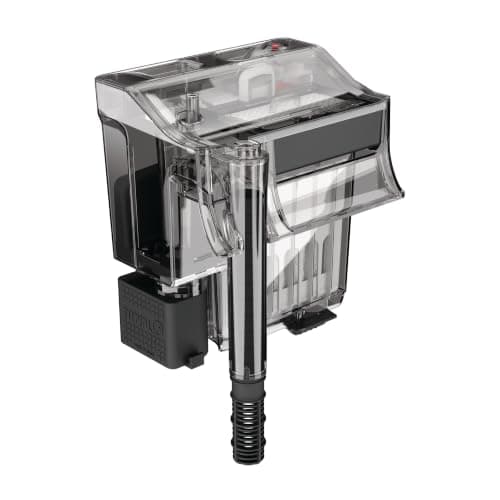 Fluval C2 Power Filter The only filter in its class that publishes a minimum flow figure, with a trickle chamber and a return Fluval states is deliberately slowed. | A planted 10 to 20 gallon tank — the default answer for most readers | $57.59 on Amazon #ad How we’re funded · price as of November 3, 2026 |
| 2 | 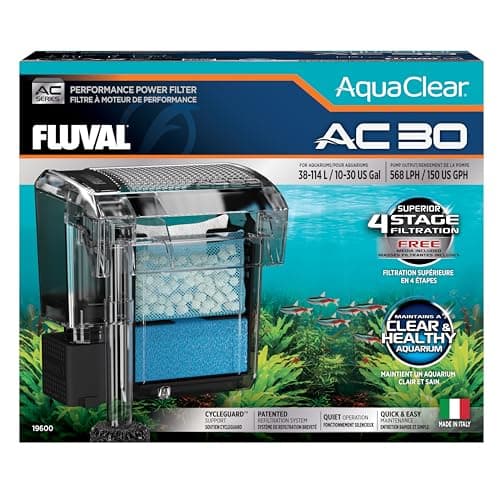 Fluval AquaClear 30 Power Filter More flow than the C2, adjustable, with a refillable basket and a pre-filter sponge in the box. | A planted 20 to 30 gallon tank where flow has to cover the volume as well | $49.99 on Amazon #ad How we’re funded · price as of November 3, 2026 |
| 3 | 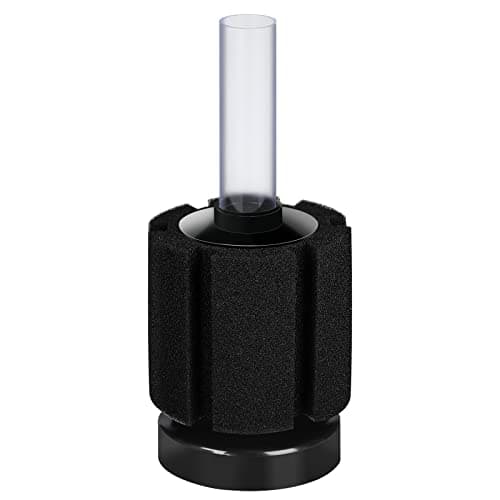 AQUANEAT Bio Sponge Filter (nano, up to 10 gallons) Air-driven, no impeller, no intake that can hurt anything. The gentlest filtration a planted tank can have. | A planted nano or a shrimp tank, where any powered intake is the problem | $5.98 on Amazon #ad How we’re funded · price as of November 3, 2026 |
| 4 | 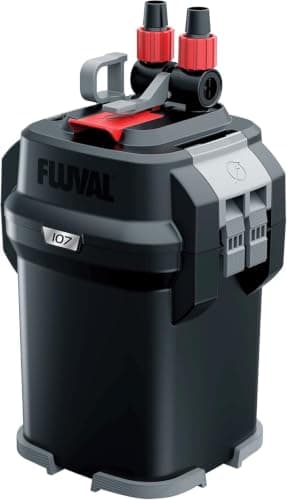 Fluval 107 Performance Canister Filter A canister: large media baskets, nothing visible in the tank, and a return you can aim away from the surface. | A planted 20 to 40 gallon tank where you want the hardware out of sight | $146.12 on Amazon #ad How we’re funded · price as of November 3, 2026 |
| 5 | 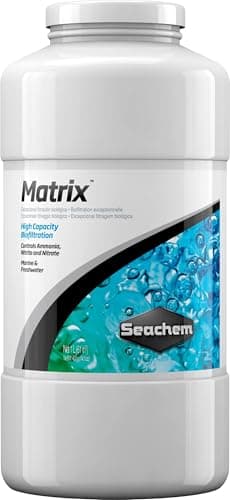 Seachem Matrix Biological Media, 1 L Fill the chemical slot with biological media instead of carbon. The cheapest upgrade on this page. | The media swap that turns any basket filter into a planted-tank filter | $18.72 on Amazon #ad How we’re funded · price as of November 3, 2026 |
| ! | 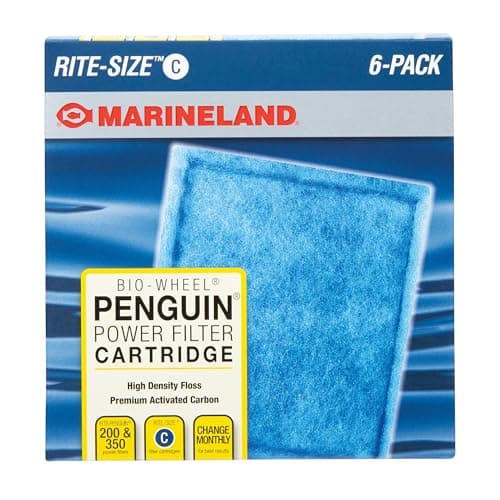 Marineland Penguin Rite-Size C Filter Cartridge, 6 Count Cartridges throw away your bacteria colony on a schedule. In a planted tank that is the opposite of what you want. Skip this one — see why below | Not a planted tank | $19.97 on Amazon #ad How we’re funded · price as of November 3, 2026 |
Rows link to the full write-up further down this page. Prices come from the live price layer only; where there is no live figure the button reads “Check price” rather than showing a remembered number.
Side by side on the criteria that changed
| Fluval C2 | AquaClear 30 | Sponge filter | Fluval 107 | |
|---|---|---|---|---|
| Rated flow | 119 max / 62 min GPH | 150 US GPH | Not published | Not published as GPH |
| Flow adjustable | Yes, with a published minimum | Yes | Via the air pump | Yes, at the valves |
| Surface churn | Low — Fluval states a refiltration system slows the output | Cascade return — moderate to high | Lowest of these | You choose — aim the return |
| Media you control | Five stages, refillable | Refillable basket | Sponge only | Stacked baskets, largest volume |
| Pre-filter sponge included | No | Yes | Not needed — no impeller | Vertical pre-filter |
| Visible in the tank | Intake tube | Intake tube | The whole unit | Two pipes only |
| Stated tank range | Up to 30 US gal | 10-30 US gal | Up to 10 US gal | Up to 30 US gal |
| Price bracket | Mid | Mid | Lowest | Highest |
Flow figures are each maker's own published specification, cited at the foot of this page. Stated tank ranges are light-stocking ceilings in every case, not working figures; our turnover method is on the how we pick page.
Why the surface question matters more than the flow question
A planted tank is a gas-exchange balance. Oxygen enters at the surface, and the same open boundary lets dissolved gases leave. The more violently you agitate that boundary, the faster everything in the water moves toward equilibrium with the room's air.
For a fish-only tank that is unambiguously good: you want oxygen in and you have no reason to keep anything dissolved. In a planted tank the trade is real, which is why planted keepers talk about surface movement in terms of "gentle ripple" rather than "more is better". The honest beginner version of this is simple — keep the surface moving, do not make it thrash — and a filter with a flow control is how you get to choose.
What a planted tank changes about filtration generally
- Plants are part of the filtration. They take up ammonia and nitrate directly, which is why a heavily planted tank is more forgiving than a bare one at the same stocking level. It is not a license to under-filter — plants do nothing on the day a filter fails.
- You will be trimming. Every trim releases fragments, and those fragments go to the intake. A pre-filter sponge is a planted-tank consumable rather than an accessory.
- Carbon is situational, not permanent. It is the right call after medicating or to clear tannins from new driftwood, and the wrong occupant of a media slot the rest of the time. The full media argument is on the best aquarium filter media.
- Substrate does some of the work. A planted tank's nutrients live in the substrate as much as in the water, which is why a low-tech planted tank is mostly a substrate and lighting decision rather than a filtration one.
- Flow still has to reach everywhere. Gentle is not the same as dead. A tank with a still corner grows the algae that likes still corners, and how to get rid of algae in a fish tank covers which kind means what.
Sizing, since it still applies
Nothing on this page replaces the arithmetic. A planted 20 gallon community tank still wants a filter whose rated flow covers it, and our method is to take six turnovers an hour and divide by 0.7 because rated flow is measured with clean media and no head height. That puts a stocked 20 gallon tank at 170 rated GPH and a stocked 30 at 257.
Read those as floors you then turn down, not as targets to overshoot. If you want the full working, it is on how to size an aquarium filter, and the per-size shortlists are on the best filter for a 20 gallon tank and the best filter for a 30 gallon tank. If the planted tank in question is a nano, the best filter for a 5 gallon tank is the better starting point.
Pick 1
Fluval C2 Power Filter
A planted 10 to 20 gallon tank — the default answer for most readers
The number
Rated 119 US GPH maximum and 62 GPH minimum, stated for aquariums up to 30 US gallons. The published minimum is what makes it a planted-tank pick rather than a size pick.
The specification that wins this a planted-tank page is the published minimum: 62 GPH against a 119 GPH maximum. Almost no maker in this class tells you where the bottom of the flow range lands, and in a planted tank the bottom of the range is where you will be running.
The five stages are a genuine difference rather than marketing. Two mechanical, one chemical and two biological, the last of which is a trickle chamber where water passes over media in air rather than submerged — the oxygen-rich environment nitrifying bacteria actually want. Fluval also describes a refiltration system that slows the output and gives a gentle flow, which is the opposite of what most hang-on-back filters do to a water surface.
In practice that combination gives you a filter that polishes the water, holds real biological volume, and returns it without a waterfall. In a planted tank that last point is the one that matters.
The honest costs. The stated 30 gallon range is optimistic: 119 rated GPH is well under the 257 our method asks for on a fully stocked 30, and under the 170 a stocked 20 gallon community tank wants, so read that figure as light stocking. The poly/foam pad is a consumable rather than a rinse-and-reuse foam. No pre-filter sponge is included, which a shrimp tank wants. It is physically taller than a basic hang-on-back and harder to hide behind a background. And five stages means five things to understand before your first maintenance.
| Rated output | 119 US GPH maximum, 62 GPH minimum |
|---|---|
| Stated tank range | Up to 30 US gallons |
| Filtration | Five stages: two mechanical, one chemical and two biological, including a trickle chamber |
| Maintenance | Cleaning indicator that rises when the poly/foam pad needs rinsing |
| What it does not do | The stated 30 gallon range is optimistic: 119 rated GPH is well under the 257 our method asks for on a fully stocked 30 gallon tank, and under the 170 a 20 gallon community tank wants. No heater, no test kit, no substrate. |
Specs from Fluval C2 Power Filter, AquaCave listing reproducing Fluval's C-series specification table (119 max / 62 min GPH, up to 30 gal, five stages); Fluval C2 Power Filter, Amazon listing. We have not used this unit.
#ad How we’re funded · price as of November 3, 2026
Pick 2
Fluval AquaClear 30 Power Filter
A planted 20 to 30 gallon tank where flow has to cover the volume as well
The number
Rated 568 L/h (150 US GPH) for 38 to 114 L (10 to 30 US gallons), 7 W, with adjustable flow. On a planted 20 gallon tank the adjustability matters more than the rating.
The argument for this over the C2 is capacity. A planted tank still has to turn its water over, and on a 20 to 30 gallon tank 150 GPH does that where 119 is stretching.
The basket is the second argument. A cartridge filter decides your media for you — mechanical and carbon, replaced on a schedule. A basket lets you decide, and in a planted tank what you want in that slot is biological volume, not carbon.
Third, the pre-filter sponge on the intake is included rather than sold as an accessory. That is the part that stops a trimmed leaf, a snail or a shrimp disappearing into the impeller, and it is the one thing the C2 does not supply.
The honest costs. The cascade return is a surface-churner by design, and quieting it means either turning the flow down or keeping the water level high so the return does not fall through air — more fiddling than the C2 asks for. At full output on a 10 gallon tank it is more current than a planted nano wants, so the knob is not optional there. No published minimum flow figure, so you cannot check where the knob lands. The rated figure is measured with clean media and no head height, so the real-world number is lower; our method divides by 0.7 to allow for it. And it is a box hanging on the back of a tank you have presumably spent some effort making look good.
| Rated output | 568 L/h (150 US gal./h) |
|---|---|
| Stated tank range | 38-114 L (10-30 US gallons) |
| Power draw | 7W at 120 V / 60 Hz |
| Media | Pre-filter sponge, Bio-Foam, BIOMAX, activated carbon |
| What it does not do | No heater, no test kit, no substrate. At full rated output this is more flow than a betta or a shrimp tank wants, so the flow control is not optional there. |
Specs from Fluval, AquaClear 30 Power Filter product page. We have not used this unit.
#ad How we’re funded · price as of November 3, 2026
Pick 3
AQUANEAT Bio Sponge Filter (nano, up to 10 gallons)
A planted nano or a shrimp tank, where any powered intake is the problem
The number
No published GPH figure: output depends entirely on the air pump you pair with it. Mechanical and biological only, with no chemical stage.
In a planted nano, the filter's job is mostly biological, because the plants are doing the nutrient work and there is very little mechanical debris to clear. A sponge filter does exactly that job and nothing else.
It also solves the two problems a planted tank has with powered filters. There is no impeller to mince a shrimp or a loose leaf, and the uplift column lifts water gently rather than firing it across the surface.
A spare sponge living in an established tank is also the cheapest insurance in the hobby: squeeze it into a quarantine tank and you have instant cycled filtration.
The honest costs. No pump, airline or check valve in the box, so the real purchase is four items, and the pump is the noisiest thing in the setup. It gives you no mechanical polish, so fine suspended particles stay suspended. It sits inside the tank in full view, which is an aesthetic cost in a tank you are planting for looks. And it is a nano device: a stocked, planted 20 gallon community tank wants more than this on its own.
| Flow rating | Not published. Air-driven sponge filters carry no manufacturer GPH figure; output depends on the air pump you pair with it. |
|---|---|
| Filtration | Mechanical and biological. No chemical stage unless you add one. |
| Running cost | No cartridge. The sponge is rinsed in old tank water and reused. |
| What it does not do | No air pump, no airline and no check valve in most listings, so budget for all three. No chemical filtration, and there is no hiding it behind the hardscape. |
Specs from Fluval, AquaClear 20 product page (the hang-on-back flow comparison). We have not used this unit.
#ad How we’re funded · price as of November 3, 2026
Pick 4
Fluval 107 Performance Canister Filter
A planted 20 to 40 gallon tank where you want the hardware out of sight
The number
Fluval states up to 30 US gallons (130 L) with an eTEC pump, stacked media baskets and a vertical pre-filter.
The canister argument on a planted tank is not flow, it is placement. Everything except an intake pipe and a return pipe lives in the cabinet, and you choose where those two pipes point. Aim the return along the glass instead of at the surface and you get circulation without churn, which is the single hardest thing to arrange with a hang-on-back.
The media volume is the second argument. Stacked baskets give you room for far more biological media than any hang-on-back basket, and in a planted tank where you are feeding bacteria and plants rather than running carbon, that volume is the useful kind of capacity.
The honest costs. It is several times the price of a hang-on-back and the most expensive pick here by a wide margin. Maintenance is a disconnect-and-carry job rather than a lift-the-lid job, and a canister you dread servicing is a canister that goes six months between cleans. There are more failure points — seals, O-rings, hose clips — and every one of them is a potential leak under your tank rather than in it. And Fluval's own 30 gallon figure is, again, a light-stocking ceiling rather than a working one.
| Stated tank range | Up to 30 US gallons (130 L) |
|---|---|
| Type | External canister, sits in the cabinet below the tank |
| Media | Stacked baskets with a separate vertical pre-filter cartridge, all Fluval media included |
| Maker's claims | eTEC construction, stated to run up to 25% quieter than the previous 06 series |
| What it does not do | We could not load a published US GPH figure from any source that responds to us, so we do not print one. Canisters also cost several times what a hang-on-back costs, need hoses and a cabinet, and take longer to service. No heater, no test kit. |
Specs from Fluval 107 Performance Canister Filter, AquaCave listing reproducing Fluval's description (up to 30 US gal / 130 L, eTEC, media included); Fluval 107 Performance Canister Filter, Amazon listing. We have not used this unit.
#ad How we’re funded · price as of November 3, 2026
Pick 5
Seachem Matrix Biological Media, 1 L
The media swap that turns any basket filter into a planted-tank filter
The number
Seachem publishes the surface area, the bacteria it supports, the dose and the service life for Matrix; 1 L is the size most hang-on-back baskets will take.
This is the pick that changes the most for the least money, and it is not a filter at all.
Most hang-on-back filters ship with a mechanical pad and a bag of activated carbon. Carbon has real uses — pulling tannins, clearing medication after treatment — but it is not something a settled planted tank needs running permanently, and the slot it occupies is the best biological real estate in the filter.
Swap it for a porous biological medium and the filter holds a larger bacteria colony in the same housing. In a planted tank, where plants are consuming nitrogen and you want stability rather than chemical intervention, that is the right use of the space.
The honest costs. It is not a mechanical medium, so you still need a pad or sponge in front of it or it clogs with debris that should have been caught earlier. It does nothing visible — there is no way to see that your biological capacity went up, which makes it an unsatisfying purchase. Rinse it in tank water only; tap water kills what you are paying for. And carbon is genuinely the right answer after medicating, so do not throw it away.
| Surface area | Seachem states greater than approximately 700 m2 per liter |
|---|---|
| Bacteria supported | Seachem states it supports aerobic and anaerobic species, so it can remove nitrate alongside ammonia and nitrite |
| Dose | Seachem states 250 mL of Matrix for each 200 L (50 US gallons) |
| Service life | Seachem states it is completely inert, will not break down, and need not be replaced |
| What it does not do | The nitrate claim depends on anaerobic zones developing deep inside the pores, which takes time and is not something you can verify at home, so treat it as a bonus rather than a reason to skip water changes. It is not a mechanical stage: without foam in front of it, it clogs with debris and stops doing its job. |
Specs from Seachem, Matrix product page (surface area, bacteria supported, dose, service life); Seachem Matrix Bio Media 1 Liter, Amazon listing. We have not used this unit.
#ad How we’re funded · price as of November 3, 2026
Skip this
Marineland Penguin Rite-Size C Filter Cartridge, 6 Count
Not a planted tank
The skip entry is a whole category rather than a bad product: cartridge-based filtration, of which this is a perfectly competent example.
A cartridge is mechanical media with carbon sewn inside it, and the instructions tell you to replace it monthly. Every replacement throws away the bacteria living on it. On a fish-only tank with a bio-wheel or a second media stage that is survivable. On a planted tank it is working against the stability that plants and bacteria are both trying to give you.
It is also a recurring cost that never ends, which is the quiet argument for a basket filter at any tank size.
If you already own a cartridge filter, the sane fix is not to buy another filter: rinse the cartridge in tank water rather than replacing it until it is physically falling apart, and stuff biological media behind it if the housing has room.
The honest costs of the skip. Cartridges are convenient, which is why they sell, and a reader who will genuinely not do media maintenance may get better results from a cartridge they replace than from a basket they ignore. The six-pack is also cheaper per month than it looks. The objection is specific to planted tanks, not universal.
| Fits | Penguin 200, 275, 350 and 375, per the compatibility listing. The 150 takes Rite-Size B; the 75 and 100 take Rite-Size A |
|---|---|
| Stages | Mechanical floss and activated carbon in one frame; the Bio-Wheel is separate and is not part of the cartridge |
| Pack | 6 cartridges. The Penguin 350 takes two at a time |
| What it does not do | This is the running cost of the line and it never stops. Buy the size your model takes — the three sizes are not interchangeable. Because the Bio-Wheel carries a separate biological colony, replacing this cartridge is less damaging to a cycle than a whole-cartridge change on a filter with no other biological stage, but the cartridge still holds bacteria and should be rinsed and reused rather than swapped on a strict schedule. |
Specs from Marineland Bio-Wheel Penguin Rite-Size C Cartridge 6 Count, Amazon listing; Marine and Reef, Penguin cartridge compatibility by model. We have not used this unit.
Questions people actually ask
Frequently asked questions
+ What is the best filter for a planted tank?
+ Do planted tanks need a filter?
+ Does a filter remove plant fertilizer?
+ Should I turn my filter down in a planted tank?
+ Is a canister filter better for a planted tank?
+ Will a filter intake hurt shrimp?
+ What filter media should a planted tank use?
+ Can I use a sponge filter in a 20 gallon planted tank?
Where the numbers came from
Sources
- Fluval, AquaClear 30 Power Filter — published output, tank range and power draw
- AquaClear 30 Power Filter listing (568 L/h / 150 US GPH, 10-30 US gal, included media)
- Fluval C2 Power Filter, AquaCave listing reproducing Fluval's C-Series specification table and five-stage description (119 max / 62 min GPH, up to 30 US gal)
- Fluval 107 Performance Canister Filter, AquaCave listing reproducing Fluval's description (up to 30 US gal / 130 L, eTEC pump, media baskets, vertical pre-filter)
- Seachem, Matrix product page (surface area, bacteria supported, dose, service life)
- USGS Water Science School, Dissolved Oxygen and Water (oxygen enters a stream mainly from the atmosphere; rapidly moving water tends to hold more dissolved oxygen than stagnant water)
- Aquifarm, aquarium filter flow rate guidance (turnover multiples)
Read next
Related on Fin & Filter
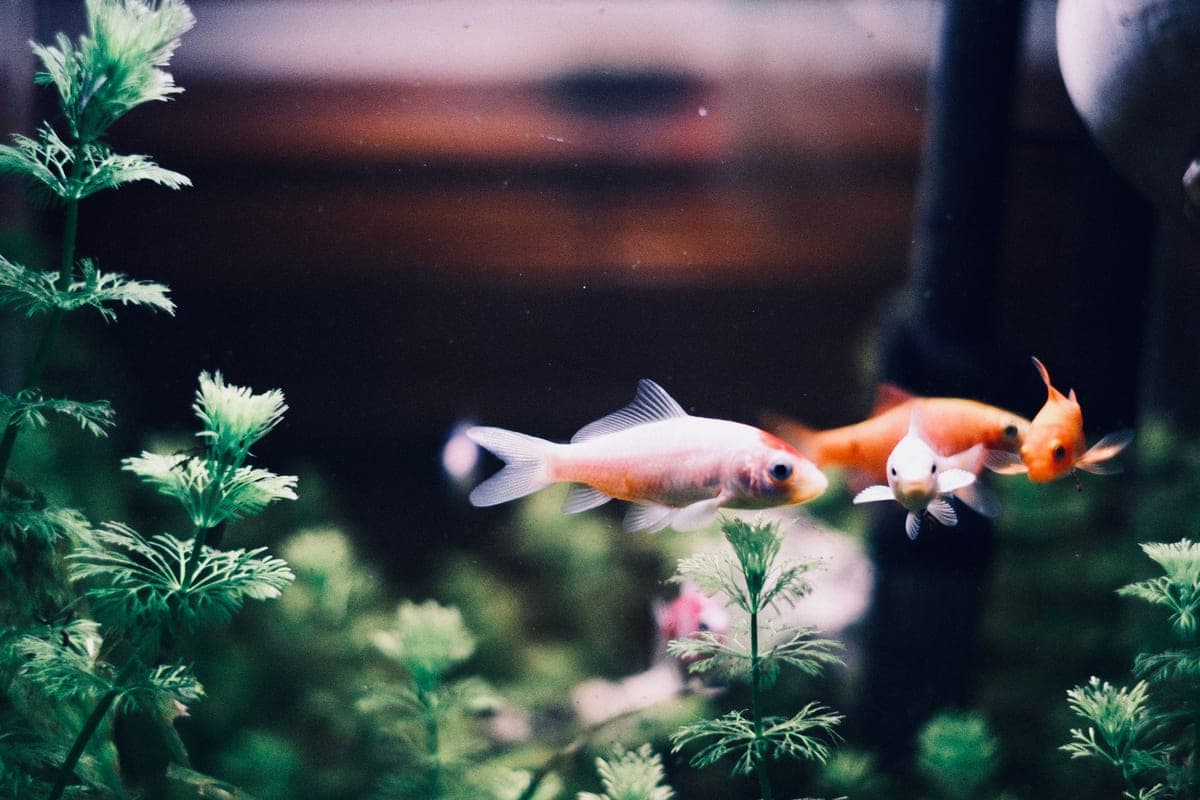
How to set up a low-tech planted tank
Substrate, light, plants, fertilizer — the four decisions, and the photoperiod rule that decides whether you grow plants or algae.
The best aquarium filter media
Mechanical, biological and chemical — what each stage does, the order to stack them, and the cartridge habit to break.

How to size an aquarium filter
Tank gallons times turnover, divided by 0.7. The formula, worked examples, and the table for every common size.