Buyer's question
Do I need a quarantine tank?
A bare tank, a squeezed sponge and a cheap heater. It protects everything you already own — and set up badly it is more dangerous than skipping it.
Fin & Filter earns a commission when you buy through the links on this page. It costs you nothing and it does not decide what we rank. How we’re funded.
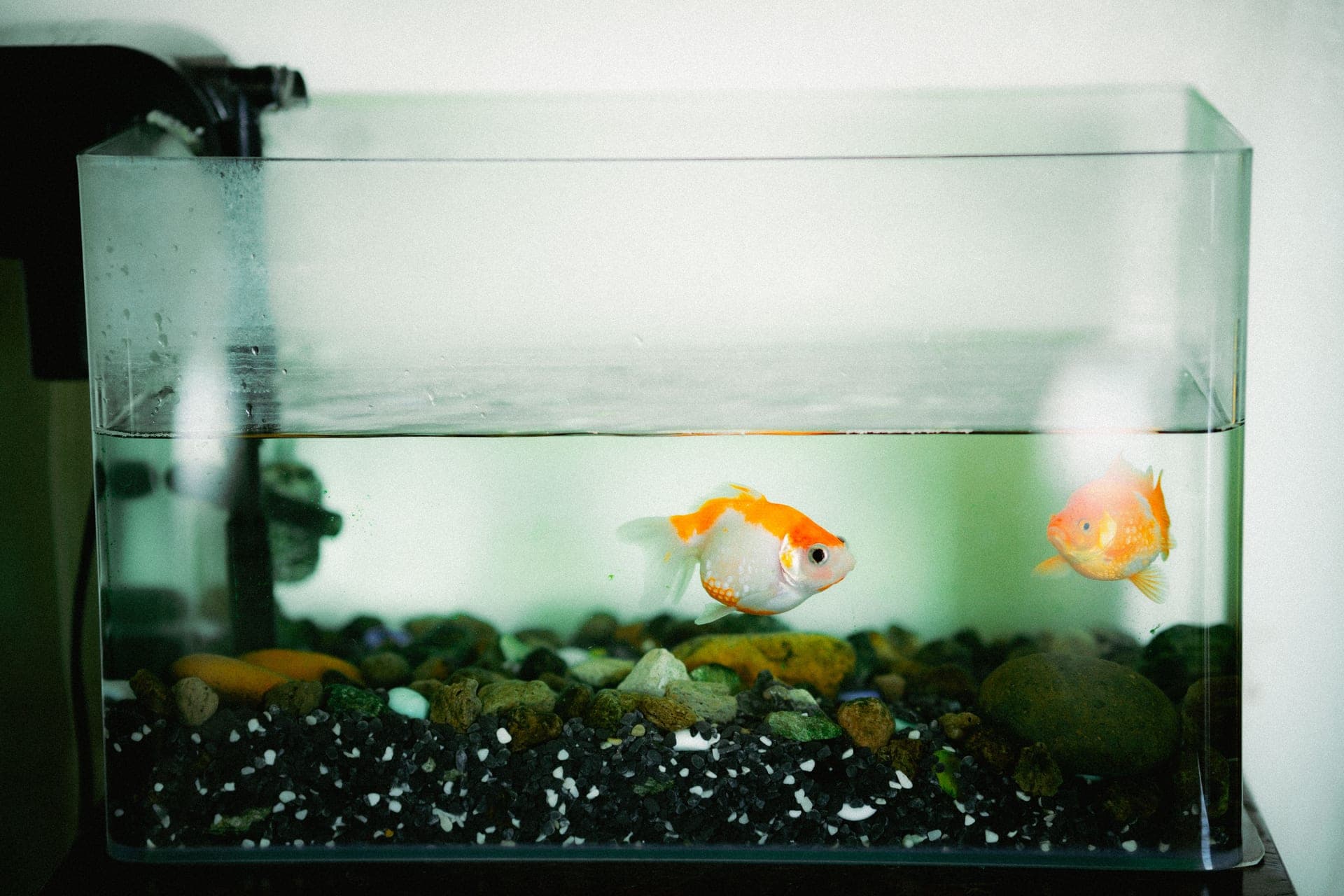
We have not used any of this gear. Every pick below is chosen from published manufacturer specifications and the arithmetic on how we pick, which you can re-run yourself.
If you already have a stocked community tank, yes — a quarantine tank is the cheapest insurance in the hobby, and the hardware is a bare tank, a sponge filter squeezed from your existing filter, a cheap heater, a thermometer and a test kit. If this is your first tank and it is still empty, no — there is nothing to protect yet, and the same money belongs in a test kit and a proper cycle. The thing to understand before you build one: a quarantine tank that is not cycled and not tested is more dangerous than no quarantine tank at all, because ammonia will harm a new fish faster than most of what you were quarantining against.
This question usually arrives at the moment someone is about to add a second batch of fish to a tank that is finally going well. That is exactly the right moment to ask it, and the answer depends almost entirely on what you already own.
Quick picks
What a quarantine tank actually takes
| # | Product | Best for | Price |
|---|---|---|---|
| 1 | 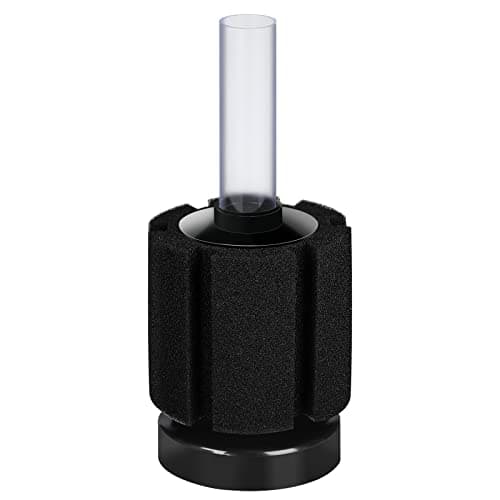 AQUANEAT Bio Sponge Filter (nano, up to 10 gallons) Squeeze a mature sponge from your main filter into it and the tank is biologically ready the same day. | The filter a quarantine tank should use, and the reason the whole thing works | $5.98 on Amazon #ad How we’re funded · price as of November 3, 2026 |
| 2 | 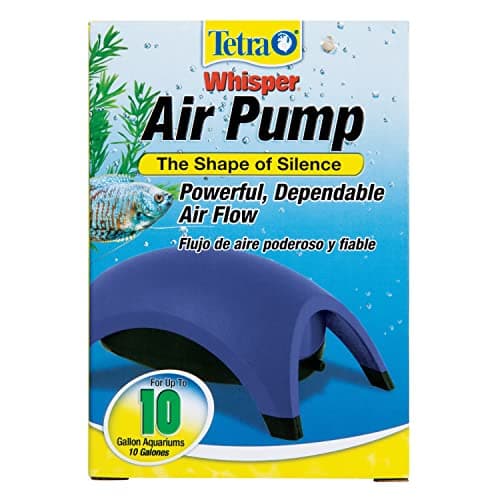 Tetra Whisper Air Pump, up to 10 gallons Tetra states a dome shape, a suspended motor and sound-dampening chambers. Rated for aquariums up to 10 US gallons. | Driving it without the noise becoming the reason you dismantle the tank | $17.39 on Amazon #ad How we’re funded · price as of November 3, 2026 |
| 3 | 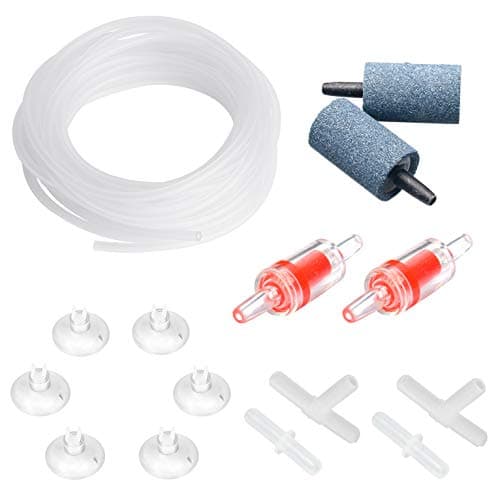 Pawfly Airline Tubing with Check Valves and Air Stones Airline and check valves together. Not optional on any air-driven setup, quarantine tank included. | The part people leave out, and the one that empties a tank onto the floor | $6.99 on Amazon #ad How we’re funded · price as of November 3, 2026 |
| 4 | 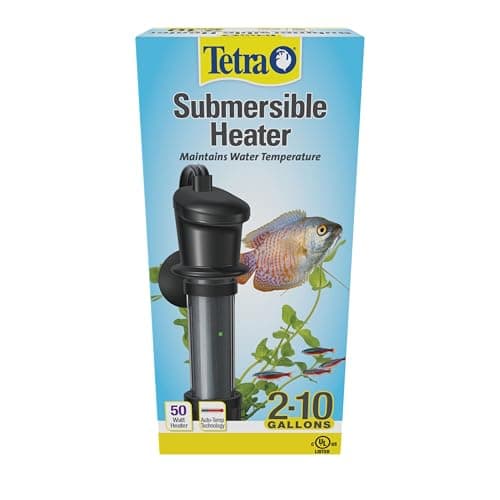 Tetra HT Submersible Heater, 50 W A 50 W submersible at the lowest sensible price. Preset, which is a real limitation and an acceptable one here. | A 5 to 10 gallon quarantine tank, cheaply | $15.27 on Amazon #ad How we’re funded · price as of November 3, 2026 |
| 5 | 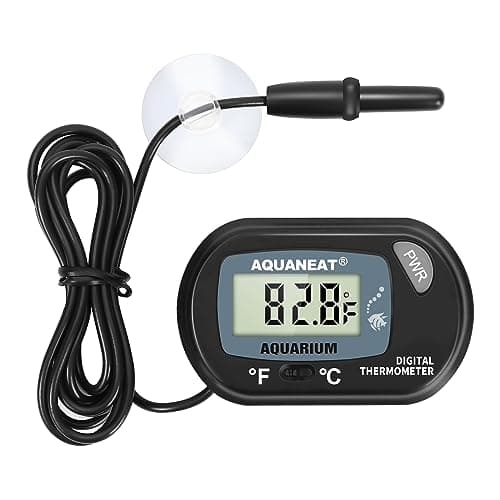 AQUANEAT Digital Aquarium Thermometer A few dollars, and the only way to know the two tanks are at the same temperature before you move a fish. | Checking that the quarantine tank actually matches the display tank | $5.45 on Amazon #ad How we’re funded · price as of November 3, 2026 |
| 6 | 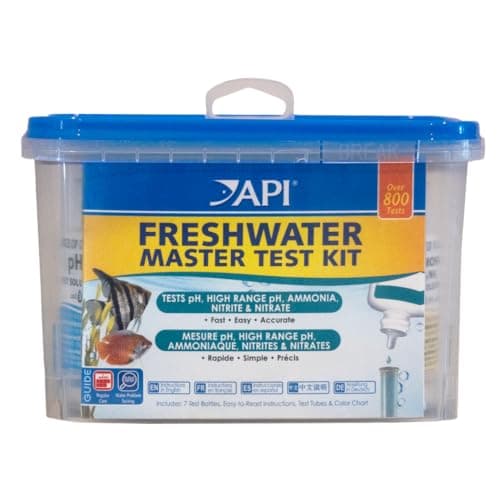 API Freshwater Master Test Kit Over 800 tests. A quarantine tank without one is a bucket you cannot see into. | The item that decides whether your quarantine tank helps or hurts | $35.98 on Amazon #ad How we’re funded · price as of November 3, 2026 |
| 7 |  Seachem Prime Conditions the replacement water, and Seachem states it detoxifies ammonia for up to 48 hours — useful in exactly this tank. | The daily water changes a bare quarantine tank needs | $16.62 on Amazon #ad How we’re funded · price as of November 3, 2026 |
| 8 | 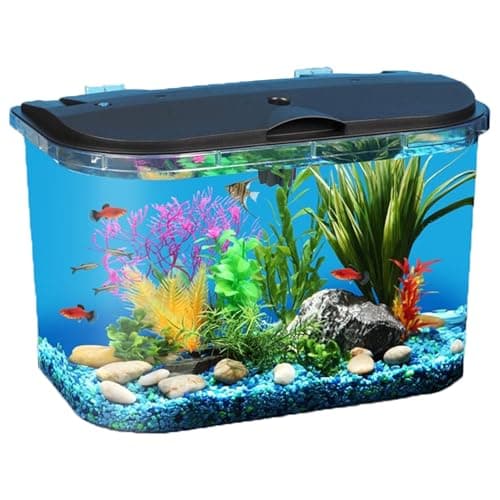 Koller Products 5 Gallon Aquarium Kit with LED and Power Filter A hooded 5 gallon kit with a light and a power filter. A lid matters more here than on a display tank. | Someone with no spare tank who wants the whole thing in one click | $65.99 on Amazon #ad How we’re funded · price as of November 3, 2026 |
| ! | 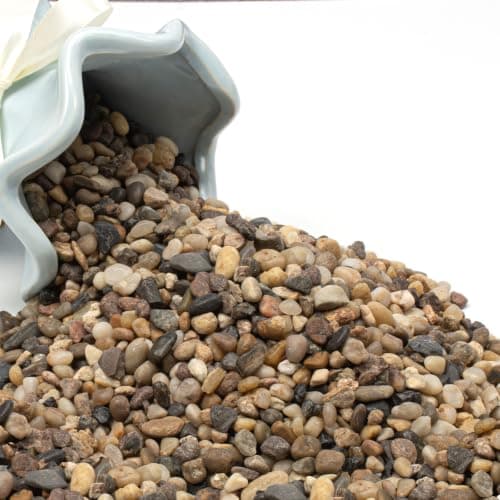 Aqualyra Natural River Pebble Aquarium Gravel (5 mm) Substrate belongs in a display tank. In a quarantine tank it traps waste you need to see and cannot be properly cleaned between uses. Skip this one — see why below | Not a quarantine tank | $16.99 on Amazon #ad How we’re funded · price as of November 3, 2026 |
Rows link to the full write-up further down this page. Prices come from the live price layer only; where there is no live figure the button reads “Check price” rather than showing a remembered number.
How we judged this, before any recommendation
Four criteria, and they are not the ones a display tank is judged on. Can it be made biologically ready today? — a quarantine tank you have to cycle for six weeks is a tank you will never use. Can you see into it? — the whole point is observation, so bare and readable beats furnished. Can it be emptied, dried and stored? — equipment that cannot be cleaned between occupants carries problems forward. Is it cheap enough that you actually buy it? — the best quarantine tank is the one that exists.
Notice what is not on that list: filtration capacity, lighting, aquascaping and anything decorative. A quarantine tank is a tool, and most of what makes a display tank good makes a quarantine tank worse.
Does your situation actually call for one?
| Your situation | Do you need a quarantine tank? | What to do instead or as well |
|---|---|---|
| First tank, still cycling, no fish yet | No | Spend the money on a test kit and cycle the tank properly |
| First fish going into a brand-new tank | No — there is nothing to protect them from yet | Acclimate carefully and watch the first fortnight |
| Adding fish to an established community tank | Yes — this is the case it exists for | Two to four weeks in quarantine before they join |
| Adding a single betta to its own tank | No | Observe closely; there is nothing else in the tank at risk |
| One fish is sick in a stocked tank | Yes, as a hospital tank | Treating a bare tank is easier and cheaper than treating a display tank |
| Buying from several shops in one trip | Yes — mixing sources is the highest-risk thing a beginner does | Quarantine as one group only if they came from one tank |
| Adding plants or snails | Worth doing, briefly | A separate container and a few weeks; no heater or filter needed for plants |
| You have no second tank and no budget | Not possible today, and say so honestly | Buy well, observe hard, and never add from two sources at once |
Our own recommendations for a beginner freshwater tank. The two-to-four-week figure is the practice this site recommends, not a figure taken from the cited publication below.
The argument for one is about stress, not just disease
The useful framing comes from UF/IFAS Extension's introduction to fish health management, which states plainly that successful fish health management begins with prevention of disease rather than treatment, and that medications cannot substitute for proper husbandry.
The same publication makes a second point that is more interesting for a beginner. A pathogen being present is usually not enough on its own: other factors, generally grouped under stress, are normally needed for active disease to develop, and management practices aimed at limiting stress are likely to be the most effective way to prevent an outbreak. Suboptimal water quality sits on its list of the conditions that let a potential pathogen turn into an actual problem.
Read those two statements together and the case for a quarantine tank gets sharper, and so does the case against a badly run one. A new fish has just been bagged, driven, netted and dropped into unfamiliar water. It is already stressed. Putting it somewhere small, clean and quiet for two weeks reduces that. Putting it somewhere small with an ammonia reading adds to it — which is why the test kit above is the entry we will not let you skip.
The instant cycle, which is the whole trick
- Keep a spare sponge filter running in your display tank, permanently. It costs a few dollars, adds filtration you were not going to object to, and is doing its job quietly for months before you need it.
- When you need the quarantine tank, move the sponge across. Carry it in a cup of tank water so it never dries out or chills — the bacteria are living on it and both will kill them.
- Fill the quarantine tank with water from the display tank where you can, topped up with conditioned tap water matched for temperature. Using established water is not cycling the tank, but it starts you at the right chemistry.
- Set the heater to match the display tank, and confirm it with the thermometer rather than the dial.
- Test on day one, before the fish goes in. Ammonia and nitrite should read zero. If they do not, the sponge was not mature or it was mishandled — fix that before you add anything alive.
- Test daily thereafter, and change 25% of the water whenever ammonia or nitrite reads above zero. In a small bare tank that may be most days, and that is normal rather than a sign of failure.
- When quarantine ends, the sponge goes back into the display tank to recolonize, and the tank is emptied, rinsed, dried and put away.
That sequence is the difference between a quarantine tank that protects fish and one that merely relocates them. The full shortlist of sponge filters, with the flow and sizing reasoning, is on the best sponge filters, and the pump side of it is argued out on do I need an air pump.
How long, and what you are watching for
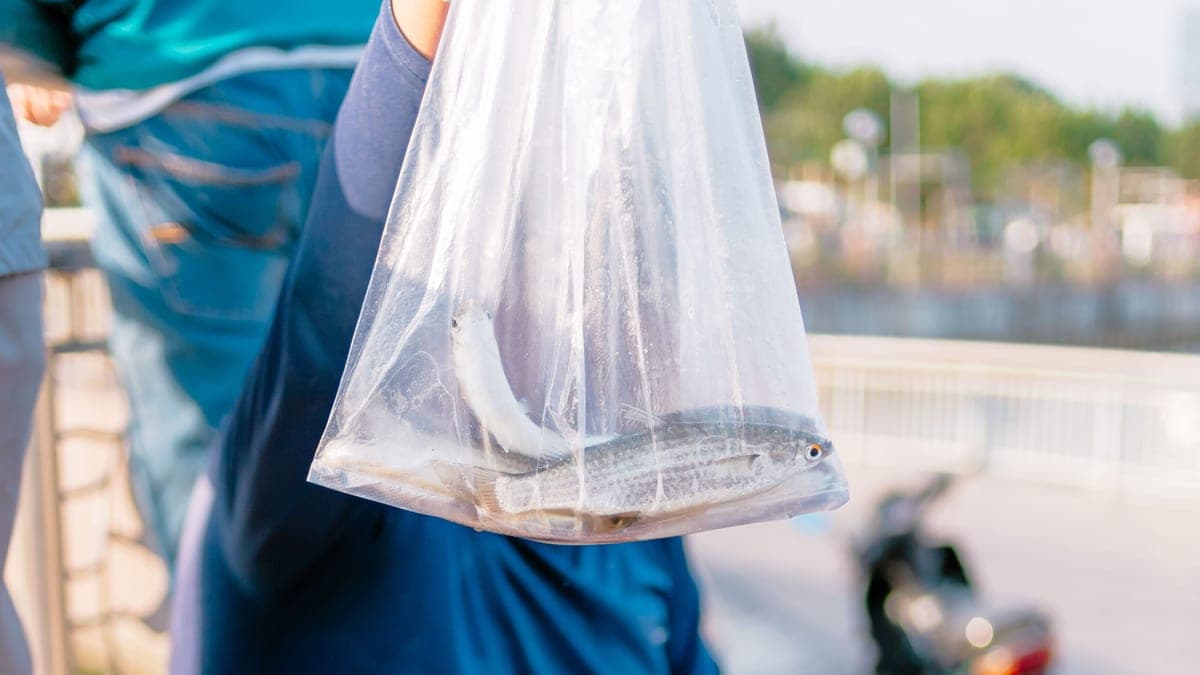
Two to four weeks is the period this site recommends for a beginner community tank, and the longer end is the right call for fish from a shop you do not know, for anything wild-caught, or for a mixed batch from different tanks.
- Week one is about eating. A fish that is feeding normally by day three or four is usually settling. One that will not eat at all by the end of the week is telling you something, and the first thing to check is the water rather than the fish.
- Watch for clamped fins, flicking against surfaces, gasping at the surface and rapid gill movement. All four have water-quality explanations as well as disease explanations, which is exactly why you test before you conclude anything.
- Do not treat preventatively. Dosing a healthy fish with a medication it does not need is the husbandry failure the UF/IFAS publication is warning about, and it is how people breed resistant problems in their own tanks.
- Keep the tank boring. No new tankmates, no rearranging, no bright light, minimal traffic past the glass. The stress reduction is a large part of what you are buying.
- Do not shortcut the end date because the fish looks fine. Looking fine on day eight is the normal course of several things that show up on day sixteen.
What a quarantine tank does not do
- It does not make a bad purchase good. A fish bought from a tank containing a dead one is a bad buy that quarantine may only delay. Buying well comes first, and the hardiest fish for a first aquarium is where that starts.
- It does not replace your display tank's cycle. Both tanks need biological filtration, and the quarantine tank borrows its colony from the display tank rather than having its own. How to cycle a fish tank is still the foundation.
- It does not diagnose anything. It gives you two weeks of clear observation, which is a different and more useful thing than a guess made through a bag at a shop counter.
- It does not protect against overstocking. A community tank already at its limit does not get safer because the next fish spent a fortnight elsewhere — see how many fish in a 20 gallon tank.
- It does not help if you cannot run it properly. An untested, unheated quarantine tank in a cold spare room is worse than acclimating carefully into a well-run display tank. Be honest about which one you will actually maintain.
And if the answer for you today is no, that is a legitimate answer rather than a failure. The practical version for keepers without a second tank — buy from shops whose tanks are clearly well kept, never mix sources in one trip, and watch new arrivals hard for the first fortnight — is set out as part of how to add fish to a new tank. If something has already gone wrong in the display tank, start at why do my fish keep dying and test before you buy anything.
Pick 1
AQUANEAT Bio Sponge Filter (nano, up to 10 gallons)
The filter a quarantine tank should use, and the reason the whole thing works
The number
No published GPH figure: air-driven sponge filters carry none, and output depends on the pump you pair with it. Mechanical and biological only, with no chemical stage.
This is the pick that makes a quarantine tank practical rather than theoretical, and the reason is the thing nobody tells beginners: a sponge filter can be cycled in about thirty seconds.
Keep a spare sponge sitting in your main tank or inside your main filter. It colonizes with the same bacteria your display tank runs on. When you need a quarantine tank, move that sponge across and the new tank has a working biological filter immediately, rather than the four to six weeks a bare new filter would take.
Two more things suit it to this job specifically. It holds no activated carbon, so there is nothing to strip out if a treatment is ever needed. And it has no impeller and no intake slot, which matters when the occupant is a small, stressed, possibly unwell fish.
The honest costs. Nothing comes in the box but the sponge: no pump, no airline, no check valve, and you need all three before it does anything. The pump is the noisiest object in the setup. It is visible in the tank, which does not matter here. And the squeeze trick only works if you have actually kept a spare sponge in the main tank — started from dry, it is as sterile as any other new filter.
| Flow rating | Not published. Air-driven sponge filters carry no manufacturer GPH figure; output depends on the air pump you pair with it. |
|---|---|
| Filtration | Mechanical and biological. No chemical stage unless you add one. |
| Running cost | No cartridge. The sponge is rinsed in old tank water and reused. |
| What it does not do | No air pump, no airline and no check valve in most listings, so budget for all three. No chemical filtration, and there is no hiding it behind the hardscape. |
Specs from Fluval, AquaClear 20 product page (the hang-on-back flow comparison). We have not used this unit.
#ad How we’re funded · price as of November 3, 2026
Pick 2
Tetra Whisper Air Pump, up to 10 gallons
Driving it without the noise becoming the reason you dismantle the tank
The number
Stated for aquariums up to 10 US gallons, one outlet. Tetra publishes no airflow figure for the line.
A quarantine tank usually lives somewhere you did not plan for a tank — a spare room, a shelf, a corner of an office — and the pump is the part that decides whether you tolerate it being there.
One outlet drives one sponge filter comfortably, which is the entire requirement here.
The honest costs. Tetra sells the line by tank-size range and publishes no airflow figure we could find, so you cannot compare it against a rival on paper. One outlet, so running a second quarantine tank means a second pump or a gang valve. And no diaphragm pump is silent — the surface it stands on matters more than the brand, and a folded towel underneath is the cheapest fix there is.
| Stated tank size | Aquariums up to 10 US gallons |
|---|---|
| Outlets | One |
| Noise design | Tetra states a patented dome shape, a suspended motor and sound-dampening chambers to reduce turbulence |
| Tubing | Takes standard-size aquarium airline |
| Published output | Tetra sells this line by tank-size range. No airflow figure appears on the listings we could reach, so none is quoted here |
| What it does not do | No airline tubing, no check valve and no air stone in the box on most listings, and all three are needed before it does anything. A pump this size drives one sponge filter, not two. |
Specs from Tetra Whisper Air Pump for aquariums up to 10 gallons, Walmart listing. We have not used this unit.
#ad How we’re funded · price as of November 3, 2026
Pick 3
Pawfly Airline Tubing with Check Valves and Air Stones
The part people leave out, and the one that empties a tank onto the floor
When a pump stops, the airline becomes a siphon: water runs back down the tube, out through the dead pump and onto whatever the tank is standing on. A check valve fitted above the water line makes that impossible.
It matters more here than on a display tank, because a quarantine tank is usually the one sitting on furniture that was never meant to hold water.
The honest costs. Check valves are directional, and fitted backwards they block the air completely, which looks exactly like a dead pump. They stiffen and clog over a year or two, so treat them as a consumable rather than a fitting. And a valve is not a substitute for routing the airline above the water line in the first place.
| What the check valve does | Allows air one way only, so tank water cannot siphon back down the airline when the pump stops |
|---|---|
| Placement | In the airline between the pump and the tank, above the water line |
| What it does not do | Not usually included with an air pump, which is exactly why it gets forgotten. A check valve is directional and fitting it backwards blocks the air entirely. |
The manufacturer does not publish a full spec sheet for this item, so nothing beyond the figures above is stated. We have not used this unit.
#ad How we’re funded · price as of November 3, 2026
Pick 4
Tetra HT Submersible Heater, 50 W
A 5 to 10 gallon quarantine tank, cheaply
The number
50 W submersible. At our 5 watts per gallon method, 50 W covers a 10 gallon tank for a 10 F lift.
The right heater for a quarantine tank is the cheap one, because this tank is empty most of the year and the money is better spent on the test kit.
Fifty watts is the correct wattage for a 10 gallon tank by our usual arithmetic, and a quarantine tank is almost always 10 gallons or less.
A detail worth getting right: match the quarantine tank's temperature to your display tank rather than to a number on a chart. The fish is going to be moved between the two, and a temperature step is a stressor you can simply not inflict.
The honest costs. It is preset, so you take the temperature the maker chose and cannot dial it to match your display tank exactly — the single biggest argument for spending more on an adjustable unit if your main tank runs warm or cold. No thermometer is included, so the setting is a claim rather than a reading. And a glass heater in a bare tank with nothing to brace it against is easy to knock.
| Wattage | 50 W |
|---|---|
| Stated tank range | 2 to 10 gallons, per the Amazon listing |
| Thermostat | Electronic, preset rather than dialed |
| What it does not do | It is preset, so you cannot choose the target temperature — fine in a normal room, wrong in a cold one or for a species that wants a specific number. Tetra's own site does not respond to us, so no accuracy tolerance is printed. No thermometer in the box. |
Specs from Tetra HT Submersible Aquarium Heater with Electronic Thermostat, 50 W, 2-10 gallon, Amazon listing. We have not used this unit.
#ad How we’re funded · price as of November 3, 2026
Pick 5
AQUANEAT Digital Aquarium Thermometer
Checking that the quarantine tank actually matches the display tank
The number
A digital thermometer with a submerged probe, reading the water rather than a dial.
A preset heater states a temperature. A thermometer measures one. Those are different claims, and the gap between them is exactly what a stressed fish experiences when it is netted from one tank into another.
Buy two if you are being thorough, or move one between the tanks and let each reading settle before you transfer anything.
The honest costs. A digital probe reads one spot, and a small bare tank with a single sponge filter genuinely does have gentle circulation, so give it a minute. The suction cup fails eventually and the unit ends up on the glass bottom. Button batteries are not replaceable on some models, which makes it a disposable device. And a cheap thermometer is better at telling you the water is stable than at telling you precisely what it is stable at — which is fine, because matching two tanks is a comparison, not an absolute.
| Why it matters | A heater dial is a setting and a thermometer is a reading. They disagree more often than beginners expect. |
|---|---|
| What it does not do | Stick-on strip thermometers read the glass rather than the water, so room temperature pulls them off. |
The manufacturer does not publish a full spec sheet for this item, so nothing beyond the figures above is stated. We have not used this unit.
#ad How we’re funded · price as of November 3, 2026
Pick 6
API Freshwater Master Test Kit
The item that decides whether your quarantine tank helps or hurts
The number
Over 800 tests per kit, covering pH, high-range pH, ammonia, nitrite and nitrate.
This is the one entry on this page that is not optional, and the reason is the failure mode described further down: a quarantine tank with ammonia in it is worse for the fish than no quarantine tank at all.
A bare tank has very little biological capacity beyond what you moved across on the sponge. It is a small volume holding a fish that is probably not eating normally, and it has no plants and no substrate to buffer anything. The only way to know it is safe is to test it, daily, for the whole quarantine period.
The honest costs. It does not test hardness, chlorine or alkalinity. It is slower and fiddlier than strips, the nitrate test needs the second bottle shaken hard and then a wait, and the color card is genuinely hard to read between adjacent shades under warm light. Reagents expire, so a kit that has been in a cupboard for two years deserves suspicion before an important reading.
| Tests | pH, High Range pH, Ammonia, Nitrite, Nitrate |
|---|---|
| Capacity | Over 800 tests per kit |
| Contents | 7 bottles of test solution, 1 color card, 4 glass tubes with caps, holding tub |
| Type | Liquid reagent |
| What it does not do | Does not test hardness, chlorine or alkalinity. It is slower than strips, the nitrate test needs vigorous shaking of the second bottle and a wait, and the color card is genuinely hard to read between adjacent shades. |
Specs from API Freshwater Master Test Kit, Amazon listing; API Freshwater Aquarium Master Test Kit, PetSmart listing. We have not used this unit.
#ad How we’re funded · price as of November 3, 2026
Pick 7
Seachem Prime
The daily water changes a bare quarantine tank needs
The number
Published dose: 1 capful (5 mL) per 200 L (50 US gallons) of new water. Seachem states binding of ammonia, nitrite and nitrate lasts up to 48 hours.
A quarantine tank is run by water changes more than by filtration, and that makes a conditioner a consumable here rather than an occasional purchase.
The ammonia-binding claim earns its place in this specific tank. If a reading does creep up between changes, the 48-hour window Seachem describes is time to act in rather than a fix — and in a small bare tank, readings creep.
The honest costs. It does not remove ammonia, it binds it, and your test kit will still read it afterwards, which is confusing the first time. The window is a window, and dosing it instead of changing water is how fish end up living in slowly worsening conditions. It smells strongly of sulfur. And none of this substitutes for the water change itself.
| Dose | 1 capful (5 mL) for each 200 L (50 US gallons) of new water |
|---|---|
| Removes | Chlorine, chloramine |
| Detoxifies | Ammonia, nitrite and nitrate |
| Binding duration | Seachem states it binds those compounds for up to 48 hours |
| What it does not do | It does not remove ammonia. It binds it into a less toxic form for up to 48 hours, and your test kit will still read the ammonia as present. It is not a bacteria product and it will not cycle a tank. |
Specs from Seachem, Prime product page. We have not used this unit.
#ad How we’re funded · price as of November 3, 2026
Pick 8
Koller Products 5 Gallon Aquarium Kit with LED and Power Filter
Someone with no spare tank who wants the whole thing in one click
The number
5 gallons, LED lighting and a power filter included per the listing.
Included because the honest cheapest route — a bare 10 gallon tank from a local shop — is not something we can link you to, and a reader who wants to solve this today needs an option that ships.
Five gallons is small for a quarantine tank and fine for the fish most beginners buy: a betta, a few nano fish, a single new addition to a community tank. The lid is the part that earns its place, because a new fish in an unfamiliar bare tank is exactly the fish most likely to jump.
The honest costs. No heater, no test kit, no substrate and no dechlorinator, so this is a tank rather than a setup. Acrylic rather than glass on this class of kit, which scratches far more readily when you clean it, and scratches are permanent. Koller publishes no filter flow figure, so the filtration cannot be checked against our turnover arithmetic before you buy — though in a quarantine tank you will likely run the sponge filter above instead. And five gallons leaves a small margin for error in every direction, which is why the daily testing matters.
| Volume | 5 gallons |
|---|---|
| Included | LED lighting and a power filter, per the Amazon listing title |
| Position | The budget end of the 5 gallon kit shelf |
| What it does not do | No heater, no test kit, no substrate, no dechlorinator. Acrylic rather than glass on this class of kit, which scratches more readily than glass when you clean algae off it. Koller publishes no filter flow figure, so the filtration cannot be checked against the turnover arithmetic before you buy. |
Specs from Koller Products 5-Gallon Aquarium Kit, Amazon listing. We have not used this unit.
#ad How we’re funded · price as of November 3, 2026
Skip this
Aqualyra Natural River Pebble Aquarium Gravel (5 mm)
Not a quarantine tank
The skip entry, and it is a good product in the wrong tank. Gravel is the right floor for a display aquarium and the wrong floor for a quarantine tank, for three reasons that all point the same way.
A quarantine tank is meant to be readable. Bare glass shows you uneaten food, waste and anything a fish passes, immediately and without a torch. Gravel hides all of it between the grains, which is the one thing you did not want here.
It is also meant to be emptied and dried between occupants. A bare tank is rinsed, dried and put away in ten minutes. Substrate is the part you cannot realistically sterilize, so it becomes the thing that carries something from one quarantine period into the next.
And a bare bottom makes the daily water change trivial — siphon straight off the glass, no vacuuming technique required.
The honest costs of the skip. A bare tank is a barer environment, and some fish are visibly more settled with cover, so give the occupant something to hide in — a ceramic cave, a length of pipe or a clump of a plant you do not mind discarding. That is cover, not substrate, and it comes out with the water.
| Type | Inert stone. Does not dissolve, so it does not alter pH or hardness |
|---|---|
| Typical grain | Roughly 2-5 mm for standard aquarium gravel, which is coarse enough that waste falls between the grains |
| Rough quantity | Commonly quoted at about 1.5 lb per gallon for a 2 inch bed, but weight follows tank footprint rather than gallons |
| Cleaning | Vacuumed directly. A siphon lifts the grains, waste rises, gravel drops back |
| What it does not do | Almost never included in a starter kit despite appearing in the photo on the box. Coated or painted novelty gravel is a different product and the coating can chip; buy natural stone. Coarse gravel lets uneaten food fall out of reach, which hides an overfeeding problem rather than preventing one. |
The manufacturer does not publish a full spec sheet for this item, so nothing beyond the figures above is stated. We have not used this unit.
Questions people actually ask
Frequently asked questions
+ Do I need a quarantine tank?
+ How big should a quarantine tank be?
+ Does a quarantine tank need to be cycled?
+ Does a quarantine tank need a filter and a heater?
+ How long should fish stay in quarantine?
+ Can I use a bucket as a quarantine tank?
+ Should I put gravel in a quarantine tank?
+ What is the difference between a quarantine tank and a hospital tank?
Where the numbers came from
Sources
- Francis-Floyd, Stilwell and Yanong, CIR921/FA004: Introduction to Fish Health Management, UF/IFAS Extension — "Successful fish health management begins with prevention of disease rather than treatment"; medications "cannot substitute the need for proper animal husbandry"; other factors, generally grouped under stress, are usually needed for active disease to develop, and "management practices directed at limiting stress are likely to be most effective in preventing disease outbreaks"; suboptimal water quality is listed among the conditions that let potential pathogens cause disease
- API Freshwater Master Test Kit — Amazon listing (parameters tested, test count)
- US EPA, Aquatic Life Criteria for Ammonia — toxicity and its dependence on pH and temperature
Read next
Related on Fin & Filter
How to add fish to a new tank
Acclimation step by step, how many to add at once, and the two-week testing routine after each addition.
The best sponge filters
The cheapest biological filtration there is, and the gentlest. What to buy, and the three parts never included.

How to cycle a fish tank
What cycling actually is, the fishless method start to finish, and the exact test result that means it is done.