Stocking
Guppy care for beginners
Hardy, cheap, colorful and relentlessly fertile. The care is genuinely easy; the population is the part nobody warns you about until there are forty of them.
Fin & Filter earns a commission when you buy through the links on this page. It costs you nothing and it does not decide what we rank. How we’re funded.
We have not used any of this gear. Every pick below is chosen from published manufacturer specifications and the arithmetic on how we pick, which you can re-run yourself.
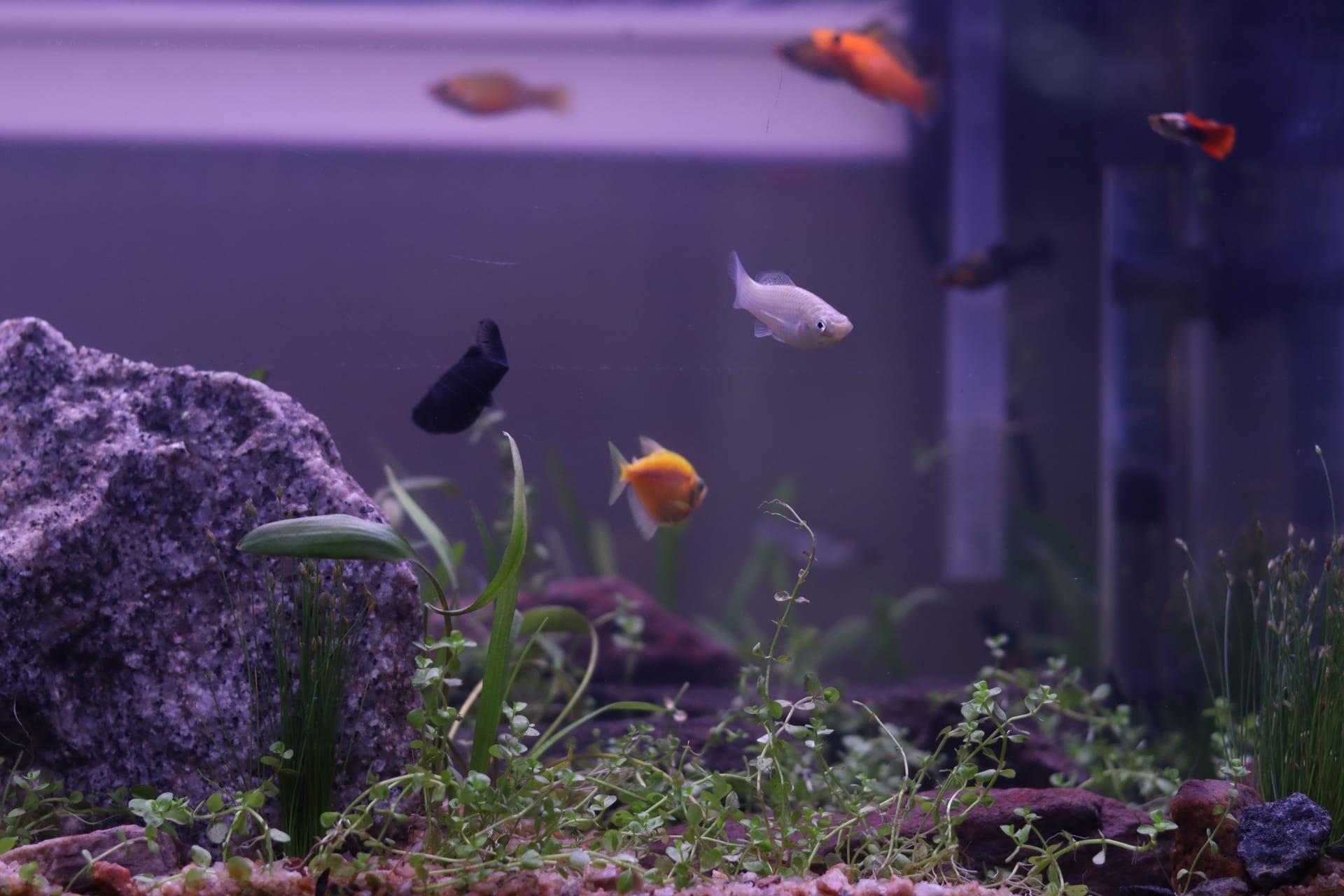
Guppies are the easiest beginner fish to keep alive and the easiest to end up with far too many of. OATA, the ornamental aquatic trade body, specifies at least 45 liters — about 12 US gallons — for a small group, which means the 5 gallon tank they are usually sold into is already under the floor before anything breeds. And they will breed: OATA calls it "almost a certainty", with females producing 20 to 80 fry per pregnancy every 24 to 30 days. The single decision that prevents the problem is to buy males only. If you want a mixed group, OATA advises at least three fish at two females to each male, and you should plan for the fry before you buy, not after.
Everything else about guppy care is genuinely forgiving. They tolerate a wide temperature range, eat anything, show no interest in bullying each other, and come in colors that make a 10 gallon tank look like a much more expensive hobby than it is. The care is easy. The arithmetic is what catches people.
Quick picks
What a guppy tank actually needs
| # | Product | Best for | Price |
|---|---|---|---|
| 1 | 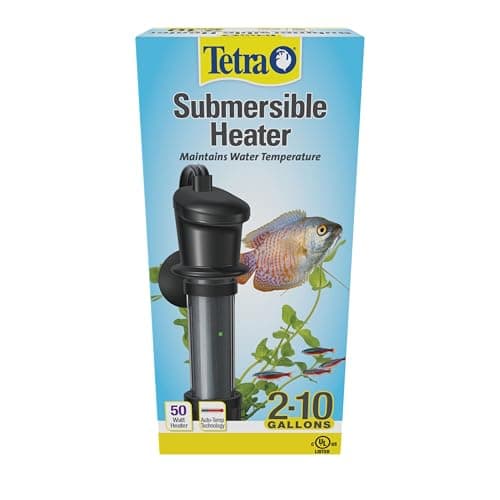 Tetra HT Submersible Heater, 50 W Guppies are tropical. OATA states a heater is required to hold a suitable temperature all year round. | The requirement the trade body states outright | $15.27 on Amazon #ad How we’re funded · price as of November 12, 2026 |
| 2 | 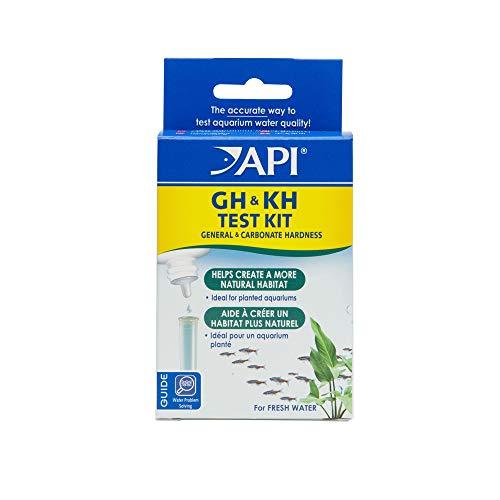 API GH & KH Test Kit OATA puts guppies in medium-hard water — 8 to 18 dH. The Freshwater Master Test Kit does not test hardness at all. | The parameter guppies actually care about, which your master kit does not measure | $11.98 on Amazon #ad How we’re funded · price as of November 12, 2026 |
| 3 | 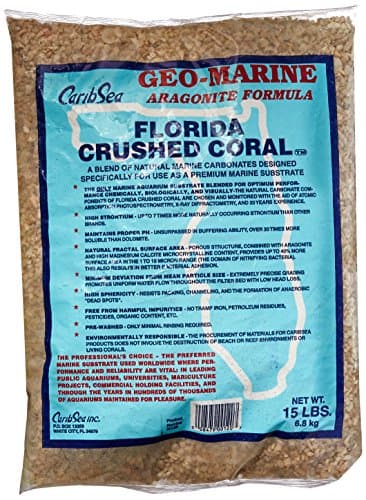 CaribSea Crushed Coral Raises GH and KH slowly toward the range OATA specifies. Wrong if your water is already hard. | Soft tap water, which is the usual reason a guppy tank underperforms | $28.99 on Amazon #ad How we’re funded · price as of November 12, 2026 |
| 4 | 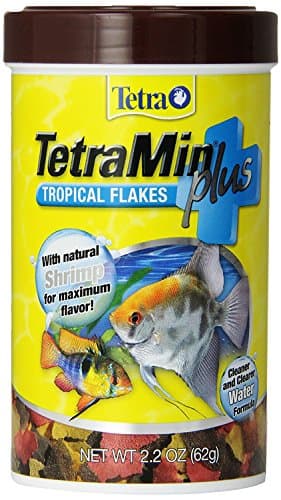 Tetra TetraMin Plus Tropical Flakes A standard tropical flake suits guppies well, and the portion matters far more than the brand. | Daily feeding for a surface-feeding fish | $8.99 on Amazon #ad How we’re funded · price as of November 12, 2026 |
| 5 | 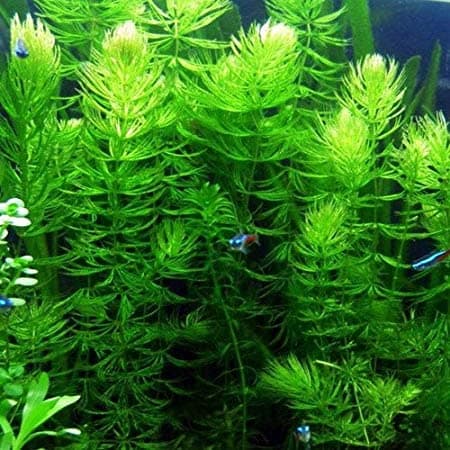 Various Hornwort (Ceratophyllum demersum) A fast-growing floating plant that needs no substrate. In a guppy tank it is a population control lever. | Fry cover, and the thing that decides how many survive | $9.97 on Amazon #ad How we’re funded · price as of November 12, 2026 |
| 6 | 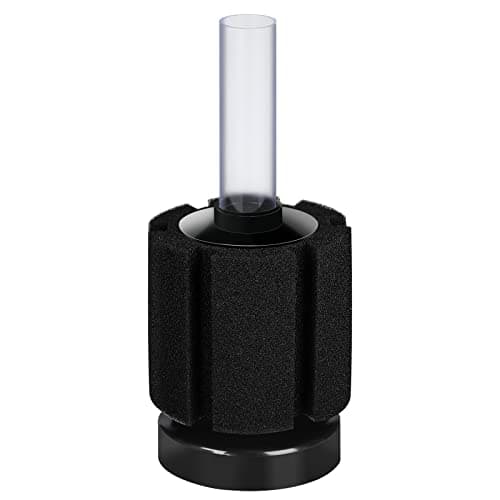 AQUANEAT Bio Sponge Filter (nano, up to 10 gallons) No impeller and no intake slot. The one filter that will not take fry out of the tank for you. | A tank where fry exist, intentionally or otherwise | $5.98 on Amazon #ad How we’re funded · price as of November 12, 2026 |
| 7 | 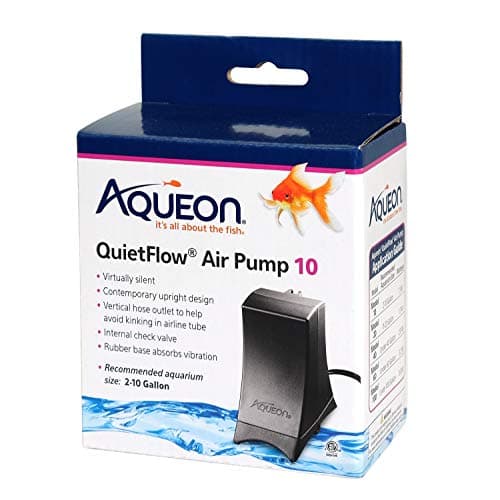 Aqueon QuietFlow Air Pump 10 (2-10 gallon tanks) A single-outlet pump rated for 2 to 10 gallon tanks. One sponge filter, nothing more ambitious. | Driving that sponge filter, correctly sized | $10.25 on Amazon #ad How we’re funded · price as of November 12, 2026 |
| 8 | 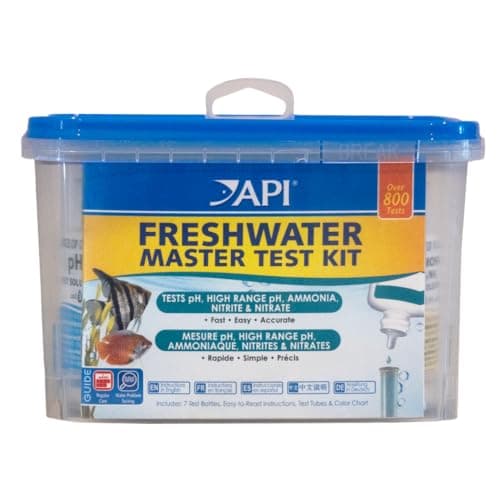 API Freshwater Master Test Kit Over 800 tests. A guppy tank's bioload rises on its own, which is a property no other beginner fish has. | The first eight weeks, and every time the population jumps | $35.98 on Amazon #ad How we’re funded · price as of November 12, 2026 |
| ! | 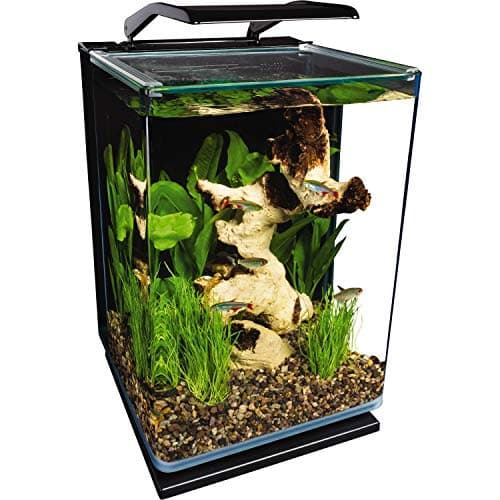 Marineland Portrait Glass LED Aquarium Kit, 5 Gallon A 5 gallon tank is below the 45 liter minimum OATA gives, before a single fry arrives. Skip this one — see why below | Not a guppy tank, however often they are sold together |
Rows link to the full write-up further down this page. Prices come from the live price layer only; where there is no live figure the button reads “Check price” rather than showing a remembered number.
How we judged this, before any recommendation
Three criteria. What does a care authority actually specify? — rather than what a shop shelf implies, because the gap between those two is the whole problem here. What does a rising bioload change? — guppies are the only common beginner fish whose stocking level increases without you buying anything, and that changes which equipment matters. What decision can the reader make once, up front, instead of managing forever? — which is why the sex-ratio question sits above everything else on this page.
The number that should decide your tank
OATA's guppy and molly care sheet gives at least 45 liters for a small group of the smaller species. That converts to roughly 12 US gallons, which lands squarely between the two tanks beginners actually consider.
| Tank | Against OATA's 45 liter figure | Honest verdict |
|---|---|---|
| 5 gallons (19 L) | Under half the stated minimum | No. This is the tank guppies are most often sold into and the reason this page exists |
| 10 gallons (38 L) | Slightly under 45 L | The realistic floor for a small all-male group, with disciplined water changes |
| 20 gallons (76 L) | Comfortably above | The right answer, and the only size that absorbs a mixed group's fry without a plan |
| 29 gallons and up | Well above | Generous. Guppies are small; the extra volume is buying you stability and margin |
Liter figures are OATA's; the US gallon conversions and the verdicts are ours. The 10 gallon row is a judgment call rather than an endorsement — it is under the stated minimum, and it works only because an all-male group's bioload stays fixed.
This is the same argument our 10 gallon vs 20 gallon page makes in general, with one guppy-specific twist: for most fish, buying the bigger tank buys you margin for *your* mistakes. With guppies it buys you margin for *their* reproduction, which happens whether you make mistakes or not.
The breeding arithmetic, which is the actual subject of this page
OATA is direct about it: breeding is "almost a certainty", though it may not succeed in a community tank without plenty of plant growth. A female may produce 20 to 80 fry per pregnancy, and a pregnancy lasts 24 to 30 days.
Read that as a monthly rate rather than a one-off event. One female, at the conservative end of OATA's range, is twenty new fish a month. Three females is sixty. The reason this does not immediately overwhelm every guppy tank is that adults eat fry in an open tank — which means your plant cover, not your intentions, is what sets the survival rate.
Pick your group before you pick your fish
- All male — the recommendation for most beginners. The population stays exactly where you put it, the color is better (males are the colorful sex), and you never manage fry. The trade-off is occasional chasing between males, which more fish and more cover both reduce.
- Mixed, at OATA's ratio. The sheet advises at least three together with two females to each male, specifically to reduce stress on females — a lone female with a male is harassed constantly. Choose this only if you have a plan for fry.
- All female. Fewer fry than a mixed group but not none, because of stored sperm. Less color, too.
- A plan for the fry is part of the purchase. Realistically: let the adults eat them in an open tank, rehome them to a shop that takes them, or accept an upgrade to a larger tank. "We will see what happens" is how a 10 gallon tank ends up with forty fish.
- Do not buy fish to eat the fry. A larger fish added to control a guppy population is a bigger ongoing problem than the one it solves, in a tank that was already at its limit.
Water: harder than most beginner fish want
OATA puts guppies in medium-hard water: general hardness 8 to 18 dH, carbonate hardness 5 to 15 dKH, at 20 to 28 C, with a heater required and a filter always essential.
The hardness line is the one worth acting on, because it is invisible to the test kit most beginners own — the Freshwater Master Test Kit does not measure hardness at all, which our own entry for it says plainly. In a hard-water region you need do nothing. In a soft-water one, guppies are a species that will quietly underperform until you correct it, and can you use tap water in a fish tank explains how to read your own supply.
Temperature is more forgiving than the hardness, but the heater is not optional: 20 C is the bottom of OATA's range, and an unheated room that sits there in the day drops below it at night.
What guppies do not need
- A breeding box. Unless you are deliberately raising fry, the fry you do not see are doing their job in the food chain. Boxes are stressful for a pregnant female and are usually bought in a panic.
- Special guppy food. A standard tropical flake fed in a portion they finish in about a minute is correct. The portion is the variable, not the formula.
- Salt as a routine additive. Guppies are freshwater fish. Adding salt as a general tonic is a habit without a general justification, and it is actively wrong in a tank with plants or invertebrates.
- A bigger filter than the tank needs. Long-finned males swim poorly in current. Size the filter to the tank — how to size an aquarium filter — and turn it down if the males are being pushed around.
- Rescuing from a cycled tank. Guppies are hardy, not immune. They still need the tank cycled before they arrive, and hardiness is what buys you forgiveness for small errors rather than permission to skip the step.
If you are still choosing a first fish rather than committing to guppies, the hardiest fish for a first aquarium sets them against the alternatives, and how many fish in a 10 gallon tank does the stocking arithmetic for the tank most people end up with.
Pick 1
Tetra HT Submersible Heater, 50 W
The requirement the trade body states outright
The number
50 W submersible. OATA gives a range of 20 to 28 C for guppies and mollies and states a heater is required.
This is first because it is the only item on this page that a care authority describes as required rather than advisable, and because guppies are routinely sold as an unheated desk-tank fish.
OATA's range is 20 to 28 C. A room that sits at the bottom of that during the day will fall below it overnight, and a small tank follows the room closely.
Fifty watts is the right wattage for the 10 gallon tank this page recommends as a floor.
The honest costs. It is preset, so you take the temperature the maker chose rather than dialing your own, which is the main argument for spending more on an adjustable unit if your room runs cold. No thermometer is included, so the setting is a claim rather than a reading. And a glass heater is easy to knock in a small tank.
| Wattage | 50 W |
|---|---|
| Stated tank range | 2 to 10 gallons, per the Amazon listing |
| Thermostat | Electronic, preset rather than dialed |
| What it does not do | It is preset, so you cannot choose the target temperature — fine in a normal room, wrong in a cold one or for a species that wants a specific number. Tetra's own site does not respond to us, so no accuracy tolerance is printed. No thermometer in the box. |
Specs from Tetra HT Submersible Aquarium Heater with Electronic Thermostat, 50 W, 2-10 gallon, Amazon listing. We have not used this unit.
#ad How we’re funded · price as of November 12, 2026
Pick 2
API GH & KH Test Kit
The parameter guppies actually care about, which your master kit does not measure
The number
Liquid titration for GH and KH. OATA states general hardness medium-hard (8-18 dH) and carbonate hardness medium-hard (5-15 dKH).
Guppies are livebearers from hard water, and this is the single most useful number for predicting whether a colony thrives or slowly fails in your house.
Keepers in soft-water regions lose guppies steadily while every reading on the master test kit says the tank is perfect — because the master kit never measured the parameter that was wrong. That is the same trap our shrimp page describes, and guppies sit on the same side of it.
If your water is already hard, this kit tells you so once and you never think about it again. That is a good outcome for twelve dollars.
The honest costs. It tests hardness and nothing else, so it is a companion to a master kit rather than a replacement. Titration is fiddlier than a color card: drops one at a time, swirl, count, and losing count means starting over. Reagents expire. And the reading only helps if you are willing to act on it.
| Tests | General hardness (GH) and carbonate hardness (KH) |
|---|---|
| Type | Liquid titration — you count drops until the color changes |
| Size | 2.5 oz, per the Amazon listing |
| Why it is separate | The API Freshwater Master Test Kit does not test hardness at all, so this is an addition to that kit rather than a duplicate of it |
| What it does not do | It does not test ammonia, nitrite, nitrate or pH — this is a hardness kit only, and it is the companion to a master kit rather than a replacement. Titration is fiddlier than the master kit's color cards: you add drops one at a time, swirl, and count, and losing count means starting the vial again. Reagents expire. And knowing your GH does nothing on its own; it is only useful if you are prepared to act on a reading that comes back very soft. |
Specs from API GH & KH Test Kit, freshwater aquarium water test kit, 2.5 oz, Amazon listing. We have not used this unit.
#ad How we’re funded · price as of November 12, 2026
Pick 3
CaribSea Crushed Coral
Soft tap water, which is the usual reason a guppy tank underperforms
The number
Aquarium Co-Op states 1 lb per 10 gallons mixed into gravel, with a service life of 1 to 2 years as substrate.
The correction, and deliberately second to the test, because adding it without testing is how people overshoot in the other direction.
A small amount in the filter or mixed into the substrate raises carbonate and general hardness steadily rather than in a jolt, which is how you want to move any parameter in a stocked tank.
It buffers pH upward at the same time, which reduces the drift that livebearers object to.
The honest costs. It is not a neutral substrate and is not sold as one — it changes water chemistry continuously, and how far it moves yours depends entirely on your starting water. It is the wrong default for a community tank and right only after a test said so. And it is a slow lever: add a little, wait a week, re-test. Emptying a bag in is a parameter swing.
| What it does | Dissolves slowly into the water, raising carbonate hardness (KH) and general hardness (GH), which buffers pH upward |
|---|---|
| Typical dose | Aquarium Co-Op states 1 lb per 10 gallons when mixed into gravel |
| Intended for | Aquarium Co-Op sells it for fish, shrimp and snails that need a higher pH, and for keepers whose tap water is soft with low pH, KH and GH |
| Service life as substrate | Aquarium Co-Op states 1 to 2 years used as substrate, versus 1 to 3 months used as filter media |
| What it does not do | This is not a neutral substrate and it is not sold as one. It changes water chemistry continuously and the size of the change depends on your starting water, so the same amount moves soft water a long way and barely moves hard water. Wrong as a default for a general community tank; correct only if you have tested your water and decided you want it harder. |
Specs from Crushed Coral 1 lb, Aquarium Co-Op product page (pH, KH, GH effect, dose, service life); Aquarium Co-Op, The Fish Keeper's Guide to pH, GH and KH. We have not used this unit.
#ad How we’re funded · price as of November 12, 2026
Pick 4
Tetra TetraMin Plus Tropical Flakes
Daily feeding for a surface-feeding fish
Guppies feed at and near the surface and are enthusiastic to the point of being misleading — they will act hungry permanently, which is how a guppy tank gets overfed.
A flake is the conventional and correct staple here. What decides outcomes is the amount: what they finish in about a minute, once a day.
The honest costs. Flake is hard to portion precisely compared with a countable pellet, which matters because overfeeding is the commonest way a small guppy tank fouls. It loses nutritional value once opened, so a large tub is false economy for a 10 gallon tank. And no food compensates for a tank holding more fish than its filter supports — which, with guppies, is where this page is really pointed.
| Guaranteed analysis | Crude protein 46% min, crude fat 11% min, crude fiber 3% max, moisture 8% max, phosphorus 1% min |
|---|---|
| First ingredients | Fish meal, dried yeast, ground brown rice, shrimp meal, wheat gluten, feeding oat meal, freeze-dried shrimp |
| Form | Floating flake |
| Intended fish | Omnivorous freshwater community species |
| What it does not do | Flake goes soggy and sinks once it is wet, so anything not eaten in a couple of minutes becomes waste rather than food. The tub is sized for far more fish than a first tank holds, and an opened tub does not stay fresh indefinitely. |
Specs from TetraMin Plus Tropical Flakes, That Pet Place listing (guaranteed analysis and ingredients). We have not used this unit.
#ad How we’re funded · price as of November 12, 2026
Pick 5
Various Hornwort (Ceratophyllum demersum)
Fry cover, and the thing that decides how many survive
Plants in a guppy tank are not decoration, they are the variable that sets your fry survival rate — and therefore how fast the population grows.
Dense floating cover means more fry survive. Little or no cover in a tank with adults means most fry are eaten, which for many keepers is the preferred outcome. Either way the choice should be deliberate rather than accidental.
Hornwort is the easiest version: it floats, needs no planting, tolerates low light and grows fast enough to matter within weeks. It also consumes the nutrients that would otherwise feed algae.
The honest costs. It sheds needles, which end up in the filter intake. It grows fast enough to need thinning, and a tank left alone becomes a mat that shades everything beneath it. And if you do not want fry, dense cover is working against you.
| Light | Undemanding. Grows in low light and faster in bright light |
|---|---|
| Planting | None required. It floats, which is why it needs no substrate at all |
| Growth rate | Fast, which is what makes it useful against algae — it competes for the same nutrients |
| What it does not do | It sheds. Hornwort drops needles, especially after a move or a parameter change, and those needles end up in the filter and the substrate. It also grows fast enough to shade everything beneath it, so it needs thinning rather than admiring. |
Specs from Hornwort Ceratophyllum live aquarium plant, Amazon listing. We have not used this unit.
#ad How we’re funded · price as of November 12, 2026
Pick 6
AQUANEAT Bio Sponge Filter (nano, up to 10 gallons)
A tank where fry exist, intentionally or otherwise
The number
No published GPH figure: output depends on the air pump you pair with it. Mechanical and biological only.
Newborn guppies are a few millimeters long and a powered filter intake will take them. Whether that is a problem depends entirely on which outcome you want.
If you want fry, a sponge filter is close to mandatory. If you do not, a hang-on-back doing some of the population control for you is a legitimate choice, and this pick is the wrong one for you.
A sponge filter is also the gentlest option for long-finned males, who are poorer swimmers in current than their size suggests.
The honest costs. No pump, airline or check valve in the box, so the real purchase is three or four items, and the pump is the noisiest thing in the setup. No mechanical polish, so fine particles stay suspended. It is visible in the tank. And it is a nano device — on a stocked 20 gallon community tank it supplements a main filter rather than replacing one.
| Flow rating | Not published. Air-driven sponge filters carry no manufacturer GPH figure; output depends on the air pump you pair with it. |
|---|---|
| Filtration | Mechanical and biological. No chemical stage unless you add one. |
| Running cost | No cartridge. The sponge is rinsed in old tank water and reused. |
| What it does not do | No air pump, no airline and no check valve in most listings, so budget for all three. No chemical filtration, and there is no hiding it behind the hardscape. |
Specs from Fluval, AquaClear 20 product page (the hang-on-back flow comparison). We have not used this unit.
#ad How we’re funded · price as of November 12, 2026
Pick 7
Aqueon QuietFlow Air Pump 10 (2-10 gallon tanks)
Driving that sponge filter, correctly sized
The number
Sold by tank-size range rather than by a published airflow figure.
One sponge filter in a tank of this size is exactly what a pump in this bracket is for, and buying further up the range adds output you cannot use.
The honest costs. No airline tubing and no check valve included, and the check valve is not optional — without one a stopped pump siphons tank water onto the floor. No flow control, so an air control valve is a separate purchase if the bubbling is brisker than you want. And the diaphragm is the wearing part; expect to replace the unit rather than service it.
| Purpose | Drives a sponge filter or an air stone |
|---|---|
| Rating | Sold by tank-size range rather than by a flow figure |
| What it does not do | Airline tubing and a check valve are usually sold separately. Without a check valve, a power cut can siphon tank water back down the airline onto the floor. |
The manufacturer does not publish a full spec sheet for this item, so nothing beyond the figures above is stated. We have not used this unit.
#ad How we’re funded · price as of November 12, 2026
Pick 8
API Freshwater Master Test Kit
The first eight weeks, and every time the population jumps
The number
Over 800 tests per kit, covering pH, high-range pH, ammonia, nitrite and nitrate.
Most stocking mistakes are things you did. With guppies the stocking level changes without you doing anything, which makes testing a different kind of necessity.
A tank that was comfortably stocked in March can be carrying three times the bioload by August, and the first evidence is a nitrate reading climbing between water changes rather than anything visible.
The honest costs. It does not test hardness — which, on this page in particular, is the parameter you also need, so budget for both kits. It is slower and fiddlier than strips, the nitrate test needs the second bottle shaken hard and then a wait, and the color card is hard to read between adjacent shades under warm light. Reagents expire.
| Tests | pH, High Range pH, Ammonia, Nitrite, Nitrate |
|---|---|
| Capacity | Over 800 tests per kit |
| Contents | 7 bottles of test solution, 1 color card, 4 glass tubes with caps, holding tub |
| Type | Liquid reagent |
| What it does not do | Does not test hardness, chlorine or alkalinity. It is slower than strips, the nitrate test needs vigorous shaking of the second bottle and a wait, and the color card is genuinely hard to read between adjacent shades. |
Specs from API Freshwater Master Test Kit, Amazon listing; API Freshwater Aquarium Master Test Kit, PetSmart listing. We have not used this unit.
#ad How we’re funded · price as of November 12, 2026
Skip this
Marineland Portrait Glass LED Aquarium Kit, 5 Gallon
Not a guppy tank, however often they are sold together
The skip entry, and it is a good tank being pointed at the wrong fish.
OATA specifies **at least 45 liters for a small group of the smaller species** — about 12 US gallons. A 5 gallon tank is well under half that, and that is the figure *before* the breeding starts.
The tall portrait footprint compounds it: less water surface per gallon than a conventional rectangle, which is the opposite of what a tank with a rising bioload wants.
For a betta, a shrimp colony or a snail tank this is a perfectly reasonable kit, and our nano pages recommend it as such. For guppies it is the purchase that guarantees the problem this page is about.
The honest costs of the skip. Nothing is wrong with the tank. If you already own one and have guppies in it, the answer is not to replace the fish — it is to plan an upgrade, keep the group all-male so the number stays fixed, and change water more often than the label suggests until you do.
| Volume | 5 gallons |
|---|---|
| Construction | Curved glass with a vertical portrait footprint |
| Filtration | Hidden three-stage filtration built into the rear column |
| Lighting | Built-in LED |
| What it does not do | No heater, which a betta in this tank will need. No test kit, no substrate, no dechlorinator. The tall portrait shape gives less water surface per gallon than a conventional footprint, which is the opposite of what a small tank wants for gas exchange. Cartridge-based filtration, so it carries a recurring cost. |
Specs from Marineland Portrait Glass LED Aquarium Kit 5 Gallons, Amazon listing. We have not used this unit.
Questions people actually ask
Frequently asked questions
+ What size tank do guppies need?
+ Can guppies live in a 5 gallon tank?
+ How many fry do guppies have?
+ How do I stop my guppies breeding?
+ How many male and female guppies should I keep together?
+ Do guppies need a heater?
+ What water conditions do guppies need?
+ Are guppies good for beginners?
Where the numbers came from
Sources
- OATA (Ornamental Aquatic Trade Association), How to look after guppies and mollies — at least 45 liters for a small group of the smaller species, 20-28 C, general hardness medium-hard (8-18 dH) and carbonate hardness medium-hard (5-15 dKH), a heater required and a filter always essential, traditional guppies about 5 cm and Endlers about 2.5 cm, keep at least three with two females to each male to reduce stress on females, and breeding almost a certainty with 20-80 fry per pregnancy lasting 24-30 days
- API GH & KH Test Kit, freshwater aquarium water test kit, 2.5 oz, Amazon listing
- API Freshwater Master Test Kit — Amazon listing (parameters tested, test count)
Read next
Related on Fin & Filter
The hardiest fish for a first aquarium
Which species tolerate a beginner's mistakes, what each needs, and the popular fish that should not be first.
How many fish in a 10 gallon tank?
Why the inch-per-gallon rule fails, the three real constraints, and worked stocking combinations.
Can you use tap water in a fish tank?
Yes, treated. Chlorine versus chloramine, why distilled water is a mistake, and the bottle to buy for your water.