Buyer's question
Can you use tap water in a fish tank?
Tap water is the correct choice and it is not safe straight from the faucet. The difference is one bottle, and which bottle depends on what your utility puts in the water.
Fin & Filter earns a commission when you buy through the links on this page. It costs you nothing and it does not decide what we rank. How we’re funded.
We have not used any of this gear. Every pick below is chosen from published manufacturer specifications and the arithmetic on how we pick, which you can re-run yourself.
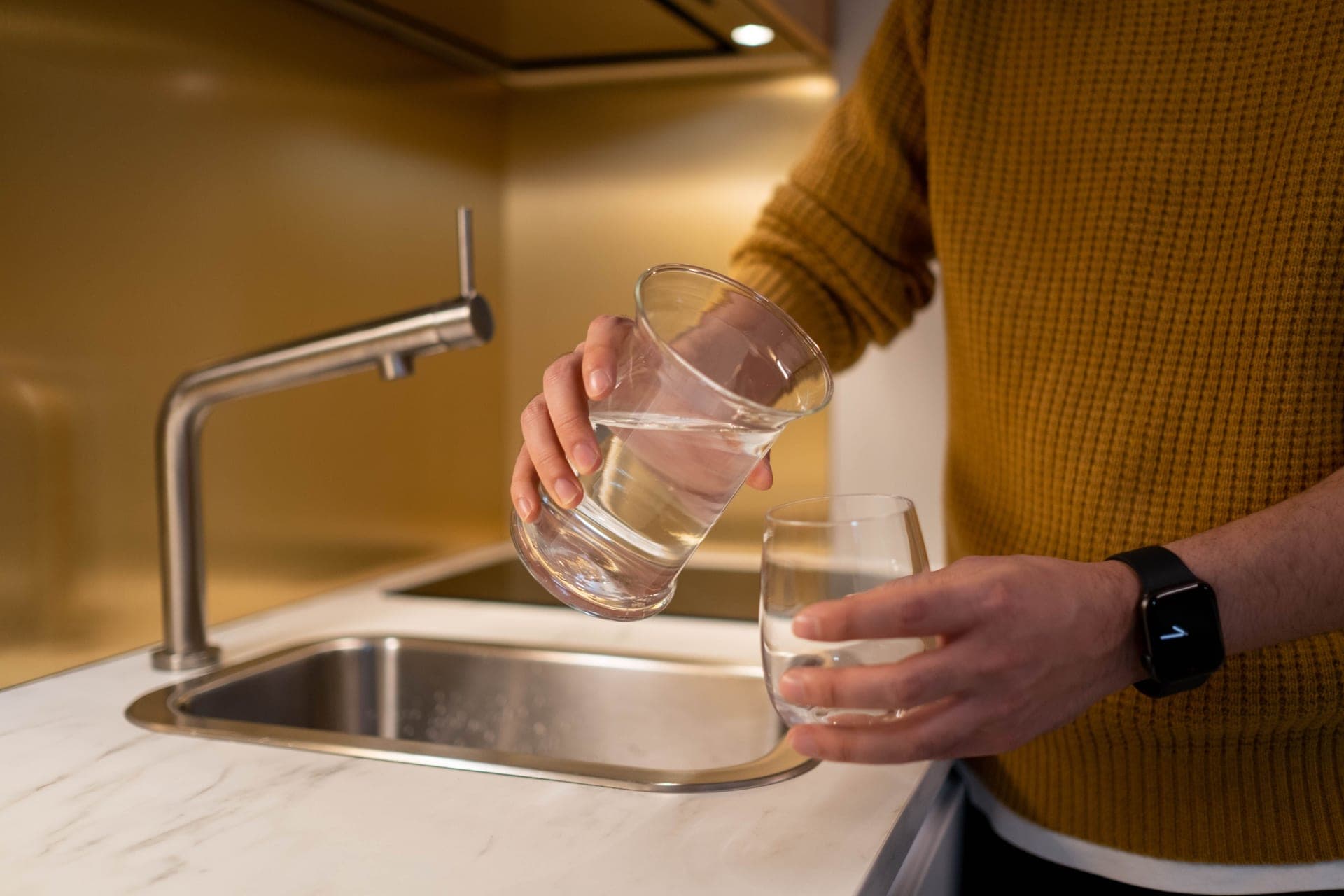
Yes. Tap water is the correct water for a freshwater aquarium — after you treat it. Municipal water is disinfected with chlorine or chloramine at up to 4.0 mg/L, which is safe for people and lethal for fish and for the bacteria in your filter, so every drop that goes into the tank needs a conditioner first. Seachem Prime is the bottle to buy if the tank is new or ever likely to go wrong; API Tap Water Conditioner is the cheaper, narrower answer for a settled tank. What you should not do is use distilled or reverse-osmosis water instead: it has had the minerals fish need stripped out of it, and it will not hold a stable pH.
This question usually arrives in one of two forms. Either somebody has heard tap water kills fish and is considering bottled water, or somebody has already filled a tank straight from the faucet and is wondering what happens next. Both have the same answer, and the second one is more urgent.
Quick picks
What to buy before the first fill
| # | Product | Best for | Price |
|---|---|---|---|
| 1 | 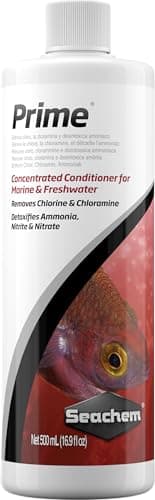 Seachem Prime Removes chlorine and chloramine, and Seachem states it also detoxifies ammonia, nitrite and nitrate for up to 48 hours. | Anyone whose tank is new, cycling, or ever likely to go wrong | $16.62 on Amazon #ad How we’re funded · price as of November 3, 2026 |
| 2 | 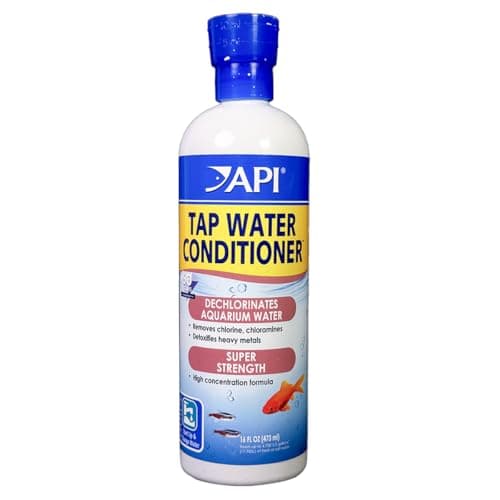 API Tap Water Conditioner, 16 oz A dechlorinator and nothing else, dosed in drops rather than capfuls. The cheapest honest answer. | An established tank that only ever needs dechlorinating, and a water bill of a bottle every two years | |
| 3 | 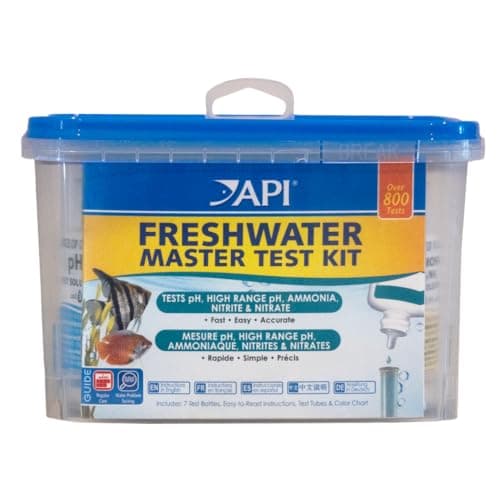 API Freshwater Master Test Kit The only way to know your starting water. Test the tap, not just the tank. | Finding out what your tap water actually is before you blame the tank | $35.98 on Amazon #ad How we’re funded · price as of November 3, 2026 |
| 4 | 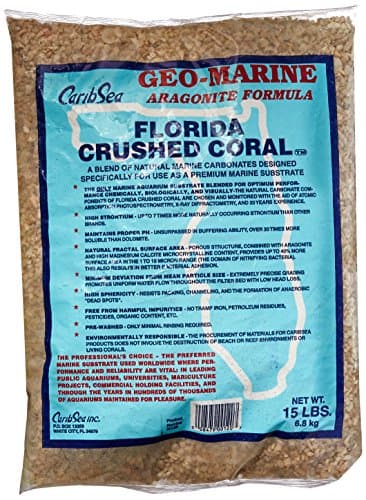 CaribSea Crushed Coral Raises carbonate hardness so pH stops drifting. Correct only if you have tested and know your water is soft. | Very soft tap water, where pH will not hold still | $28.99 on Amazon #ad How we’re funded · price as of November 3, 2026 |
| 5 | 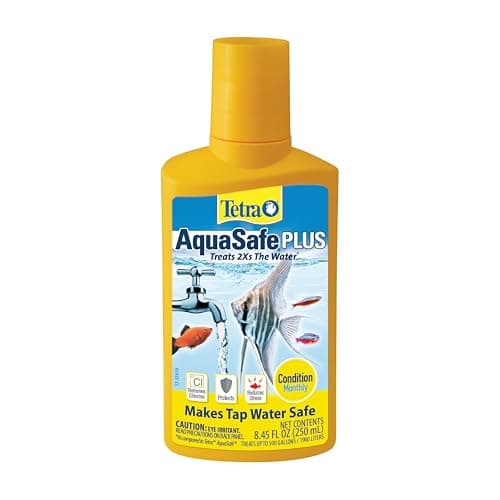 Tetra AquaSafe Plus Water Conditioner A competent conditioner, supplied in a sample size that runs out exactly when you have stopped thinking about it. | The sachet that came in your kit, and the two water changes it covers | $10.07 on Amazon #ad How we’re funded · price as of November 3, 2026 |
Rows link to the full write-up further down this page. Prices come from the live price layer only; where there is no live figure the button reads “Check price” rather than showing a remembered number.
How we judged this, before any recommendation
Three criteria, in this order. Does it remove chloramine, not just chlorine? — because chloramine is what most US utilities now use and it behaves very differently. Does it leave the minerals in? — because fish and plants need them and stripped water is unstable. Can you check the dose against a published figure? — because a conditioner is the one product where under-dosing is invisible until the fish show it.
That ordering is what rules out distilled and RO water before the product comparison even starts. They pass the first test perfectly and fail the second completely.
Chlorine or chloramine: the only question that changes your dose
The EPA sets a maximum residual disinfectant level of 4.0 mg/L for both chlorine and chloramines, as Cl2. That is the ceiling your utility works to, and it is why untreated tap water is not a neutral liquid.
The difference between the two matters enormously to you and not at all to your water company. Free chlorine gases off from standing water, which is where the old advice about letting a bucket sit overnight comes from. Chloramine does not — it is chlorine bonded to ammonia, it is deliberately more stable, and it is why that old advice is now actively dangerous. Worse, breaking the bond releases the ammonia, so a conditioner that handles chloramine is dealing with two problems and its label often says so with a bigger dose.
| Free chlorine | Chloramine | |
|---|---|---|
| EPA maximum residual level | 4.0 mg/L (as Cl2) | 4.0 mg/L (as Cl2) |
| Gases off from standing water | Yes, slowly | No — this is the point of it |
| "Let the bucket sit overnight" | Partially works | Does not work at all |
| Releases ammonia when broken down | No | Yes — the ammonia was bonded to the chlorine |
| Conditioner dose | The label's base dose | Often several times higher — check your label |
| How to find out which you have | Your utility's annual water quality report, or call them | Same |
Disinfectant levels are the EPA's regulated maxima, cited at the foot of this page. Dose behavior is from the conditioner labels, also cited.
Why not distilled, RO or bottled water
- Distilled water has had everything removed, including the calcium, magnesium and carbonates that fish, snails and plants use and that give water its buffering capacity. A tank of pure distilled water has almost no resistance to pH change, so it swings — and pH swings harm fish far more reliably than a pH that is simply not ideal.
- Reverse-osmosis water is the same story with a filter instead of a kettle. Keepers who use RO water are chasing a specific water chemistry for a specific fish, and they remineralize it deliberately before it goes in the tank. That is a technique for a later tank, not a shortcut for a first one.
- Bottled spring water is a lottery. It is not disinfected the way tap water is, which sounds like an advantage, but its mineral content is whatever the spring had and the label rarely tells you in terms you can act on. You are paying a lot per gallon for an unknown.
- The cost is the quiet argument. A 20 gallon tank on weekly 25% changes needs about 260 gallons of water a year. At bottled-water prices that is a recurring bill; from the tap with a conditioner it is pennies.
- The exception that is real: if your tap water is genuinely unsuitable — a private well with high nitrate, for instance — that is a case for testing, treating, and asking a specific question rather than reaching for distilled water. Our contact page is the place for that one.
Test your tap water once. It explains most of the rest.
Fill a glass, let it stand an hour, and test it for pH, ammonia and nitrate. Three things commonly turn up, and each of them explains something people otherwise blame on the tank.
- A high pH out of the faucet — often 7.8 to 8.4 in hard-water regions — explains a tank that will not sit at the 7.0 the fish chart asks for. The right response is almost always to keep the fish that suit your water rather than to fight it with chemicals.
- Ammonia above zero is normal where chloramine is used, because the disinfectant contains it. It is also why a brand-new tank can show ammonia before a fish arrives, and why Prime's binding claim is useful on day one.
- Hardness tells you whether you are in soft-water or hard-water country. The USGS classifies water as soft below 60 mg/L of calcium carbonate, moderately hard to 120, hard to 180 and very hard above that. Soft water is the case where buffering with crushed coral is a real fix rather than meddling; hard water needs nothing done to it at all.
Your utility publishes an annual water quality report that gives you the disinfectant it uses and usually the hardness, which is faster than testing for those two. The numbers that matter in the tank, though, you measure yourself — the kit everybody ends up with is taken apart on the API Freshwater Master Test Kit review.
The routine, once you have the right bottle
Treat the new water, not the tank, where you can: dose the bucket, stir, then pour it in. On a faucet-driven water changer that is impossible, so you dose the tank for the volume of water you are adding before you start refilling. Either way, match the temperature — a 25% change of cold water into a warm tank is a thermal shock you can avoid with a thermometer and thirty seconds of patience.
Top-off water counts too. Evaporation removes water and leaves the minerals behind, so what you add back needs conditioning exactly like a water change does, even though the volume is small. The full weekly routine is on how often to change aquarium water, and the shortlist of conditioners is on the best aquarium water conditioners.
One last thing that catches people: treating the water does nothing about the nitrogen cycle. Conditioned tap water is safe water, not cycled water, and a tank still needs its bacteria colony grown before fish go in. That is how to cycle a fish tank, and it is the step that actually decides whether the fish live.
Pick 1
Seachem Prime
Anyone whose tank is new, cycling, or ever likely to go wrong
The number
Published dose: 1 capful (5 mL) per 200 L (50 US gallons) of new water, which works out at about 0.1 mL per gallon treated.
If you buy one bottle before the tank is wet, buy this one. It does the compulsory job — chlorine and chloramine removal — and it does a second job no basic dechlorinator does.
Seachem states it detoxifies ammonia, nitrite and nitrate, binding them into a less toxic form for up to 48 hours. On a new tank that is cycling, that window is the difference between a water change you do tomorrow morning and a water change you needed to do last night.
The dose is unusually small for the volume it treats, which is why the bottle lasts and why comparing conditioners on shelf price gives you the wrong answer.
The honest costs. It does not remove ammonia, it binds it, and your test kit will still read the ammonia afterwards — a number that has not dropped after dosing is neither a broken kit nor a failed product. The 48-hour window is a window, and dosing it instead of changing water is how fish are kept in slowly worsening water. It smells strongly of sulfur. And on a settled tank with months of zero ammonia readings, you are carrying a capability you never use.
| Dose | 1 capful (5 mL) for each 200 L (50 US gallons) of new water |
|---|---|
| Removes | Chlorine, chloramine |
| Detoxifies | Ammonia, nitrite and nitrate |
| Binding duration | Seachem states it binds those compounds for up to 48 hours |
| What it does not do | It does not remove ammonia. It binds it into a less toxic form for up to 48 hours, and your test kit will still read the ammonia as present. It is not a bacteria product and it will not cycle a tank. |
Specs from Seachem, Prime product page. We have not used this unit.
#ad How we’re funded · price as of November 3, 2026
Pick 2
API Tap Water Conditioner, 16 oz
An established tank that only ever needs dechlorinating, and a water bill of a bottle every two years
The number
The retailer states about 1 drop per gallon for chlorine and heavy metals, about 3 drops per gallon where chloramine is used, and 9,460 gallons treated per 16 oz bottle.
This is the right buy for a cycled, stable, correctly stocked tank, and on that tank it is not a compromise — it is the product that does the one thing you need.
It is also the clearest illustration of the chlorine-versus-chloramine point this page is about: the published dose triples where the utility uses chloramine. That is not marketing, it is chemistry, and it is the number most people never notice on the label.
The honest costs. It is not an ammonia detoxifier, which is the exact capability Prime has and this does not, and it is why they are not interchangeable in an emergency. Retailer listings disagree with each other about the dose — one gives drops per gallon, another gives teaspoons per hundred gallons — so this is a product where you read your own bottle rather than a website. Dosing by drops is fiddly on a large water change.
| Job | Dechlorinator. Removes chlorine and neutralizes chloramine |
|---|---|
| Concentration | API markets it as highly concentrated, so a small bottle treats a large volume |
| Scope | A dechlorinator, and only that |
| What it does not do | It is not an ammonia detoxifier. That is the specific thing Prime does and this does not, and it is the whole reason the two are not interchangeable in an emergency. No bacteria, no slime-coat additive. |
Specs from API Tap Water Conditioner 16 oz, Amazon listing. We have not used this unit.
Pick 3
API Freshwater Master Test Kit
Finding out what your tap water actually is before you blame the tank
The number
Over 800 tests per kit, covering pH, high-range pH, ammonia, nitrite and nitrate.
Almost nobody does this and it answers more questions than any other ten minutes in the hobby: fill a glass from the tap, let it stand for an hour, and test it.
A pH of 8.2 out of the faucet explains a tank that will not stay at 7.0. Ammonia above zero in tap water is a real thing where chloramine is used, because breaking chloramine apart releases ammonia — which is exactly why the conditioner matters and why a brand-new tank can read ammonia before a single fish arrives.
Knowing your baseline also stops you chasing numbers. Fish do far better in stable water that is not their textbook ideal than in water you are constantly correcting toward it.
The honest costs. It does not test hardness, chlorine or alkalinity, which are three of the things this page would like you to know. It is slower and fiddlier than strips, the nitrate test needs the second bottle shaken hard and then a wait, and the color card is genuinely hard to read between adjacent shades under warm light. Reagents expire.
| Tests | pH, High Range pH, Ammonia, Nitrite, Nitrate |
|---|---|
| Capacity | Over 800 tests per kit |
| Contents | 7 bottles of test solution, 1 color card, 4 glass tubes with caps, holding tub |
| Type | Liquid reagent |
| What it does not do | Does not test hardness, chlorine or alkalinity. It is slower than strips, the nitrate test needs vigorous shaking of the second bottle and a wait, and the color card is genuinely hard to read between adjacent shades. |
Specs from API Freshwater Master Test Kit, Amazon listing; API Freshwater Aquarium Master Test Kit, PetSmart listing. We have not used this unit.
#ad How we’re funded · price as of November 3, 2026
Pick 4
CaribSea Crushed Coral
Very soft tap water, where pH will not hold still
The number
The USGS classifies water below 60 mg/L as calcium carbonate as soft. Aquarium Co-Op states 1 lb per 10 gallons mixed into gravel, with a service life of 1 to 2 years as substrate.
Here is the case where tap water genuinely needs more than dechlorinating. If your water is very soft — low hardness, low carbonate hardness — there is little buffering capacity in the tank, and pH can slide downward between water changes as acids accumulate.
Crushed coral dissolves slowly and raises carbonate and general hardness, which buffers pH upward and holds it steadier. On soft water it is the fix; mixed into gravel it works quietly for a year or two.
The honest costs. This is not a neutral substrate and it is not sold as one. It changes water chemistry continuously, and the size of the change depends entirely on your starting water, so the same amount moves soft water a long way and barely registers in hard water. It is the wrong default for a general community tank and right only after a test told you so. And nothing here is an argument for chasing a specific pH number: stability beats the textbook figure every time.
| What it does | Dissolves slowly into the water, raising carbonate hardness (KH) and general hardness (GH), which buffers pH upward |
|---|---|
| Typical dose | Aquarium Co-Op states 1 lb per 10 gallons when mixed into gravel |
| Intended for | Aquarium Co-Op sells it for fish, shrimp and snails that need a higher pH, and for keepers whose tap water is soft with low pH, KH and GH |
| Service life as substrate | Aquarium Co-Op states 1 to 2 years used as substrate, versus 1 to 3 months used as filter media |
| What it does not do | This is not a neutral substrate and it is not sold as one. It changes water chemistry continuously and the size of the change depends on your starting water, so the same amount moves soft water a long way and barely moves hard water. Wrong as a default for a general community tank; correct only if you have tested your water and decided you want it harder. |
Specs from Crushed Coral 1 lb, Aquarium Co-Op product page (pH, KH, GH effect, dose, service life); Aquarium Co-Op, The Fish Keeper's Guide to pH, GH and KH. We have not used this unit.
#ad How we’re funded · price as of November 3, 2026
Pick 5
Tetra AquaSafe Plus Water Conditioner
The sachet that came in your kit, and the two water changes it covers
Included because most beginners already own some without having chosen it: a sachet of AquaSafe ships in a large share of starter kits, and it is where a lot of conditioner habits get set.
As a dechlorinator it is competent and widely used. The retailer-published dose is one teaspoon (5 mL) per 10 gallons — five times the volume of product per gallon treated that Prime asks for, which is the number worth knowing before you compare bottle prices.
The honest costs. The quantity is the problem rather than the chemistry. A kit sachet is a sample, not a supply, and on a 20 gallon tank doing weekly 25% changes you will exhaust it in roughly two changes — a discovery people make mid-water-change, standing over a bucket of untreated tap water. It is also not an ammonia detoxifier, and retailer listings disagree over whether the dose is a teaspoon per 10 gallons or a capful per 20.
| Type | Tap water conditioner for freshwater aquariums |
|---|---|
| Dosing | Printed on the bottle and varies by size. Follow the label. |
| What it does not do | A conditioner neutralizes tap water. It is not a substitute for a water change and it does not carry the ammonia-binding claim Prime does. |
The manufacturer does not publish a full spec sheet for this item, so nothing beyond the figures above is stated. We have not used this unit.
#ad How we’re funded · price as of November 3, 2026
Questions people actually ask
Frequently asked questions
+ Can you use tap water in a fish tank?
+ How long should tap water sit before adding fish?
+ Can I use distilled water in a fish tank?
+ Is bottled water better for fish than tap water?
+ How do I know if my water has chlorine or chloramine?
+ Why does my tap water test positive for ammonia?
+ Do I need to condition water for a top-off?
+ Does my tap water's pH matter?
+ Can I use a water softener's output in my tank?
Where the numbers came from
Sources
- US EPA, National Primary Drinking Water Regulations (maximum residual disinfectant level of 4.0 mg/L for both chlorine and chloramines, as Cl2)
- US EPA, Chloramines in Drinking Water — why many utilities use chloramine rather than free chlorine
- USGS Water Science School, Hardness of Water (soft 0-60, moderately hard 61-120, hard 121-180 and very hard above 180 mg/L as calcium carbonate; hardness is caused by compounds of calcium and magnesium)
- Seachem Prime — product page (dose, what it removes, what it detoxifies, 48-hour binding claim)
- API Tap Water Conditioner 16 oz, That Pet Place listing (about 1 drop per gallon for chlorine and heavy metals, about 3 drops per gallon where chloramine is used; 16 oz stated to treat 9,460 gallons)
- Tetra AquaSafe Plus 8.45 oz, That Pet Place listing (add one teaspoon / 5 mL for every 10 gallons; treats up to 500 gallons; neutralizes chloramine by breaking the bond between chlorine and ammonia; adds a slime coating)
Read next
Related on Fin & Filter
The best aquarium water conditioners
What conditioners actually remove, the ammonia-binding claim that matters in an emergency, and which to keep on the shelf.
Seachem Prime vs Tetra AquaSafe Plus
Dose per gallon, the ammonia claim, and the one situation where the cheaper bottle is genuinely the wrong buy.
How to cycle a fish tank
What cycling actually is, the fishless method start to finish, and the exact test result that means it is done.