Stocking
What size tank do goldfish need?
Goldfish are extremely hardy and extremely badly housed, and those two facts are connected — they survive conditions that would kill anything else, which is why the conditions persist.
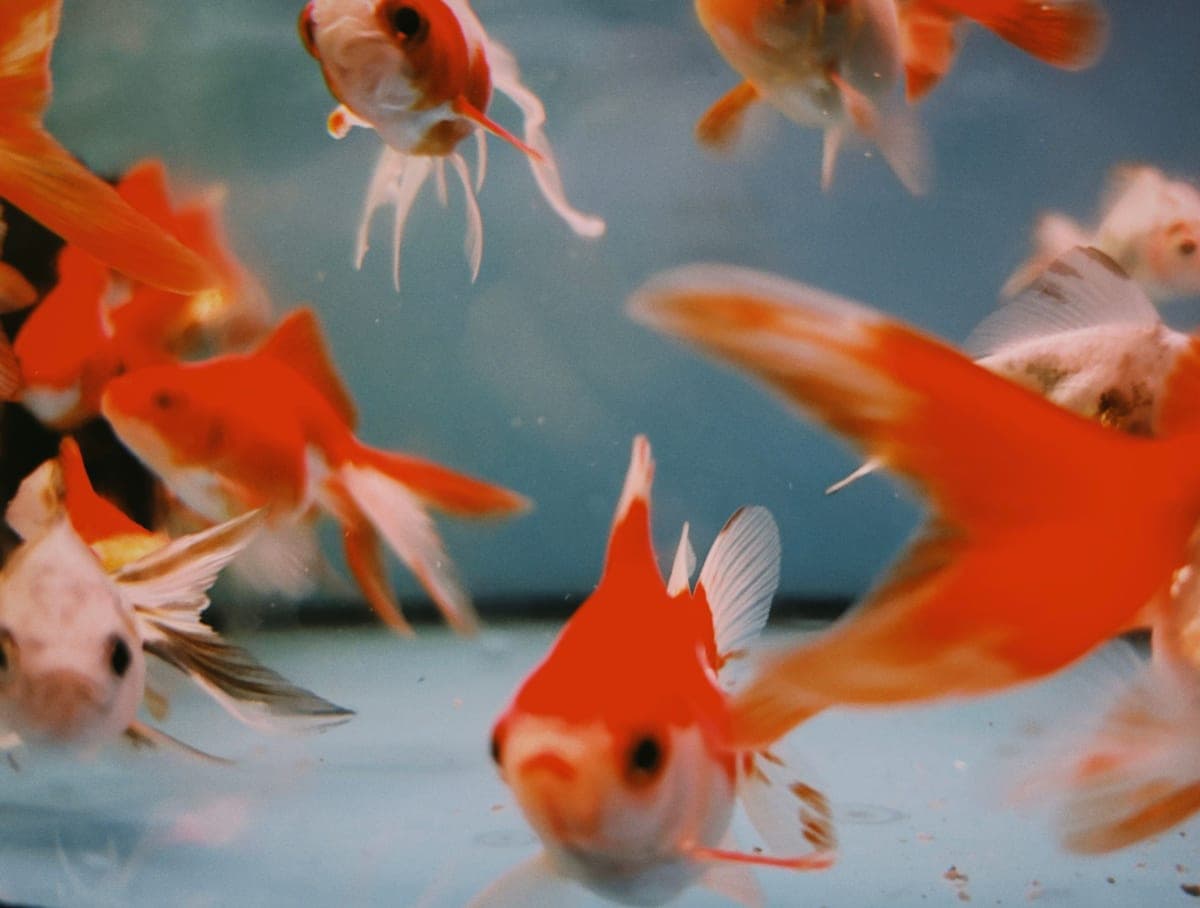
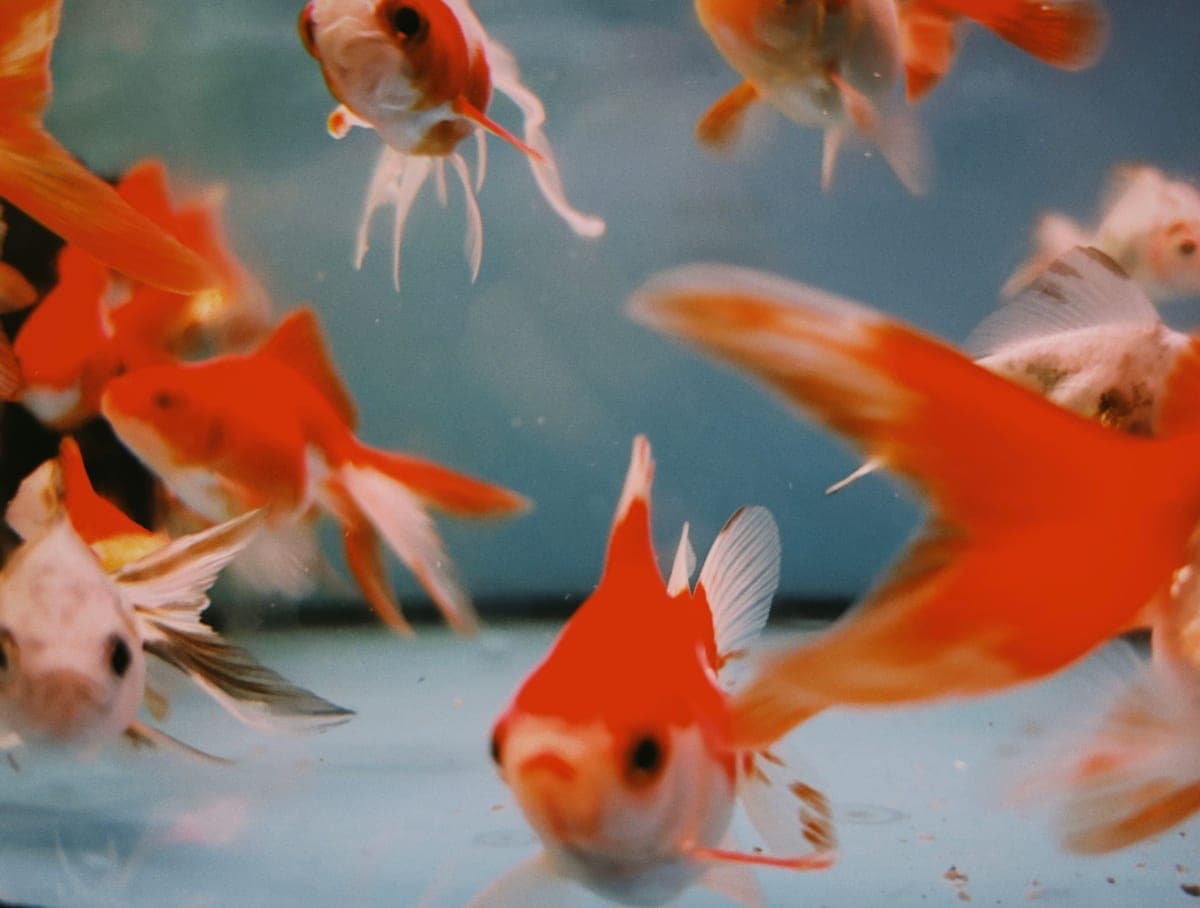
Far more than a bowl, and more than a 10 gallon tank. Goldfish grow large, produce a great deal of waste, and are coldwater fish — a fancy variety needs a tank measured in tens of gallons, and a common goldfish realistically belongs in a pond. They do not stay small in a small tank; they become stunted, which is a deformity rather than an adaptation.
This is the most consequential myth in the hobby, because it is attached to the fish most often given to children and most often kept in the smallest containers.
Why they need so much water
They get big
Common and comet goldfish are pond fish. They reach a size that no aquarium a beginner is likely to own can house, and the small orange fish in the bag at the fair is a juvenile of a species that grows for years.
Fancy varieties — orandas, ryukins, fantails — stay shorter but become deep-bodied and heavy, which is body mass and therefore waste. Shorter is not smaller in the sense that matters.
They produce a lot of waste
This is the constraint people underestimate. Goldfish eat heavily, have a short digestive tract, and are messy feeders. Their ammonia output per unit of body length is far above a tropical community fish of similar size, which is exactly why length-based stocking rules fail worst on this species.
Waste is a concentration problem, and concentration is mass divided by volume. A goldfish in a small tank produces a lot of the numerator into a very small denominator, which is why goldfish bowls foul so fast.
They are coldwater fish
Goldfish do not want a tropical heater, and this matters practically because they are so often sold alongside tropical equipment and housed in tropical setups. Warmer water raises their metabolism, which raises their waste output, and it also raises ammonia toxicity — the EPA notes toxicity increases with temperature. A heated goldfish tank is worse on both counts.
Stunting is not adaptation
The belief that a fish grows to the size of its tank is the single most damaging idea attached to goldfish, and it is worth taking apart because it contains a grain of truth.
Goldfish in small containers do stay smaller. What is happening is not the fish sensibly adjusting to its accommodation. In poor water, growth-inhibiting compounds accumulate and suppress external growth while the internal organs continue developing. The result is a fish whose organs are outgrowing the body containing them.
That is a deformity, and it is associated with a shortened life and organ failure. A stunted goldfish is not a small healthy goldfish; it is a sick one that has been prevented from growing.
What is actually needed
| Type | Honest verdict | Why |
|---|---|---|
| Common / comet goldfish | A pond, or a very large aquarium | They reach pond-fish size and never stop being active swimmers. No beginner aquarium is appropriate. |
| Fancy varieties (oranda, ryukin, fantail) | A large aquarium, measured in tens of gallons, more for each additional fish | Deep-bodied and heavy. Slower swimmers than commons, but not smaller in waste terms. |
| A goldfish bowl | Not appropriate for any goldfish | No filtration, tiny volume, and minimal surface area for gas exchange. |
| A 10 gallon tank | Not appropriate | This is a betta or nano-school tank. See how many fish in a 10 gallon tank. |
We give ranges rather than precise minimums deliberately: published recommendations vary and we would rather say "far more than you have been told" honestly than invent an authoritative-sounding number.
Filtration, which is the other half
Goldfish are the case where our standard turnover arithmetic should be pushed upward. A typical community tank is sized at 6 times turnover; a goldfish tank wants 8 or more, because the waste load per gallon is so much higher.
Run the numbers from how to size an aquarium filter with 8x rather than 6x, and expect to need considerably more filter than a tropical tank of the same volume. Two filters is a reasonable answer here, and water changes will be larger and more frequent regardless.
If your goldfish is already in a small tank
Very common, usually because it was a gift or a fairground prize, and it is fixable. Nobody needs a lecture — here is the order of operations.
- Increase water changes now. More water, more often, is the immediate mitigation and it costs nothing. See how often to change aquarium water.
- Test ammonia and nitrite. A small overstocked goldfish tank usually has readings, and that is the acute problem rather than the size.
- Feed less. Goldfish beg constantly and always appear hungry. Overfeeding is the biggest single contributor to a fouled goldfish tank.
- Do not heat it. Room temperature is right, and warmer water increases both waste output and ammonia toxicity.
- Upgrade the tank, or rehome. A bigger tank is the real fix. If that is not possible, a local aquarium club, a school, or a keeper with a pond is a better outcome than a lifetime in a small tank — and rehoming a fish you cannot house properly is a responsible decision, not a failure.
- Never release it outdoors. Goldfish are highly invasive in wild waterways and released fish cause real ecological damage. A pond on private property is fine; a river is not.
What to keep instead, in a small tank
If you have a 10 or 20 gallon tank and wanted a goldfish, the good news is that the tank is excellent for other things: a single betta, a school of small tetras or rasboras, a group of platies, or a shrimp colony. See the hardiest fish for beginners.
Questions people actually ask
Frequently asked questions
+ What size tank does a goldfish need?
+ Can a goldfish live in a bowl?
+ Do goldfish grow to the size of their tank?
+ Do goldfish need a heater?
+ How many goldfish can I keep together?
+ What should I do if my goldfish is in too small a tank?
Where the numbers came from
Sources
Read next
Related on Fin & Filter
How many fish in a 10 gallon tank?
Why the inch-per-gallon rule fails, the three real constraints, and worked stocking combinations.
The hardiest fish for a first aquarium
Which species tolerate a beginner's mistakes, what each needs, and the popular fish that should not be first.

How to size an aquarium filter
Tank gallons times turnover, divided by 0.7. The formula, worked examples, and the table for every common size.