Head to head
Goldfish vs betta: which should be your first fish?
They sit on the same shelf, at roughly the same price, in roughly the same bag. Choosing between them is not a choice of fish — it is a choice of tank size, and of whether you buy a heater at all.
Fin & Filter earns a commission when you buy through the links on this page. It costs you nothing and it does not decide what we rank. How we’re funded.
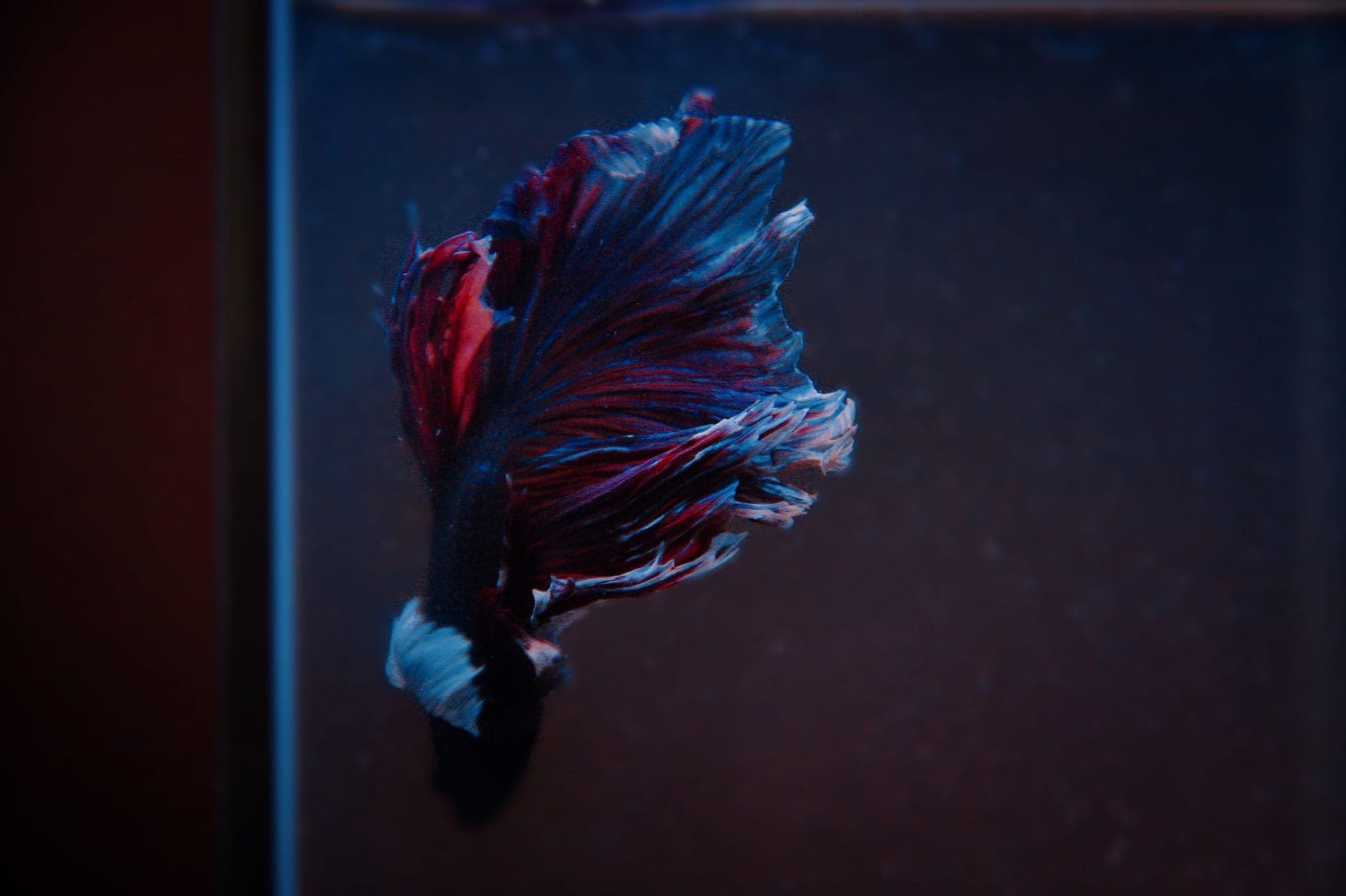
We have not used any of this gear. Every pick below is chosen from published manufacturer specifications and the arithmetic on how we pick, which you can re-run yourself.
For a first tank, the betta. The same trade body puts a single male betta in at least 20 liters (about 5 US gallons) and one adult goldfish in at least 100 liters (about 26 US gallons), plus 50 liters for every additional goldfish. That five-fold difference in water, not the fish itself, is the decision you are actually making.
These two are the beginner's fork in the road. They sit near each other in every shop, cost roughly the same, and are both sold as easy. They are not comparable purchases, and the gap is not a matter of opinion — it is printed in the care sheets the trade publishes for its own members.
The criterion: how much water each fish needs, and whether you heat it
State the criterion before the answer. We are comparing these two on published minimums from a single source, so the numbers are consistent with each other: OATA, the Ornamental Aquatic Trade Association, publishes a care sheet per species and we have quoted both.
| Betta (Siamese fighting fish) | Goldfish | |
|---|---|---|
| Minimum aquarium | At least 20 liters for a single male — about 5.3 US gallons | At least 100 liters for one adult — about 26 US gallons — plus 50 liters (13 gallons) for each additional adult |
| Temperature | 20-28 C (68-82 F) | 4-25 C (39-77 F), with 15-23 C (59-73 F) optimal for fancy varieties |
| Heater | Required, to hold a suitable temperature all year round | Not required, unless the fish are kept in a very cold room |
| Adult size | About 7 cm, under 3 inches | Up to about 20 cm (8 inches) for fancy varieties; up to 25 cm (10 inches) is common in an aquarium |
| Flow | A gentle current, so the fish can swim freely | A filter is always essential; fancy breeds also want the output gentle and evenly distributed |
| Weekly water change | 25% | 25% |
| pH | 6.0-8.0 | 6.0-8.0 |
Every figure in this table is quoted from OATA's own care sheet for that species, both linked in Sources. The liter-to-gallon and Celsius-to-Fahrenheit conversions are ours.
Three rows do the work. The water requirement differs by a factor of five. The heater is required for one and discouraged for the other. And the adult size differs by more than three times, which is the reason the water requirement differs — the goldfish in the bag is a juvenile of a fish that keeps growing.
The tanks themselves, which are not a pick on this page
The betta tank is an ordinary first aquarium and this site already compares them properly: the 10 gallon options are on best 10 gallon aquarium kits, and the smaller end on best nano aquarium kits. A 10 gallon tank holds 37.9 liters, which is 89% more than the 20 liter floor — the margin is what makes it stable.
The goldfish tank is the one that falls outside the kit aisle entirely, and the arithmetic is the reason. OATA's figure is 100 liters for one adult. A 20 gallon tank is 75.7 liters, so even the largest kit on best 20 gallon aquarium kits lands about a quarter short of the minimum for a single goldfish. That is not a knock on those kits. It is the clearest statement of the gap this page is about: the goldfish answer starts where the beginner kit aisle stops.
Which is also why the picks below are the gear that differs by species rather than a tank shortlist. The tank is the decision; the equipment is what the decision costs.
Quick picks
The gear each answer commits you to
| # | Product | Best for | Price |
|---|---|---|---|
| 1 | 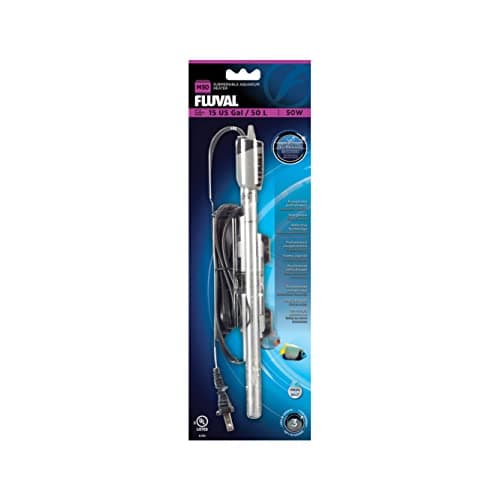 Fluval M50 Submersible Heater (50W) 50 W is exactly what our arithmetic asks for on a 10 gallon tank, and the betta is the fish that genuinely needs it. | The betta route: the purchase that decides it | $32.99 on Amazon #ad How we’re funded · price as of November 3, 2026 |
| 2 | 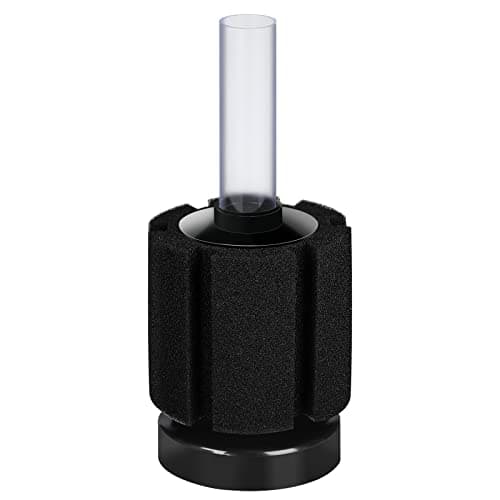 AQUANEAT Bio Sponge Filter (nano, up to 10 gallons) The gentlest filtration available, which is what both the trade body and the published research say a betta wants. | The betta route: flow the fish will not have to fight | $5.98 on Amazon #ad How we’re funded · price as of November 3, 2026 |
| 3 | 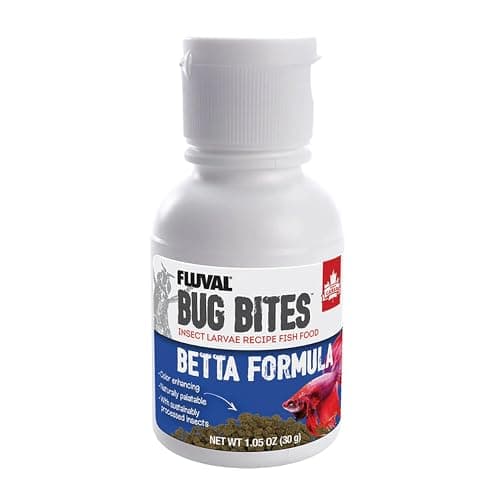 Fluval Bug Bites Betta Formula Floating granules sized for a betta, from the insect-larvae range, and the staple we land on elsewhere for the same fish. | The betta route: food for a small carnivorous mouth | $5.99 on Amazon #ad How we’re funded · price as of November 3, 2026 |
| 4 | 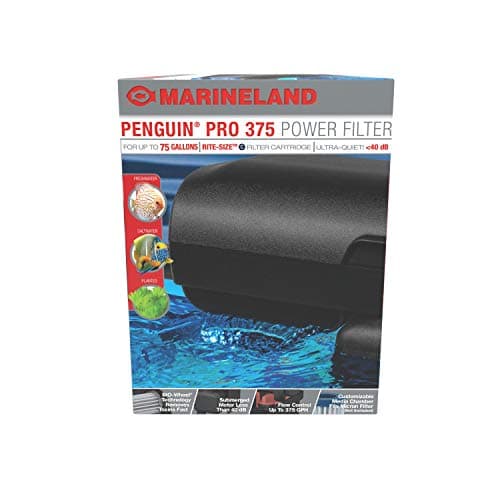 Marineland Penguin 375 GPH Bio-Wheel Power Filter The first filter on this site that clears the figure a 100 liter goldfish tank actually asks for. | The goldfish route: filtration at 8x, not 6x | $64.87 on Amazon #ad How we’re funded · price as of November 3, 2026 |
| 5 | 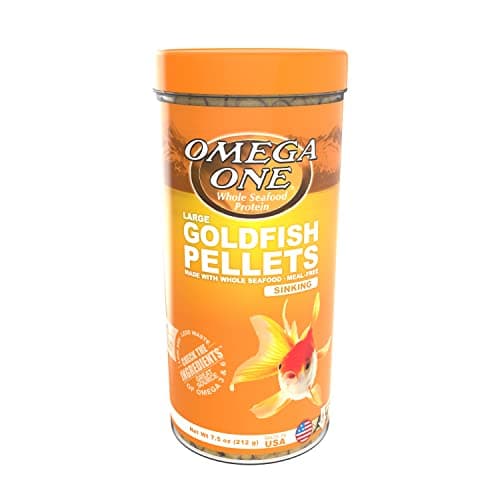 Omega One Goldfish Pellets, Sinking A sinking pellet, which is the specific thing a deep-bodied fancy goldfish needs and a floating flake is not. | The goldfish route: sinking food for a fancy variety | $9.99 on Amazon #ad How we’re funded · price as of November 3, 2026 |
| 6 | 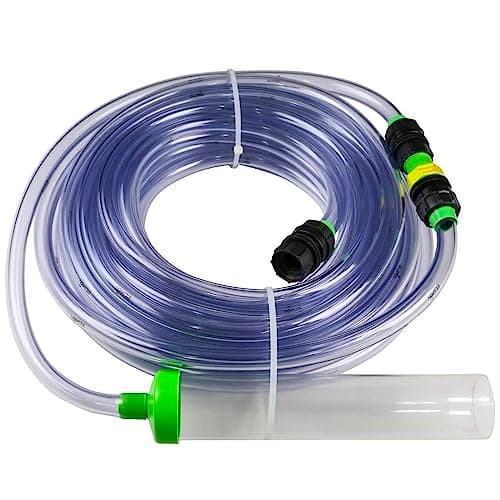 Python No Spill Clean and Fill, 25 ft The volume a goldfish tank sheds every week is the point at which buckets stop being a reasonable way to do this. | The goldfish route: the weekly water change, without buckets | $59.99 on Amazon #ad How we’re funded · price as of November 3, 2026 |
| ! | 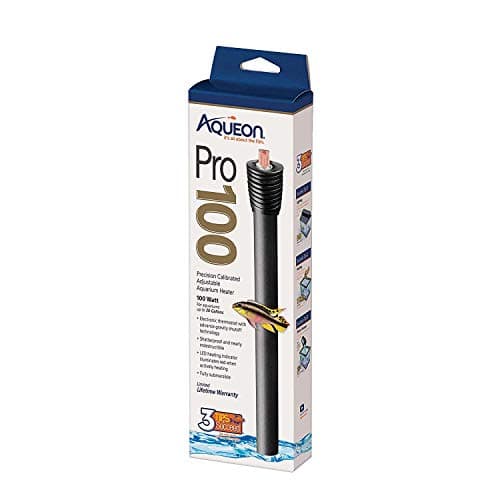 Aqueon Pro 100 Submersible Heater, 100 W A sound 100 W heater for a tropical 20 to 30 gallon tank, and the single most common wrong purchase for a goldfish. Skip this one — see why below | Nothing on the goldfish route | $62.95 on Amazon #ad How we’re funded · price as of November 3, 2026 |
Rows link to the full write-up further down this page. Prices come from the live price layer only; where there is no live figure the button reads “Check price” rather than showing a remembered number.
What the betta answer actually costs you
A 10 gallon tank, a 50 W heater, a gentle filter, a thermometer, a dechlorinator and a test kit. That is an ordinary first aquarium, and the full version with the alternatives weighed up is on the best betta tank setup. The heater sizing behind the 50 W figure is on the best heater for a 10 gallon tank.
The one place a betta is fussier than a community fish is flow. UF/IFAS reports that research has used flow as a stressor on this species and concludes heavy filtration may be harmful to a betta's welfare, which is why the filter choice here is the gentlest available rather than the most powerful affordable. The alternatives, including how to tame a filter you already own, are on the best filter for a betta.
A betta also breathes air. It is a labyrinth fish, with paired chambers above the gills formed from the first gill arch, so it takes gulps at the surface as normal behavior rather than as a distress signal. A tank lid with a gap, and no powerful surface current, are both part of getting this right.
What the goldfish answer actually costs you
A tank measured in tens of gallons, a filter sized well above the usual figure, a sinking food, and a weekly water change nearly three times the size. No heater, which is the one line where the goldfish is cheaper. The full argument on tank size, including why published minimums vary so widely, is on what size tank goldfish need, and the equipment inversion has its own page on whether goldfish need a filter and a heater.
The filter figure is where this page can be most concrete, because it is arithmetic rather than opinion. A community tank is sized at 6 times turnover on this site; a goldfish tank wants 8 or more, because the waste load per gallon is so much higher. The method itself, and why a filter's rated GPH is not its real GPH, is on how to size an aquarium filter.
| Tank | Turnover used | Real GPH needed | Rated GPH to shop for |
|---|---|---|---|
| 10 gallon betta tank | 4x — lightly stocked | 40 | 55 |
| 10 gallon betta tank | 6x — if you ever restock it as a community tank | 60 | 85 |
| 26 gallon goldfish tank | 6x — the usual community figure | 156 | 225 |
| 26 gallon goldfish tank | 8x — what a goldfish warrants | 208 | 295 |
Rated GPH applies this site's 30% real-world throughput correction: a filter is rated with empty media and no head height, and loaded it moves considerably less. 26 gallons is OATA's 100 liter minimum converted.
The useful finding is in the bottom two rows. A filter labelled for 20 to 50 gallons clears the 6x figure comfortably and misses the 8x figure, which is how a goldfish tank ends up under-filtered by someone who read the box carefully and did everything right.
Pick 1
Fluval M50 Submersible Heater (50W)
The betta route: the purchase that decides it
The number
Our method asks 5 W per gallon for a 10 F lift, so 50 W on a 10 gallon tank. The M50 is 50 W and is rated by Fluval to 15 US gallons, with a 66-86 F range that spans the whole 68-82 F band OATA gives for a betta.
This is the purchase that separates the two fish more sharply than anything else. OATA's betta sheet says a heater is required to maintain a suitable temperature all year round. Its goldfish sheet says a heater is not required unless the fish are kept in a very cold room. Same publisher, same series, opposite instruction.
The reason is that a betta is a tropical fish in the literal sense. UF/IFAS puts the floor for an unheated betta container at a room held no lower than 22 C, which is 71.6 F — warmer than most people keep a house in winter, and far warmer than a room gets overnight with the heating off.
A heater is also the quietest way to remove a whole category of beginner failure. Temperature swings suppress a fish's immune response, and the resulting illness gets blamed on the fish rather than on the thermostat that was never there.
The honest costs. No thermometer is included, and a heater dial is a setting rather than a reading — you still need something in the water telling you the actual temperature. It is also a glass heater, so it wants care when the tank is drained.
| Wattage | 50 W |
|---|---|
| Stated tank size | Up to 15 US gal / 50 L |
| Temperature range | 66-86 F (19-30 C) |
| Thermostat | Computer-calibrated, adjustable dial |
| What it does not do | No thermometer. A heater dial is a setting, not a reading, and you still need something in the water telling you what the temperature actually is. |
Specs from Fluval, M50 Submersible Heater product page. We have not used this unit.
#ad How we’re funded · price as of November 3, 2026
Pick 2
AQUANEAT Bio Sponge Filter (nano, up to 10 gallons)
The betta route: flow the fish will not have to fight
The number
A 10 gallon tank at 4x turnover needs 40 real GPH, which is 55 rated GPH once the usual 30% real-world loss is applied. An air-driven sponge filter publishes no GPH figure at all, and that absence is the point rather than a gap in the data.
OATA asks for a gentle current so a betta can swim freely. UF/IFAS goes further and reports that research has used flow as a stressor on this species, concluding that heavy filtration may actually be harmful to a betta's health and welfare. That is an unusually direct statement from an extension publication, and it settles the filter question.
A sponge filter is the simplest way to comply. It is driven by an air pump rather than an impeller, so the output is a column of bubbles rather than a jet, and there is no outflow to baffle. It is biological and mechanical filtration with no cartridge, so the running cost after the pump is close to nothing.
It also suits the fish's breathing. A betta is a labyrinth fish, with paired chambers above the gills that let it take air at the surface, so a calm surface it can reach matters more here than it does for most species.
The honest costs. No air pump, no airline and no check valve are included in most listings, so budget for all three. There is no chemical filtration stage unless you add one, and there is no hiding the thing behind the hardscape — it sits in the tank and looks like what it is.
| Flow rating | Not published. Air-driven sponge filters carry no manufacturer GPH figure; output depends on the air pump you pair with it. |
|---|---|
| Filtration | Mechanical and biological. No chemical stage unless you add one. |
| Running cost | No cartridge. The sponge is rinsed in old tank water and reused. |
| What it does not do | No air pump, no airline and no check valve in most listings, so budget for all three. No chemical filtration, and there is no hiding it behind the hardscape. |
Specs from Fluval, AquaClear 20 product page (the hang-on-back flow comparison). We have not used this unit.
#ad How we’re funded · price as of November 3, 2026
Pick 3
Fluval Bug Bites Betta Formula
The betta route: food for a small carnivorous mouth
A betta is a carnivore with a stomach roughly the size of its eye, which is the detail that makes a generic tropical flake the wrong purchase. The granules here float, which suits a fish that feeds at the surface, and they are sized to be taken in one go rather than mouthed and spat out.
Buying the right food at the start also removes the most common water-quality problem in a small tank. Uneaten food is the ammonia source nobody counts, and in 10 gallons there is very little water to dilute it.
The honest costs. A 1.05 oz pot is a great deal of food for one fish and it will go stale long before it runs out, so buy the smallest size you can find. Fluval's own site does not respond to us, so no guaranteed analysis is reproduced here.
| Form | Small floating granules sized for a betta's mouth |
|---|---|
| Size | 1.05 oz |
| Line | Fluval's insect-larvae range, the betta formula of the same family as the tropical food |
| What it does not do | A 1.05 oz pot is a lot of food for one fish and it will go stale long before it runs out — buy the smallest size you can. Fluval's own site does not respond to us, so no guaranteed analysis is printed here. |
Specs from Fluval Bug Bites Betta Fish Food, 1.05 oz, Amazon listing. We have not used this unit.
#ad How we’re funded · price as of November 3, 2026
Pick 4
Marineland Penguin 375 GPH Bio-Wheel Power Filter
The goldfish route: filtration at 8x, not 6x
The number
A 100 liter tank is 26 US gallons. At the 8x turnover a goldfish warrants rather than the usual 6x, that is 208 real GPH, which is 295 rated GPH after the 30% loss. This filter is rated 375 GPH, so it clears the figure with 27% in hand.
Goldfish are the case where this site's standard turnover arithmetic gets pushed upward, because the waste load per gallon is so much higher than a tropical community tank of the same volume. They eat heavily, have a short digestive tract, and are messy feeders.
Run the usual 6x figure on the same tank and you get 225 rated GPH, which is why a filter labelled for 20 to 50 gallons looks like the obvious buy and then quietly under-filters a goldfish tank at the bottom of that range. The arithmetic is the whole argument for stepping up a size here.
That is the honest shape of the goldfish answer: the fish is cheap and the equipment is not. Everything scales with the water, and the water requirement is five times the betta's.
The honest costs. Marineland publishes the 375 GPH figure in the listing title but does not publish a stated tank range for this model that we can cite, so the sizing above is our arithmetic rather than the maker's claim. It is a cartridge-based Bio-Wheel filter, so it carries a recurring media cost, and the wheel is audible.
| Rated flow | 375 GPH, per the Amazon listing title |
|---|---|
| Cartridge | Rite-Size C, the same cartridge as the Penguin 200, 275 and 350, per the compatibility listing |
| Biological stage | Rotating wet/dry Bio-Wheel, kept rather than replaced |
| What it does not do | 375 rated GPH is about 20% under the 471 a stocked 55 gallon community tank needs, so on that tank it is half of a two-filter setup rather than the whole answer. Marineland's stated tank range is not published on a source that responds to us. Cartridges are a recurring cost, and the wheel is audible. No heater, no test kit. |
Specs from Marineland Bio-Wheel Penguin 375 GPH Power Aquarium Filter, Amazon listing (rated flow); Marineland Penguin Rite-Size cartridge compatibility (Rite-Size C fits 200, 275, 350 and 375), Marine and Reef listing index. We have not used this unit.
#ad How we’re funded · price as of November 3, 2026
Pick 5
Omega One Goldfish Pellets, Sinking
The goldfish route: sinking food for a fancy variety
Fancy goldfish have a compressed, rounded body shape, and that shape makes them prone to buoyancy trouble. A floating food makes them gulp air at the surface to get it, which is exactly the thing that aggravates the problem. A sinking pellet removes the gulping.
This is the staple we land on elsewhere on the site for the same fish, so the recommendation is consistent rather than page-specific.
The honest costs. The 6 mm pellet is large: too big for a young or small-mouthed goldfish, which needs the medium or small size instead. Omega One's own site fails TLS verification from here, so no guaranteed analysis is printed.
| Form | Sinking pellets, 6 mm large |
|---|---|
| Size | 7.5 oz |
| Why sinking | A sinking pellet keeps a fancy goldfish from gulping air at the surface |
| What it does not do | 6 mm is a large pellet: too big for a young or small-mouthed goldfish, which needs the medium or small size instead. Omega One's site fails TLS verification from here, so no guaranteed analysis is printed. |
Specs from Omega One Goldfish Pellets, Sinking, 6 mm Large, 7.5 oz, Amazon listing. We have not used this unit.
#ad How we’re funded · price as of November 3, 2026
Pick 6
Python No Spill Clean and Fill, 25 ft
The goldfish route: the weekly water change, without buckets
The number
OATA asks for a partial water change of 25% at least once a week. On a 100 liter goldfish tank that is 25 liters — about 6.6 US gallons — out and back in, every week, indefinitely.
The weekly percentage is identical for both fish. The volume is not, and that is the part people do not price in when they compare the two at the shop. A 10 gallon betta tank sheds 2.5 gallons a week, which is one small bucket. A 26 gallon goldfish tank sheds nearly three times that.
A siphon that runs to a faucet removes the carrying entirely, which matters less for the arm strain than for the fact that a maintenance routine only works if it is easy enough to actually do every week.
The honest costs. It needs a threaded faucet, so a pull-out spray head or an unthreaded modern tap will not take the adapter without a separate part. It runs tap water down the drain while it siphons, and it does not condition the refill for you — the dechlorinator is still a separate step, and on a refill of this size it is not an optional one.
| Length | 25 feet |
|---|---|
| How it works | Attaches to a faucet and uses water pressure to siphon out and refill, with no buckets |
| Included | Hose, gravel tube, switch, hose connectors, faucet pump, brass faucet adapter |
| Setup | Remove the faucet aerator and washer, fit the adapter, connect the tubing |
| What it does not do | It needs a threaded faucet, so a pull-out spray head or an unthreaded modern tap will not take the adapter without a separate part. It also runs tap water down the drain while it siphons, and it does not condition the refill for you. |
Specs from Python No Spill Clean and Fill 25 ft, Amazon listing; Python No Spill Clean & Fill, Chewy listing. We have not used this unit.
#ad How we’re funded · price as of November 3, 2026
Skip this
Aqueon Pro 100 Submersible Heater, 100 W
Nothing on the goldfish route
This is here as a skip rather than as a bad product. On a tropical 20 to 30 gallon tank it is a good heater, and it appears on this site's heater shortlists on exactly that basis.
On a goldfish tank it is the wrong purchase, and it is the one a beginner is most likely to make, because goldfish are sold alongside tropical equipment and in tropical-looking setups. OATA's goldfish sheet is explicit that a heater is not required unless the room is very cold, and its fancy goldfish sheet puts the optimal band at 15-23 C, which is 59-73 F — below where a tropical heater is usually set.
Heating a goldfish tank makes two things worse at once. It raises the fish's metabolism, which raises waste output, and the EPA notes that ammonia toxicity itself increases with temperature. More ammonia produced, and more harm per unit of it.
The honest costs of getting this wrong are not the price of the heater. They are a tank running warm, producing more waste, with a fish less able to tolerate it.
| Wattage | 100 W |
|---|---|
| Stated tank size | Up to 30 gallons |
| Temperature range | 68 to 88 F |
| Housing | Shatterproof construction with no glass components |
| Safety | Auto shut-off if overheated or not properly positioned; power monitor light |
| What it does not do | Aqueon does not publish a thermostat accuracy tolerance or a heater length on this product page, so neither is printed here. No thermometer included, and it is the most expensive heater on our 20 gallon shortlist. |
Specs from Aqueon Pro Aquarium Heater 100 Watt, retailer listing (100 W, up to 30 gallons, 68-88 F, shatterproof with no glass components, auto shut-off, power monitor light). We have not used this unit.
The honest case for the goldfish
This page lands on the betta for a first tank, and it would be dishonest to pretend the goldfish has nothing going for it. It is genuinely hardy, it is long-lived when housed properly, it needs no heater, and it is interactive in a way few aquarium fish are. If you have the space, the budget and the appetite for a bigger tank, a goldfish tank done right is a better aquarium than a betta tank done right.
The reason it loses the beginner comparison is not the fish. It is that the goldfish failure mode is slow. They are hardy enough to survive bad housing for years, which means the mistake is not visible in time to correct it, and the fish gets blamed for a short life that the tank caused.
If the goldfish has already arrived
Very common — a gift, a fairground prize, a tank inherited with a house. Nobody needs a lecture about it, and the order of operations is short.
- Do not heat it. Room temperature is right. Warmer water raises waste output and raises ammonia toxicity at the same time.
- Test ammonia and nitrite. In a goldfish tank that is too small, there are usually readings, and that is the acute problem rather than the gallonage.
- Increase the water changes now. More water, more often, costs nothing and buys time. The schedule is on how often to change aquarium water.
- Feed less, and feed sinking food. Goldfish beg constantly and always look hungry. Overfeeding is the single biggest contributor to a fouled goldfish tank, and the shortlist is on best goldfish food.
- Upgrade the tank when you can, or rehome. A bigger tank is the real fix. A keeper with a pond is a better outcome than a lifetime in a small tank, and that is a responsible decision rather than a failure.
- Never release it outdoors. Goldfish are highly invasive in wild waterways. A pond on private property is fine; a river is not.
The part that is identical either way
Both fish go into a cycled tank or they go into a tank that is poisoning them, and that process is the same for a betta, a goldfish, and everything else. It takes weeks, it is finished by a test result rather than by a date, and it is the step most often skipped. Start at how to cycle a fish tank.
Both also want a 25% partial water change at least once a week, per the same two care sheets. Only the volume differs. And if neither fish is quite what you pictured, a 10 or 20 gallon tank opens up a great deal more than these two options — the shortlist is on the hardiest fish for beginners, and what a complete first setup actually costs is on what a first tank really costs.
Questions people actually ask
Frequently asked questions
+ Is a betta or a goldfish better for a beginner?
+ Can a goldfish and a betta live together?
+ Does a betta need a heater?
+ Does a goldfish need a heater?
+ Is a 5 gallon tank enough for a betta?
+ Can a goldfish live in a 10 gallon tank?
+ Which one is cheaper to set up?
+ Why do bettas gulp at the surface?
Where the numbers came from
Sources
- OATA (Ornamental Aquatic Trade Association), How to look after Siamese fighting fish (bettas) — minimum 20 liters for a single male, 20-28 C, gentle current, heater required, adult size about 7 cm
- OATA, How to look after goldfish in an aquarium — minimum 100 liters for one adult plus 50 liters per additional adult, 4-25 C, heater not required unless the room is very cold, 25% weekly water change
- OATA, How to look after fancy goldfish — same 100 liter minimum, 15-23 C optimal, adult size up to about 20 cm, gentle and evenly distributed filter output
- Watson, DiMaggio, Hill, Tuckett and Yanong, FA212: Evolution, Culture, and Care for Betta splendens, UF/IFAS Extension — the labyrinth organ, the 22 C room-temperature floor for an unheated container, and the finding that flow is a stressor
- US EPA, Aquatic Life Criteria for Ammonia — toxicity and its dependence on pH and temperature
Read next
Related on Fin & Filter
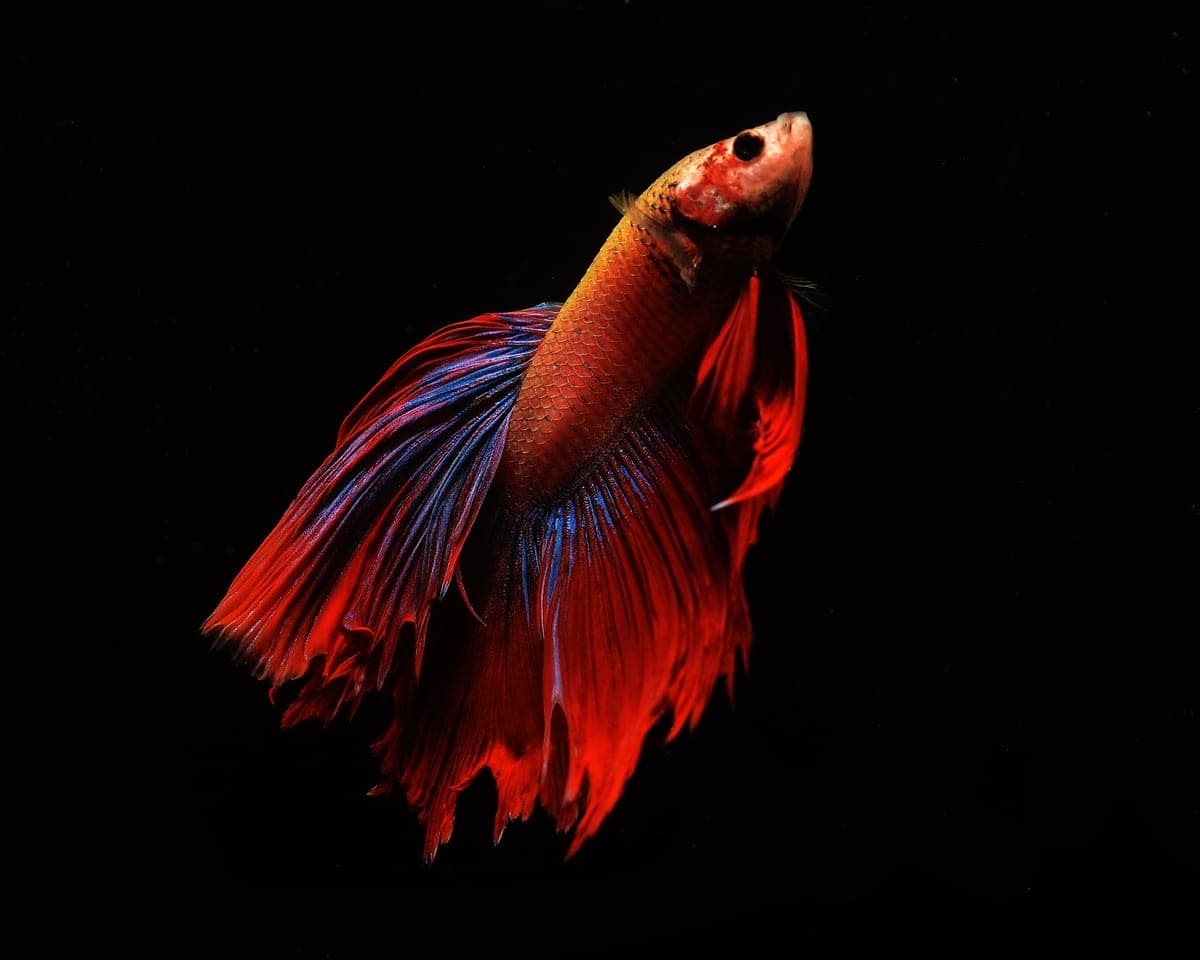
The best betta tank setup
The complete betta equipment list: tank, heat, gentle filtration, plants and food — and why the bowl on the shelf fails.
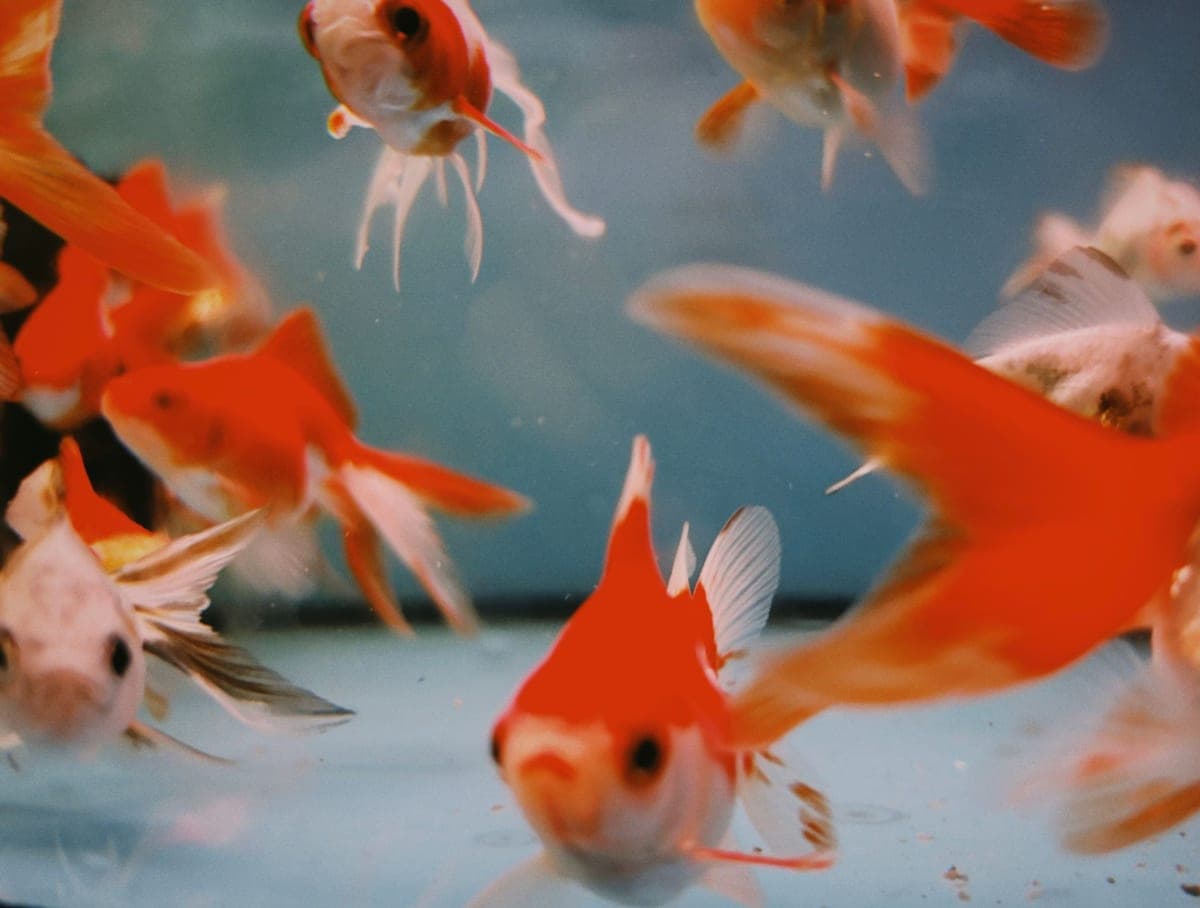
What size tank do goldfish need?
Why goldfish need far more water than they are given, what stunting really is, and how to fix a bad setup.
Do goldfish need a filter and a heater?
Yes to a filter and size it at 8x turnover, no to a heater, and why warming a goldfish tank makes things worse.