Buyer's question
Can you use a gravel vacuum on sand?
The tool is the same. The technique is not, and nobody tells you that before you siphon half your substrate into a bucket.
Fin & Filter earns a commission when you buy through the links on this page. It costs you nothing and it does not decide what we rank. How we’re funded.
We have not used any of this gear. Every pick below is chosen from published manufacturer specifications and the arithmetic on how we pick, which you can re-run yourself.
Yes — the same gravel vacuum works on sand, with one change: hover the bell about an inch above the surface instead of pushing it in. Sand is heavier than the waste sitting on top of it, so a throttled siphon lifts the dirt and leaves the grains. For a tank up to 20 gallons the tool to buy is a plain bell-and-hose siphon, because pinching the hose is how you control the pull; above 20 gallons a Python No Spill Clean and Fill removes the buckets, at the cost of a stronger pull you have to hover higher to manage.
The reason this question exists is that the tool is sold as a gravel vacuum and the instructions on the pack describe digging it into gravel. Do that on sand and you will watch a slow beige stream of your substrate disappear up the hose into a bucket.
Quick picks
What to buy for a sand-bottomed tank
| # | Product | Best for | Price |
|---|---|---|---|
| 1 | 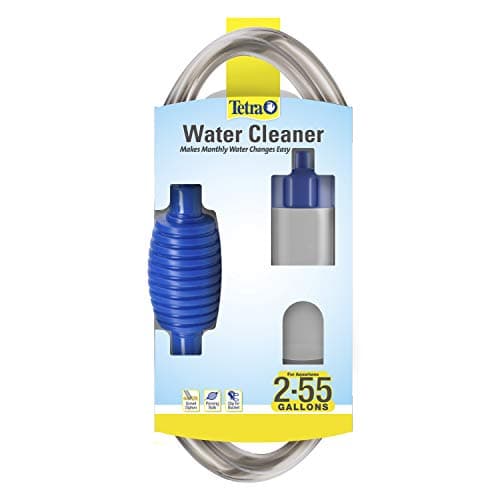 Tetra Water Cleaner Gravel Siphon A plain hose-and-bell siphon is the right tool for sand, because the hose is where you control the pull. | Sand, and any tank up to about 20 gallons | $10.29 on Amazon #ad How we’re funded · price as of November 3, 2026 |
| 2 | 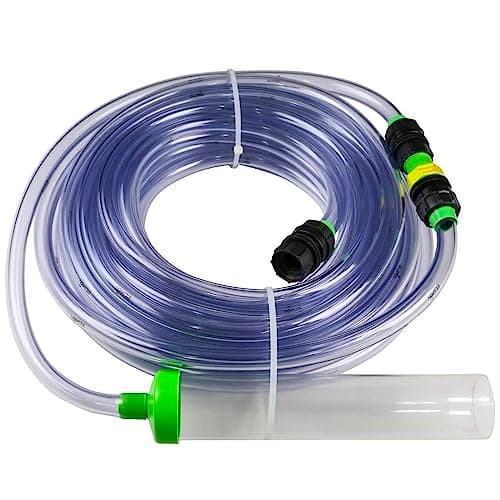 Python No Spill Clean and Fill, 25 ft Faucet-driven, no buckets, and it drains straight to the sink. On sand it needs a careful hand. | A tank over about 20 gallons, where buckets are why water changes stop happening | $59.99 on Amazon #ad How we’re funded · price as of November 3, 2026 |
| 3 | 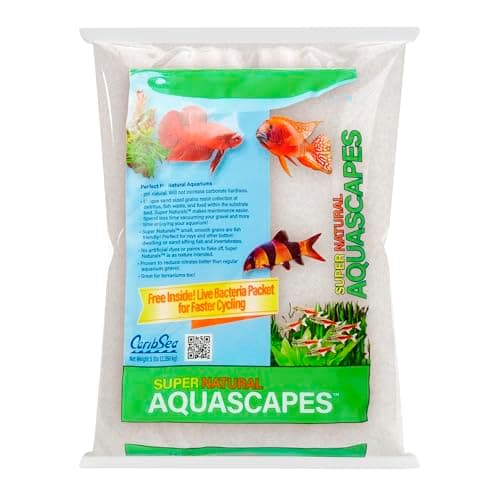 CaribSea Super Naturals Aquarium Sand Grain size is the variable that decides how hard your weekly clean will be, and CaribSea publishes theirs. | Someone still choosing substrate, who wants sand they can actually clean | $38.99 on Amazon #ad How we’re funded · price as of November 3, 2026 |
| 4 | 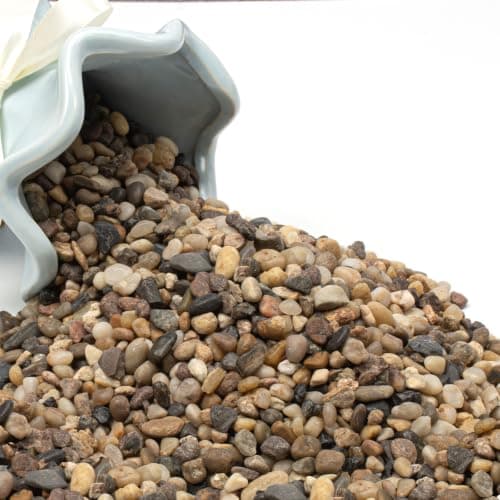 Aqualyra Natural River Pebble Aquarium Gravel (5 mm) Gravel forgives a buried siphon completely, which is the one real advantage it has here. | Anyone who would rather not learn a technique at all | $16.99 on Amazon #ad How we’re funded · price as of November 3, 2026 |
Rows link to the full write-up further down this page. Prices come from the live price layer only; where there is no live figure the button reads “Check price” rather than showing a remembered number.
How we judged this, before any recommendation
One criterion decides everything on this page: how much control you have over the speed of the water entering the bell. Waste that sits on sand is lighter than the sand itself, so there is a window of flow where the dirt lifts and the grains do not. A tool that gives you a throttle lets you find that window; a tool that runs at a fixed rate does not.
Everything else is secondary. Bell diameter matters because the same suction spread over a wider opening pulls more gently at any one point. Grain size matters because it sets where that window sits. Hose length matters only for whether you will keep doing the job at all.
The technique, step by step
- Start the siphon with the bell in open water, not against the substrate, so you can see how fast it is pulling before it is near anything you mind losing.
- Pinch the hose until the flow is a steady trickle rather than a rush. On a bucket siphon your thumb is the control; on a faucet-driven changer, turn the tap down.
- Hold the bell about an inch above the sand and move it slowly in overlapping passes. Detritus will lift off the surface in visible clouds and go up the tube. The sand will shift slightly and settle.
- Work in strips, not patches. Sand shows its clean lines, and overlapping strips stop you missing the middle of the tank, which is where waste collects under a filter outflow.
- Do not clean the whole floor every week. A third at a time is plenty, and it leaves the bacteria in the rest of the substrate undisturbed.
- Stir the untouched areas with a finger or a chopstick once a month to break up compaction, before you siphon that section next time.
- Stop at 25% of the tank volume removed, dechlorinate and temperature-match the replacement, and refill slowly onto a plate or your hand so you do not crater the sand you just levelled.
Sand and gravel, side by side
| Sand | Gravel | |
|---|---|---|
| Siphon technique | Hover about an inch above, throttled flow | Push the bell in and vacuum freely |
| Where waste sits | On the surface, visible, easy to lift | Between grains, hidden, needs digging out |
| Risk of losing substrate | Real, and entirely a function of flow | Essentially none |
| Compaction | Compacts; stir monthly | Does not compact |
| Bottom-sifting fish | Better — corydoras and loaches sift it safely | Sharp gravel wears corydoras barbels |
| Visible dirt between cleans | Shows everything | Hides it until the nitrate test |
| Filter intake risk | Fine grains can be drawn in if the intake sits low | None |
| Planted tanks | Holds root tabs in place well | Nutrients wash through faster |
The grain-size figures behind the sand column are CaribSea's published range, cited at the foot of the page. Technique and risk columns are our own judgment.
The three mistakes that cause the panic
- Burying the bell. The instructions on a gravel vacuum pack tell you to, because the pack is written for gravel. On sand it is a sand pump.
- Running the faucet wide open on a water changer. Faucet-driven suction is stronger than gravity suction, and on sand that difference is the whole problem. Turn the tap down before the bell goes near the bottom.
- Cleaning all of it, every week. A deep clean of the entire floor every seven days strips the substrate bacteria along with the waste. A third of the tank per week is the sustainable version, and it is also less work. The frequency and volume question is worked through on how often to change aquarium water.
What this does not fix
Vacuuming the substrate removes waste before it becomes ammonia, which is maintenance rather than treatment. If the tank already has an ammonia reading, the substrate is not the first move — how to lower ammonia fast is. If the water is cloudy rather than dirty, cloudiness in a new tank is usually a bacterial bloom you should leave alone, which is covered on why is my fish tank water cloudy.
And if you are still deciding what goes on the floor of the tank rather than how to clean it, the full comparison is on the best aquarium substrate. The tool shortlist, with the bucket-versus-faucet argument in full, is on the best aquarium gravel vacuums.
Pick 1
Tetra Water Cleaner Gravel Siphon
Sand, and any tank up to about 20 gallons
The number
A manual siphon into a bucket: the cheapest way to do a proper substrate-vac water change.
The counter-intuitive part: for sand you want the simple tool, not the clever one. A bell-and-hose siphon has exactly one control — how much of the hose you pinch — and that control is the whole technique.
Pinch the hose to slow the flow and the bell lifts detritus off the surface while the sand, which is heavier than the waste sitting on it, stays put. Release the hose fully with the bell buried and you have a sand pump.
The wide bell matters too. The same suction spread over a wider mouth pulls more gently at any one point, which is the difference between lifting the dirt and excavating the floor.
The honest costs. You carry the water, which is tolerable on a 10 or 20 gallon tank and the reason people quietly stop doing water changes on anything bigger. There is no flow control other than your thumb. And on very fine sand even a throttled siphon will pick up grains if you let the bell touch down, so it stays a technique rather than becoming automatic.
| Type | Manual siphon into a bucket |
|---|---|
| Cost | The cheapest way to do a proper gravel-vac water change |
| What it does not do | You carry the water. On a 10 or 20 gallon tank that is fine. The moment the tank gets big, it is the reason people quietly stop doing water changes. |
The manufacturer does not publish a full spec sheet for this item, so nothing beyond the figures above is stated. We have not used this unit.
#ad How we’re funded · price as of November 3, 2026
Pick 2
Python No Spill Clean and Fill, 25 ft
A tank over about 20 gallons, where buckets are why water changes stop happening
The number
25 feet of hose; runs from a faucet adapter, siphoning out and refilling without a bucket.
The honest reason to own one of these has nothing to do with cleaning quality. It is that carrying five gallons of water twice a week is the thing that makes people abandon the routine, and a maintenance habit you actually keep is worth more than a better tool you do not use.
On sand it works, with a caveat: the pull is driven by your faucet rather than by gravity, and it is stronger than a bucket siphon. Hover higher, move faster, and keep the water running at a lower rate than you would on gravel.
The honest costs. It wastes tap water to generate suction, which is a real cost in a drought state and an ethical shrug in most others. It needs a threaded faucet your kitchen may not have. The 25 foot hose is a lot of hose to drain, dry and store. And the stronger pull is the opposite of what fine sand wants, so the technique matters more here, not less.
| Length | 25 feet |
|---|---|
| How it works | Attaches to a faucet and uses water pressure to siphon out and refill, with no buckets |
| Included | Hose, gravel tube, switch, hose connectors, faucet pump, brass faucet adapter |
| Setup | Remove the faucet aerator and washer, fit the adapter, connect the tubing |
| What it does not do | It needs a threaded faucet, so a pull-out spray head or an unthreaded modern tap will not take the adapter without a separate part. It also runs tap water down the drain while it siphons, and it does not condition the refill for you. |
Specs from Python No Spill Clean and Fill 25 ft, Amazon listing; Python No Spill Clean & Fill, Chewy listing. We have not used this unit.
#ad How we’re funded · price as of November 3, 2026
Pick 3
CaribSea Super Naturals Aquarium Sand
Someone still choosing substrate, who wants sand they can actually clean
The number
CaribSea states a grain size of 0.25 to 0.75 mm on the Moonlight variant, with other colors running up to about 1.5 mm; stated pH neutral with no dyes or paints.
If you have not bought substrate yet, this is the decision that makes the rest of this page easy or hard. Heavier, coarser grains settle faster and resist the siphon; the finest grains behave more like a powder and will climb the hose at the slightest provocation.
CaribSea publishing a grain-size range at all is the reason it is here — most sand is sold by color and by weight with no particle figure, so you cannot tell before it arrives whether you are buying something you can vacuum.
A bag also includes a live bacteria packet, which is a head start on cycling rather than a substitute for it.
The honest costs. Sand compacts, so it needs occasional stirring with a finger or a chopstick to prevent anaerobic pockets. Fine grains get drawn into a filter intake that sits too low, which chews impellers. It is heavier per gallon of tank than gravel and more expensive per pound. And the bacteria packet is not a cycle.
| Grain size | 0.25 to 0.75 mm on the Moonlight variant; other colors run up to about 1.5 mm |
|---|---|
| Water chemistry | CaribSea states pH neutral and that it will not increase hardness |
| Coatings | CaribSea states no artificial dyes or paints |
| Included | A live bacteria packet, stated to speed up cycling |
| Bag sizes | Sold in 10, 20 and 40 lb bags depending on retailer; the listing linked here is the 20 lb bag |
| What it does not do | Sand compacts, so it needs occasional stirring and it is vacuumed differently from gravel — hover the siphon above it rather than digging in, or you will remove the sand along with the waste. Fine sand can be drawn into a filter intake if the intake sits too low. The bacteria packet is a head start, not a substitute for cycling. |
Specs from CaribSea Super Naturals Moonlight Sand, Bulk Reef Supply listing (grain size, pH neutral, no dyes, bacteria packet); CaribSea Moonlight Sand, 20 lb, Amazon listing; CaribSea, Freshwater Substrates product page (all natural, no paints, dyes or coatings). We have not used this unit.
#ad How we’re funded · price as of November 3, 2026
Pick 4
Aqualyra Natural River Pebble Aquarium Gravel (5 mm)
Anyone who would rather not learn a technique at all
The number
Natural river pebble at about 5 mm — coarse enough that a siphon cannot lift it.
The alternative answer to this page's question is to not have sand. Gravel at around 5 mm is heavy enough that you can push the bell straight down into it, vacuum hard, and lose nothing but water and waste.
That is a genuine convenience and it is why most starter kits ship gravel. The trade is that gravel traps debris between the grains rather than letting it sit on top, so it holds more of it between cleans and demands that you actually push the siphon in.
The honest costs. Coarse gravel hides more waste than sand does, and a skipped week shows up later as nitrate rather than as visible dirt on the surface. It is worse for fish that sift the bottom with their mouths, and corydoras in particular wear their barbels down on sharp gravel. And it looks like a starter kit, which for some keepers is the whole reason they wanted sand.
| Type | Inert stone. Does not dissolve, so it does not alter pH or hardness |
|---|---|
| Typical grain | Roughly 2-5 mm for standard aquarium gravel, which is coarse enough that waste falls between the grains |
| Rough quantity | Commonly quoted at about 1.5 lb per gallon for a 2 inch bed, but weight follows tank footprint rather than gallons |
| Cleaning | Vacuumed directly. A siphon lifts the grains, waste rises, gravel drops back |
| What it does not do | Almost never included in a starter kit despite appearing in the photo on the box. Coated or painted novelty gravel is a different product and the coating can chip; buy natural stone. Coarse gravel lets uneaten food fall out of reach, which hides an overfeeding problem rather than preventing one. |
The manufacturer does not publish a full spec sheet for this item, so nothing beyond the figures above is stated. We have not used this unit.
#ad How we’re funded · price as of November 3, 2026
Questions people actually ask
Frequently asked questions
+ Can you use a gravel vacuum on sand?
+ How do you clean sand in a fish tank without sucking it up?
+ Do you need a special sand vacuum?
+ How often should you vacuum sand?
+ Does sand need stirring?
+ Is sand harder to keep clean than gravel?
+ Will sand damage my filter?
+ Can I use a Python water changer on sand?
Where the numbers came from
Sources
Read next
Related on Fin & Filter
The best aquarium gravel vacuums
Bucket siphon versus hose-fed changer, the faucet fitting that catches people out, and which suits your tank.
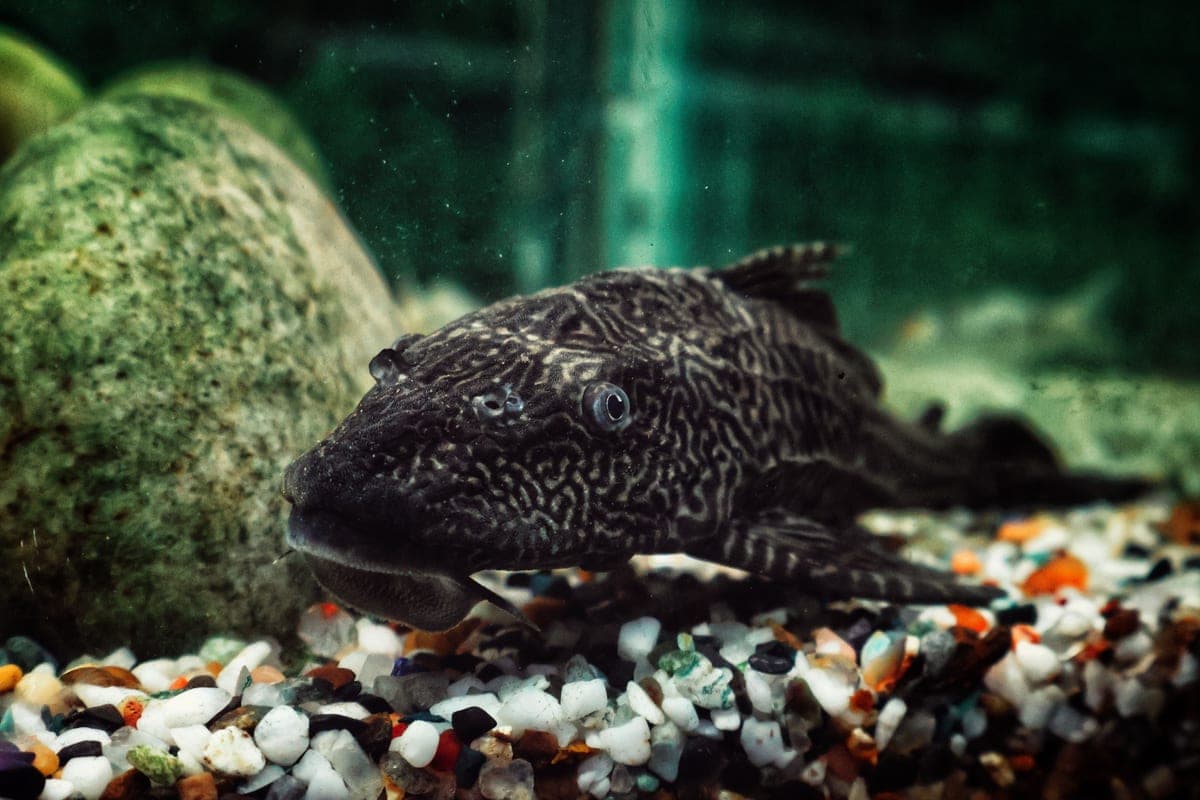
The best aquarium substrate
Gravel, sand or planted soil, how much a tank actually takes, and the buffering substrate to avoid by accident.
How often to change aquarium water
The 25%-weekly default, how nitrate sets your real schedule, and the water change mistakes to avoid.