Buying guide
The best aquarium substrate
Almost no starter kit includes any, the box always has some in the photograph, and the amount you need is decided by the floor of your tank rather than by the gallons in it.
Fin & Filter earns a commission when you buy through the links on this page. It costs you nothing and it does not decide what we rank. How we’re funded.
We have not used any of this gear. Every pick below is chosen from published manufacturer specifications and the arithmetic on how we pick, which you can re-run yourself.
For a first freshwater tank, buy plain inert aquarium gravel. It changes nothing about your water chemistry, it is the most forgiving substrate to vacuum, and it is the cheapest good answer. Choose fine sand instead if you plan to keep corydoras or other bottom-sifting fish, and an active planted soil only if live plants are the point of the tank. Whatever you choose, buy enough for a bed about two inches deep — and calculate that from the tank's footprint, not from its gallons.
Substrate is the strangest gap in the starter kit category. Every kit box carries a photograph of a finished aquarium with a bed of gravel in it, and essentially none of them include any. We say so on what starter kits leave out and on every kit roundup, and until now we have never had a page to send you to. This is that page.
It is also not purely cosmetic, which is the assumption worth dismantling first. Substrate holds a meaningful share of the tank's bacterial colony, it gives rooted plants somewhere to live, and it gives bottom-dwelling fish a surface they can behave normally on. A bare-bottom tank is a perfectly healthy tank and it is easier to clean — but it is a deliberate choice, not the default.
Quick picks
The best aquarium substrate
| # | Product | Best for | Price |
|---|---|---|---|
| 1 | No image Various Inert aquarium gravel Inert, cheap, forgiving to clean, and it changes nothing about your water chemistry — which at this stage is exactly what you want. | The default first substrate, and the one most tanks should have | |
| 2 | No image CaribSea Super Naturals Aquarium Sand Fine, smooth, pH neutral by the maker's own statement, and the correct choice if your stocking plan includes bottom-feeders. | Corydoras, loaches and anything that sifts the bottom | |
| 3 | No image Fluval Plant and Shrimp Stratum An active soil that feeds root systems and deliberately shifts water chemistry — powerful, and the opposite of inert. | A planted tank, or a shrimp tank, where you want the substrate to do a job | |
| 4 | No image Various Beginner live plants (java fern, anubias, hornwort) Whether you intend to keep plants is the single biggest input into this decision, so settle it first. | The thing that decides which substrate you should have bought | |
| 5 | No image Various Bucket-and-siphon gravel vacuum Substrate accumulates waste by design. This is how it comes back out, and the technique changes by substrate type. | The tool that makes any of these substrates work long term | |
| ! | No image Various Crushed coral Sold on the freshwater shelf, and it is not a neutral substrate — it deliberately raises hardness and pH. Skip this one — see why below | Nothing, unless you have tested your water and decided you want it harder |
Rows link to the full write-up further down this page. Prices come from the live price layer only; where there is no live figure the button reads “Check price” rather than showing a remembered number.
How much you actually need, and why the per-gallon rule misleads
This is the arithmetic section, and it exists because the rule of thumb everyone quotes is dimensionally wrong. Substrate fills a volume: length times width times depth. Gallons describe a different volume — the water — and the two do not scale together.
The clearest demonstration is two tanks that hold identical water. A 20 gallon Long and a 20 gallon High contain the same twenty gallons, but the Long has noticeably more floor to cover. Published figures for a standard two inch bed put the Long at about 33 lb and the High at about 26 lb — roughly a 27% difference for the same stated tank size.
| Step | Figure |
|---|---|
| Rule of thumb quoted almost everywhere | About 1.5 lb per gallon for a 2 inch bed |
| What that predicts for any 20 gallon tank | About 30 lb |
| Actual figure, 20 gallon Long (more floor) | About 33 lb |
| Actual figure, 20 gallon High (less floor) | About 26 lb |
| Difference, for the same 20 gallons of water | About 7 lb, or roughly 27% |
| Planted tank target depth | Closer to 3 inches, so about 2 lb per gallon |
Figures from the substrate calculation guidance cited at the foot of this page. Treat per-gallon numbers as a rough starting estimate and the footprint as the real basis.
One more correction, and it catches people comparing bags in a shop: weight is not comparable across substrate types. Lightweight porous volcanic soils such as Stratum need substantially less weight than dense river gravel to reach the same depth, so a bag that looks small by weight may cover the same floor. Compare depth achieved, not pounds bought.
If you would rather not do arithmetic at all, the practical shortcut is to buy for a two inch bed, err slightly high, and keep the receipt on the second bag. Running out halfway through a setup is far more annoying than a spare bag in a cupboard.
How we chose these
Three criteria, applied in this order. All three are answerable before you buy, which is the standard we hold every roundup on this site to.
- Does it change your water chemistry, and does it say so? An inert substrate adds no variables. An active one deliberately adds several. Both are legitimate; buying the second thinking it is the first is not. Every pick above states which it is, in the maker's own words where they publish them.
- Does the grain suit the animals you intend to keep? This is the criterion beginners skip and it is the one that causes actual harm. Bottom-sifting fish need fine, smooth grains. Coarse or sharp material wears their barbels over months.
- Can you realistically maintain it? Substrate accumulates waste by design, and each type has a different cleaning technique. A substrate you find awkward to vacuum is a substrate that quietly stops getting vacuumed, and that is how an ammonia problem starts. See how often to change aquarium water.
What we did not judge on: appearance, and long-term plant growth outcomes. Appearance is yours to decide. Growth comparisons would need controlled side-by-side trials that we have not run and that nobody has published in a form we could cite, so we have quoted what each maker states about its own product and left it there. We have not used any of these substrates and do not claim to have. The full method is on how we pick.
Pick 1
Various Inert aquarium gravel
The default first substrate, and the one most tanks should have
The number
Commonly quoted at about 1.5 lb per gallon for a 2 inch bed, though weight actually follows tank footprint rather than gallons. See the arithmetic below.
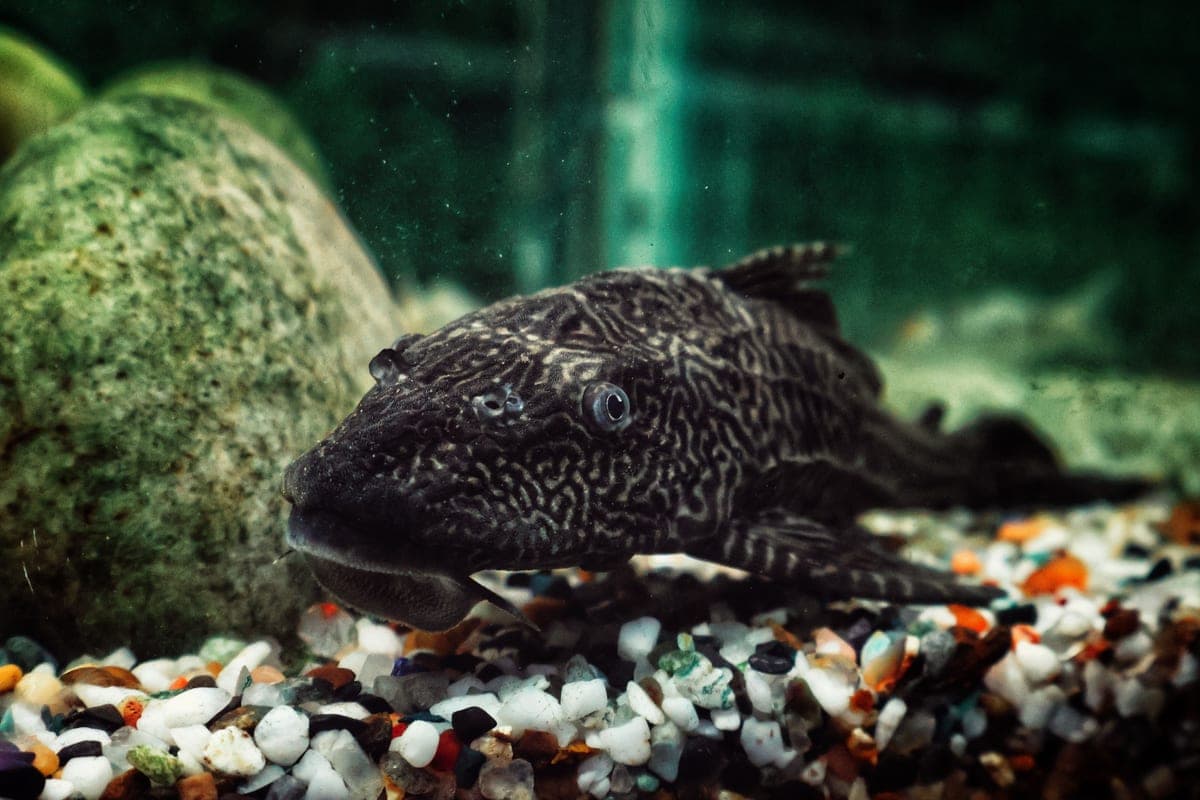
For a first freshwater tank, plain natural aquarium gravel is the right answer far more often than the shop display suggests, and the reason is what it does not do. It is inert stone. It does not dissolve, it does not buffer, it does not soften or harden your water, and it does not add a variable to a tank where you are already learning to manage several.
It is also the easiest substrate to clean, which matters more in month one than anything aesthetic. A gravel vacuum pushed into a gravel bed lifts the grains, lets the waste rise out and drops the stone back. Sand needs a gentler technique and soil needs to be left largely alone. On a first tank, forgiving beats optimal.
The grain size does real work. Standard aquarium gravel runs roughly 2 to 5 mm, which is coarse enough that water flows through the bed rather than sitting stagnant in it, and large enough that fish are not going to ingest it while foraging.
The honest costs. That same coarseness lets uneaten food fall down between the grains where nothing can reach it, so gravel hides an overfeeding problem rather than preventing one — it makes vacuuming a genuine requirement rather than a tidiness habit. It is a poor rooting medium for demanding plants, holding no nutrients of its own. And avoid the painted, coated novelty colors: the coating is an unnecessary risk on a surface that will sit in your water for years, and natural stone costs the same.
| Type | Inert stone. Does not dissolve, so it does not alter pH or hardness |
|---|---|
| Typical grain | Roughly 2-5 mm for standard aquarium gravel, which is coarse enough that waste falls between the grains |
| Rough quantity | Commonly quoted at about 1.5 lb per gallon for a 2 inch bed, but weight follows tank footprint rather than gallons |
| Cleaning | Vacuumed directly. A siphon lifts the grains, waste rises, gravel drops back |
| What it does not do | Almost never included in a starter kit despite appearing in the photo on the box. Coated or painted novelty gravel is a different product and the coating can chip; buy natural stone. Coarse gravel lets uneaten food fall out of reach, which hides an overfeeding problem rather than preventing one. |
The manufacturer does not publish a full spec sheet for this item, so nothing beyond the figures above is stated. We have not used this unit.
Pick 2
CaribSea Super Naturals Aquarium Sand
Corydoras, loaches and anything that sifts the bottom
The number
Grain size 0.25 to 0.75 mm on the Moonlight variant. CaribSea states pH neutral and that it will not increase hardness, with no artificial dyes or paints, and includes a live bacteria packet.
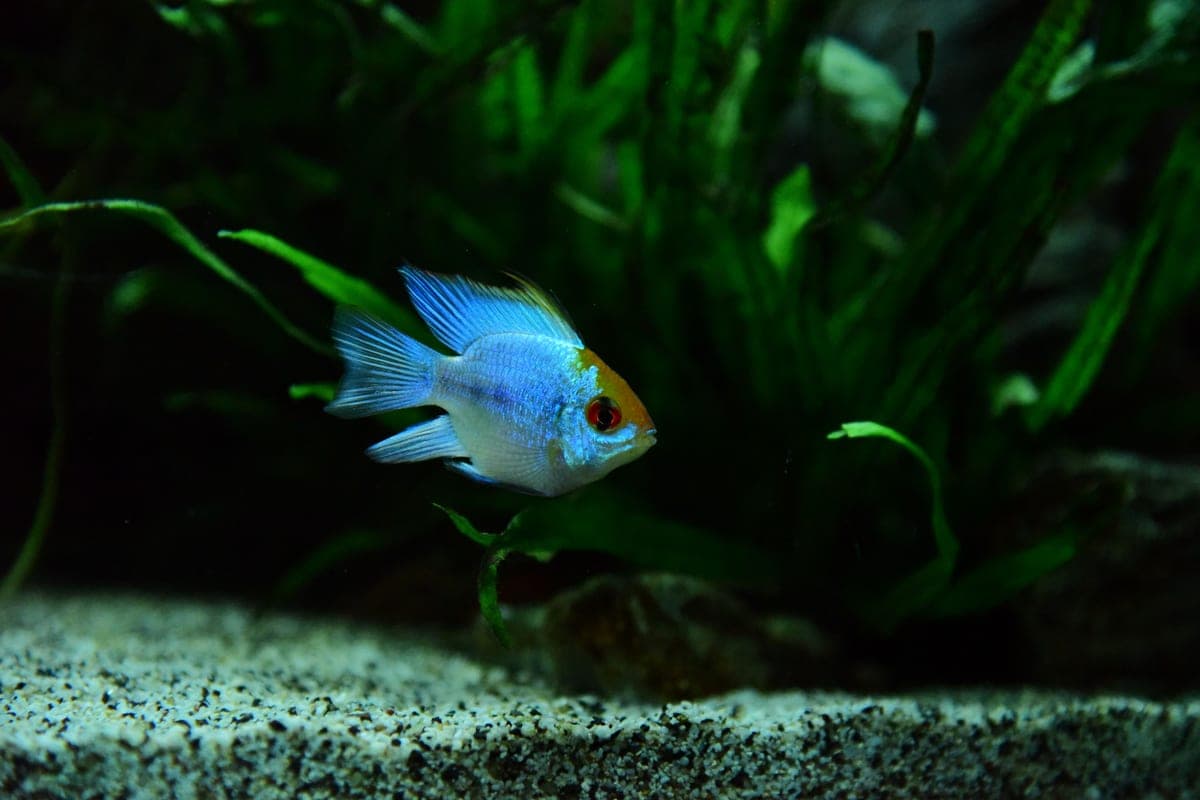
If you intend to keep corydoras, kuhli loaches, or anything else that feeds by pushing its face into the substrate, this is not a style preference. Those fish sift bottom material through delicate barbels, and sharp or coarse gravel wears those barbels down over months. Sand is the substrate they are built for.
The specification is unusually well published for this category. CaribSea states a 0.25 to 0.75 mm grain on the Moonlight variant, that it is pH neutral and will not increase hardness, and that it carries no artificial dyes or paints. Each bag also includes a live bacteria packet, which is a reasonable head start on cycling and is not a reason to skip testing.
There is a second, less obvious advantage. Because sand grains are fine and pack together, waste sits on top of the bed rather than disappearing into it. That is visually less tidy and practically much better: you can see what is there, and a siphon held just above the surface lifts it away without removing the sand.
The honest costs, and they are real. Sand compacts over time and benefits from being stirred occasionally, particularly under decor where water never moves. It is vacuumed differently — hover the siphon rather than digging in, or you will send the sand up the tube along with the waste. Fine grains can be drawn into a filter intake sitting too close to the bed. And pouring water carelessly onto a fresh sand bed will cloud the whole tank for a day.
| Grain size | 0.25 to 0.75 mm on the Moonlight variant; other colors run up to about 1.5 mm |
|---|---|
| Water chemistry | CaribSea states pH neutral and that it will not increase hardness |
| Coatings | CaribSea states no artificial dyes or paints |
| Included | A live bacteria packet, stated to speed up cycling |
| Bag sizes | Commonly sold in 10, 20 and 40 lb bags depending on retailer |
| What it does not do | Sand compacts, so it needs occasional stirring and it is vacuumed differently from gravel — hover the siphon above it rather than digging in, or you will remove the sand along with the waste. Fine sand can be drawn into a filter intake if the intake sits too low. The bacteria packet is a head start, not a substitute for cycling. |
Specs from CaribSea Super Naturals Moonlight Sand, Bulk Reef Supply listing (grain size, pH neutral, no dyes, bacteria packet); CaribSea Super Naturals Aquarium Sand, Amazon listing; CaribSea, Freshwater Substrates product page (all natural, no paints, dyes or coatings). We have not used this unit.
Pick 3
Fluval Plant and Shrimp Stratum
A planted tank, or a shrimp tank, where you want the substrate to do a job
The number
3 to 5 mm granules. Fluval states it supports a neutral to slightly acidic pH, softens water and reduces carbonate hardness, and that its porous structure allows rapid bacterial colonization.
This is the pick if plants are the point of the tank rather than decoration in it. Fluval states the granules are collected from the foothills of Mount Aso volcano in Japan, sized 3 to 5 mm, with a porous structure that beneficial bacteria colonize rapidly — which means the substrate itself contributes biological filtration in a way plain gravel does not.
The word to hold onto is active. Fluval states it supports a neutral to slightly acidic pH and provides a natural way to soften water and reduce carbonate hardness. For a planted or shrimp tank, that is precisely what you want: most aquarium plants and most dwarf shrimp prefer soft, slightly acidic water. For a general community tank whose water is already soft, it is an extra variable you did not need.
It is also light. Because it is porous volcanic material rather than dense stone, you need substantially less weight than gravel or sand to reach the same depth, so comparing bag weights across substrate types will mislead you badly.
The honest costs. Being light and porous, it moves when you plant into it and it clouds the water easily if you pour water straight onto the bed rather than onto a plate or your hand. It is more expensive per tank than plain gravel by a clear margin. And aquasoils of this type are generally understood to have a finite buffering life rather than lasting indefinitely — Fluval publishes no figure for that, and we are not going to invent one.
| Granule size | 3 to 5 mm |
|---|---|
| Origin | Fluval states it is collected from the foothills of Mount Aso volcano in Japan |
| Water chemistry | Fluval states it supports a neutral to slightly acidic pH |
| Hardness | Fluval states it softens water and reduces carbonate hardness |
| Structure | Porous, which Fluval states allows rapid colonization by beneficial bacteria |
| Common bag size | 8.8 lb on the Amazon listing |
| What it does not do | It actively changes your water chemistry, which is a feature for a planted or shrimp tank and a complication if your tap water is already soft. It is lightweight and porous rather than heavy stone, so it is easier to disturb when planting and it clouds the water badly if you pour water onto it carelessly. Aquasoils of this type are generally understood to have a finite buffering life rather than lasting forever, and Fluval does not publish a figure for that. |
Specs from Fluval Stratum Plant and Shrimp Substrate, Bulk Reef Supply listing (granule size, origin, pH, hardness, porosity); Fluval Plant and Shrimp Stratum 8.8 lb, Amazon listing. We have not used this unit.
Pick 4
Various Beginner live plants (java fern, anubias, hornwort)
The thing that decides which substrate you should have bought
This entry is here because substrate choice is downstream of a decision most beginners have not consciously made yet. If the tank will hold plastic plants and a rock, any inert substrate works and gravel is the cheapest good answer. If it will hold live plants, the substrate becomes part of the equipment.
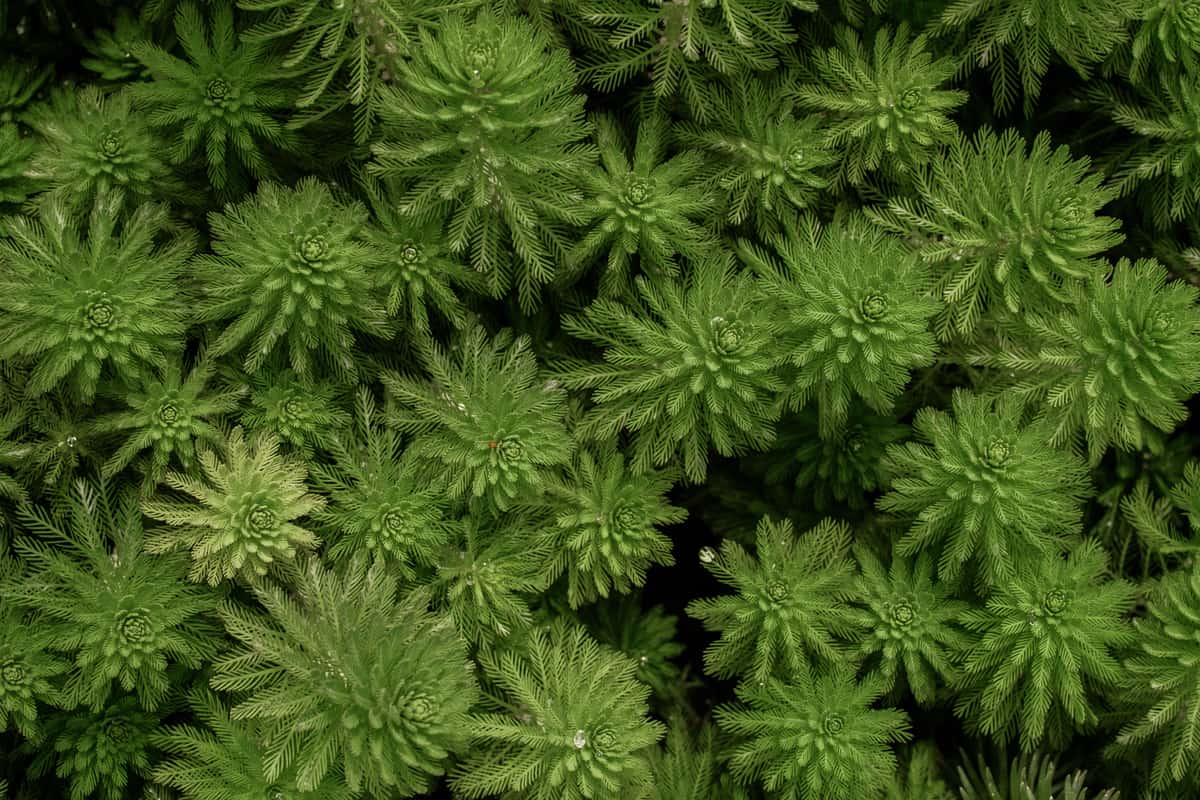
The useful nuance is that not all plants care. The genuinely beginner-tolerant species — java fern, anubias, hornwort — are not root feeders in the way a carpeting plant is. Java fern and anubias are attached to wood or rock rather than planted, and hornwort will happily float. You can run a good-looking, healthy planted tank on plain gravel with those species and never need an active soil.
So the honest ordering is: start with the plants you actually want, then buy the substrate that suits them. Buying an expensive active soil first and choosing plants afterwards is the sequence that wastes money.
The honest costs of live plants themselves: they need adequate light, and a plant that melts in a dark tank adds decaying matter to your bioload rather than reducing it. Some arrive carrying snails or algae. And a tank of struggling plants is worse than a tank with none.
| Why these three | They tolerate low light, need no injected CO2, and are not demanding root feeders |
|---|---|
| Planting note | Java fern and anubias must not be buried; the rhizome rots if you push it into the substrate |
| What it does not do | Live plants can arrive carrying snails, snail eggs or algae. They are also not a filter: plants consume nitrate, but they will not carry the ammonia load of a stocked tank on their own. |
The manufacturer does not publish a full spec sheet for this item, so nothing beyond the figures above is stated. We have not used this unit.
Pick 5
Various Bucket-and-siphon gravel vacuum
The tool that makes any of these substrates work long term
Substrate is where uneaten food, plant debris and fish waste collect, and none of it leaves the tank on its own. Left there it decomposes into ammonia, which is the compound this entire site is organized around avoiding.
That makes a siphon the mandatory companion purchase to whatever you choose here, and the technique differs by material. In gravel, push the tube into the bed and let the grains tumble — waste is lighter and rises out while the stone falls back. In sand, hold the tube just above the surface and let the water lift the debris off the top. In an active soil planted tank, largely leave it alone and skim the surface only, because disturbing the bed releases nutrients into the water column and pulls up the soil itself.
The honest costs. It is manual work with buckets, and on a bigger tank it gets tedious enough that people quietly stop doing it, which is how a routine lapses. A siphon needs a height difference to start, so the bucket has to sit below the tank.
One thing not to do, whichever substrate you own: never clean the entire bed in one session. Substrate holds a meaningful share of the tank's bacterial colony, and stripping all of it at once is a real setback to a cycle. Do a section at a time.
| Type | Manual siphon into a bucket |
|---|---|
| Cost | The cheapest way to do a proper gravel-vac water change |
| What it does not do | You carry the water. On a 10 or 20 gallon tank that is fine. The moment the tank gets big, it is the reason people quietly stop doing water changes. |
The manufacturer does not publish a full spec sheet for this item, so nothing beyond the figures above is stated. We have not used this unit.
Skip this
Various Crushed coral
Nothing, unless you have tested your water and decided you want it harder
The skip entry, and it is a skip in a specific sense: this is a good product that beginners buy by accident because it sits in the freshwater aisle next to the gravel and looks like a decorative white stone.
It is not decorative. Aquarium Co-Op, which sells it, is explicit that crushed coral adds hardness to the water and significantly boosts KH, which buffers pH from swinging. That is a deliberate water chemistry intervention, and they sell it for keepers whose tap water is soft with low pH, KH and GH, and for fish, shrimp and snails that need a higher pH — African cichlids and some livebearers being the usual cases.
For a general beginner community tank the problem is that you probably do not know your starting water yet, and the size of the effect depends entirely on that starting point. The same quantity moves soft water a long way and barely moves water that is already hard. Adding an unknown amount of buffering to an untested tank is the opposite of the controlled, one-variable-at-a-time approach that makes a first tank survivable.
It is also not permanent in the way gravel is. Aquarium Co-Op states roughly 1 to 2 years of service life used as substrate, against 1 to 3 months used as filter media, because it works by dissolving. A substrate that consumes itself is a maintenance item.
If you have tested your water, found it soft and acidic, and specifically want to raise and stabilize it, this is a legitimate and well-priced way to do that — Aquarium Co-Op states about 1 lb per 10 gallons mixed into gravel. Buy it as a water chemistry decision, never as a substrate decision.
| What it does | Dissolves slowly into the water, raising carbonate hardness (KH) and general hardness (GH), which buffers pH upward |
|---|---|
| Typical dose | Aquarium Co-Op states 1 lb per 10 gallons when mixed into gravel |
| Intended for | Aquarium Co-Op sells it for fish, shrimp and snails that need a higher pH, and for keepers whose tap water is soft with low pH, KH and GH |
| Service life as substrate | Aquarium Co-Op states 1 to 2 years used as substrate, versus 1 to 3 months used as filter media |
| What it does not do | This is not a neutral substrate and it is not sold as one. It changes water chemistry continuously and the size of the change depends on your starting water, so the same amount moves soft water a long way and barely moves hard water. Wrong as a default for a general community tank; correct only if you have tested your water and decided you want it harder. |
Specs from Crushed Coral 1 lb, Aquarium Co-Op product page (pH, KH, GH effect, dose, service life); Aquarium Co-Op, The Fish Keeper's Guide to pH, GH and KH. We have not used this unit.
Rinse it. Then rinse it again.
This is the single most common first-day mistake with substrate and it produces the single most common first-day panic: a tank filled with what looks like dirty milk.
Bagged gravel and sand carry fine dust from handling and transport. Put it in dry, add water, and that dust goes into suspension and stays there for days. It is not dangerous and it is not an ammonia problem — it is exactly the brown or tan cloudiness described on why is my fish tank water cloudy — but it is entirely avoidable.
- Rinse in batches, a few pounds at a time in a bucket or colander, not the whole bag at once.
- Use plain tap water and no soap, ever. Detergent residue in an aquarium is lethal and it does not rinse out easily.
- Keep going until the water runs clear, not until it runs less dirty. Sand takes considerably longer than gravel and will test your patience.
- Add water gently onto a plate or your hand, never straight onto the bed, or you will undo the rinsing in one pour.
- One exception: most active planted soils, including Stratum, are not rinsed — check the bag, because rinsing them can break down the granules.
Depth, and the reason not to overdo it
About two inches is the standard target for a general tank, and roughly three inches suits a planted tank where root-feeding species need somewhere to develop. Deeper is not better.
The reason is oxygen. Water circulates through a shallow bed; it does not circulate through a deep one. In a deep, undisturbed layer of fine material, oxygen-starved pockets can develop, and the published guidance is to avoid letting fine sand exceed about two inches without stirring it occasionally, because those anaerobic pockets can trap hydrogen sulfide gas. In practice this is a manageable problem rather than a dramatic one — occasional stirring, or bottom-dwelling fish and snails that turn the bed over for you, prevents it — but it is a real reason not to pour in four inches because the bag was large.
Where it fits in the setup
Substrate goes in before water and before hardscape, and it is one of the very first things to do — which is why it needs buying alongside the tank rather than a week later. The full sequence, in order, is on how to set up a 10 gallon tank, and the complete shopping list including this is on what a first tank really costs.
If the tank is not bought yet, start at tanks, kits and gear or go straight to the size-specific kit shortlists on best 10 gallon aquarium kits and best 20 gallon aquarium kits — and remember to add substrate to the order, because the kit will not have any. If you are planning the planted route, easy live plants for beginners covers which species tolerate a beginner's setup, and the hardiest fish for beginners covers what will be living on top of whatever you choose.
Questions people actually ask
Frequently asked questions
+ How much substrate do I need for a 10 gallon tank?
+ Gravel or sand for a beginner aquarium?
+ Do I need to rinse aquarium gravel before adding it?
+ Can I use play sand or pool filter sand in an aquarium?
+ Does aquarium substrate affect pH?
+ How deep should aquarium substrate be?
+ Can I keep an aquarium with no substrate at all?
Where the numbers came from
Sources
- CaribSea Super Naturals Moonlight Sand, Bulk Reef Supply listing (grain size, pH neutral, no dyes, bacteria packet)
- CaribSea Super Naturals Aquarium Sand, Amazon listing
- CaribSea, Freshwater Substrates product page (all natural, no paints, dyes or coatings)
- Fluval Stratum Plant and Shrimp Substrate, Bulk Reef Supply listing (granule size, origin, pH, carbonate hardness, porosity)
- Fluval Plant and Shrimp Stratum 8.8 lb, Amazon listing
- Crushed Coral 1 lb, Aquarium Co-Op product page (pH, KH and GH effect, dose, service life)
- Aquarium Co-Op, The Fish Keeper's Guide to pH, GH and KH
- AquaLogic HQ, how to calculate aquarium substrate (depth, pounds per gallon, footprint vs gallons)
Read next
Related on Fin & Filter

What starter kits leave out
Five omissions, the same across brands, and the one that is actually lethal.
How to set up a 10 gallon fish tank
Box to running tank in eight steps, ending at the cycle rather than at the fish.
Easy live plants for a beginner tank
Java fern, anubias and hornwort — why these three, how to plant them correctly, and what they will not do.