Problem solving
How to get rid of algae in a fish tank
Algae is not a disease and it is not a sign you are bad at this. It is an input problem, and the input is almost always light. Here is how to tell which algae you have and what actually removes it.
Fin & Filter earns a commission when you buy through the links on this page. It costs you nothing and it does not decide what we rank. How we’re funded.
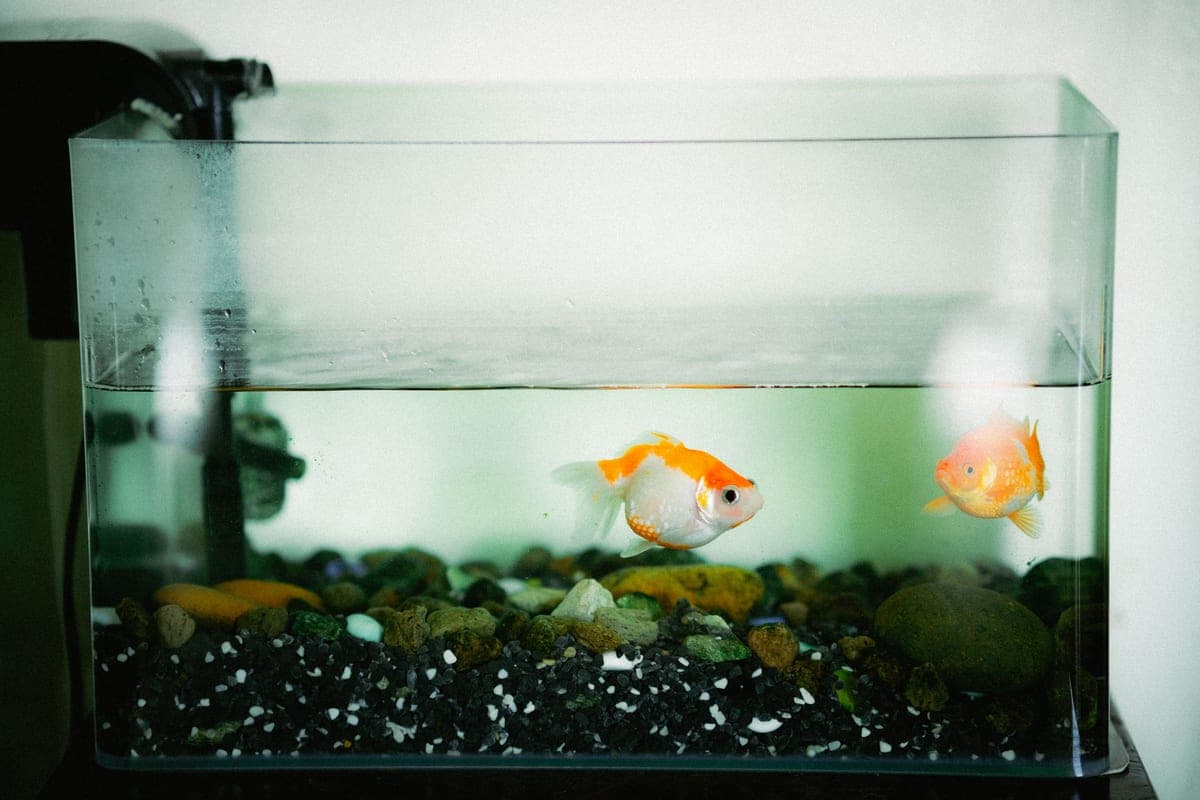
We have not used any of this gear. Every pick below is chosen from published manufacturer specifications and the arithmetic on how we pick, which you can re-run yourself.
Work in this order: identify the algae, shorten the photoperiod to about six hours on a timer, remove what is there by hand and siphon it out at the water change, and test nitrate to see whether feeding and water changes are part of the problem. Brown dust on a new tank usually fades on its own. Green spots need a blade. Hair algae needs manual removal plus less light. Black beard tufts need spot treatment and better flow. Green water is its own problem with its own page. What almost never works is killing the algae in place and changing nothing else.
Every aquarium grows algae. It is a photosynthetic organism living in a lit box of nutrient-rich water — the surprise would be if it did not. The useful question is not how to eliminate it but which one you have, because the five common types have different causes and the fix for one does nothing for another.
First: identify what you actually have
| What you see | Usual name | Most common cause | The fix that works |
|---|---|---|---|
| Brown dust on glass, substrate and leaves, wipes off easily | Diatoms | A new tank finding its balance | Wait. Wipe it off at water changes; it usually fades as the tank matures |
| Hard green dots on glass that a pad will not shift | Green spot algae | Long photoperiod, often with low phosphate | A blade, plus a shorter day |
| Green film that returns on the glass within days | Green dust algae | Too much light for the tank's plant mass | Shorten the photoperiod; scrape at the water change |
| Long green strands on plants and decor | Hair or string algae | Excess light and nutrients together | Pull it out by hand, then cut the light back |
| Dark tufts on leaf edges, wood and equipment | Black beard algae | Unstable CO2 and poor flow in one area | Improve circulation, remove affected leaves, spot treat |
| The water itself is green, everything is cloudy | Green water bloom | Direct sunlight or a long photoperiod on a nutrient-rich tank | Its own page — see the link below |
These are the five patterns a beginner tank produces. If you cannot tell which you have, the answer is almost always diatoms on a tank under three months old.
Note how many rows say the same thing about light. That is the single most useful observation on this page: the type tells you how to remove what is there, but the photoperiod is what decides whether it comes back.
The three levers, in order of effect
- Light. Cut the photoperiod to six hours on a timer, and move the tank out of direct sunlight or curtain the window. This is free, and it is right more often than anything you can buy.
- Nutrients. Feed less — uneaten food is nutrients — and keep the weekly water change, which is what removes dissolved nitrate. Test nitrate rather than guessing.
- Export. Scrape, wait, then siphon. Algae that is removed from the glass but left in the tank is nutrients that feed the next crop.
A fourth lever is slower and more pleasant: add plants. Fast growers compete with algae for exactly the same nutrients, which is why a well-planted tank usually has cleaner glass than a bare one — how to set up a low-tech planted tank covers that properly.
Quick picks
What actually helps, in the order it helps
| # | Product | Best for | Price |
|---|---|---|---|
| 1 | 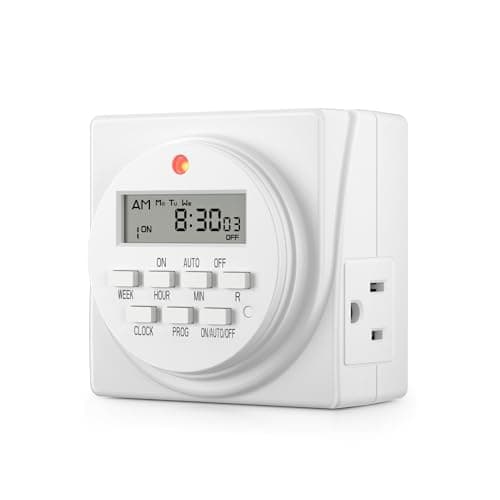 BN-LINK Indoor 7-Day Programmable Digital Timer Outlet A fixed photoperiod costs less than a bottle of anything and addresses the input rather than the symptom. | The fix that works on every type of algae | |
| 2 | 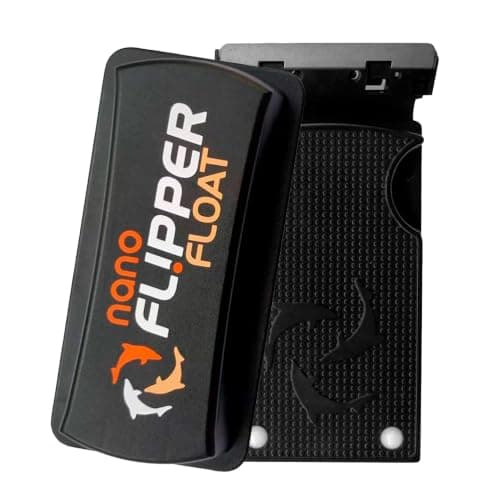 FL!PPER Float Nano Magnetic Cleaner A floating 2-in-1 magnet rated for glass up to 1/4 inch, with a blade for the hard spots a pad slides over. | Getting what is already there off the glass | $29.99 on Amazon #ad How we’re funded · price as of November 3, 2026 |
| 3 | 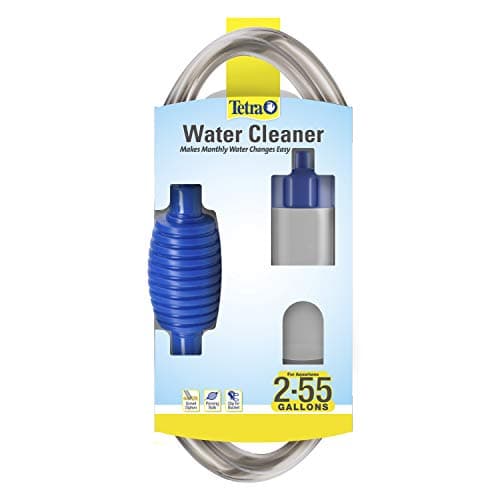 Tetra Water Cleaner Gravel Siphon Scraping loosens algae into the water. The siphon is the step that takes it out of the tank. | Exporting it instead of moving it around | $10.29 on Amazon #ad How we’re funded · price as of November 3, 2026 |
| 4 | 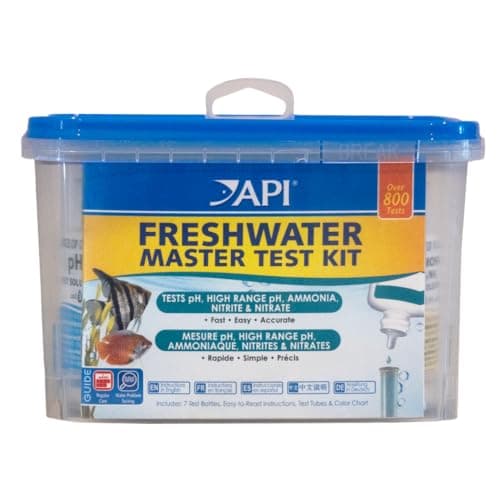 API Freshwater Master Test Kit Nitrate is the number that tells you whether feeding and water changes are part of your algae problem. | Telling a nutrient problem from a light problem | $35.98 on Amazon #ad How we’re funded · price as of November 3, 2026 |
| 5 | 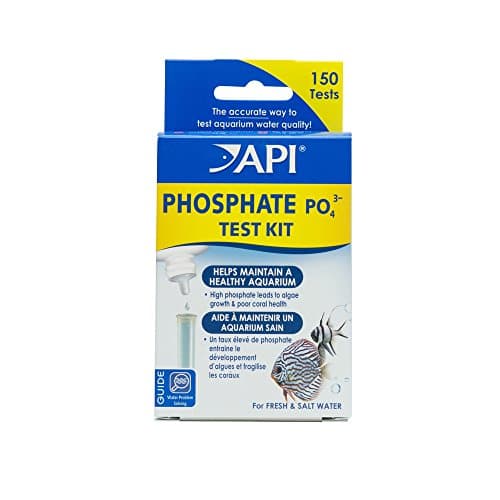 API Phosphate Test Kit Phosphate is the reading that occasionally explains an algae problem the nitrate result cannot. | The second nutrient number, when nitrate is already low | |
| 6 | 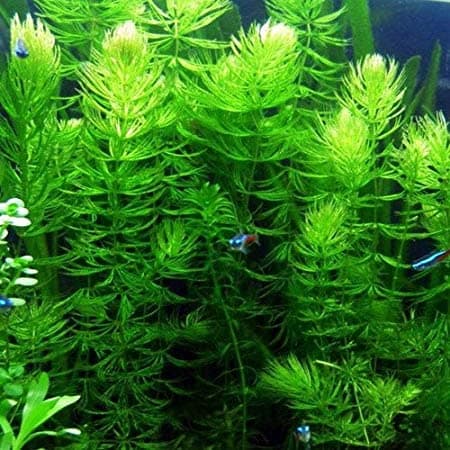 Various Hornwort (Ceratophyllum demersum) A fast-growing plant that consumes the nutrients algae wants, with no planting required. | Competing with algae rather than fighting it | $9.97 on Amazon #ad How we’re funded · price as of November 3, 2026 |
| ! | 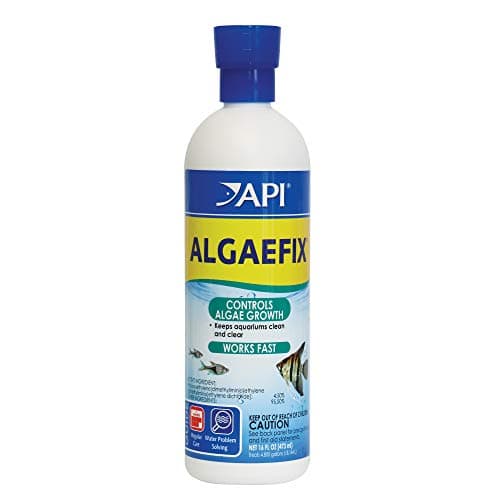 API ALGAEFIX Algae Control An algae control liquid that changes the symptom and not the input — and leaves the dead algae in your tank. Skip this one — see why below | The bottle to think hardest about before buying | $16.98 on Amazon #ad How we’re funded · price as of November 3, 2026 |
Rows link to the full write-up further down this page. Prices come from the live price layer only; where there is no live figure the button reads “Check price” rather than showing a remembered number.
Type by type
Brown dust on a new tank (diatoms)
The classic first-month algae: a fine brown film over glass, substrate and slow-growing leaves, which wipes away easily and reappears in a few days. It is the usual pattern on a tank under about three months old, and the usual outcome is that it fades on its own as the tank matures.
Do not treat it. Wipe the glass at water changes, keep the photoperiod short, and let the tank settle. If the tank is new, check that the reason you are looking at it closely is not something more serious: a brown film plus fish gasping at the surface is an ammonia question, not an algae question — how to lower ammonia fast.
Hard green dots (green spot algae)
Small, hard, circular green dots that a scrubber pad polishes rather than removes. They grow on the glass and on the leaves of slow plants like anubias, which sit still long enough to be colonized.
On glass, a blade removes it — that is what the 2-in-1 magnet above is for. On leaves, do not scrape: remove the worst leaves if they are badly covered, and accept the rest. Then shorten the day. If nitrate is low and the photoperiod is already short, this is the one case where a phosphate reading is worth taking.
Long green strands (hair and string algae)
Strands that wrap around plants, decor and equipment. This is the type that responds best to physical removal, because it is long enough to grab: twist it around a toothbrush or your fingers and pull it out of the tank rather than breaking it up in the water.
It usually means light and nutrients are both running ahead of what the plants can use. Cut the photoperiod first, feed less second, and expect it to take two or three weeks to stop reappearing.
Dark tufts (black beard algae)
Small dark tufts on leaf edges, wood and hardware, typically where flow is strongest or stagnant rather than evenly distributed. It is the most stubborn of the five and the least responsive to simply cutting light.
The practical approach is to remove what you can — affected leaves, and hardware that can come out and be cleaned outside the tank — and to improve circulation so no corner is dead. Spot treatment exists and is commonly used in the hobby; if you go that route, treat the object rather than the tank, and read the caution in the skip entry above before adding anything to the water column.
Green water
A bloom of free-floating algae that turns the whole water column green. It does not respond to scraping, because it is not on a surface. That one has its own page: why is my fish tank water green.
What about algae eaters?
Snails, shrimp and a few fish genuinely graze algae, and in a stable tank they help. Three honest caveats before you buy any of them.
- No animal eats algae faster than a light problem grows it. An algae crew added to a tank running a ten hour photoperiod just gives you a tank with an algae problem and more bioload.
- They are animals, not equipment. Every one of them has its own tank size, temperature and diet requirements, and most of the ones sold for this job will starve once the algae is gone unless you feed them.
- This site links no live animals. Amazon does not sell them and we would not link them if it did — buy livestock where you can look at it first, and read up on the species before, not after.
The routine that keeps it away
- Light on a timer, six to eight hours, and the tank out of direct sun. Set it once.
- Scrape the glass weekly, immediately before the water change, so the debris leaves with the water. Tools are on best algae scrapers.
- Change about 25% of the water weekly, vacuuming the substrate as you go — the reasoning is on how often to change aquarium water.
- Feed what the fish clear in a minute or two, and net out what they do not.
- Keep plants in the tank, and add a fast grower if algae keeps returning.
- Test nitrate monthly once the tank is established, so a rising trend is visible before it is green.
The cheapest lever in all of this is the light, and it is the one most people never set deliberately: do I need a light for my fish tank covers the photoperiod that keeps a tank on the right side of the balance.
Algae and a visible snail population are usually two readings of the same habit — surplus food and surplus nutrients. The snail half of that is on how to get rid of snails in a fish tank.
Pick 1
BN-LINK Indoor 7-Day Programmable Digital Timer Outlet
The fix that works on every type of algae
The number
Indoor 7-day programmable timer with two outlets, per the Amazon listing. Six hours a day is the starting photoperiod we recommend on every planted tank.
Almost every algae problem in a beginner tank is a light problem: too many hours, an uncontrolled window, or a fixture running while nothing in the tank can use the energy.
A timer turns the photoperiod from something you intend into something that happens. Set six hours, leave it alone for a month, and a large share of algae problems fade without another purchase.
The second outlet is useful here too — put the light on one and an air pump on the other, so the schedule survives you being away.
The honest costs. It fixes nothing this week: algae already on the glass still has to be removed by hand, and plants take weeks to respond to a changed schedule. We could not verify a published electrical rating from a source that responds to us, so check the listing against what you plug in. A digital timer can lose its program in a long outage.
| Type | Plug-in digital timer, 7-day programmable, per the Amazon listing |
|---|---|
| Outlets | Two, so one timer runs a light and an air pump or a second tank |
| Why it matters | A fixed photoperiod is the cheapest algae control there is, and memory is not a schedule |
| What it does not do | No electrical rating is printed here because we could not verify one from a source that responds to us — check the listing against what you are plugging in. A digital timer also loses its program in a long outage unless it has battery backup, so check the schedule after the power goes out. A mechanical dial timer is cheaper and cruder if you prefer no programming at all. |
Specs from BN-LINK Indoor 7-Day Programmable Digital Timer Outlet, 2 outlets, Amazon listing. We have not used this unit.
Pick 2
FL!PPER Float Nano Magnetic Cleaner
Getting what is already there off the glass
The number
Stated for small glass tanks up to 1/4 inch (6 mm). The 2-in-1 design flips under water between a scrubber pad and a scraper blade.
Green spot algae is hard enough that a pad polishes it rather than removing it. A tool with a blade is the difference between a clean pane and a pane that looks clean until the light hits it.
Doing this with a magnet rather than a handheld scraper keeps your hands out of the water, which matters more than it sounds on a tank you are already treating for something.
The honest costs. The 1/4 inch glass limit rules it out on thicker tanks. Like any magnet it will drag grit across the glass if you take it near the substrate — keep an inch clear at the bottom and check the pad before each pass. Our full shortlist, including acrylic-safe options, is on the algae scraper page linked below.
| Glass thickness | Small glass tanks up to 1/4 inch (6 mm), per the Amazon listing |
|---|---|
| Type | 2-in-1: flip it in the water to swap between scrubber pad and scraper |
| Floats | Floating design, so the inner half surfaces rather than dropping into the substrate |
| What it does not do | The 1/4 inch limit rules it out on thicker glass, which includes many tanks over about 30 gallons. The flip action takes practice, and like any magnet it will drag grit across the glass if you let it near the sand. |
Specs from FLIPPER Float Nano Magnetic Aquarium Cleaner, glass up to 1/4 inch (6 mm), Amazon listing. We have not used this unit.
#ad How we’re funded · price as of November 3, 2026
Pick 3
Tetra Water Cleaner Gravel Siphon
Exporting it instead of moving it around
This is the step people skip, and skipping it is why the glass is green again in three days. Algae scraped off a pane settles into the substrate, decomposes, and feeds the next crop.
The order that works: scrape the glass, wait ten minutes for the debris to settle, then do the water change with the vacuum and take the debris out with the water.
A water change also does the thing no bottle does — it removes dissolved nitrate, which is the nutrient side of the equation.
The honest costs. It is slow, and on a small tank a siphon empties the water faster than you expect, so have the replacement water dechlorinated and at temperature before you start.
| Type | Manual siphon into a bucket |
|---|---|
| Cost | The cheapest way to do a proper gravel-vac water change |
| What it does not do | You carry the water. On a 10 or 20 gallon tank that is fine. The moment the tank gets big, it is the reason people quietly stop doing water changes. |
The manufacturer does not publish a full spec sheet for this item, so nothing beyond the figures above is stated. We have not used this unit.
#ad How we’re funded · price as of November 3, 2026
Pick 4
API Freshwater Master Test Kit
Telling a nutrient problem from a light problem
Algae needs light and nutrients. You can see the light; you cannot see the nutrients. A nitrate reading is how you find out whether the tank is carrying a load the plants and water changes are not keeping up with.
It is also the kit that catches the much more serious problem people mistake for an algae question: ammonia and nitrite in a tank that is not cycled.
The honest costs. It is the most expensive item on this page, and if you already own it you do not need another. It is a liquid kit read against a color card, so results are bands rather than figures, and it does not test phosphate.
| Tests | pH, High Range pH, Ammonia, Nitrite, Nitrate |
|---|---|
| Capacity | Over 800 tests per kit |
| Contents | 7 bottles of test solution, 1 color card, 4 glass tubes with caps, holding tub |
| Type | Liquid reagent |
| What it does not do | Does not test hardness, chlorine or alkalinity. It is slower than strips, the nitrate test needs vigorous shaking of the second bottle and a wait, and the color card is genuinely hard to read between adjacent shades. |
Specs from API Freshwater Master Test Kit, Amazon listing; API Freshwater Aquarium Master Test Kit, PetSmart listing. We have not used this unit.
#ad How we’re funded · price as of November 3, 2026
Pick 5
API Phosphate Test Kit
The second nutrient number, when nitrate is already low
The number
Measures phosphate, which the Freshwater Master Test Kit does not cover. Stated for freshwater and saltwater, per the Amazon listing.
Most beginners never need this. It earns its place in one specific situation: nitrate is low, the photoperiod is already short, and the algae keeps coming back anyway.
Phosphate arrives with food and with some tap water, and a high reading points at overfeeding or at a source problem rather than at anything you are dosing — a recommended dose of a trace fertilizer contributes almost nothing, which Seachem publishes a figure for.
The honest costs. It answers one question, and only after the light and feeding have been dealt with. Buying it first is a way of spending money to avoid shortening a photoperiod. Same color-card limitation as any liquid test.
| Measures | Phosphate, which the Freshwater Master Test Kit does not cover |
|---|---|
| Water | Stated for freshwater and saltwater, per the Amazon listing |
| Type | Liquid reagent test, read against a color card |
| What it does not do | It answers one question only, and it is a question most beginners never need to ask: nitrate from the master kit is the more useful number, and a phosphate reading changes nothing unless you already control light and feeding. Liquid tests are read by eye against a card, so the result is a band rather than a figure. |
Specs from API Phosphate Test Kit for freshwater and saltwater, Amazon listing. We have not used this unit.
Pick 6
Various Hornwort (Ceratophyllum demersum)
Competing with algae rather than fighting it
Plants and algae want the same things. A tank with fast-growing plants has less left over, which is why a heavily planted tank usually has cleaner glass than a bare one.
Hornwort is the easiest version of that strategy: it floats, needs no substrate, tolerates low light, and grows fast enough to matter within weeks.
The honest costs. It sheds needles, which end up in the filter intake. It grows fast enough to need thinning. And floating plants shade everything below them, so keep a clear patch over anything rooted. It is a slow lever, not an emergency fix.
| Light | Undemanding. Grows in low light and faster in bright light |
|---|---|
| Planting | None required. It floats, which is why it needs no substrate at all |
| Growth rate | Fast, which is what makes it useful against algae — it competes for the same nutrients |
| What it does not do | It sheds. Hornwort drops needles, especially after a move or a parameter change, and those needles end up in the filter and the substrate. It also grows fast enough to shade everything beneath it, so it needs thinning rather than admiring. |
Specs from Hornwort Ceratophyllum live aquarium plant, Amazon listing. We have not used this unit.
#ad How we’re funded · price as of November 3, 2026
Skip this
API ALGAEFIX Algae Control
The bottle to think hardest about before buying
This is the skip entry, and it is a genuine product that genuinely does something. The reason it is here rather than in the list above is what happens after it works.
Killing algae leaves it in the water to decompose. The EPA's description of algal blooms states plainly that decomposing algae consumes the oxygen in the water column — in an open lake that is a fish kill, and in a closed aquarium it is both an oxygen drop and an ammonia load on a filter that was already busy. A tank treated for algae and then hit with an ammonia spike is a worse tank than one with green glass.
It also does nothing about the cause. The light is still on for ten hours, the tank is still overfed, and the algae comes back — which is how people end up dosing on a schedule.
Read the label's cautions about invertebrates before using any algaecide in a tank with shrimp or snails, and check whether the product you have is the freshwater or marine version; API sells both and they are not interchangeable.
If you use one anyway, do it after a water change rather than before, keep the surface agitated, and test for ammonia over the following week.
| What it is | A liquid algae control product for freshwater aquariums, sold in a 16 oz bottle |
|---|---|
| What it does not do | It does not change the light or the nutrient load that grew the algae |
| Separate product | API sells a distinct marine version; the freshwater and saltwater bottles are not interchangeable |
| What it does not do | This is on our algae page as the option to think hardest about, not as a recommendation. Killing algae leaves it in the tank to decompose, and the EPA's own description of algal blooms notes that decomposing algae consumes the oxygen in the water column — in a closed aquarium that also means an ammonia load on a filter that was already busy. Read the label's own cautions about invertebrates before using it in a tank with shrimp or snails. |
Specs from API ALGAEFIX Algae Control, 16 oz, Amazon listing; US EPA, Nutrient Pollution — The Effects: Environment (decomposing algae consumes oxygen in the water column). We have not used this unit.
One last reassurance: a tank that grows a little algae is a normal tank. The goal is a routine that keeps it to a weekly two-minute job, not a sterile box. If the algae arrived alongside cloudy water, fish at the surface or a recent fish death, deal with the water first — why is my fish tank water cloudy and why do my fish keep dying are the pages for that, and both start with a test kit rather than a bottle.
Questions people actually ask
Frequently asked questions
+ How do I get rid of algae in my fish tank fast?
+ What causes algae in a fish tank?
+ Why is there brown algae in my fish tank?
+ Will less light get rid of algae?
+ Should I use an algaecide in my aquarium?
+ Do algae eaters actually work?
Where the numbers came from
Sources
- US EPA, Nutrient Pollution — The Effects: Environment (nutrient pollution fuels algal blooms; decomposing algae consumes the oxygen in the water column)
- BN-LINK Indoor 7-Day Programmable Digital Timer Outlet, 2 outlets, Amazon listing
- API Phosphate Test Kit for freshwater and saltwater, Amazon listing
- API ALGAEFIX Algae Control, 16 oz, Amazon listing
- FLIPPER Float Nano Magnetic Aquarium Cleaner, 2-in-1 scrubber and scraper for glass up to 1/4 inch (6 mm), Amazon listing
- Mag-Float Medium Black Stealth Glass Magnet Aquarium Scraper Cleaner with Blade, Amazon listing
Read next
Related on Fin & Filter
The best aquarium algae scrapers
Magnet or handheld, blade or pad, glass or acrylic. The tools that work and the mistake that scratches the tank.
Why is my fish tank water green?
A free-floating algae bloom, not dirt. Why scrubbing fails, how to starve it of light and nitrate, and what not to buy.
How to set up a low-tech planted tank
Substrate, light, plants, fertilizer — the four decisions, and the photoperiod rule that decides whether you grow plants or algae.