Model review
Fluval C2 Power Filter review
Five filtration stages, a trickle chamber, a cleaning indicator and a published 62 GPH minimum — sold for a tank size its maximum flow cannot support.
Fin & Filter earns a commission when you buy through the links on this page. It costs you nothing and it does not decide what we rank. How we’re funded.
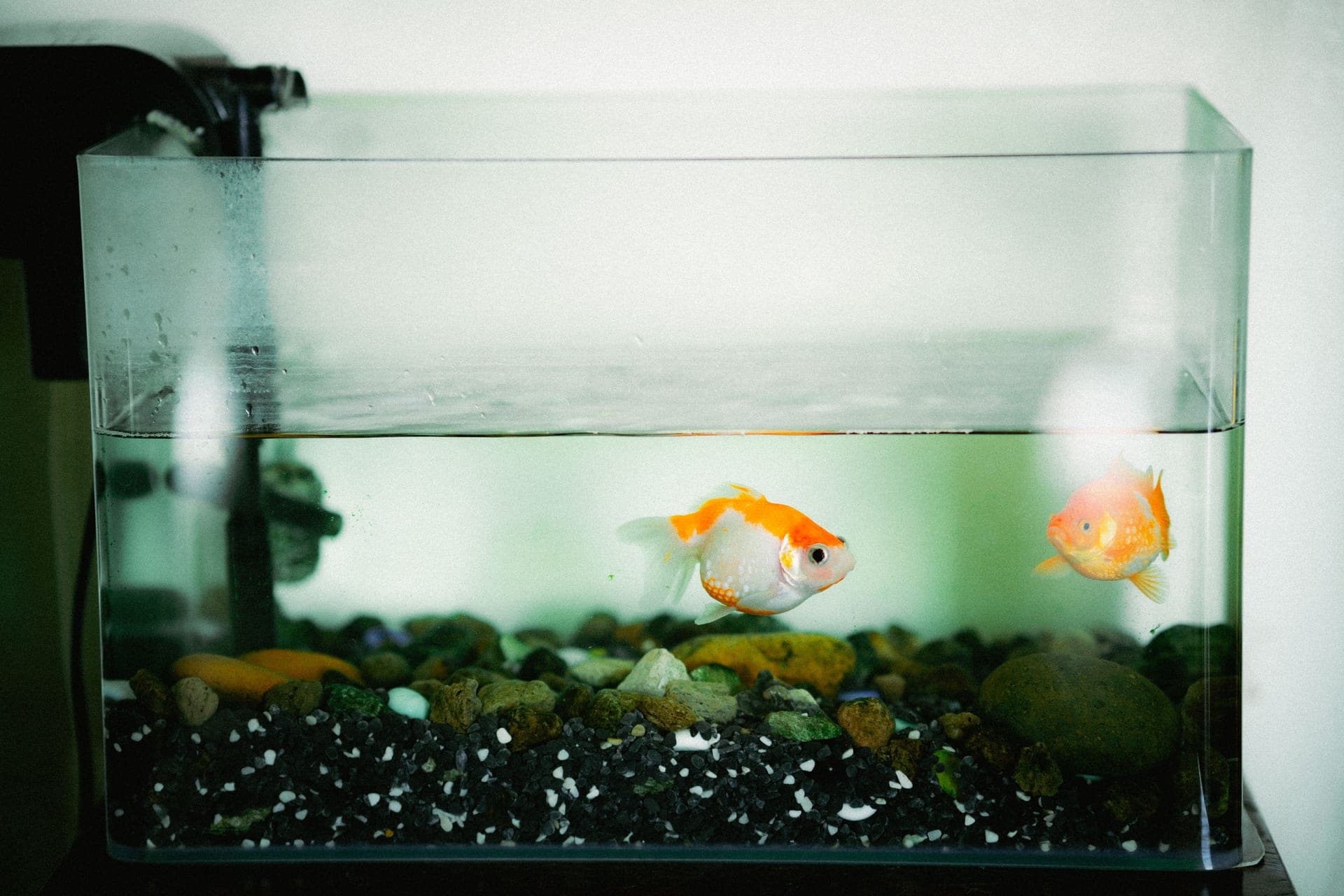
We have not used any of this gear. Every pick below is chosen from published manufacturer specifications and the arithmetic on how we pick, which you can re-run yourself.
The Fluval C2 is the right filter for a 10 gallon community tank, or a planted or lightly stocked 20 — and it is not a 30 gallon filter despite the number on the box. It is worth buying for two specific things almost nothing else in its class offers: a published minimum flow of 62 GPH, which is what you need to know if you keep a betta, shrimp or plants, and a trickle chamber that runs biological media in air rather than submerged. If your 20 gallon tank is fully stocked, buy the C3 instead — same design, 153 GPH, and only about 10% short of what our method asks for rather than 30%.
We have not used this filter and do not claim to have. What follows is Fluval's published specification as reproduced by the retailer cited at the foot of this page, our own turnover arithmetic applied to it, and a plain account of where the specification and the model range disagree. The method is on how we pick.
Quick picks
The C2, and what to buy instead when it is wrong
| # | Product | Best for | Price |
|---|---|---|---|
| 1 | 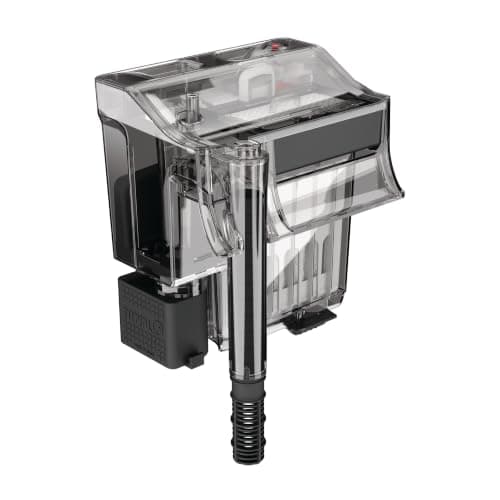 Fluval C2 Power Filter Genuinely more filter than its price suggests, with a published minimum flow nobody else in the class offers — and a model range that overstates it. | A 10 gallon community tank, or a planted or lightly stocked 20 | $57.59 on Amazon #ad How we’re funded · price as of November 3, 2026 |
| 2 | 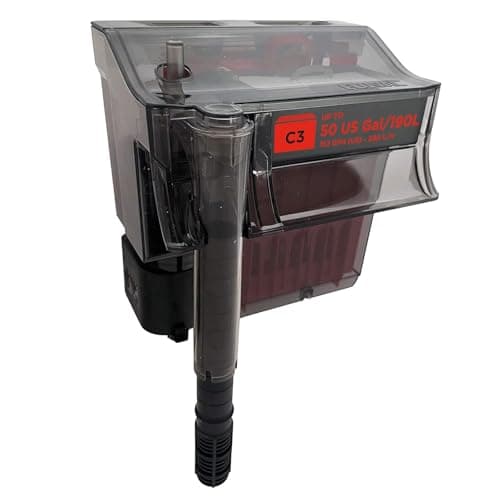 Fluval C3 Power Filter 153 GPH maximum and 80 GPH minimum, same five stages. The C2's answer for a properly stocked 20. | The same design on a tank the C2 cannot carry | $59.99 on Amazon #ad How we’re funded · price as of November 3, 2026 |
| 3 | 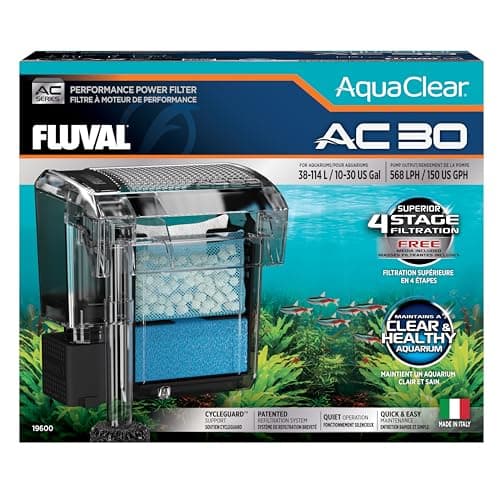 Fluval AquaClear 30 Power Filter 150 GPH of rinse-and-reuse media at a lower price — fewer features, better economics. | A stocked 20 gallon tank where running cost matters more than stages | $49.99 on Amazon #ad How we’re funded · price as of November 3, 2026 |
| 4 | 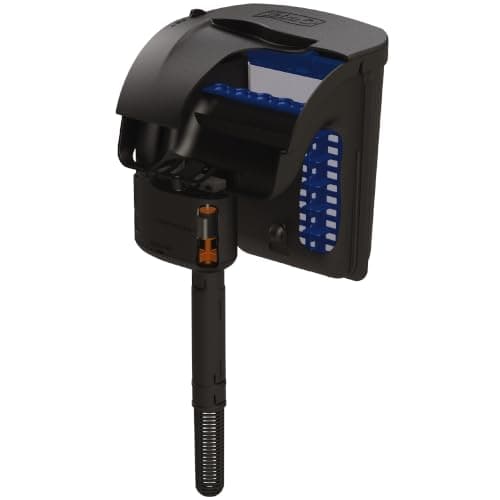 Tetra Whisper IQ 20 Power Filter A fraction of the price with a stabilizing base plate and a cartridge you will be buying forever. | The cheapest competent hang-on-back for a 20, if the C2 is simply too much money | $23.17 on Amazon #ad How we’re funded · price as of November 3, 2026 |
| 5 | 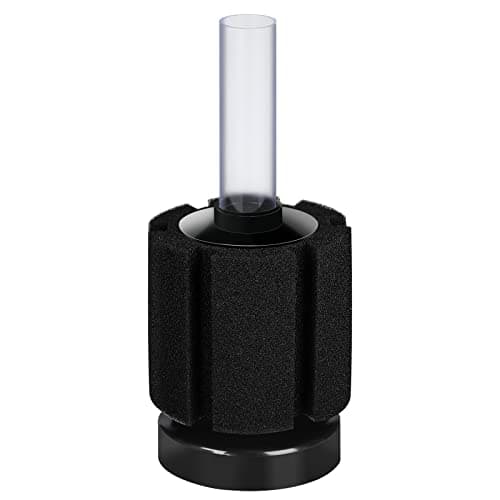 AQUANEAT Bio Sponge Filter (nano, up to 10 gallons) Air-driven and gentle by default rather than by compromise, at a fraction of the price. | A betta or shrimp tank, where even 62 GPH is more current than you want | $5.98 on Amazon #ad How we’re funded · price as of November 3, 2026 |
Rows link to the full write-up further down this page. Prices come from the live price layer only; where there is no live figure the button reads “Check price” rather than showing a remembered number.
The published specification, and what each line means
| Fluval publishes | Figure | What it means in practice |
|---|---|---|
| Maximum flow | 119 US GPH | Comfortable on a 10 gallon community tank; short of a stocked 20 |
| Minimum flow | 62 US GPH | The figure that matters — almost no competitor publishes one |
| Stated aquarium size | Up to 30 US gallons | A light-stocking ceiling; a stocked 30 needs about 257 rated GPH |
| Stage 1 (mechanical) | Porous foam pad | Catches large particles; rinse in tank water |
| Stage 2 (mechanical) | Poly/foam pad | Fine debris — and the consumable in this filter |
| Stage 3 (chemical) | Activated carbon | Ammonia remover and Zeo-Carb available instead; carbon is situational |
| Stage 4 (biological) | Bio-Screen | Keeps debris out of the biological stage |
| Stage 5 (biological) | Trickle chamber with C-Nodes | Media in air, not submerged — the oxygen-rich environment bacteria want |
| Refiltration system | Slows the output | Gentler return than a cascade — useful in a planted tank |
| Cleaning indicator | Rises when the poly/foam pad needs rinsing | Tells you flow has dropped before the tank does |
Specification as published by Fluval and reproduced by the retailer listing cited at the foot of this page. Required GPH figures are computed with our own method.
Where the model range and the arithmetic part company
Our method is applied identically to every filter on this site: a stocked community tank wants six turnovers an hour, and because rated flow is measured with clean media and no head height, you divide by 0.7 to get the rating to shop for.
| Tank | Needs (rated GPH) | C2 at 119 GPH |
|---|---|---|
| 5 gallon | 43 | Clears it, and turns down to 62 if that is still too much |
| 10 gallon | 85 | Clears it by about 40% |
| 20 gallon, planted or lightly stocked | 170 | 30% short — acceptable where plants share the load |
| 20 gallon, fully stocked | 170 | 30% short — buy the C3 |
| 30 gallon (the stated ceiling) | 257 | 54% short |
Required figures computed with the method on how we pick. Fluval's 30 gallon figure assumes light stocking, as every maker's tank range does.
This is not unique to Fluval. The same gap turns up on the Seachem Tidal 35, on the Aqueon QuietFlow line and on Marineland's Penguins. What is unusual here is that Fluval publishes enough of the specification for the gap to be visible, and then publishes the minimum as well.
The trickle chamber, and why it is not marketing
Nitrifying bacteria need oxygen to do their job, and submerged media is always competing with the rest of the tank for dissolved oxygen. A trickle chamber runs water over media sitting in air, so the bacteria there have atmospheric oxygen available rather than dissolved oxygen.
That is the same principle as the bio-wheel on a Marineland Penguin, done with a static medium instead of a rotating one — and a static medium has no bearing to seize, which is the bio-wheel's known failure point. It is a real design advantage, and it is the reason this filter punches above its flow figure biologically.
Who should buy something else
If your tank is a fully stocked 20 or bigger, buy on flow: the C3 is the same filter with the headroom, and our size pages do the arithmetic on 20 gallons and 30 gallons. If running cost is the priority, an AquaClear basket is cheaper to own over a year, and the AquaClear Power Filter review explains why. If the C-series versus AquaClear question is the one you actually came with, it is settled properly on AquaClear vs Fluval C Series.
If gentle flow is the entire requirement — a betta, shrimp, or fry — a sponge filter does it for a fraction of the money and cannot be knocked back to full output. And whatever you buy, it arrives sterile and converts no ammonia until the bacteria grow in it, so cycle the tank before the fish arrive.
Pick 1
Fluval C2 Power Filter
A 10 gallon community tank, or a planted or lightly stocked 20
The number
Rated 119 US GPH maximum and 62 GPH minimum, stated for aquariums up to 30 US gallons. A 10 gallon community tank needs 85 rated GPH by our method, which this clears by about 40%. A stocked 20 needs 170, which it misses by 30%. A stocked 30 needs 257, which it misses by 54%.
Start with what is unusual, because in this class it is genuinely unusual: Fluval publishes a minimum flow figure. 119 GPH at the top, 62 GPH at the bottom. Almost every competitor publishes one number and an adjustable knob with no indication of where the knob lands, and that missing figure is exactly what a betta keeper, a shrimp keeper or a planted-tank keeper needs.
The five stages are real and worth naming, because "five-stage" on a box is usually marketing. Stage one is a porous foam pad for large particles. Stage two is a poly/foam pad for fine debris. Stage three is the chemical slot — activated carbon as supplied, with ammonia remover and Zeo-Carb available instead. Stage four is a Bio-Screen that keeps debris out of the biological stage. Stage five is a trickle chamber with C-Nodes, where water passes over media in air rather than submerged, which is the oxygen-rich environment nitrifying bacteria want.
Fluval also describes a refiltration system that slows the output and gives a gentle flow, and a cleaning indicator that rises when the poly/foam pad needs rinsing. The indicator is the quietly valuable feature: filters do not fail loudly, they clog, and biological capacity falls before anything visible happens in the tank.
The honest costs. The 30 gallon figure on the box is a light-stocking ceiling, and at 119 rated GPH it delivers about 46% of what our method asks for on a fully stocked 30 gallon tank. The poly/foam pad is a consumable rather than a rinse-and-reuse foam, so there is a small recurring cost. Five stages means five things to understand before your first maintenance, and the trickle chamber in particular looks wrong to a beginner the first time they open it. It is physically tall for a hang-on-back. And like every filter, it arrives sterile — it converts no ammonia at all until bacteria grow in it.
| Rated output | 119 US GPH maximum, 62 GPH minimum |
|---|---|
| Stated tank range | Up to 30 US gallons |
| Filtration | Five stages: two mechanical, one chemical and two biological, including a trickle chamber |
| Maintenance | Cleaning indicator that rises when the poly/foam pad needs rinsing |
| What it does not do | The stated 30 gallon range is optimistic: 119 rated GPH is well under the 257 our method asks for on a fully stocked 30 gallon tank, and under the 170 a 20 gallon community tank wants. No heater, no test kit, no substrate. |
Specs from Fluval C2 Power Filter, AquaCave listing reproducing Fluval's C-series specification table (119 max / 62 min GPH, up to 30 gal, five stages); Fluval C2 Power Filter, Amazon listing. We have not used this unit.
#ad How we’re funded · price as of November 3, 2026
Pick 2
Fluval C3 Power Filter
The same design on a tank the C2 cannot carry
The number
Rated 153 US GPH maximum, 80 GPH minimum, stated for aquariums up to 50 US gallons. On a stocked 20 gallon tank needing 170 rated GPH it lands about 10% short, against the C2's 30%.
This is the practical consequence of the naming problem. If your tank is a properly stocked 20 gallon community tank and you want the C-series, buy the C3 and not the C2.
You get the same five stages, the same trickle chamber and the same cleaning indicator, with a third more flow at the top and a usefully higher floor at the bottom.
The honest costs. The stated 50 gallon top end is optimistic by an even wider margin than the C2's 30 — our method asks for 429 rated GPH on a stocked 50, so read 50 as very light stocking indeed. It is a larger unit to hang and to hide. It costs more. And on a 10 gallon tank it is more filter than the tank needs, with the flow turned down to achieve what a C2 does at its natural setting.
| Rated output | 153 US GPH maximum, 80 GPH minimum |
|---|---|
| Stated tank range | Up to 50 US gallons |
| Filtration | Five stages: two mechanical, one chemical and two biological, including a trickle chamber |
| Maintenance | Cleaning indicator that rises when the poly/foam pad needs rinsing |
| What it does not do | Rated 153 GPH, so the stated 50 gallon top end is a light-stocking figure — our method asks for 429 on a stocked 50. On a 20 gallon community tank it lands about 10% short. No heater, no test kit, no substrate. |
Specs from Fluval C3 Power Filter, AquaCave listing reproducing Fluval's C-series specification table (153 max / 80 min GPH, up to 50 gal, five stages); Fluval C3 Power Filter, Amazon listing. We have not used this unit.
#ad How we’re funded · price as of November 3, 2026
Pick 3
Fluval AquaClear 30 Power Filter
A stocked 20 gallon tank where running cost matters more than stages
The number
Rated 568 L/h (150 US GPH) for 10 to 30 US gallons at 7 W, with adjustable flow. On a stocked 20 it is about 12% short of the 170 required, against the C2's 30%.
The honest alternative for a reader whose tank is bigger than the C2 suits and who does not care about trickle chambers. More flow, lower price, and foam you rinse and reuse rather than a pad you replace.
The pre-filter sponge on the intake is included, which the C2 does not supply, and that is the part that matters if you keep shrimp or trim plants.
The honest costs. No cleaning indicator of any kind, so you judge the flow by eye and most people judge it late. No trickle chamber, so your biological media is all submerged. No published minimum flow figure, which is the C2's real advantage. And it is still about 12% short on a fully stocked 20, which is why we pair it with a sponge filter on that tank.
| Rated output | 568 L/h (150 US gal./h) |
|---|---|
| Stated tank range | 38-114 L (10-30 US gallons) |
| Power draw | 7W at 120 V / 60 Hz |
| Media | Pre-filter sponge, Bio-Foam, BIOMAX, activated carbon |
| What it does not do | No heater, no test kit, no substrate. At full rated output this is more flow than a betta or a shrimp tank wants, so the flow control is not optional there. |
Specs from Fluval, AquaClear 30 Power Filter product page. We have not used this unit.
#ad How we’re funded · price as of November 3, 2026
Pick 4
Tetra Whisper IQ 20 Power Filter
The cheapest competent hang-on-back for a 20, if the C2 is simply too much money
The number
Tetra states 130 GPH for aquariums up to 20 US gallons.
Included because the price gap is wide enough to be a real decision rather than a rounding error, and because on a lightly stocked 20 this filter does the job.
The design feature worth noting is the base plate, which braces the unit against the glass and is a genuine contributor to how quietly it runs.
The honest costs. It is cartridge-based, so every replacement discards the bacteria living on the cartridge and the recurring cost never ends — the single strongest argument for a basket filter at any price. No published minimum flow. No trickle chamber. And at 130 GPH on a stocked 20 it is short of the 170 our method asks for, by about the same margin as the AquaClear 30 but with worse economics.
| Rated flow | 130 GPH, per the Amazon listing title |
|---|---|
| Model | Whisper IQ 20 — the model number tracks the tank size it is named for |
| Cartridge | Whisper Bio-Bag with Stay Clean, Large size |
| Biological stage | Bio-Scrubber |
| Noise | Tetra states less than 40 dB |
| What it does not do | Named for a 20 gallon tank, but at 130 rated GPH it is about 24% short of the 170 our method asks for on a fully stocked 20 gallon community tank. Monthly cartridge replacement per Tetra. No published flow-control figure. No heater, no test kit. |
Specs from Tetra Whisper IQ 130 GPH Power Filter, Amazon listing; Tetra Whisper IQ, Feeders Pet Supply listing (cartridge size per model, SoundShield). We have not used this unit.
#ad How we’re funded · price as of November 3, 2026
Pick 5
AQUANEAT Bio Sponge Filter (nano, up to 10 gallons)
A betta or shrimp tank, where even 62 GPH is more current than you want
The C2's 62 GPH minimum is a good answer for gentle flow. A sponge filter is a better one, because gentleness is its normal state rather than a dialled-down setting, and because nothing gets knocked back up to full output by a cleaning session.
It is also the cheapest biological filtration available, and a spare sponge in an established tank is an instantly cycled filter for a hospital tank.
The honest costs. It needs an air pump, airline and check valve, none of which are included, and the pump is the loudest object in the setup. There is no mechanical polish, so fine particles stay in suspension. It is visible inside the tank. And it is a nano device — it is not an answer for a stocked 20 or 30 gallon tank on its own.
| Flow rating | Not published. Air-driven sponge filters carry no manufacturer GPH figure; output depends on the air pump you pair with it. |
|---|---|
| Filtration | Mechanical and biological. No chemical stage unless you add one. |
| Running cost | No cartridge. The sponge is rinsed in old tank water and reused. |
| What it does not do | No air pump, no airline and no check valve in most listings, so budget for all three. No chemical filtration, and there is no hiding it behind the hardscape. |
Specs from Fluval, AquaClear 20 product page (the hang-on-back flow comparison). We have not used this unit.
#ad How we’re funded · price as of November 3, 2026
Questions people actually ask
Frequently asked questions
+ Is the Fluval C2 good for a 30 gallon tank?
+ What size tank is the Fluval C2 actually right for?
+ What are the five stages in a Fluval C2?
+ How low does the Fluval C2 flow go?
+ Fluval C2 or AquaClear 30?
+ Does the Fluval C2 need cartridges?
+ Is the Fluval C2 quiet?
+ Is the Fluval C2 good for a betta?
Where the numbers came from
Sources
- Fluval C2 Power Filter, AquaCave listing reproducing Fluval's C-Series specification table and five-stage description (119 max / 62 min GPH, up to 30 US gal)
- Fluval C3 Power Filter, AquaCave listing reproducing Fluval's C-Series specification table (153 max / 80 min GPH, up to 50 US gal, trickle chamber and cleaning indicator)
- Fluval, AquaClear 30 Power Filter — published output, tank range and power draw
- AquaClear 30 Power Filter listing (568 L/h / 150 US GPH, 10-30 US gal, included media)
- Tetra Whisper IQ 130 GPH Power Filter, Amazon listing
- Aquifarm, aquarium filter flow rate guidance (turnover multiples)
Read next
Related on Fin & Filter
AquaClear vs Fluval C Series
Five stages and a trickle chamber, or a cheaper basket that turns down to a trickle. Both are Fluval, and the arithmetic separates them.
The best filter for a 10 gallon tank
Every filter here clears the 85 GPH a 10 gallon tank needs, so we rank on media cost and cycling safety instead.
The best filter for a planted tank
Judged on surface churn, biological volume and intake safety rather than raw flow — the three things a planted tank changes.