Setup
Where to place your filter and heater
Both pieces of equipment work by moving or measuring water, so where they sit relative to each other decides whether either does its job. This takes five minutes and prevents a class of problem.
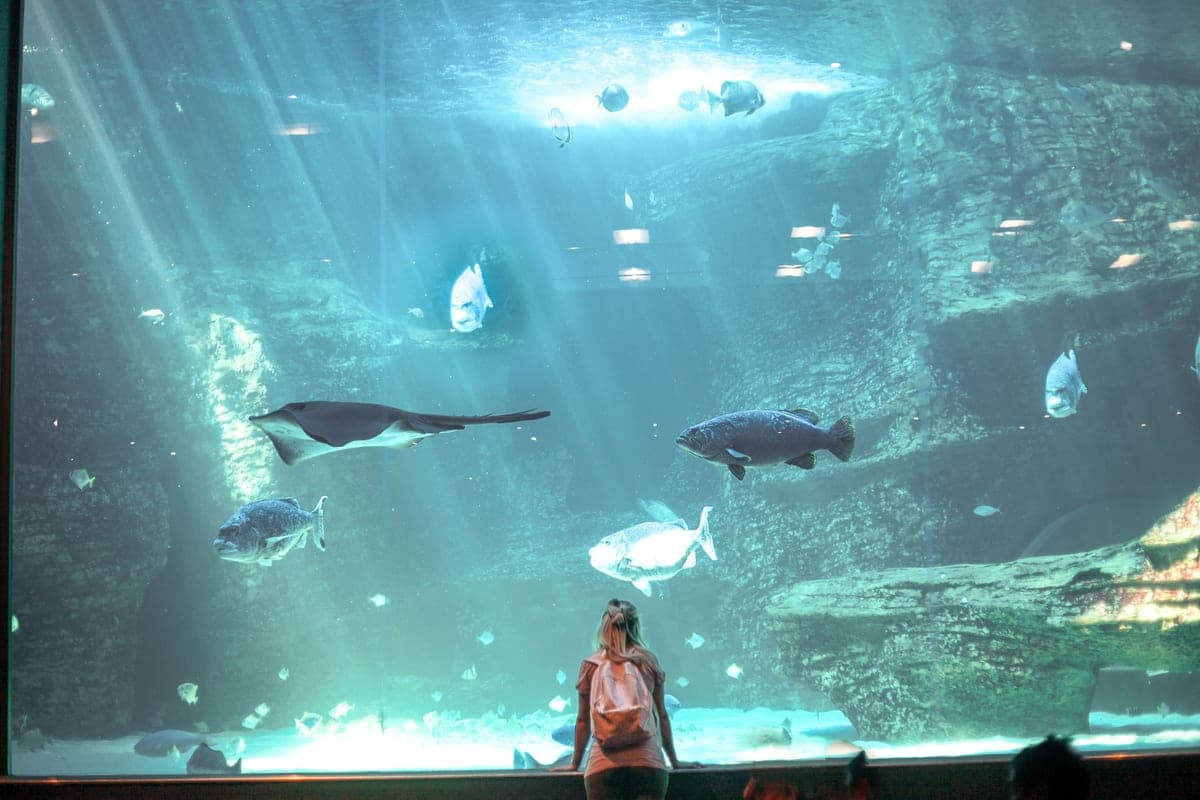
Put the heater in the filter's flow — near the intake or in the outflow path — so warmed water is carried around the tank instead of pooling. Place the filter so it moves water along the tank's long axis rather than across the short one. And leave a drip loop in every power cord, which is the single most important electrical habit in the hobby.
Placement gets treated as an aesthetic decision and is not. A heater in still water heats the water around itself and reports that temperature to its own thermostat, so it switches off while the far end of the tank sits several degrees cooler. A filter pointed into a corner turns over that corner. Both problems are invisible and both are free to avoid.
The heater goes in the flow
A heater has a thermostat, and that thermostat measures the water immediately around the heater — not the tank. In still water it creates a warm pocket, reads the pocket, satisfies itself, and shuts off. The rest of the tank never gets there.
Put the heater where water is actually moving and the problem disappears. Two placements work:
- Near the filter intake. Water is being pulled past the heater and up into the filter, then distributed across the tank by the outflow. This is the most reliable option and the one we would default to.
- Directly in the outflow path. Water leaving the filter passes over the heater and carries the warmth outward. Slightly less even than the intake position but still far better than a still corner.
Mount it at an angle rather than vertically if the manufacturer allows it — an angled heater sheds convection currents along its length instead of straight up, which mixes a little better. And keep it fully submerged to its marked minimum depth. Most modern heaters are fully submersible, but running one partly exposed is how the glass cracks.
The filter turns the long axis
A standard 20 gallon tank is roughly twice as long as it is deep. If the filter outflow points across the short dimension, water hits the front glass a few inches away and rolls back — the far ends of the tank barely move, and debris settles there permanently.
Position a hang-on-back at one end of the back wall rather than dead center, so the outflow pushes along the length of the tank. Water travels down to the far end, turns, and comes back along the front. The whole volume circulates and debris is carried to the intake instead of accumulating in a dead corner.
If you run two filters — which we recommend on anything over about 15 gallons — put them at opposite ends facing each other rather than side by side. See sponge filter vs hang-on-back.
Water level and outflow
Keep the water high enough that the filter outflow runs into the surface rather than falling through air onto it. A trickling outflow is louder, splashes salt creep and mineral deposits onto the hood, and drives off more CO2 — which matters in a planted tank. It is also the single most common reason a new keeper thinks their filter has developed a fault.
The drip loop
This is the most important thing on the page and it takes ten seconds.
Every cord leaving the tank should hang down below the level of the outlet before rising to plug in, so it forms a U. Water that runs down the cable — from condensation, from a splash, from your arm during a water change — collects at the bottom of the U and drips onto the floor rather than tracking into the socket.
- Every cord, every time. Filter, heater, air pump, light.
- Plug into a GFCI outlet where you have one. Aquariums are the residential case these were designed for.
- Unplug the heater before a water change. A heater exposed to air while running can crack, and a hot heater dropped into cool water can shatter. Give it ten minutes to cool before refilling.
- Keep the power strip off the floor, not behind the stand where a spill runs into it.
- Check the airline check valve if you run a sponge filter — without one, a power cut siphons tank water down the airline onto the floor.
A workable layout, back to front
- Hang-on-back filter at one end of the back wall, outflow pointing along the tank's length.
- Heater angled near the filter intake, fully submerged, at the same end.
- Thermometer at the opposite end, so it is reading the tank rather than the heater.
- Sponge filter, if you run one, at the far end from the hang-on-back.
- Air pump above the water line, on a towel or foam pad, with a check valve in the airline.
- Every cord in a drip loop, into a GFCI outlet where possible.
- Taller decor and plants at the back and sides where they hide equipment; open swimming space at the front.
Then run the whole thing for a day before anything goes in it — leaks, temperature stability, filter priming — and start cycling the tank. The full setup sequence is on how to set up a 10 gallon tank.
Questions people actually ask
Frequently asked questions
+ Where should I put the heater in my fish tank?
+ Should the heater be horizontal or vertical?
+ Where should the filter go on an aquarium?
+ What is a drip loop and do I need one?
+ Should I turn off the heater during a water change?
Where the numbers came from
Sources
Read next
Related on Fin & Filter

How to set up a 10 gallon fish tank
Box to running tank in eight steps, ending at the cycle rather than at the fish.
The best aquarium heaters for a first tank
The wattage your room actually needs, worked out, and the heaters that can hold it.
The best aquarium filters for a beginner tank
Rated flow against required flow, filter by filter, plus the media design that decides your running cost.