Buying guide
The best aquarium thermometers
The cheapest instrument in the hobby, and the one that catches the failure most likely to kill a tank quietly: a heater holding a temperature it is not actually holding.
Fin & Filter earns a commission when you buy through the links on this page. It costs you nothing and it does not decide what we rank. How we’re funded.
We have not used any of this gear. Every pick below is chosen from published manufacturer specifications and the arithmetic on how we pick, which you can re-run yourself.
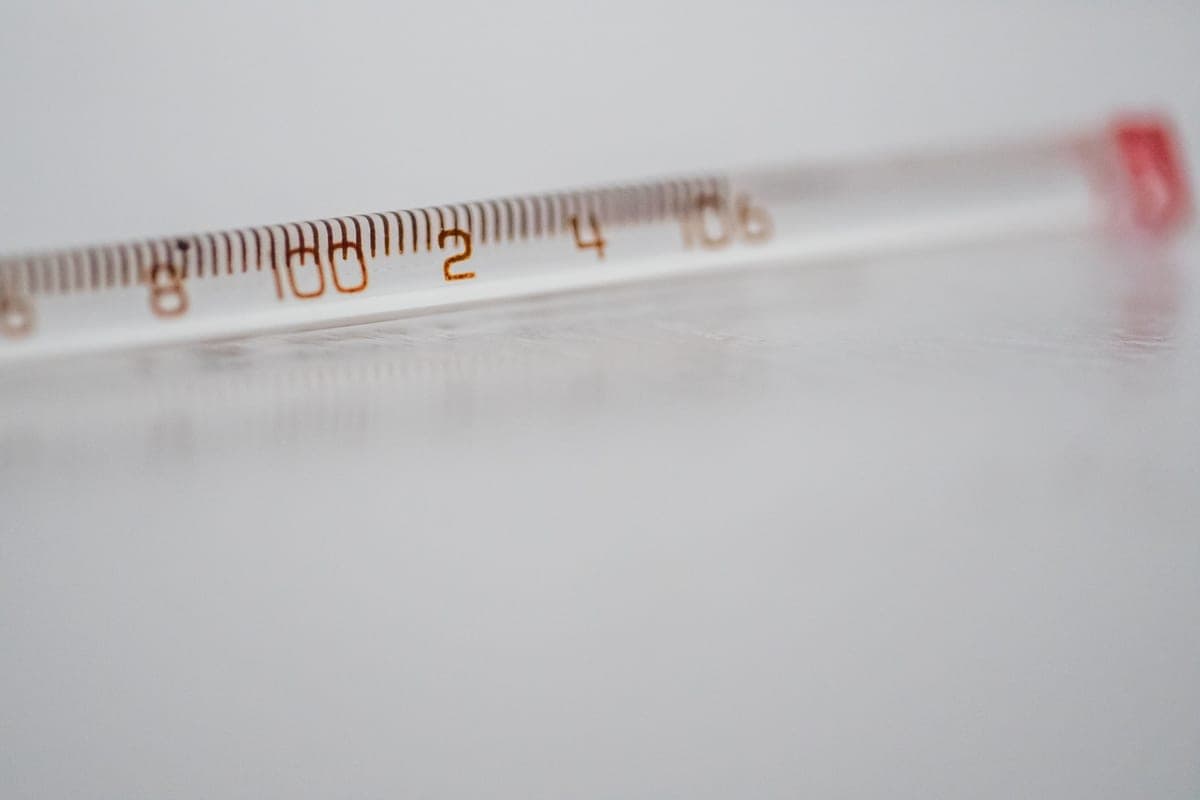
Buy a thermometer that sits in the water, not one stuck to the outside of the glass. A liquid-filled glass thermometer with a suction cup is the cheapest reliable option and needs no battery; a digital unit with an in-tank probe and an external display is easier to read at a glance, which in practice means you check it more often. Best of all is one of each, because two thermometers of different types disagreeing is the only calibration check a home aquarist gets.
This is the least glamorous purchase in the hobby and one of the highest-leverage. Temperature is the parameter a beginner is least likely to be watching and the one most likely to move without warning, because it depends on a mechanical device with a thermostat that will eventually be wrong about something.
The core idea on this page is one sentence long: a heater dial is a setting and a thermometer is a reading, and they are not the same claim. The dial says what the heater is trying to do. Only something in the water can tell you what it achieved.
Quick picks
The best aquarium thermometers
| # | Product | Best for | Price |
|---|---|---|---|
| 1 | No image Marina Floating Thermometer with Suction Cup Reads the water rather than the glass, cannot run out of battery, and shows a tropical safe band. | The default: in the water, no battery, marked safe zone | |
| 2 | No image Various Aquarium thermometer A digital display is far easier to read at a glance, which means you actually check it. | Reading the temperature without getting close to the tank | |
| 3 | No image Eheim Jager TruTemp Heater, 100W One of the few heaters you can recalibrate yourself rather than replace. | When the thermometer and the heater disagree, and you want to fix it | |
| 4 | No image Fluval M100 Submersible Heater (100W) 100 W, adjustable, published for tanks up to 30 gallons, and no recalibration dial. | The straightforward adjustable heater to pair with a thermometer | |
| ! | No image Marina Meridian LCD Thermometer An LCD strip that adheres to the outside of the glass, so it reads the glass and not the water. Skip this one — see why below | Nothing you should rely on |
Rows link to the full write-up further down this page. Prices come from the live price layer only; where there is no live figure the button reads “Check price” rather than showing a remembered number.
Why stick-on strips are the wrong default
Almost every beginner's first thermometer is an adhesive LCD strip, because kits include them. It is worth being precise about the objection, because it is not that they are cheap.
A strip on the outside of the tank is in thermal contact with three things: the water on one side, the glass in the middle, and the room on the other. What it reports is a blend, weighted towards whichever is closest. Put a tank against a cold exterior wall, or in a spot that catches an hour of direct sun, and the strip and the water diverge in the direction of the room. The strip is not faulty; it is measuring what it is touching.
| Type | Where it measures | Battery | Realistic use |
|---|---|---|---|
| Floating or suction glass | In the water | None | The reliable default. Small print is the only real drawback. |
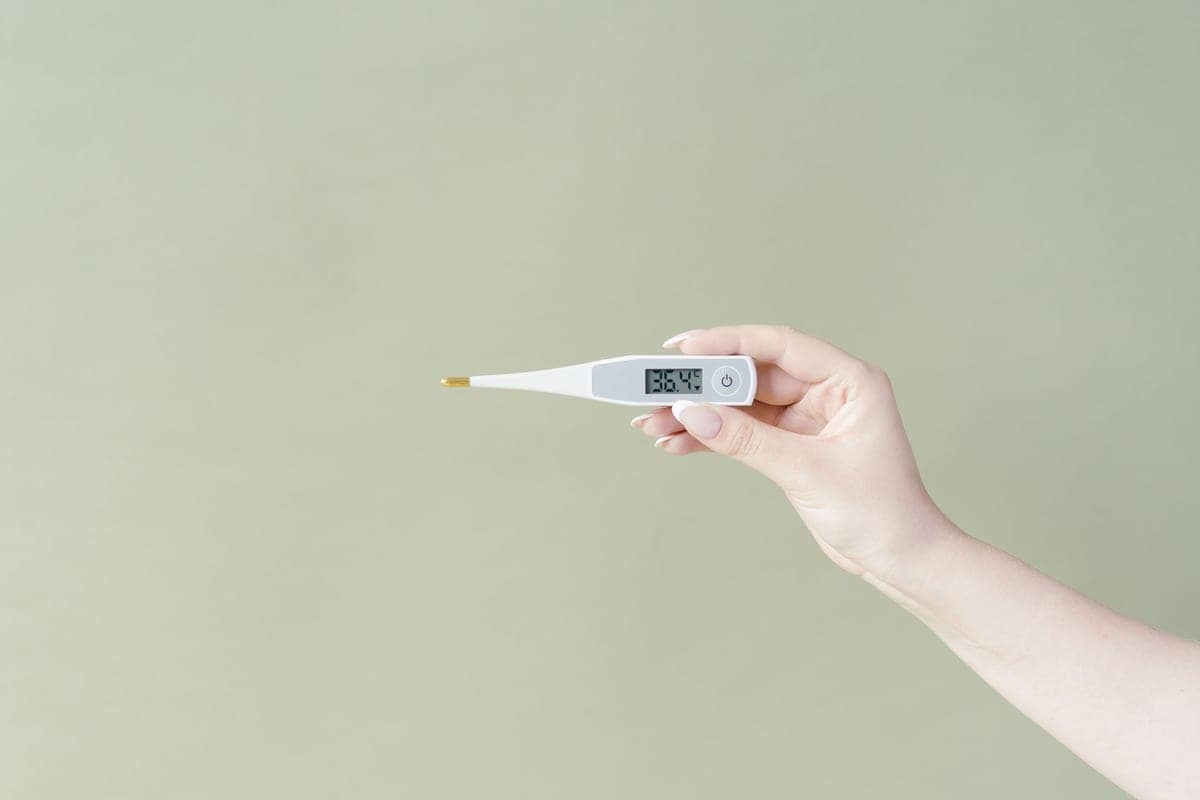
| Digital with in-tank probe | In the water, displayed outside | Yes | Easiest to read, so most likely to actually get read. |
| Adhesive LCD strip | The outside of the glass | None | A trend indicator. Not a number to make stocking decisions on. |
| Infrared / laser thermometer | The glass or water surface, from a distance | Yes | Reads a surface, not the body of water. Not a substitute. |
Compiled from the manufacturer and retailer listings cited at the foot of this page. Placement, not price, is what separates these.
What temperature you are aiming at
For a general tropical community tank the usual target sits in the high 70s Fahrenheit, and Marina's thermometer line marks a safe band spanning 64-86 degrees Fahrenheit, which is deliberately wider than any single species wants. Species differ, and a betta, a goldfish and a group of white cloud minnows do not want the same water — the hardiest fish for beginners page covers which species tolerate what.
The more useful principle is that stability beats precision. A tank held steadily at 76 degrees is a healthier tank than one that averages 78 while swinging four degrees every night. Fish tolerate a constant temperature they would not have chosen far better than they tolerate a moving one, which is why the thermometer's job is really to catch movement rather than to confirm a number.
Pick 1
Marina Floating Thermometer with Suction Cup
The default: in the water, no battery, marked safe zone
The number
Marina lists a 64-86 degree Fahrenheit (18-30 Celsius) span across this thermometer line, which brackets the tropical community range comfortably.
This is the pick because of where it sits. It is a liquid-filled glass thermometer that either floats in the tank or attaches to the inside glass with a suction cup, which means it is measuring the water your fish are living in. That sounds obvious until you compare it with a strip stuck to the outside of the tank.
It reads in both Fahrenheit and Celsius and carries a marked safety-zone band for most tropical fish, which is genuinely useful for a beginner who does not yet know what a normal number looks like. You are checking a band rather than interpreting a figure.
It has no battery, which matters more than it sounds. A dead digital thermometer usually tells you it is dead. A digital thermometer with a failing battery can drift first, and a slowly-wrong reading is worse than an obviously-absent one.
The honest costs. It is glass, so it breaks if you drop it or wedge it under a rock. The suction cup will eventually let go and the thermometer will drift around the tank, which is untidy rather than harmful. The printing is small and it is harder to read from across a room than a digital display, which is the single best argument for the next pick.
| Type | Liquid-filled glass, floats vertically or sticks to the inside glass |
|---|---|
| Mounting | Suction cup, or left free-floating |
| Scale | Reads in both Fahrenheit and Celsius |
| Safe zone | Carries a marked safety-zone band for most tropical fish. Marina lists a 64-86 F (18-30 C) span across this thermometer line |
| Power | None. No battery to die unnoticed |
| What it does not do | It is glass, so it breaks if you drop it or trap it under a rock. The suction cup will eventually let go and the thermometer will drift, which is cosmetic rather than harmful. Small print, harder to read across a room than a digital display. |
Specs from Marina Deluxe Floating Thermometer with Suction Cup, Amazon listing; Marina Plastic Aquarium Thermometer, Petsense listing (suction cup, safety zone, dual scale). We have not used this unit.
Pick 2
Various Aquarium thermometer
Reading the temperature without getting close to the tank
The argument for digital is behavioral rather than technical. A thermometer you can read from the doorway gets read every day. A small glass scale inside a planted tank gets read when you remember, and remembering is exactly what fails during the busy week when the heater sticks.
Most units of this type put a probe in the water and the display outside on the glass, so you get the accuracy of an in-water sensor with a readable display. Look for that arrangement specifically rather than an all-in-one strip.
The honest downsides. There is a battery, and it will die at some point without announcing it. Accuracy varies between units in a way that is hard to check from a listing, and a digital display invites false confidence: a reading to a tenth of a degree looks authoritative whether or not it is correct.
The practical answer to that last problem is not to buy a better digital thermometer. It is to own two thermometers of different types and compare them occasionally, which is the cheapest calibration check available to a home aquarist.
| Why it matters | A heater dial is a setting and a thermometer is a reading. They disagree more often than beginners expect. |
|---|---|
| What it does not do | Stick-on strip thermometers read the glass rather than the water, so room temperature pulls them off. |
The manufacturer does not publish a full spec sheet for this item, so nothing beyond the figures above is stated. We have not used this unit.
Pick 3
Eheim Jager TruTemp Heater, 100W
When the thermometer and the heater disagree, and you want to fix it
The number
Eheim publishes a 100 W rating, an 18 to 34 Celsius adjustment range, control accuracy of plus or minus 0.5 Celsius, and user recalibration of plus or minus 2 Celsius on the TruTemp dial.
A thermometer is a diagnostic instrument, so it is worth knowing what you can actually do with the diagnosis. Most heaters offer nothing: if the dial says 78 and the water is 75, you compensate by turning the dial up and living with a lie.
The Jager is the common exception. Eheim publishes a TruTemp recalibration feature that lets you realign the dial to the true temperature by plus or minus 2 degrees Celsius, alongside a stated control accuracy of plus or minus 0.5 Celsius. That turns a disagreement between heater and thermometer into a five-minute fix rather than a permanent annoyance.
It is here because it changes what the thermometer is for. Without recalibration, a thermometer tells you that something is wrong. With it, the thermometer tells you exactly how far to turn a screw.
The honest costs. It is glass-bodied, so it is breakable, and it is long for a small tank — check it fits your tank's depth before ordering. It includes no thermometer of its own, which is the entire premise of this page.
| Wattage | 100 W |
|---|---|
| Adjustment range | 18 to 34 C |
| Control accuracy | Plus or minus 0.5 C |
| Recalibration | User-recalibratable at plus or minus 2 C |
| What it does not do | Glass-bodied and long. No thermometer included. |
Specs from Eheim Jager TruTemp 100W, retailer spec sheet. We have not used this unit.
Pick 4
Fluval M100 Submersible Heater (100W)
The straightforward adjustable heater to pair with a thermometer
The number
Fluval publishes 100 W for up to 30 US gallons across a 66-86 degree Fahrenheit range on a computer-calibrated dial.
Included as the honest counterpoint to the pick above. The M100 is a good heater with a computer-calibrated dial and a published range, and it is the straightforward choice if your kit shipped a preset heater you want to replace.
What it does not have is a user recalibration adjustment. If your thermometer and this heater disagree, the fix is to set the dial to whatever number produces the right water temperature and to stop treating the dial as a temperature. That is a perfectly workable arrangement and it is what most keepers do.
It is on a thermometer page for one reason: it is the specific case where owning a thermometer is not optional. A heater whose dial you cannot trust and whose calibration you cannot correct is a heater you are flying blind with unless something in the water is reporting back.
No thermometer, no controller and no backup thermostat are included, and the last of those is worth understanding. A single thermostat is a single point of failure, and the failure mode that kills a tank is a heater stuck on rather than a heater stuck off.
| Wattage | 100 W |
|---|---|
| Stated tank size | Up to 30 US gal / 100 L |
| Temperature range | 66-86 F |
| Cord | 6 feet |
| What it does not do | No thermometer, no controller and no backup thermostat. |
Specs from Fluval, M100 Submersible Heater product page. We have not used this unit.
Skip this
Marina Meridian LCD Thermometer
Nothing you should rely on
The skip entry, and it is the thermometer most beginners already own, because a strip like this ships in a lot of starter kits.
The specification is not in dispute and it is the whole problem: this is an LCD strip with an adhesive backing, mounted to the outside of the aquarium glass, reading 64 to 86 degrees Fahrenheit. Anything mounted outside the glass is measuring a surface that sits between the tank water and the room, so the room pulls the reading. A cold wall, a draft, a radiator or an hour of afternoon sun all move it away from the water temperature.
It is not useless. As a rough trend indicator, glanced at daily, it will show you a large change. What it will not do reliably is tell you the difference between 76 and 79 degrees, and that band is exactly where tropical stocking decisions get made.
There is also a practical annoyance: the adhesive is a one-way trip. Positioning it badly, or wanting to move the tank against a different wall later, means buying another one. And this model carries no marked safe zone, so you are reading a bare number with no guidance about whether it is a good one.
If you have one, leave it on. Just do not let it be the only thing in the room telling you what the temperature is.
| Type | LCD strip |
|---|---|
| Mounting | Adhesive backing, mounted to the OUTSIDE of the aquarium glass |
| Range | 64 to 86 F (18 to 30 C) |
| Power | None |
| What it does not do | Mounted outside the glass, it reads the glass rather than the water, so a cold room or a sunny window pulls the reading away from the truth. No marked safe zone on this model, and the adhesive is a one-way trip. |
Specs from Marina Meridian Thermometer 64-86F, Fish Tanks Direct listing. We have not used this unit.
Where to put it, and why not next to the heater
Put the thermometer at the opposite end of the tank from the heater. Directly beside a heating element you are reading the warm plume rather than the tank, and you will conclude the tank is warmer than it is. At the far end you are reading water that has been around the loop, which is the number that matters.
This is the same reasoning that governs where the heater itself goes, and both are covered on where to place a filter and heater: near the filter outflow so moving water carries the heat around, rather than in a still corner where it heats one patch and the thermostat shuts off early.
How to check a thermometer you already own
- Compare two. Put a second thermometer of a different type in the tank for a day. If they agree closely, both are probably fine. If they disagree by several degrees, at least one is wrong and you now know to investigate.
- Check against a known point. A glass of ice water that has sat and stabilized is close to 32 degrees Fahrenheit. It is a crude check, and it will catch a badly-out unit.
- Watch it across a day, not a moment. A single reading tells you almost nothing. The same reading taken morning and night tells you whether the room is dragging the tank around overnight, which is the actual risk.
- Re-check after any change. A new heater, a tank moved to a different wall, or the first cold week of the year all deserve a fresh look. See how often to change aquarium water for where this fits in a routine.
If you are still assembling the tank, the wattage arithmetic is on best aquarium heaters, and the full shopping list including this one is on what a first tank really costs.
Questions people actually ask
Frequently asked questions
+ Are stick-on aquarium thermometers accurate?
+ Do I need a thermometer if my heater has a dial?
+ What temperature should a tropical fish tank be?
+ Where should I put the thermometer in the tank?
+ Digital or glass aquarium thermometer, which is better?
Where the numbers came from
Sources
- Marina Deluxe Floating Thermometer with Suction Cup, Amazon listing
- Marina Plastic Aquarium Thermometer, Petsense listing (suction cup, dual scale, safety zone)
- Marina Meridian LCD Thermometer 64-86F, Fish Tanks Direct listing
- Eheim Jager TruTemp 100W, retailer spec sheet
- Fluval, M100 Submersible Heater product page
- Aquarium Co-Op forum, heater sizing chart: temperature, watts, gallons
Read next
Related on Fin & Filter
The best aquarium heaters for a first tank
The wattage your room actually needs, worked out, and the heaters that can hold it.

What a first aquarium really costs
The complete first-tank shopping list, split into one-time and recurring, and the three places beginners waste money.

Where to place your filter and heater
Put the heater in the flow, the filter across the long axis, and always leave a drip loop. Why each rule exists.