Buyer's question
Is Seachem Prime worth it?
The bottle looks expensive next to a basic dechlorinator and is usually cheaper to use. The real question is whether the thing it does beyond dechlorinating is something your tank needs.
Fin & Filter earns a commission when you buy through the links on this page. It costs you nothing and it does not decide what we rank. How we’re funded.

We have not used any of this gear. Every pick below is chosen from published manufacturer specifications and the arithmetic on how we pick, which you can re-run yourself.
Yes, if your tank is cycling, newly stocked, or ever in trouble — because Prime temporarily binds ammonia for up to 48 hours, which no basic dechlorinator does, and that window is what keeps fish alive while you do water changes. No, if your tank has been cycled and stable for months: at that point you are paying for a capability you never use, and a cheaper concentrated dechlorinator does the one job you actually need. On cost per water change rather than per bottle, the gap is much smaller than the shelf price suggests.
This question comes up because the price comparison people make is the wrong one. Prime looks expensive beside a basic conditioner on the shelf, and the shelf is not where the money is spent — the dose is.
Quick picks
Is Seachem Prime worth it?
| # | Product | Best for | Price |
|---|---|---|---|
| 1 | 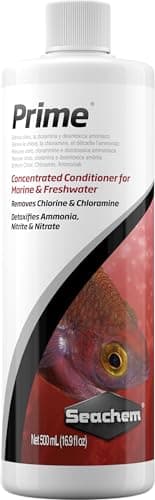 Seachem Prime Highly concentrated, and it temporarily binds ammonia — which is the feature you are actually paying for. | A cycling tank, a tank with fish in trouble, or anyone who wants one bottle to cover both | $16.62 on Amazon #ad How we’re funded · price as of September 14, 2026 |
| 2 | 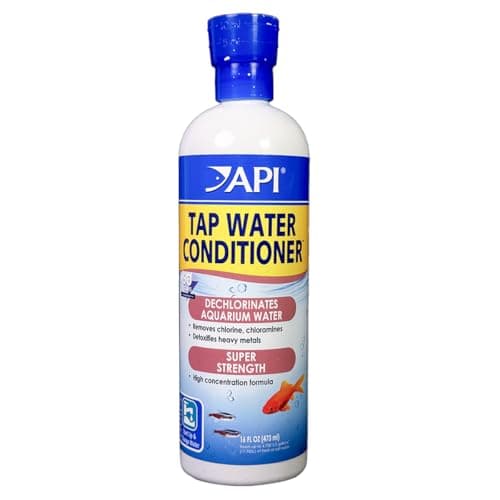 API Tap Water Conditioner, 16 oz Does the one job most tanks actually need, and does not pretend to do the other one. | An established tank that only ever needs dechlorinating | $8.48 on Amazon #ad How we’re funded · price as of September 14, 2026 |
| 3 | 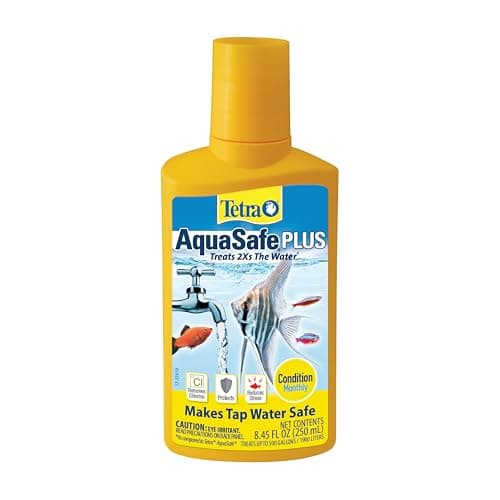 Tetra AquaSafe Plus Water Conditioner A competent dechlorinator that arrives as a sample sachet you will exhaust in two water changes. | The third option, and the one usually already in the kit | $10.07 on Amazon #ad How we’re funded · price as of September 14, 2026 |
| 4 | 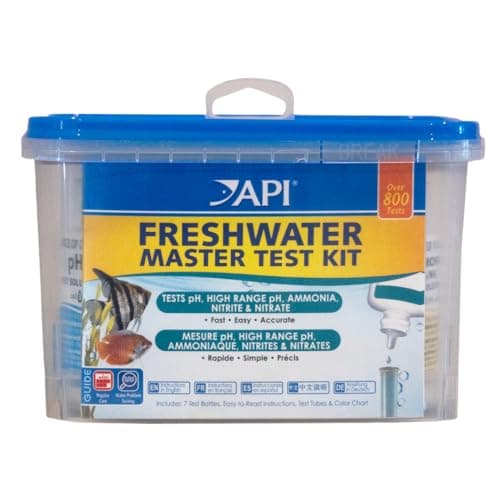 API Freshwater Master Test Kit The only way to answer this page's question for your specific tank. | Knowing whether you need the expensive bottle at all | $35.98 on Amazon #ad How we’re funded · price as of September 14, 2026 |
| ! | 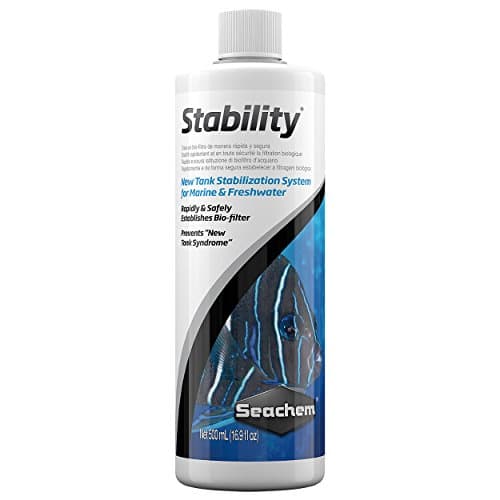 Seachem Stability Bottled bacteria in a near-identical bottle, and the single most common mix-up on this shelf. Skip this one — see why below | Not what you reach for when ammonia is high | $19.52 on Amazon #ad How we’re funded · price as of September 14, 2026 |
Rows link to the full write-up further down this page. Prices come from the live price layer only; where there is no live figure the button reads “Check price” rather than showing a remembered number.
What you are actually paying for
Two features, and they are worth separating because only one of them is unusual.
| Seachem Prime | A basic dechlorinator | |
|---|---|---|
| Removes chlorine | Yes | Yes |
| Neutralizes chloramine | Yes | Yes (check the label) |
| Temporarily binds ammonia | Yes — Seachem states up to 48 hours | No |
| Detoxifies nitrite and nitrate | Seachem states yes | No |
| Concentration | Very high — small doses per volume | Often concentrated too; compare dose rates |
| Cost per bottle | Higher | Lower |
| Cost per water change | Frequently lower | Varies — do the arithmetic on the label |
Claims are Seachem's and the respective manufacturers' own, cited at the foot of this page.
The row that matters is the third one. Chlorine removal is commodity chemistry and every conditioner on the shelf does it. Temporary ammonia binding is the feature that separates Prime from a basic dechlorinator, and whether it is worth paying for depends entirely on whether your tank ever has ammonia in it.
Do the per-dose arithmetic, not the per-bottle one
We do not print prices on this site, because a number typed into an article is stale within weeks and a stale price anchors your budget to something nobody checked. What we can give you is the method, which takes one minute in the shop:
- Read the dose rate off the back of each bottle — how much treats how many gallons.
- Work out your water change volume. A weekly 25% change on a 20 gallon tank is five gallons.
- Divide the bottle volume by the dose to get the number of water changes it covers.
- Then compare the shelf prices against those numbers rather than against each other.
Do that and the result surprises most people: a concentrated conditioner with a high shelf price frequently costs less per water change than a cheap dilute one. That is the single most useful thing on this page and it applies to every product in the category, not just this one.

When Prime is genuinely worth it
- During a fish-in cycle. Fish are in an uncycled tank and ammonia is climbing. This is the situation the 48-hour binding window exists for, alongside daily water changes — see how to lower ammonia fast.
- Immediately after stocking. Adding a group of fish raises the bioload ahead of the colony, and ammonia can appear for a few days.
- When something has failed. A filter that stopped while you were away, a dead fish that went unnoticed, a power cut.
- On heavily stocked tanks, where the margin between the load and the filter's capacity is thin.
- If you only want to own one bottle. It covers both jobs, and simplicity has real value on a first tank.
When a cheaper conditioner is the better buy
- An established tank reading zero ammonia for months. The binding feature is insurance you are not claiming on.
- Light stocking with a generous filter. The scenario where ammonia appears is remote.
- A planted tank with a mature routine, where nitrate is being consumed and water changes are on schedule.
- When the per-dose arithmetic goes the other way. Run the numbers above rather than assuming; sometimes the cheaper bottle genuinely is cheaper.
Pick 1
Seachem Prime
A cycling tank, a tank with fish in trouble, or anyone who wants one bottle to cover both
The number
Seachem states Prime removes chlorine and chloramine and detoxifies ammonia, nitrite and nitrate, binding those compounds for up to 48 hours.
Two things make Prime different from a basic dechlorinator, and only one of them is on the front of the bottle.
The first is concentration. Prime is dosed in very small volumes relative to the water it treats, so a small bottle covers a great many water changes. Compared on shelf price it looks expensive; compared on cost per water change it is usually the cheaper product, and that reverses the intuition most people arrive with.
The second is the ammonia claim, and it is the real reason to buy it. Seachem states Prime detoxifies ammonia, nitrite and nitrate, binding them into a less harmful form for up to 48 hours. In a tank that is cycling with fish in it, or one where something has gone wrong, that 48-hour window is genuinely valuable — it buys time to do water changes while the bacteria catch up.
The honest costs and limits. It does not remove ammonia, it binds it, and your test kit will still read the ammonia afterwards — a reading that has not dropped after dosing is not a broken kit and not a failed product. The 48-hour window is a window, not a solution; dosing Prime instead of changing water is how people keep fish in slowly worsening conditions. It smells strongly of sulfur, which surprises everyone the first time. And on a stable, cycled, lightly stocked tank, the ammonia-binding feature is capability you are carrying and never using.
| Dose | 1 capful (5 mL) for each 200 L (50 US gallons) of new water |
|---|---|
| Removes | Chlorine, chloramine |
| Detoxifies | Ammonia, nitrite and nitrate |
| Binding duration | Seachem states it binds those compounds for up to 48 hours |
| What it does not do | It does not remove ammonia. It binds it into a less toxic form for up to 48 hours, and your test kit will still read the ammonia as present. It is not a bacteria product and it will not cycle a tank. |
Specs from Seachem, Prime product page. We have not used this unit.
#ad How we’re funded · price as of September 14, 2026
Pick 2
API Tap Water Conditioner, 16 oz
An established tank that only ever needs dechlorinating
The number
A dechlorinator: removes chlorine and neutralizes chloramine. API markets it as highly concentrated, so a small bottle treats a large volume.
This is the honest alternative, and on a settled tank it is often the right answer rather than the compromise.
The reasoning is simple. If your tank is cycled, stocked within its capacity, and has read zero ammonia every week for six months, then the only thing you need from a bottle at water-change time is chlorine and chloramine removal. That is exactly what this does, and it is cheaper.
API also markets this as highly concentrated, so the per-dose economics are closer to Prime than the shelf price suggests. The gap between the two products on cost-per-water-change is smaller than most people assume in either direction.
The honest costs. It is not an ammonia detoxifier — that is the specific capability Prime has and this does not, and it is why the two are not interchangeable in an emergency. If a filter fails while you are away, or you are doing a fish-in cycle, this bottle will not buy you the 48 hours the other one will. No bacteria, no slime-coat additive.
| Job | Dechlorinator. Removes chlorine and neutralizes chloramine |
|---|---|
| Concentration | API markets it as highly concentrated, so a small bottle treats a large volume |
| Scope | A dechlorinator, and only that |
| What it does not do | It is not an ammonia detoxifier. That is the specific thing Prime does and this does not, and it is the whole reason the two are not interchangeable in an emergency. No bacteria, no slime-coat additive. |
Specs from API Tap Water Conditioner 16 oz, Amazon listing. We have not used this unit.
#ad How we’re funded · price as of September 14, 2026
Pick 3
Tetra AquaSafe Plus Water Conditioner
The third option, and the one usually already in the kit
Included because most people already own some without having chosen it: a sachet of AquaSafe is in a large share of starter kits, which is where a lot of beginners' conditioner habits get set.
As a dechlorinator it is competent and widely used, and for an established tank on a weekly water change it does the job. It also adds a slime-coat conditioner, which is marketed as reducing stress during handling — that is Tetra's claim rather than something we can verify.
The important thing about it is the quantity rather than the chemistry. The sachet in a kit is a sample, not a supply. On a 20 gallon tank doing weekly 25% changes you will exhaust it in roughly two changes, and discovering that mid-water-change is how people end up pouring untreated tap water into a tank.
The honest costs. Like the API conditioner, it is not an ammonia detoxifier. And buy the bottle rather than relying on what came in the box — the kit sachet is deliberately sized to get you started rather than to keep you going.
| Type | Tap water conditioner for freshwater aquariums |
|---|---|
| Dosing | Printed on the bottle and varies by size. Follow the label. |
| What it does not do | A conditioner neutralizes tap water. It is not a substitute for a water change and it does not carry the ammonia-binding claim Prime does. |
The manufacturer does not publish a full spec sheet for this item, so nothing beyond the figures above is stated. We have not used this unit.
#ad How we’re funded · price as of September 14, 2026
Pick 4
API Freshwater Master Test Kit
Knowing whether you need the expensive bottle at all
The number
Over 800 tests per kit, covering pH, high-range pH, ammonia, nitrite and nitrate.
This page cannot tell you whether Prime is worth it for your tank, because the answer depends on a number only you can measure.
If your ammonia has read zero every week for months, the ammonia-binding feature is insurance you are paying for and not using, and a cheaper dechlorinator is a rational choice. If your ammonia is above zero at any point — a cycling tank, a new stocking, a filter that failed — then that feature is the whole reason to own Prime, and the price stops being the question.
That makes a test kit the thing that actually decides this purchase. Buying a more expensive conditioner without a way to measure whether you need it is guessing at the answer.
The honest downsides. It is slower and fiddlier than strips, the nitrate test needs the second bottle shaken hard then a wait, and the color card is hard to read between adjacent shades in warm light. Reagents expire, so an old kit deserves suspicion.
| Tests | pH, High Range pH, Ammonia, Nitrite, Nitrate |
|---|---|
| Capacity | Over 800 tests per kit |
| Contents | 7 bottles of test solution, 1 color card, 4 glass tubes with caps, holding tub |
| Type | Liquid reagent |
| What it does not do | Does not test hardness, chlorine or alkalinity. It is slower than strips, the nitrate test needs vigorous shaking of the second bottle and a wait, and the color card is genuinely hard to read between adjacent shades. |
Specs from API Freshwater Master Test Kit, Amazon listing; API Freshwater Aquarium Master Test Kit, PetSmart listing. We have not used this unit.
#ad How we’re funded · price as of September 14, 2026
Skip this
Seachem Stability
Not what you reach for when ammonia is high
The skip entry, in a specific sense: this is a perfectly good product that gets grabbed instead of Prime at exactly the wrong moment.
Prime and Stability sit next to each other, come in near-identical bottles from the same brand, and do completely different jobs. Prime is a water conditioner that removes chlorine and chloramine and temporarily binds ammonia. Stability is a live bacterial culture that seeds the biofilter. Neither substitutes for the other.
The consequence of the mix-up is not trivial. Someone whose ammonia is climbing reaches for the wrong bottle, adds bacteria that will take days to establish, and gets no protection at all in the meantime — while believing the problem is being handled.
There is a real use for Stability, and it is not an emergency. It is a head start when establishing or re-establishing a biofilter, dosed as a seven-day course. Used that way it is a reasonable purchase.
The honest costs. It is a live culture that can be killed by heat or freezing in transit, and you cannot tell a dead bottle from a live one by looking. Seachem does not publish the species or strains. And most importantly for this page: it does not dechlorinate, so it never replaces the bottle this article is about.
| Bacteria | A synergistic blend of aerobic, anaerobic and facultative bacteria |
|---|---|
| Day 1 dose | 1 capful (5 mL) for each 40 L (10 US gallons) |
| Days 2 to 7 | 1 capful for each 80 L (20 US gallons), daily, for 7 days |
| Manufacturer claim | Seachem states it establishes the biofilter and prevents new tank syndrome |
| What it does not do | It is not a water conditioner and it does not detoxify ammonia; that is Prime's job, and the two products are routinely confused. Seachem does not publish the bacterial species or strains. |
Specs from Seachem, Stability product page. We have not used this unit.
The honest summary
Prime is a good product that is over-recommended as a default and under-appreciated for what it actually does. The reflexive advice to buy it regardless of circumstances is what makes people suspect it is hype — and then the genuinely useful case, a tank in trouble at two in the morning, is the one they are not prepared for.
Our position: if you are new, cycling, or recently stocked, buy Prime and treat the 48-hour window as an emergency tool rather than a routine one. If your tank has been boring for six months, a concentrated basic dechlorinator is a rational downgrade, and the money is better spent on test reagents. Either way, work the dose arithmetic rather than comparing bottle prices, and keep testing — the full conditioner comparison is on best aquarium water conditioners.
Questions people actually ask
Frequently asked questions
+ Is Seachem Prime worth the money?
+ Does Seachem Prime really work?
+ Why does ammonia still show after using Prime?
+ Can I use Seachem Prime every day?
+ What is the difference between Seachem Prime and Stability?
+ Is a cheaper dechlorinator good enough?
Where the numbers came from
Sources
- Seachem Prime — product page (dose, what it removes, what it detoxifies, 48-hour binding claim)
- Seachem Stability — product page (dosing schedule and manufacturer claim)
- API Tap Water Conditioner 16 oz, Amazon listing
- Tetra AquaSafe Plus Water Conditioner, Amazon listing
- API Freshwater Master Test Kit — Amazon listing (parameters tested, test count)
Read next
Related on Fin & Filter
Seachem Prime vs Stability
One is a conditioner, one is bacteria. What each does, when you need each, and why owning both is normal.

The best aquarium water conditioners
What conditioners actually remove, the ammonia-binding claim that matters in an emergency, and which to keep on the shelf.

How to lower ammonia in a fish tank fast
The emergency protocol in order: water change first, conditioner second, stop feeding, and what not to do.