Troubleshooting
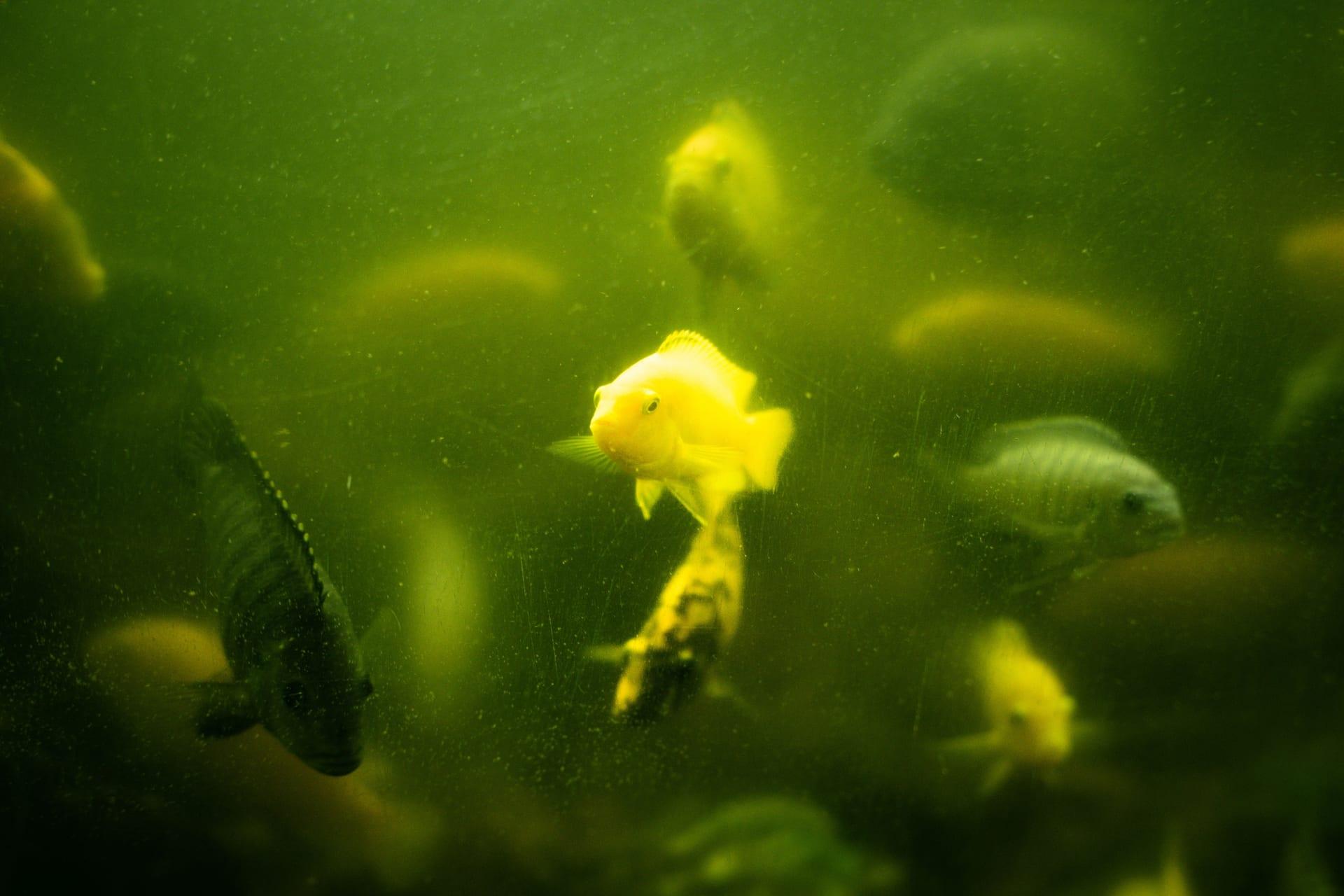
Why does my fish tank smell?
A healthy aquarium is not odorless — it smells faintly earthy, and that is fine. The smells worth acting on are specific, and each one points at a different cause.
Fin & Filter earns a commission when you buy through the links on this page. It costs you nothing and it does not decide what we rank. How we’re funded.
We have not used any of this gear. Every pick below is chosen from published manufacturer specifications and the arithmetic on how we pick, which you can re-run yourself.
A healthy aquarium is not odorless — it smells faintly earthy, and that is normal. The smells worth acting on are specific. Rotten eggs or sulfur means anaerobic pockets in compacted substrate, or a filter left far too long. A sharp, acrid ammonia smell is the urgent one: test immediately, because ammonia harms fish directly. A strong fishy or sewage smell means something organic is decaying — uneaten food, a dead fish, or dying plant matter. An earthy or musty smell is usually just biology doing its job. In every case the fix is physical: find the source, siphon the substrate, change water. Carbon takes the smell out of the water afterwards; it does not remove the cause.
The useful thing about aquarium smells is how specific they are. Unlike cloudy water, which has several causes that look identical, the smells map fairly cleanly onto different problems — which makes your nose a genuine first-pass diagnostic.
Quick picks
What the fix actually takes
| # | Product | Best for | Price |
|---|---|---|---|
| 1 | 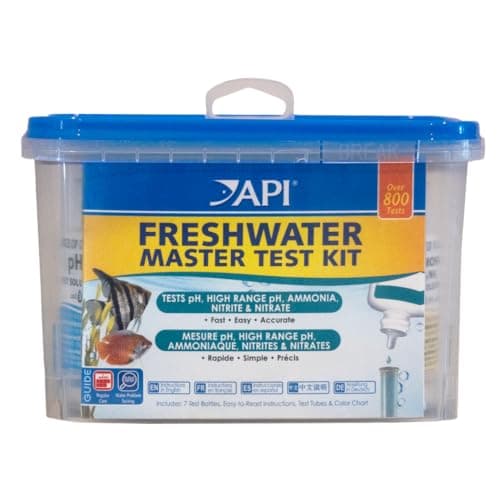 API Freshwater Master Test Kit Over 800 tests. A tank that smells of ammonia is a test result waiting to happen, and the test is the only way to know. | Telling an urgent smell from a harmless one, which you cannot do by nose | $35.98 on Amazon #ad How we’re funded · price as of November 10, 2026 |
| 2 | 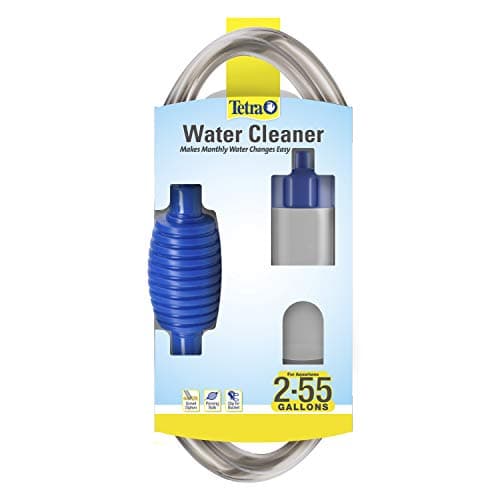 Tetra Water Cleaner Gravel Siphon The substrate is where decaying food collects and where anaerobic pockets form. Removing that is the cure, not a treatment. | The actual fix for three of the four smells | $11.91 on Amazon #ad How we’re funded · price as of November 10, 2026 |
| 3 | 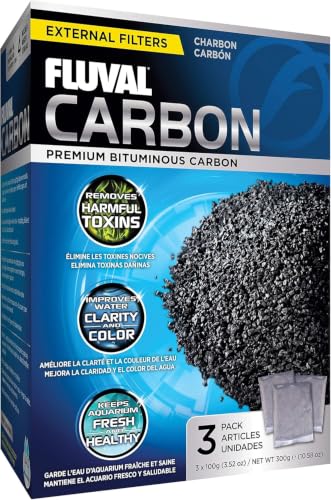 Fluval Carbon Filter Media Inserts, 100 g nylon bags, 3 pack Activated carbon adsorbs the dissolved organics that odors are made of. Fast, effective, and temporary by nature. | Taking the smell out of the water while the cause is dealt with | $14.99 on Amazon #ad How we’re funded · price as of November 10, 2026 |
| 4 | 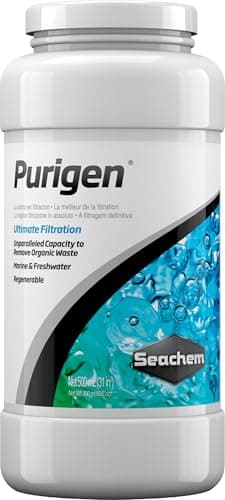 Seachem Purigen Organic Filtration Resin, 500 mL Removes organics before they break down, and regenerates with bleach rather than being thrown away. | A tank that smells faintly and persistently despite good maintenance | $30.90 on Amazon #ad How we’re funded · price as of November 10, 2026 |
| 5 | 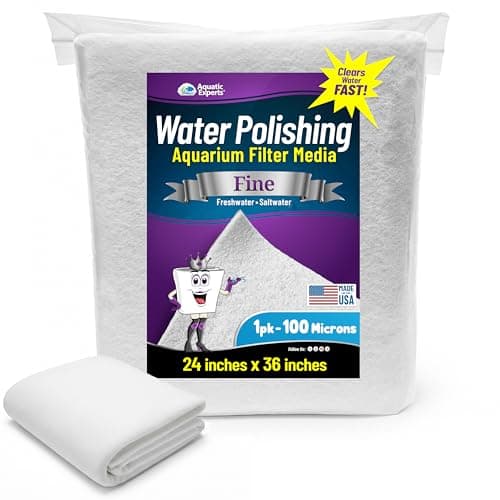 Aquatic Experts Aquarium Polishing Filter Pad A neglected filter is a sealed box of trapped waste. Fresh mechanical media after a proper rinse. | A filter that has become the thing that smells | $16.99 on Amazon #ad How we’re funded · price as of November 10, 2026 |
| 6 | 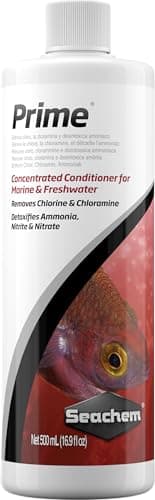 Seachem Prime Conditions the replacement water, and Seachem states it detoxifies ammonia for up to 48 hours — relevant if the smell is ammonia. | The water changes every fix on this page depends on | $16.62 on Amazon #ad How we’re funded · price as of November 10, 2026 |
| ! | 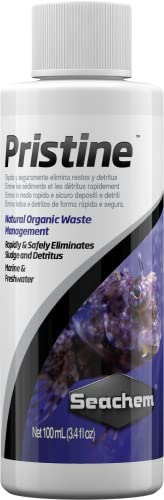 Seachem Pristine A legitimate bacterial waste product, bought for the wrong reason. Seachem itself points at overfeeding and overstocking. Skip this one — see why below | Not the thing to reach for because a tank smells | $9.99 on Amazon #ad How we’re funded · price as of November 10, 2026 |
Rows link to the full write-up further down this page. Prices come from the live price layer only; where there is no live figure the button reads “Check price” rather than showing a remembered number.
How we judged this, before any recommendation
Three criteria. Does it tell urgent from harmless? — two of these four smells mean nothing much and two mean act now, and spending money before you know which is how people treat the wrong problem. Does it remove the cause or the symptom? — carbon and bacteria bottles address the water; a siphon and a net address the thing producing the smell. Is it reversible? — disturbing a deep neglected substrate all at once can make a tank worse before it gets better, so method matters as much as product.
What the smell is telling you
| The smell | What it usually is | Urgency | What to do |
|---|---|---|---|
| Faintly earthy or musty | Normal biology. Taste-and-odor compounds like geosmin are detectable by humans at extraordinarily low concentrations | None | Nothing. This is what a working tank smells like |
| Rotten eggs / sulfur / "farts" | Hydrogen sulfide from anaerobic pockets — compacted deep substrate, or a filter unopened for months | Moderate — act this week | Siphon the substrate in sections; open and rinse the filter |
| Sharp, acrid, ammonia-like | Ammonia. A tank that is uncycled, overstocked, overfed, or whose filter has failed | Urgent — act today | Test. Water change. Stop feeding. Treat as a fish-in cycle |
| Strongly fishy, rotting, sewage | Something organic decaying — uneaten food, a dead fish, dying plant matter | Act today | Find it and remove it. Check behind the filter and under hardscape |
| Swampy or pond-like | Heavy organic load, often with visible algae and a long-overdue water change | Low to moderate | Water change, substrate vacuum, cut feeding |
| Smell appeared right after a water change | Substrate disturbed and anaerobic gas released, or untreated tap water | Low | Usually settles in a day. Confirm the conditioner went in |
| Smell plus cloudy water | Bacterial bloom on an organic load, or a tank well behind on maintenance | Moderate | Treat the load, not the cloudiness |
Our own diagnostic ordering for a beginner freshwater tank. The geosmin detection figure is the USGS value cited at the foot of this page; the smell-to-cause mappings are our judgment.
Why an earthy smell is usually nothing
The reassuring case first, because it sends a lot of people looking for a problem they do not have.
Earthy and musty odors in water are caused by compounds that USGS identifies as the cyanobacterial compounds most commonly associated with taste-and-odor episodes — geosmin and 2-methylisoborneol. The striking part is the sensitivity: USGS gives geosmin a human detection limit of 10 nanograms per liter. That is ten parts per trillion, which means you can smell it long before it represents any quantity of anything.
USGS also separates these compounds from the health question — illness is associated with cyanotoxins rather than with the taste-and-odor compounds themselves. In an aquarium context the practical reading is simple: a faint earthy smell from a tank whose water tests clean is not a problem to solve. It is the smell of a working biological system, and chasing it with products is how people end up stripping a healthy tank.
Rotten eggs: the one that scares people most
A sulfur or rotten-egg smell is hydrogen sulfide, and it is produced in places where oxygen cannot reach — typically deep, compacted substrate that has never been disturbed, or a canister filter that has not been opened in six months.
The important part is the method rather than the diagnosis. Do not dig the whole substrate over at once. A large, long-established anaerobic layer released into the water column in one go is a genuine shock to a stocked tank. Work through it in sections over several weekly water changes, siphoning gently and letting the tank settle between sessions.
- Vacuum a third of the substrate per water change, not the whole floor.
- Pay attention to the dead zones — under hardscape, in corners, behind the filter intake, anywhere flow does not reach.
- Stir deep sand gently and routinely once it is clean, which prevents the pockets re-forming. A finger or a chopstick is enough.
- Open the filter. If it has gone months without a rinse, that is a sealed container of trapped waste and may be the whole source.
- Check circulation. Still corners grow the problems that still corners grow — see where to place your filter and heater.

Find it before you treat it
- Smell the tank itself, not the room. Lift the lid and smell the water surface directly. A room smell with a clean-smelling tank is usually the lid, the cabinet or a damp towel rather than the water.
- Test ammonia and nitrite before anything else. This takes ten minutes and splits urgent from cosmetic.
- Count the fish. A missing one, decaying behind the filter or under a rock, is the commonest cause of a sudden strong smell in a previously fine tank.
- Open the filter. Black, slimy, foul media is an answer. Rinse it in old tank water, never under the tap.
- Push a finger into the substrate in a few places. Bubbles rising with a sulfur smell confirm anaerobic pockets.
- Check what is left over after feeding. Food reaching the substrate uneaten is the renewable source of almost every smell here.
- Then, and only then, add carbon to clear the smell that is left in the water once the cause is gone.
What not to do
- Do not mask it. The smell is the most useful diagnostic signal you have, and a product that removes the odor while the cause carries on producing it is removing your only warning.
- Do not tear the tank down. Stripping and restarting destroys a cycled filter and substrate to fix a problem that a few water changes handle, and you will be back in six weeks with new tank syndrome.
- Do not rinse the filter media under the tap. Chlorine and chloramine kill the colony, which turns a smell into an ammonia problem.
- Do not add more fish or feed more because the tank "looks hungry". Overfeeding is the renewable cause behind most of this page.
- Do not assume a smell after a water change is a problem. Disturbed substrate releases gas, and it usually settles within a day.
If the tank is cloudy as well as smelly, the two usually share one cause — see why is my fish tank water cloudy. If it is green as well, that is an algae bloom on the same organic load: why is my fish tank water green. And if fish are dying alongside the smell, stop reading this page and start at why do my fish keep dying, which puts the diagnostic steps in the right order.
Pick 1
API Freshwater Master Test Kit
Telling an urgent smell from a harmless one, which you cannot do by nose
The number
Over 800 tests per kit, covering pH, high-range pH, ammonia, nitrite and nitrate.
This is first because two of the four smells on this page mean something and two do not, and your nose cannot reliably tell you which you have.
A sharp, acrid smell often is ammonia, and ammonia is the one thing here that harms fish directly. A musty, earthy smell is usually nothing at all. Testing takes ten minutes and settles it before you spend money on the wrong fix.
It also catches the case this page cannot see: a tank that smells only mildly but reads 1.0 ppm ammonia is in more trouble than a tank that reeks of decaying plant matter.
The honest costs. It does not test hardness, chlorine or alkalinity. It is slower and fiddlier than strips, the nitrate test needs the second bottle shaken hard and then a wait, and the color card is genuinely hard to read between adjacent shades under warm light. Reagents expire, so an old kit deserves suspicion.
| Tests | pH, High Range pH, Ammonia, Nitrite, Nitrate |
|---|---|
| Capacity | Over 800 tests per kit |
| Contents | 7 bottles of test solution, 1 color card, 4 glass tubes with caps, holding tub |
| Type | Liquid reagent |
| What it does not do | Does not test hardness, chlorine or alkalinity. It is slower than strips, the nitrate test needs vigorous shaking of the second bottle and a wait, and the color card is genuinely hard to read between adjacent shades. |
Specs from API Freshwater Master Test Kit, Amazon listing; API Freshwater Aquarium Master Test Kit, PetSmart listing. We have not used this unit.
#ad How we’re funded · price as of November 10, 2026
Pick 2
Tetra Water Cleaner Gravel Siphon
The actual fix for three of the four smells
The number
A manual siphon into a bucket: the cheapest way to do a proper substrate-vac water change.
Almost every bad aquarium smell traces back to organic matter breaking down somewhere you are not looking, and the substrate is the usual somewhere.
A siphon does two jobs at once here: it physically removes the decaying material producing the smell, and the water change it is attached to dilutes whatever has dissolved into the water column.
For the rotten-egg case specifically, gently working the siphon through deep substrate also breaks up the compacted, oxygen-free pockets where that smell is generated in the first place.
The honest costs. You carry the water, which is fine on a 10 or 20 gallon tank and the reason people stop doing changes on anything larger. There is no flow control other than your thumb. On sand the technique changes — hover rather than dig. And disturbing a deep, long-neglected substrate all at once can release more into the water than a single change removes, which is why this page says do it in sections.
| Type | Manual siphon into a bucket |
|---|---|
| Cost | The cheapest way to do a proper gravel-vac water change |
| What it does not do | You carry the water. On a 10 or 20 gallon tank that is fine. The moment the tank gets big, it is the reason people quietly stop doing water changes. |
The manufacturer does not publish a full spec sheet for this item, so nothing beyond the figures above is stated. We have not used this unit.
#ad How we’re funded · price as of November 10, 2026
Pick 3
Fluval Carbon Filter Media Inserts, 100 g nylon bags, 3 pack
Taking the smell out of the water while the cause is dealt with
The number
Three 100 g nylon bags, per the Amazon listing. Drops into most hang-on-back media baskets.
Carbon is the right tool for the half of this problem that is about the water rather than the cause. Dissolved organics are what most aquarium odors actually are, and carbon adsorbs them quickly.
It is genuinely useful after you have removed the source — the smell lingers in the water for days otherwise, and carbon shortens that to hours.
The nylon bags matter practically: they drop straight into a basket and come out cleanly, which loose granular carbon does not.
The honest costs. Carbon is a sponge, not a cure. It adsorbs until saturated and then does nothing, typically within weeks, and an exhausted bag is just mechanical media occupying a chemical slot. It removes medication, so it comes out before treating a fish and goes back after. And used on a tank whose cause is still producing — a dead fish behind the filter, say — it masks the only signal you had.
| Supplied as | Three 100 g nylon bags of activated carbon, per the Amazon listing |
|---|---|
| What it does | Adsorbs dissolved organics, which is what most aquarium odors and discoloration actually are |
| Where it goes | The chemical stage of a filter — most hang-on-back baskets take a bag directly |
| What it does not do | Carbon is a sponge, not a cure. It adsorbs until it is saturated and then it does nothing, which is usually a matter of weeks rather than months, and an exhausted bag left in the filter is just mechanical media taking up a slot. It also removes medication, so it comes out before you treat a fish and goes back in afterwards. And it treats the symptom: if a tank smells because something is decaying in it, carbon will take the edge off the odor while the cause carries on producing it. |
Specs from Fluval Carbon Filter Media Inserts, 100 g nylon bags, 3 pack, Amazon listing. We have not used this unit.
#ad How we’re funded · price as of November 10, 2026
Pick 4
Seachem Purigen Organic Filtration Resin, 500 mL
A tank that smells faintly and persistently despite good maintenance
The number
Seachem states 250 mL treats up to 1,000 L for up to six months, darkens as it exhausts, and regenerates 1:1 with bleach.
The step up from carbon for the specific case of a tank that is maintained properly and still carries a faint smell — usually a heavily stocked or heavily fed tank where organics accumulate faster than weekly changes remove them.
The practical advantage over carbon is that it tells you when it is done: Seachem states it darkens as it exhausts, so you are not guessing at replacement intervals.
It also regenerates rather than being discarded, which changes the running-cost arithmetic on a tank that genuinely needs continuous organic removal.
The honest costs. It is several times the price of carbon up front. Regeneration means handling bleach and rinsing very thoroughly, which is a real chore and a real risk if done carelessly. Seachem notes an interaction with amine-based slime-coat products. And like carbon, it is polishing the water rather than fixing whatever is adding the organics.
| What it does | Seachem states it removes soluble and insoluble impurities and controls ammonia, nitrite and nitrate by removing nitrogenous organic waste before it breaks down |
|---|---|
| Capacity | Seachem states each 250 mL treats up to 1,000 L (250 US gallons) for up to six months |
| Regeneration | Seachem states it darkens as it exhausts and is renewed by soaking in a 1:1 bleach solution for 24 hours, then in dechlorinator |
| Clarity | Seachem states it polishes water and raises redox |
| What it does not do | The bleach regeneration is a real procedure with a real failure mode: resin that is not thoroughly dechlorinated afterwards will carry bleach into your tank. If that sounds like a step you would rush, buy fresh resin instead. It is also the most expensive item on this page and the least necessary — it is a polish on a tank that is already working, not a fix for one that is not. |
Specs from Seachem, Purigen product page (what it removes, capacity, regeneration, redox and clarity); Seachem Purigen 500 mL, Amazon listing. We have not used this unit.
#ad How we’re funded · price as of November 10, 2026
Pick 5
Aquatic Experts Aquarium Polishing Filter Pad
A filter that has become the thing that smells
The cause people check last is the filter itself. It is designed to collect organic waste, it is usually opaque, and on a tank that has gone a few months without a media rinse it can be the single largest source of smell in the room.
Open it before you buy anything. If the media is black, slimy and foul, that is your answer, and rinsing it in old tank water is most of the fix.
Replace mechanical media only when it is physically breaking down — a pad that looks terrible and still passes water is doing its job.
The honest costs. It is a mechanical medium only, doing nothing biological or chemical. You cut it to fit, which is a slightly annoying five minutes with scissors. Packed too tightly it becomes a clog rather than a filter. And it is a consumable in a way that rinse-and-reuse foam is not.
| Stage | Fine mechanical polishing, fitted after the coarse foam |
|---|---|
| Form | Cut-to-fit pad, so it suits any filter |
| Job | Catches the fine particles a coarse sponge passes, which is what makes water look hazy |
| What it does not do | Genuinely disposable, unlike the rest of this page — fine floss clogs quickly and is not worth rinsing and reusing many times. It is a polish, not filtration capacity: it will not fix a tank that is under-filtered or overstocked. |
Specs from Aquatic Experts Aquarium Polishing Filter Pad, Amazon listing. We have not used this unit.
#ad How we’re funded · price as of November 10, 2026
Pick 6
Seachem Prime
The water changes every fix on this page depends on
The number
Published dose: 1 capful (5 mL) per 200 L (50 US gallons) of new water. Seachem states binding of ammonia, nitrite and nitrate lasts up to 48 hours.
Every route out of a smelly tank runs through water changes, and tap water needs conditioning before it goes in.
The ammonia-binding claim is directly relevant to one of the four smells here: if the tank genuinely smells of ammonia, the 48-hour window Seachem describes is time to keep changing water in while the filter catches up.
The honest costs. It does not remove ammonia, it binds it, and the test kit will still read it afterwards. The window is a window rather than a fix. It smells strongly of sulfur itself, which is briefly confusing on a page about aquarium smells. And none of it substitutes for the water change.
| Dose | 1 capful (5 mL) for each 200 L (50 US gallons) of new water |
|---|---|
| Removes | Chlorine, chloramine |
| Detoxifies | Ammonia, nitrite and nitrate |
| Binding duration | Seachem states it binds those compounds for up to 48 hours |
| What it does not do | It does not remove ammonia. It binds it into a less toxic form for up to 48 hours, and your test kit will still read the ammonia as present. It is not a bacteria product and it will not cycle a tank. |
Specs from Seachem, Prime product page. We have not used this unit.
#ad How we’re funded · price as of November 10, 2026
Skip this
Seachem Pristine
Not the thing to reach for because a tank smells
The skip entry, and as usual it is a good product in the wrong moment rather than a bad one.
Seachem describes Pristine as bio-augmentation — beneficial bacteria that break down excess food, waste and detritus. For a keeper managing a heavily stocked tank deliberately, that is a reasonable thing to own.
Bought because the tank smells, it is the wrong order of operations. The waste it is digesting is sitting in your substrate, where a siphon removes it physically in ten minutes rather than biologically over weeks. And Seachem's own page says the quiet part out loud: persistent high nutrients may point to **overstocking, overfeeding or inadequate filtration**. That is the actual diagnosis, from the manufacturer.
The honest costs of the skip. None as a product. It also asks you to turn off UV or ozone and to clear any antibiotics with carbon and a water change first, so it is not a bottle you simply add on top of whatever else is going on. If the tank is clean and still struggling with nutrients, revisit the stocking level before the shelf.
| What it is | Bio-augmentation: Seachem states it uses beneficial bacteria to break down excess food, waste and detritus |
|---|---|
| Stated dose | Seachem publishes 1 capful (5 mL) per 40 L (10 US gallons), then 1 capful per 80 L (20 US gallons) for maintenance |
| Maker’s own caveat | Seachem states that persistent high nutrients may point to overstocking, overfeeding or inadequate filtration |
| What it does not do | It is not an odor product and is not sold as one. Bought because a tank smells, it treats the consequence of waste that a siphon would physically remove in ten minutes, and Seachem itself points at overstocking, overfeeding or inadequate filtration as the underlying causes. It also asks you to turn off UV or ozone and to clear antibiotics with carbon and a water change first, so it is not a bottle you simply add on top of whatever else is happening. |
Specs from Seachem, Pristine product page (bio-augmentation, dosing, the overstocking/overfeeding caveat); Seachem Pristine, Amazon listing. We have not used this unit.
Questions people actually ask
Frequently asked questions
+ Why does my fish tank smell?
+ Is it normal for a fish tank to smell?
+ Why does my fish tank smell like rotten eggs?
+ Why does my fish tank smell like ammonia?
+ Will activated carbon fix a smelly aquarium?
+ Why does my tank smell after a water change?
+ Can a dirty filter make the tank smell?
+ Does a smelly tank mean the fish are in danger?
Where the numbers came from
Sources
- USGS Kansas Water Science Center, Cyanobacterial (Blue-Green Algal) Blooms: Tastes, Odors, and Toxins — geosmin and 2-methylisoborneol are the cyanobacterial compounds most commonly associated with taste-and-odor episodes, geosmin has a human detection limit of 10 nanograms per liter, and illness is linked to cyanotoxins rather than to the taste-and-odor compounds
- Seachem, Pristine product page — bio-augmentation using beneficial bacteria to break down excess food, waste and detritus; dosing; and Seachem’s own statement that persistent high nutrients may point to overstocking, overfeeding or inadequate filtration
- Fluval Carbon Filter Media Inserts, 100 g nylon bags, 3 pack, Amazon listing
- US EPA, Aquatic Life Criteria for Ammonia — toxicity and its dependence on pH and temperature
- Seachem, Purigen product page and FAQ (removes organics before conversion, 250 mL treats up to 1,000 L for up to six months, darkens when exhausted, 1:1 bleach regeneration, storage, amine-based slime coat interaction, no effect on hardness)
- API Freshwater Master Test Kit, Amazon listing
Read next
Related on Fin & Filter

Why is my fish tank water cloudy?
Milky, green or brown — what each means, which to leave alone, and why clarity says nothing about ammonia.

How often to change aquarium water
The 25%-weekly default, how nitrate sets your real schedule, and the water change mistakes to avoid.

How to lower ammonia in a fish tank fast
The emergency protocol in order: water change first, conditioner second, stop feeding, and what not to do.