Buying guide
The best filter for a betta tank
A betta needs its ammonia processed like any other fish, and it needs almost no current while that happens. Those two requirements pull in opposite directions, which is the whole problem.
Fin & Filter earns a commission when you buy through the links on this page. It costs you nothing and it does not decide what we rank. How we’re funded.

We have not used any of this gear. Every pick below is chosen from published manufacturer specifications and the arithmetic on how we pick, which you can re-run yourself.
Buy a sponge filter, with an air pump, airline and check valve. Bettas need filtration exactly as much as any other fish — the myth that they do not comes from their ability to breathe air, which has nothing to do with the ammonia in their water — but they cannot tolerate strong current. A sponge filter is the one design that gives you both.
This is one of the most searched questions in the hobby and one of the most badly answered, because two half-truths collide. The first is that bettas breathe air and so do not need a filter. The second is that any filter will do. Both are wrong, and in opposite directions.
Quick picks
The best filter for a betta tank
| # | Product | Best for | Price |
|---|---|---|---|
| 1 | No image Various Air-driven nano sponge filter The standard answer, and it is standard for a good reason: biological filtration with essentially no current. | Almost every betta tank | |
| 2 | No image Fluval AquaClear 20 Power Filter The adjustable flow control makes it the most betta-friendly hang-on-back here, but it still needs baffling. | A betta tank where you want a hang-on-back, baffled | |
| 3 | No image Various Small aquarium air pump Not optional. A sponge filter without an air pump is a block of foam sitting in water. | The part people forget to buy with the sponge filter | |
| ! | No image Marineland Penguin 100 Bio-Wheel Power Filter Fixed high flow, a wide outflow curtain, and no way to turn it down. Wrong tool for this fish. Skip this one — see why below | Not a betta filter |
Rows link to the full write-up further down this page. Prices come from the live price layer only; where there is no live figure the button reads “Check price” rather than showing a remembered number.
Why breathing air changes nothing about the water
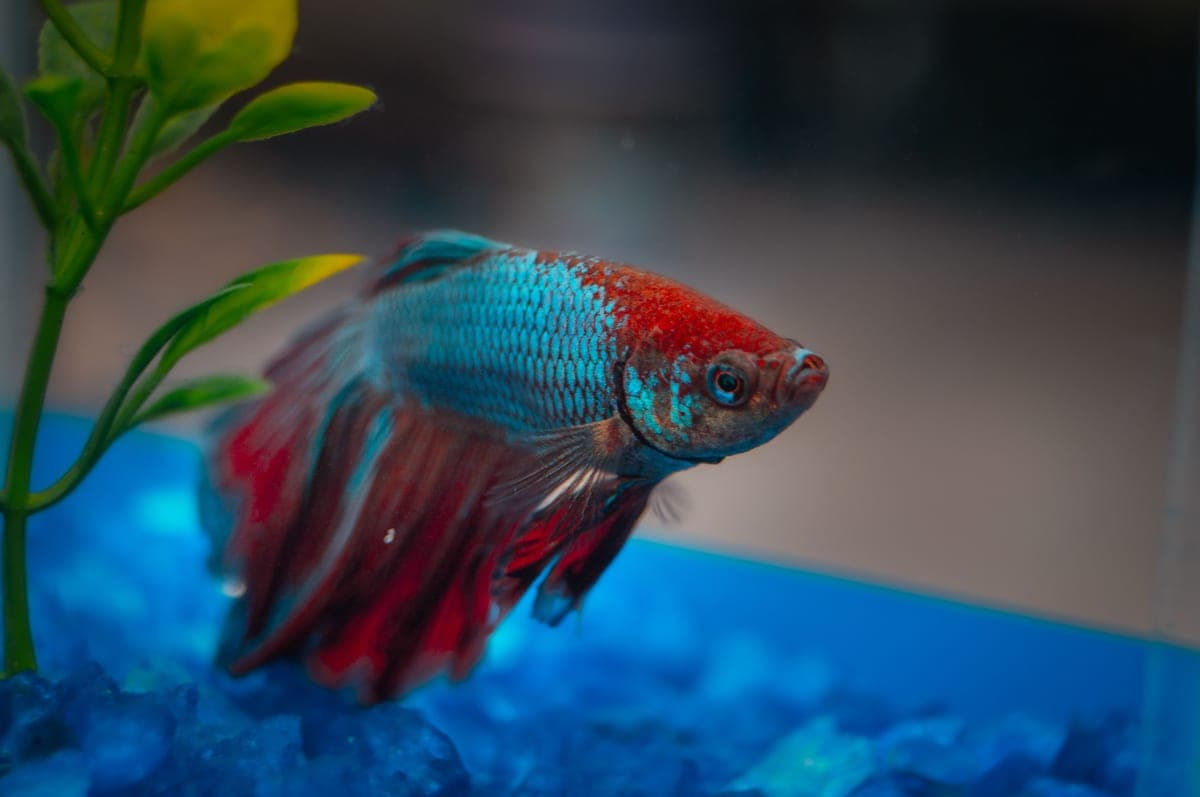
Bettas have a labyrinth organ, a genuine anatomical adaptation that lets them take oxygen from the surface. It evolved for shallow, warm, oxygen-poor water. It is real, and it is where the myth comes from.
It solves exactly one problem: dissolved oxygen. It does nothing whatsoever about ammonia. A betta still excretes ammonia continuously through its gills and its waste, that ammonia still burns gill tissue at concentrations under 1 ppm, and its toxicity still rises with pH and temperature — which the EPA documents, and which matters because a betta tank runs warm.
A betta in an unfiltered bowl is not being spared a filter. It is living in accumulating toxin, breathing air above it. That is why the bowl-kept betta has a reputation for a short life: they survive conditions that kill other fish, and surviving is not the same as being fine.
Pick 1
Various Air-driven nano sponge filter
Almost every betta tank
The number
No manufacturer publishes a GPH figure for an air-driven sponge filter, and we will not invent one. For a betta this is the rare case where the absence of a flow number does not matter — gentleness is the requirement.
For a betta, this is the filter to buy, and the reasoning is unusually clean.
A sponge filter works by air lift: bubbles rise up a tube, water is drawn through a foam block behind them, and the foam does the mechanical trapping and hosts the bacteria. There is no impeller and no pressurized outflow, so the water movement is a gentle circulation rather than a jet. A betta can hold station anywhere in the tank without swimming.
It also happens to suit the rest of a betta setup. Bettas are usually kept in 5 to 10 gallon tanks, which is exactly the range a nano sponge filter is built for. They are often kept with live plants, which prefer gentle flow. And they are often a first fish, where the sponge's zero running cost and impossible-to-uncycle maintenance are genuinely valuable.
The one thing to get right is the air pump. Too strong and the bubble stream becomes its own current and a noise problem; most pumps sold for this size are fine, and a valve on the airline lets you dial it back. Do not skip the check valve.
| Flow rating | Not published. Air-driven sponge filters carry no manufacturer GPH figure; output depends on the air pump you pair with it. |
|---|---|
| Filtration | Mechanical and biological. No chemical stage unless you add one. |
| Running cost | No cartridge. The sponge is rinsed in old tank water and reused. |
| What it does not do | No air pump, no airline and no check valve in most listings, so budget for all three. No chemical filtration, and there is no hiding it behind the hardscape. |
Specs from Fluval, AquaClear 20 product page (the hang-on-back flow comparison). We have not used this unit.
Pick 2
Fluval AquaClear 20 Power Filter
A betta tank where you want a hang-on-back, baffled
The number
Rated 100 GPH. On a 5 gallon betta tank the requirement is only about 45 rated GPH, so this runs far above what the tank needs — which is exactly why the flow control matters.
If you want the chemical filtration stage and the tidiness of a filter that hangs outside the tank, this is the one to get, with the flow turned down and the outflow baffled.
The flow control knob is the reason it makes this list. Most hang-on-backs run at one speed; this one does not. On a 5 gallon betta tank you can turn 100 rated GPH down substantially and still be well above the roughly 45 GPH the tank needs, which is a genuinely comfortable place to be.
Turning it down is not sufficient on its own, though, and this is where a lot of betta keepers stop too early. Even at low flow, the outflow falls as a curtain into the tank and creates surface turbulence a betta will fight. Baffle it — the standard fix is described below and costs nothing.
The media basket is the other reason it is here: reusable foam and ceramic rather than a cartridge, so a small tank's colony is never thrown away on a monthly schedule.
| Rated output | 378 L/h (100 US gal./h) |
|---|---|
| Stated tank range | 18-76 L (5-20 US gallons) |
| Power draw | 6 watts |
| Media | Pre-filter sponge, Bio-Foam, BIOMAX, activated carbon |
| Flow control | Adjustable |
| What it does not do | No heater, no test kit and no substrate. The flow knob helps but does not turn it into a betta filter on its own; a pre-filter sponge or a baffle is still the usual fix. |
Specs from Fluval, AquaClear 20 Power Filter product page. We have not used this unit.
Pick 3
Various Small aquarium air pump
The part people forget to buy with the sponge filter
The number
Air pumps are sold by tank-size range rather than by a published flow figure, so there is no arithmetic to do here.
This is in the roundup because "sponge filter" listings routinely show the sponge alone, and a beginner orders one expecting a working filter.
You need three things: the pump, airline tubing to connect it, and a check valve. The check valve is the one people skip and the one that matters most. An air pump sits above the tank; the airline runs down into it. When the power cuts, the pump stops holding pressure and the tank can siphon backwards up the airline and out onto the floor. A check valve is a one-way plastic fitting that costs almost nothing and prevents it entirely.
A flow valve on the airline is also worth having, because it lets you dial the bubble rate down. For a betta this is not cosmetic — a hard bubble stream is its own current and a betta will avoid that corner of the tank.
Sound: most small pumps buzz. Setting the pump on a folded towel or a foam pad rather than a hard shelf removes most of it.
| Purpose | Drives a sponge filter or an air stone |
|---|---|
| Rating | Sold by tank-size range rather than by a flow figure |
| What it does not do | Airline tubing and a check valve are usually sold separately. Without a check valve, a power cut can siphon tank water back down the airline onto the floor. |
The manufacturer does not publish a full spec sheet for this item, so nothing beyond the figures above is stated. We have not used this unit.
Skip this
Marineland Penguin 100 Bio-Wheel Power Filter
Not a betta filter
We are naming this specifically because Bio-Wheel filters are widely sold in the small-tank range where betta keepers shop.
There is no flow control. At 100 rated GPH on a 5 gallon tank that is roughly twenty turnovers an hour, and unlike the AquaClear you cannot dial it back. The Bio-Wheel design also produces a wide outflow curtain, which is a lot of surface disturbance in a small tank.
A betta in that tank is not in danger, but it is spending energy holding position, it will be pushed around while sleeping, and long-finned varieties struggle noticeably more. Bettas are ambush fish from slow, heavily vegetated water — strong current is not a preference they have, it is a stressor.
You can baffle it, and if you already own one that is the right move. But if you are buying for a betta today, buy the sponge instead.
| Rated flow | 100 GPH |
|---|---|
| Stated tank size | Up to 20 gallons |
| Filtration | Three-stage: mechanical, biological and chemical, with a rotating Bio-Wheel |
| Line range | 75 / 100 / 150 / 200 / 350 GPH across the Penguin range |
| What it does not do | The Bio-Wheel is a real wet/dry surface, but it also makes the filter noisier than a sealed hang-on-back, and a stalled or dried-out wheel does nothing at all. Cartridge-based. No heater, no test kit. |
Specs from Marineland Penguin 100 Bio-Wheel, Amazon listing. We have not used this unit.
How to baffle a filter you already own
If you already have a hang-on-back on a betta tank, you do not need to replace it. You need to break the fall of the outflow, and every method below costs essentially nothing.
- The water bottle baffle. Cut a section from a clean plastic bottle and clip it over the outflow lip so the water spreads sideways along the glass instead of falling as a curtain. This is the standard fix and it works better than it sounds.
- Raise the water level. The shorter the drop from outflow to surface, the less turbulence. Filling to just under the outflow lip alone makes a noticeable difference.
- A sponge over the outflow. A pre-filter sponge pushed onto the outflow diffuses it. It also stops long fins being pulled toward the intake, which is the other betta hazard on a hang-on-back.
- Turn the flow control down, if your filter has one. Necessary but rarely sufficient by itself — combine it with a baffle.
- Aim the outflow at the glass, so the energy dissipates against the back wall rather than into open water.
You will know it is right when the betta uses the whole tank, rests near the surface without being pushed, and its fins are not permanently streaming. A betta that spends its time wedged behind the heater in the one still corner is telling you the flow is too strong.
The rest of the betta setup
- A heater is not optional. Bettas are tropical and want stable warmth in the high 70s Fahrenheit. Room temperature is not adequate in most homes, and a swinging temperature is worse than a steady cool one. Sizing on best aquarium heaters.
- Five gallons is a reasonable floor, and more is easier — a larger volume dilutes mistakes and swings less in temperature. See what size tank for a first aquarium.
- A lid, always. Bettas jump, and a jumping betta is a dead betta. Most kits include one; if yours does not, this is the accessory to buy.
- Cycle before the fish, exactly as with any other tank. How to cycle a fish tank.
- Think hard about tankmates. A betta community is possible and is not the default. See can a betta live with other fish.
Questions people actually ask
Frequently asked questions
+ Do bettas need a filter?
+ What is the gentlest aquarium filter?
+ How do I make my filter less strong for my betta?
+ Can a betta live in a bowl?
+ Is a sponge filter enough for a betta?
Where the numbers came from
Sources
Read next
Related on Fin & Filter
Do I need a filter for a betta?
The labyrinth organ solves oxygen, not ammonia. Why a betta needs a cycled filter, and how to make one gentle.

Sponge filter vs hang-on-back: which one for your tank
Mechanism, running cost, noise, failure modes and flow — the full comparison, plus when to run both.
Can a betta live with other fish?
What makes a betta community work, what reliably fails, and why you need a separation plan before you try.