Straight answer
Do I need a filter for a betta?
Bettas breathe air, which is true, and it is used to justify keeping them in unfiltered bowls, which does not follow. Here is what the adaptation actually solves and what it does not.
Fin & Filter earns a commission when you buy through the links on this page. It costs you nothing and it does not decide what we rank. How we’re funded.
We have not used any of this gear. Every pick below is chosen from published manufacturer specifications and the arithmetic on how we pick, which you can re-run yourself.
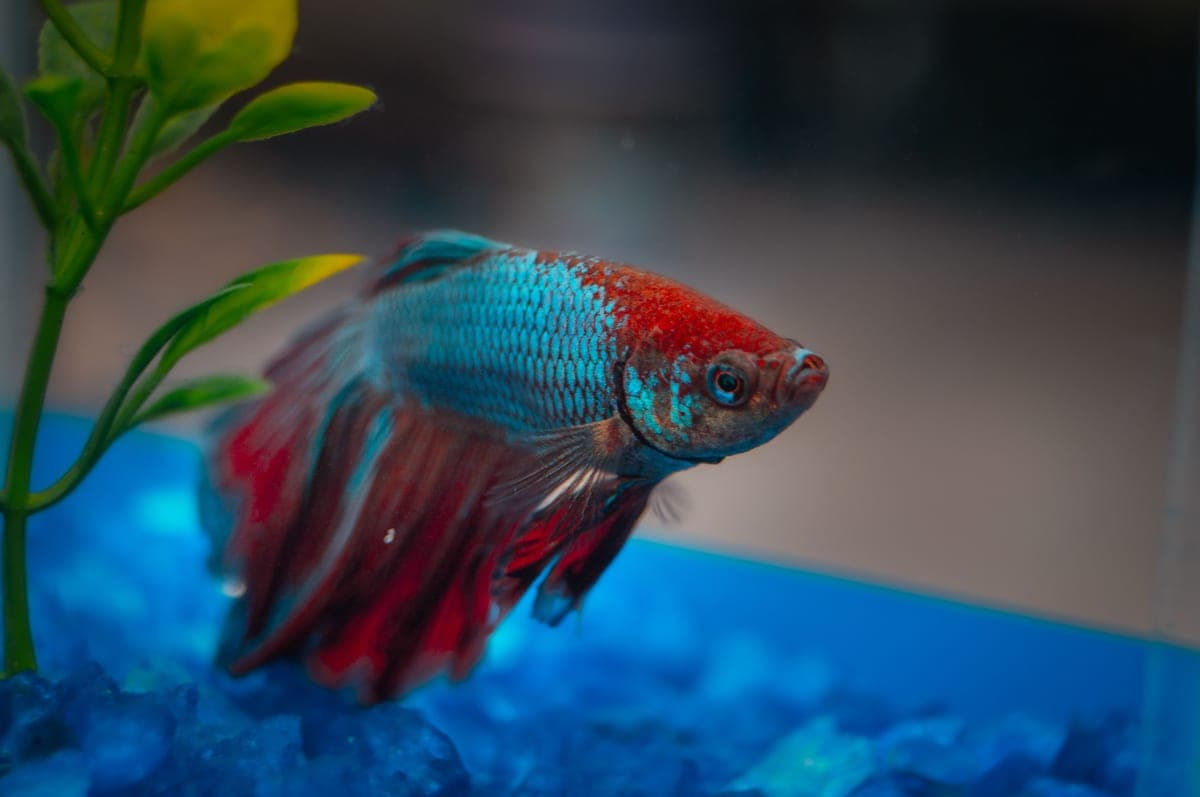
Yes. A betta needs a filter as much as any other fish. The labyrinth organ lets it take oxygen from the air, which solves a dissolved-oxygen problem and does nothing at all about ammonia — and ammonia is what harms fish in unfiltered water. What a betta genuinely cannot tolerate is strong current, so the answer is a gentle filter, not no filter.
This question gets asked constantly and answered badly in both directions. One camp says no filter is needed because bettas breathe air. The other says any filter will do. Following either produces a stressed or a dead fish.
What the labyrinth organ actually does
Bettas are anabantoids, and the labyrinth organ is a real, well-documented adaptation: a folded, highly vascularized structure above the gills that lets the fish absorb oxygen from air gulped at the surface. It evolved for shallow, warm, slow water where dissolved oxygen runs low — rice paddies, floodplains, ditches.
So a betta can survive in water that would suffocate a tetra. That is the entire scope of the adaptation, and every popular argument for the unfiltered bowl quietly expands it into something it is not.
What it does not do
It does not process ammonia. A betta excretes ammonia continuously, through its gills as well as its waste, exactly like every other fish. In an unfiltered container that ammonia has nowhere to go: there is no bacterial colony converting it, so it accumulates until the next water change.
Ammonia burns gill tissue at concentrations well under 1 ppm, and — as the EPA documents — its toxicity rises with both pH and temperature. A betta tank is a warm tank. That is the worst combination for ammonia toxicity, in the fish least likely to visibly complain about it.
Why the bowl myth persists
Because bettas do survive it, for a while, and that looks like evidence. A tetra in the same bowl dies in days and the owner concludes the bowl was wrong. A betta lasts months, so the bowl looks vindicated.
What is actually happening is chronic ammonia exposure: burned gills, a suppressed immune system, clamped fins, lethargy and a shortened life. The fish is not thriving, it is enduring. The reputation of the betta as a short-lived, delicate fish comes almost entirely from a species being routinely kept in the one setup that harms it slowly enough to be deniable.
The pet trade did not help by selling them in cups, which is a shipping and display expedient rather than a statement about husbandry.
The real requirement: gentle flow
Having established that a betta needs a filter, here is the genuine constraint that the no-filter camp is half-right about.
Bettas come from slow, heavily vegetated water. They are built for maneuvering, not for sustained swimming, and long-finned varieties especially have a great deal of drag. Strong current is a real stressor: a betta that has to swim continuously to hold position is spending energy it should be spending on its immune system, and one that gets pushed around while trying to rest at the surface never settles.
- A sponge filter is the standard answer. Air-driven, no impeller, no pressurized outflow — biological filtration with essentially no current. See best filter for a betta.
- A hang-on-back with flow control, turned down and baffled, works well. The AquaClear line has an adjustable knob, which is what makes it viable here.
- Any filter can be baffled. Clip a cut section of plastic bottle over the outflow so water spreads sideways along the glass instead of falling as a curtain.
- Raise the water level to shorten the drop from outflow to surface. This alone makes a noticeable difference.
- Push a pre-filter sponge onto the outflow to diffuse it — and onto the intake, which stops long fins being pulled toward it.
You will know the flow is right when the betta uses the whole tank, rests near the surface undisturbed, and its fins are not permanently streaming behind it. A betta wedged behind the heater in the only still corner is telling you something.
The rest of what a betta actually needs
| Requirement | Why | Where to read more |
|---|---|---|
| A cycled filter, gently run | Processes ammonia. Gentle so the fish is not fighting current. | Best filter for a betta |
| A heater | Tropical fish. Wants stable warmth in the high 70s F; a swinging temperature is worse than a steady cool one. | Best aquarium heaters |
| 5 gallons or more | Volume dilutes mistakes and holds temperature. Below that, everything happens too fast to correct. | What size tank for a first aquarium |
| A lid | Bettas jump, and a jumping betta is a dead betta on the carpet. | How to set up a 10 gallon tank |
| A cycled tank before the fish | The filter processes no ammonia until bacteria colonize it, which takes weeks. | How to cycle a fish tank |
Quick picks
What to buy for a betta tank
| # | Product | Best for | Price |
|---|---|---|---|
| 1 | No image Various Air-driven nano sponge filter Biological filtration with essentially no current, which is exactly the combination a betta needs. | The answer for almost every betta tank | |
| 2 | No image Various Small aquarium air pump A sponge filter without a pump is foam sitting in water. | The part that is not in the sponge filter box | |
| 3 | No image Fluval AquaClear 20 Power Filter The adjustable flow control makes it the most betta-viable hang-on-back, once baffled. | If you want a hang-on-back instead |
Rows link to the full write-up further down this page. Prices come from the live price layer only; where there is no live figure the button reads “Check price” rather than showing a remembered number.
If your betta is in an unfiltered bowl right now
This is recoverable and it is a common place to be, usually because the fish was bought in a cup with a bowl beside it on the shelf. Do not panic and do not do everything at once.
- Start changing water more often, today. In an unfiltered container you are the filter. Small frequent changes with dechlorinated water at matching temperature, rather than one large one.
- Get a test kit so you can see what is actually happening instead of guessing. See best aquarium test kits.
- Set up a proper tank alongside — 5 gallons or more, heater, sponge filter — and cycle it before moving the fish. Moving a fish into an uncycled tank swaps one ammonia problem for another.
- Use a conditioner that detoxifies ammonia in the bowl in the meantime. It buys time between water changes; it does not replace them.
- Move the fish once the new tank reads zero ammonia and zero nitrite, matching the temperature carefully.
The full emergency version, for a tank with fish already in it, is on why do my fish keep dying.
Questions people actually ask
Frequently asked questions
+ Do betta fish need a filter?
+ Can a betta live in a bowl without a filter?
+ What kind of filter is best for a betta?
+ Is my filter too strong for my betta?
+ Do bettas need a heater as well?
Where the numbers came from
Sources
Read next
Related on Fin & Filter
The best filter for a betta tank
Gentle filtration that still processes ammonia, and the cheap baffle that fixes a filter you already have.
Can a betta live with other fish?
What makes a betta community work, what reliably fails, and why you need a separation plan before you try.

How to cycle a fish tank
What cycling actually is, the fishless method start to finish, and the exact test result that means it is done.