Stocking
Can a betta live with other fish?
The answer is a genuine maybe, which is unsatisfying and accurate. Temperament varies more between individual bettas than between most whole species.
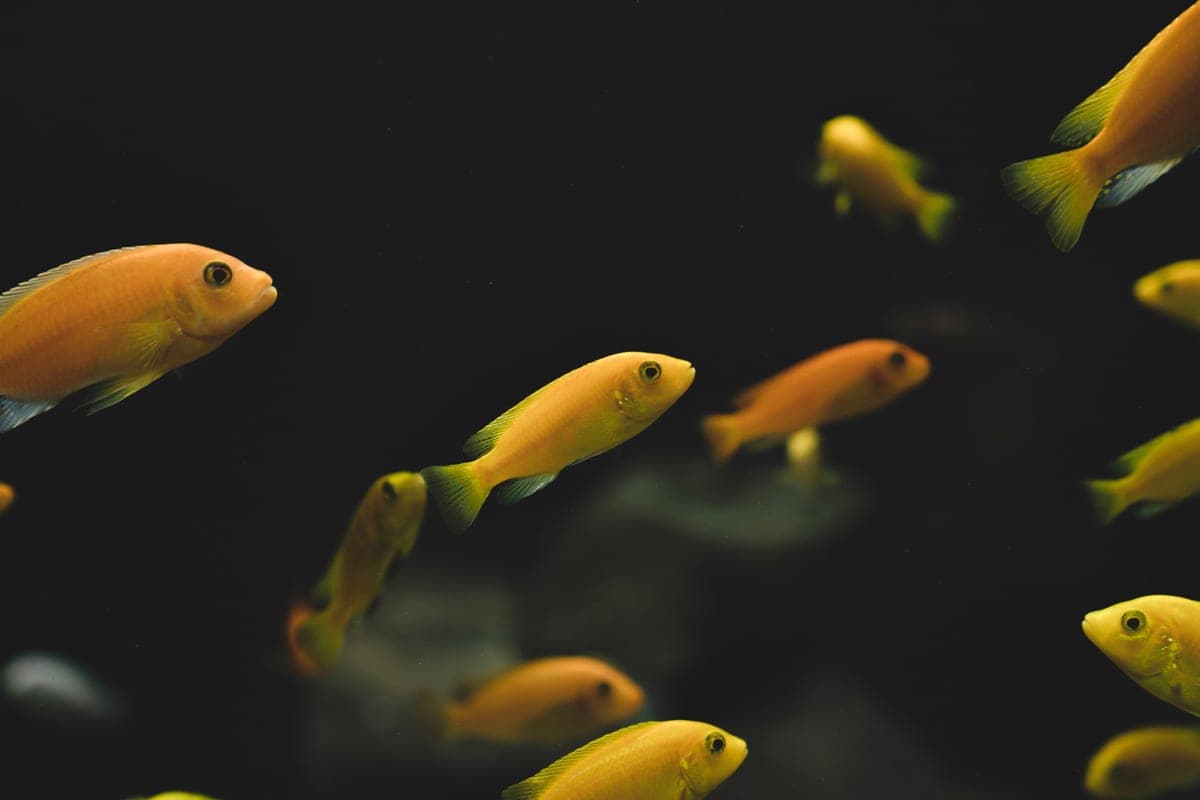
Sometimes. It depends far more on the individual betta than on which tankmates you choose. Snails and shrimp are the lowest-risk companions, small peaceful bottom-dwellers in a 20 gallon or larger planted tank are the next tier, and anything long-finned, brightly colored or nippy reliably fails. Never attempt it without somewhere to move a fish at short notice.
Two half-truths circulate. One says bettas must always be alone; the other says a betta community is easy if you pick peaceful fish. Neither survives contact with an actual betta, because temperament varies enormously between individuals of the same species.
Why individual temperament dominates
Bettas were selectively bred for aggression. Modern ornamental bettas are many generations removed from that, and the trait did not distribute evenly: some are placid and ignore everything, others attack anything that moves.
That means any list of compatible tankmates is a probability rather than a guarantee. The same species combination succeeds in one tank and fails in another with no difference in setup. This is why the honest advice is conditional and why the exit plan matters more than the species list.
What raises the odds
- More space. 20 gallons or larger. A 10 gallon tank has no room for anything to get away, and most betta community failures are really space failures.
- Heavy planting and broken sightlines. Plants, wood and decor that break the tank into zones matter more than almost anything else. A betta that cannot see the whole tank at once patrols less.
- Add the betta last. Introducing it into an established group means it has no territory to defend. Adding fish to an established betta's tank is the harder direction.
- A young betta, which is generally more adaptable than an older one that has lived alone for a year.
- Tankmates that occupy different water levels. Bottom dwellers and a surface-oriented betta simply meet less often.
- Fish that are not visually similar to a rival. No long fins, no bright reds and blues, nothing that looks like another betta from the front.
Tankmates by risk
| Risk | Options | Notes |
|---|---|---|
| Lowest | Nerite snails, mystery snails | Different enough that most bettas ignore them entirely. Nerites do not breed in fresh water, so no population problem. |
| Low | Amano shrimp | Larger and less betta-shaped than cherry shrimp, so they read as scenery rather than food to most individuals. |
| Moderate | Corydoras in a group of 6+, in 20 gallons or more | Bottom dwellers that stay out of the betta's zone. Needs a bigger tank for the group's own sake, not just the betta's. |
| Moderate | Small rasboras or ember tetras, well planted | Small, quick, and not flashy. Needs cover and space. |
| High | Cherry shrimp | Often eaten. A large established colony in a heavily planted tank can persist by out-breeding losses; a handful of new ones will not. |
| Avoid | Guppies, other long-finned fish | Long flowing fins read as a rival betta. This combination fails often. |
| Avoid | Tiger barbs, serpae tetras, any known fin-nipper | The betta is the victim here. Long fins are irresistible to nippers and the damage invites infection. |
| Never | Another betta, of either sex | Two males will fight to death. Females kept together need a carefully managed large sorority and are not a beginner project. |
What failure looks like
Watch for these in the first fortnight and act early rather than hoping it settles.
- Flaring at tankmates — gill covers spread wide. Occasional flaring is display; constant flaring is a fish under permanent stress.
- Chasing. A brief chase at introduction is normal. Sustained pursuit is not.
- Torn or missing fins, on the betta or on anything else. Either direction is a failure.
- A tankmate permanently hiding, not eating, or wedged in one corner.
- The betta stops eating or holds its fins clamped — it is the stressed one.
- Any fish missing. Do not wait to see whether it turns up.
If you see these, separate them. A community that is not working does not improve with time; the stressed fish gets sicker and stress suppresses the immune system in every species involved.
The honest recommendation
For a first tank, keep the betta alone. It is a genuinely rewarding fish on its own — more responsive to its keeper than most community species — and a single betta in a well-planted 10 gallon tank with a heater and a sponge filter is a complete, interesting aquarium that is very likely to succeed.
Try a community later, in a bigger tank, once you have a second cycled tank to move something into. That order removes almost all the risk. Setup requirements are on do I need a filter for a betta and best filter for a betta.
Questions people actually ask
Frequently asked questions
+ Can a betta live with other fish?
+ What fish can live with a betta in a 10 gallon tank?
+ Can two bettas live together?
+ Can a betta live with guppies?
+ Will my betta eat shrimp?
+ How do I know if my betta is stressed by its tankmates?
Where the numbers came from
Sources
Read next
Related on Fin & Filter
The best filter for a betta tank
Gentle filtration that still processes ammonia, and the cheap baffle that fixes a filter you already have.
Do I need a filter for a betta?
The labyrinth organ solves oxygen, not ammonia. Why a betta needs a cycled filter, and how to make one gentle.
How many fish in a 10 gallon tank?
Why the inch-per-gallon rule fails, the three real constraints, and worked stocking combinations.