Stocking
Corydoras care for beginners
Peaceful, busy, genuinely easy. Everything that goes wrong with them is decided by two purchases made before the fish arrives: what is on the bottom of the tank, and whether any food gets there.
Fin & Filter earns a commission when you buy through the links on this page. It costs you nothing and it does not decide what we rank. How we’re funded.
We have not used any of this gear. Every pick below is chosen from published manufacturer specifications and the arithmetic on how we pick, which you can re-run yourself.
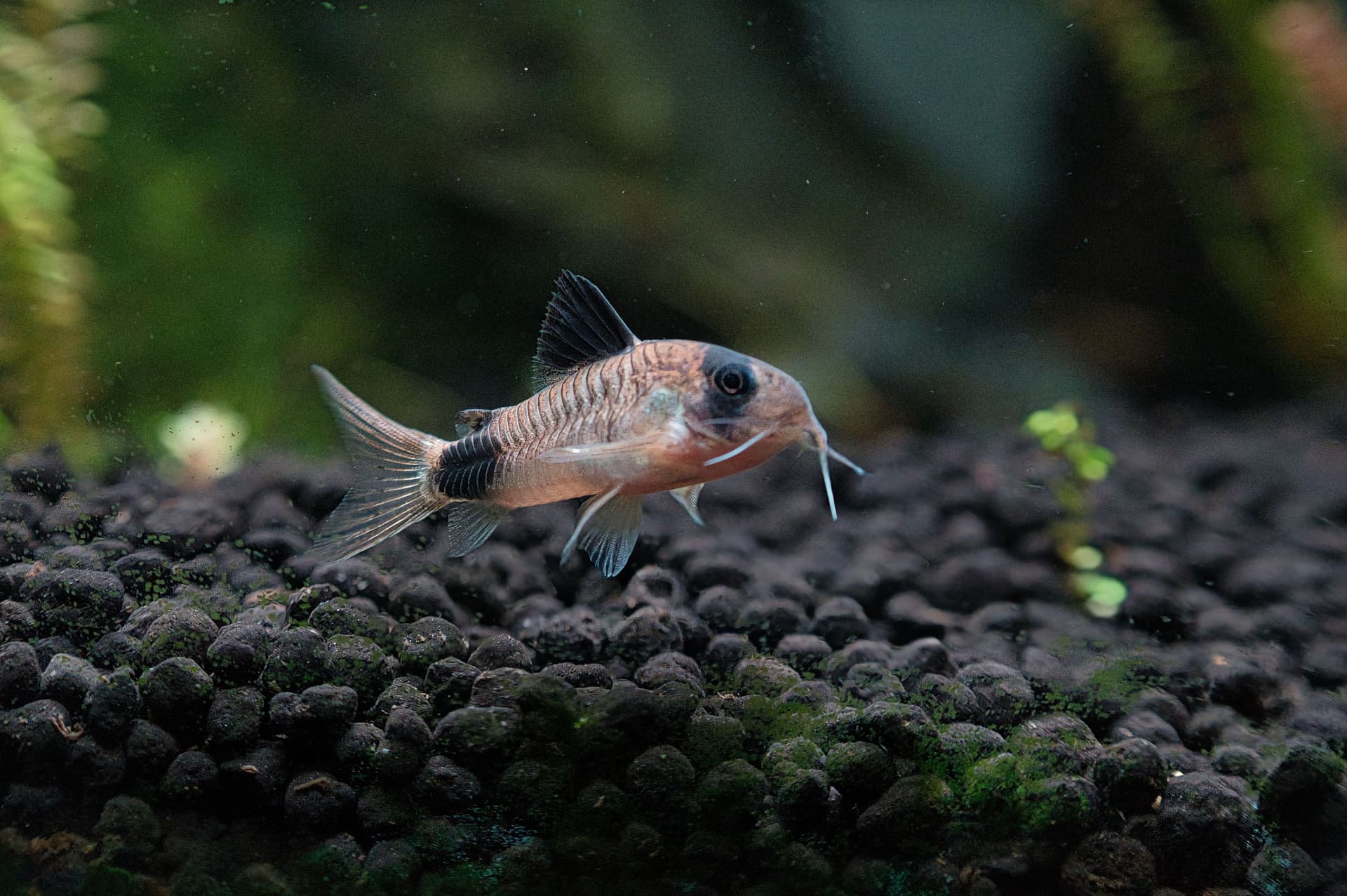
Corydoras are genuinely easy fish that are routinely sold into the wrong tank. OATA, the ornamental aquatic trade body, specifies an aquarium of at least 80 liters — about 21 US gallons — for a shoal of the smaller species such as Corydoras, and states they should be kept in groups of at least five. They are not a cleanup crew and they are not an add-on to a 10 gallon community tank. Two purchases decide how they do, and both are made before the fish arrives: sand or genuinely fine gravel, because OATA states this is needed to prevent injury to them, and a sinking food, because flake eaten at the surface never reaches the bottom. Water is the easy part: 22 to 27 C, pH 6.0 to 8.0, hardness 4 to 18 dH — a wide range almost any tap water already meets.
And one thing not to do, which almost no beginner page leads with: do not catch a corydoras with a net. OATA warns that most catfish have spines on their pectoral fins and just behind the gills. Those spines go through mesh and lock, and getting the fish out usually means cutting the net. Herd it into a cup or a jar instead.
Quick picks
What a corydoras tank actually needs
| # | Product | Best for | Price |
|---|---|---|---|
| 1 | 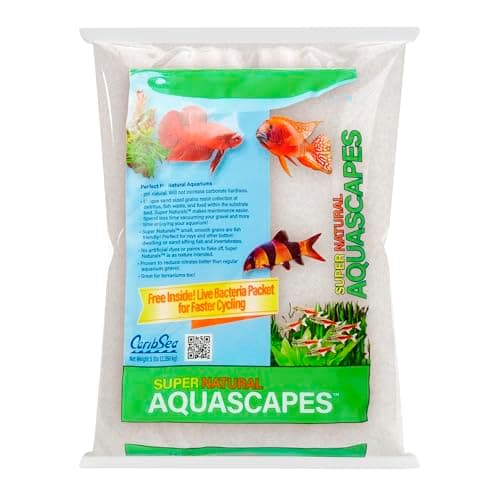 CaribSea Super Naturals Aquarium Sand OATA states sand or fine gravel should be on the bottom to prevent injury. On this fish that is not decoration advice. | The purchase that decides whether they stay healthy | $38.99 on Amazon #ad How we’re funded · price as of November 14, 2026 |
| 2 | 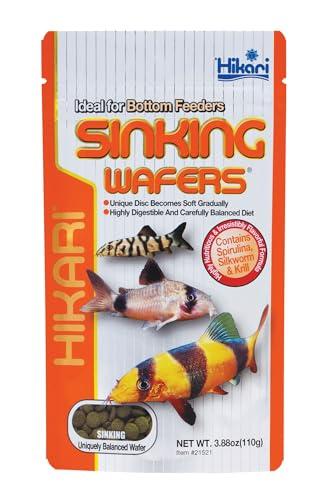 Hikari Sinking Wafers for Bottom-Feeding Tropical Fish The maker names Corydoras catfish on its own product page. Very little bottom-feeder food does. | Food that actually reaches the bottom | $9.57 on Amazon #ad How we’re funded · price as of November 14, 2026 |
| 3 | 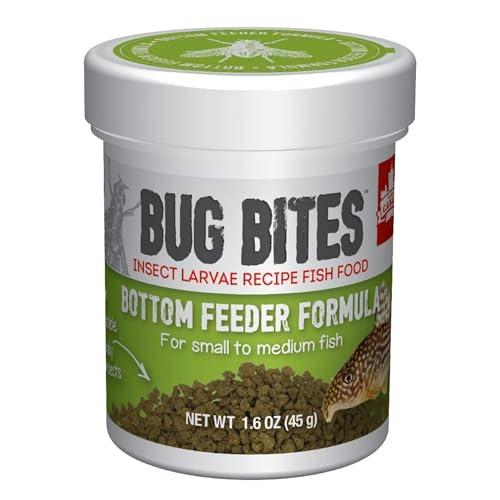 Fluval Bug Bites Bottom Feeder Formula A 1.4 to 2.0 mm sinking granule. It spreads across the floor instead of concentrating in one place. | A group, where a single wafer turns into a scrum | $5.49 on Amazon #ad How we’re funded · price as of November 14, 2026 |
| 4 | 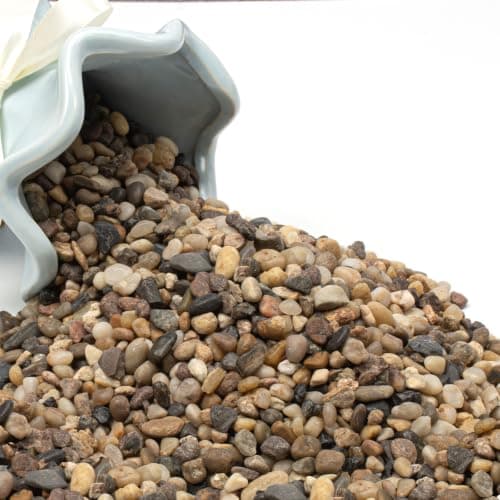 Aqualyra Natural River Pebble Aquarium Gravel (5 mm) OATA allows fine gravel as well as sand. The property that matters is smooth and rounded, not the word on the bag. | Keepers who will not use sand, done the one way that is defensible | $16.99 on Amazon #ad How we’re funded · price as of November 14, 2026 |
| 5 | 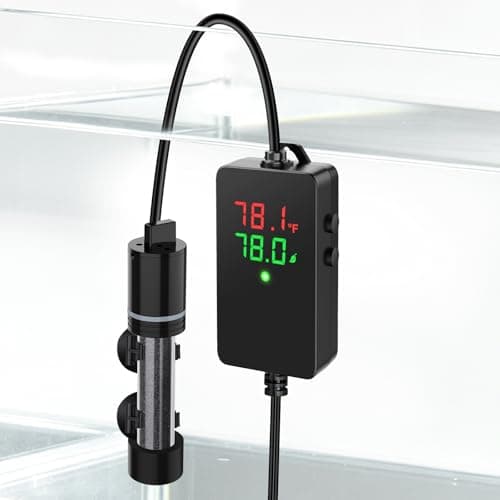 hygger ECO Precise Aquarium Heater, 100 W 100 W rated for 10 to 20 gallons. Corydoras are tropical fish and this is not optional. | Holding OATA's range on a 20 gallon tank | $23.99 on Amazon #ad How we’re funded · price as of November 14, 2026 |
| 6 | 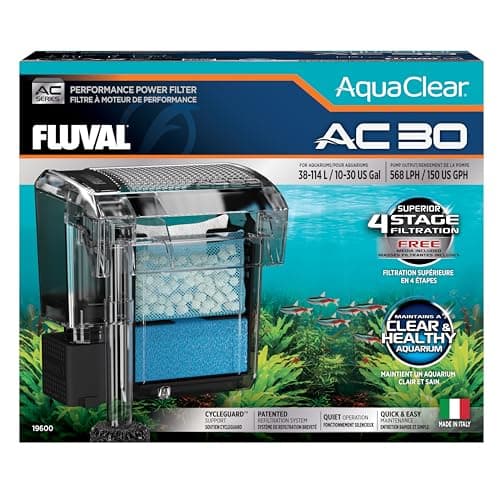 Fluval AquaClear 30 Power Filter Rated 10 to 30 US gallons. A group of six corydoras is more waste than their size suggests. | A 20 gallon tank that now has a bottom-dwelling bioload | $48.57 on Amazon #ad How we’re funded · price as of November 14, 2026 |
| 7 | 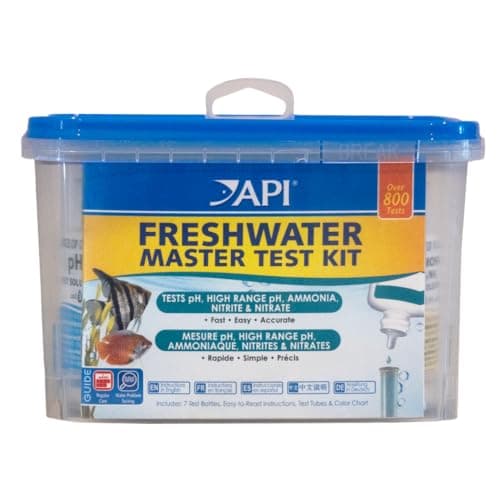 API Freshwater Master Test Kit Over 800 tests. OATA's catfish figure is nitrate no more than 20 mg/L above your tap water. | The nitrate ceiling OATA actually puts a number on | $35.98 on Amazon #ad How we’re funded · price as of November 14, 2026 |
| 8 | 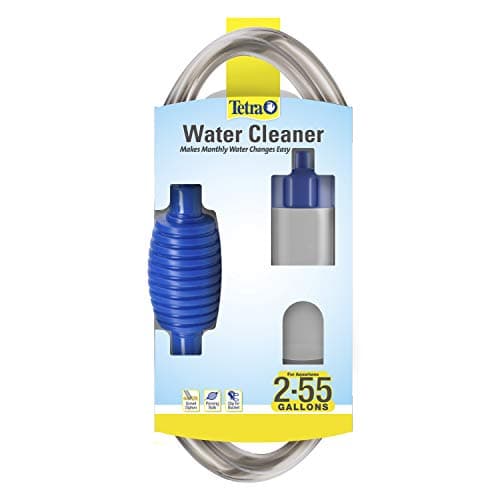 Tetra Water Cleaner Gravel Siphon The cheapest way to do it, with one technique change if you took the sand advice. | Removing waste from the surface corydoras live on | $11.91 on Amazon #ad How we’re funded · price as of November 14, 2026 |
| ! | 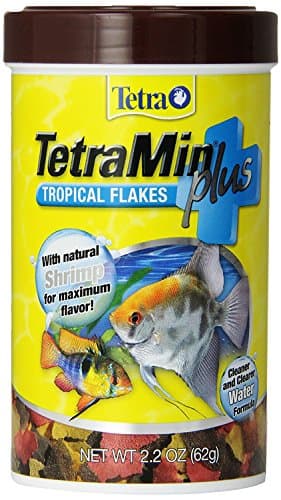 Tetra TetraMin Plus Tropical Flakes A good tropical flake and the commonest reason a corydoras slowly starves in a stocked community tank. Skip this one — see why below | Not corydoras, which is the point | $8.99 on Amazon #ad How we’re funded · price as of November 14, 2026 |
Rows link to the full write-up further down this page. Prices come from the live price layer only; where there is no live figure the button reads “Check price” rather than showing a remembered number.
How we judged this, before any recommendation
Three criteria. What does a care authority put a number on? — because this is a species where the hobby's received wisdom and the published figures mostly agree, and the published figures are checkable. What is decided before the fish arrives? — substrate and food are both bought at setup and both are awkward to change later, which is why they lead the picks. What is the failure that takes six months to show? — corydoras rarely die suddenly; they decline. The things on this page are the things that cause the slow version.
The tank: 80 liters, and what that means in gallons
OATA gives at least 80 liters for a shoal of the smaller species, such as Corydoras. That is about 21 US gallons, which lands just above the most common beginner tank and squarely on the second one.
| Tank | Against OATA's 80 liter figure | Honest verdict |
|---|---|---|
| 5 gallons (19 L) | A quarter of the stated minimum | No. Not even for the dwarf species, which still want a group |
| 10 gallons (38 L) | Under half | No, and this is the tank corydoras are most often sold into. A group of five does not belong here |
| 20 gallons (76 L) | Marginally under 80 L | The realistic answer. A 20 gallon long is better than a 20 high: same volume, more floor |
| 29 gallons and up | Comfortably above | Generous, and the floor area is what you are really buying |
Liter figures are OATA's; the US gallon conversions and the verdicts are ours. The 20 gallon row is a judgment call — it is a few liters short of the stated minimum, and we recommend it because the standard 20 long footprint gives this fish more of what it actually uses than a taller tank of the same volume would.
Footprint matters more here than for almost any other beginner fish, because a corydoras uses the floor and ignores the rest. That is the same argument our 20 gallon long vs 20 gallon high page makes in general, and corydoras are the clearest case for it on the whole site.
The group: five is OATA's floor, six is what we would buy
OATA states corydoras should be kept in groups of at least five, and that fish kept singly or in too-small groups will often become stressed. Most of the hobby says six. The difference is not worth arguing about; what is worth saying is why the number exists at all.
- A group is how they behave normally. Corydoras in a proper shoal forage together, rest together and dash to the surface for air in company. Two or three spend most of their time hidden, which is not shyness — it is the stressed version.
- Buy six rather than five if the tank allows it, for the ordinary reason: it leaves you a margin if one does not make it through the first months, and you are not then adding a single fish to an established group.
- One species, not a mixed bag. Corydoras shoal with their own kind, so six of one species beats two each of three species, however the shop has them tanked.
- They are a community fish, and OATA says so — the sheet calls corydoras, otocinclus and smaller plecos excellent additions to community aquariums. The constraint is the tank size and the floor space, not compatibility.
- Add them after the tank is cycled and settled, like anything else. How to add fish to a new tank has the procedure; the only cory-specific part is the netting warning above.
Substrate: what the injury actually is
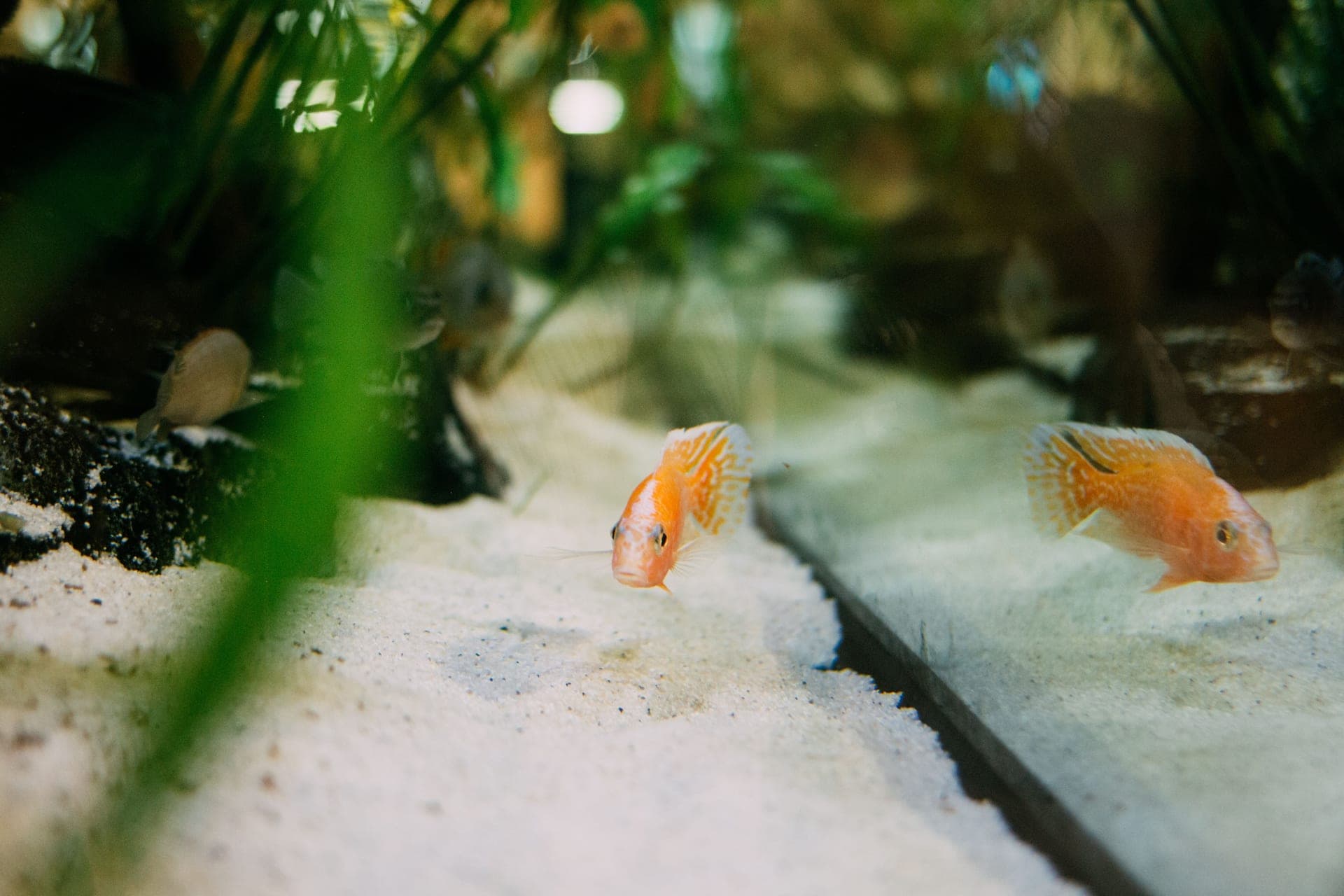
OATA's wording is that aquarium sand or fine gravel should be placed on the bottom of the aquarium to prevent injury to them. It is worth knowing what injury, because that tells you which substrates are fine and which are not.
A corydoras finds food by pushing a pair of soft sensory barbels through the substrate. On sharp-edged or crushed grains those barbels abrade, shorten and can become infected. A fish without working barbels is a fish that cannot find food on a floor it cannot see well. Nothing about this is dramatic on any given day, which is why it is missed.
So the test is not sand versus gravel, it is smooth versus sharp, and fine versus coarse. Fine sand passes easily. Smooth rounded river stone passes with the caveat that food falls between the grains. Sharp crushed gravel and coated novelty gravel do not pass. Our best aquarium substrate page ranks the options for a general tank; this is the one fish that narrows the list for you.
Water: the section where you can relax
OATA's catfish figures are 22 to 27 C, pH 6.0 to 8.0, general hardness 4 to 18 dH and carbonate hardness 3 to 15 dKH, with ammonia and nitrite at zero and nitrate not more than 20 mg/L above your tap water.
Read the width of those ranges. A pH span of two full units and a hardness span of 4 to 18 dH covers very nearly every municipal supply in the country, which means that for most readers the honest answer to "what water do corydoras need" is the water you already have, dechlorinated. The things on that list that do need your attention are the two that are supposed to read zero, and those are a function of cycling and stocking rather than of your tap. Can you use tap water in a fish tank covers the preparation.
What corydoras do not need
- To be your cleanup crew. This is the single most common misunderstanding about them. They do not eat algae, they do not eat fish waste, and they will not keep your substrate clean. They need their own food, delivered to the floor.
- A bare-bottom tank. Easier to clean and actively wrong for this fish — sifting is what they do.
- Driftwood. Plecos rasp wood; corydoras do not need it. Buy it because you like it, not because a cory requires it.
- Soft or acidic water. The 4 to 18 dH and pH 6.0 to 8.0 ranges are wide for a reason. Chasing a low pH in a tank that does not have one naturally causes far more harm than the number it fixes.
- A strong current. They are not a hillstream fish. If the filter is pushing them around, turn it down — how to size an aquarium filter has the arithmetic.
If you are still choosing, the hardiest fish for a first aquarium sets corydoras against the alternatives, and how many fish in a 20 gallon tank does the stocking arithmetic for the tank this page recommends.
Pick 1
CaribSea Super Naturals Aquarium Sand
The purchase that decides whether they stay healthy
The number
0.25 to 0.75 mm grain on the Moonlight variant. CaribSea states pH neutral, no dyes or paints, with a live bacteria packet included.
This is first because it is the only item on this page that a care authority ties directly to injury, and because it is the decision that is hardest to reverse once there are fish in the tank.
A corydoras feeds by pushing its barbels, which are soft sensory whiskers, through the substrate. On sharp or coarse grains those barbels wear down and can become infected, and a cory that has lost its barbels has lost the organ it finds food with. It is a slow failure that looks like nothing for months.
Fine sand is the straightforward answer. It is also the substrate this fish sifts most convincingly, which is most of the reason to keep them.
The honest costs. Sand compacts and needs occasional stirring, and it is vacuumed differently from gravel: hover above it rather than digging in, or the sand leaves with the waste. Fine sand can be drawn into a filter intake sitting too low. Twenty pounds is more than a 20 gallon tank needs for a shallow bed, so you will have some left over. And the live bacteria packet is a head start, not a substitute for cycling the tank.
| Grain size | 0.25 to 0.75 mm on the Moonlight variant; other colors run up to about 1.5 mm |
|---|---|
| Water chemistry | CaribSea states pH neutral and that it will not increase hardness |
| Coatings | CaribSea states no artificial dyes or paints |
| Included | A live bacteria packet, stated to speed up cycling |
| Bag sizes | Sold in 10, 20 and 40 lb bags depending on retailer; the listing linked here is the 20 lb bag |
| What it does not do | Sand compacts, so it needs occasional stirring and it is vacuumed differently from gravel — hover the siphon above it rather than digging in, or you will remove the sand along with the waste. Fine sand can be drawn into a filter intake if the intake sits too low. The bacteria packet is a head start, not a substitute for cycling. |
Specs from CaribSea Super Naturals Moonlight Sand, Bulk Reef Supply listing (grain size, pH neutral, no dyes, bacteria packet); CaribSea Moonlight Sand, 20 lb, Amazon listing; CaribSea, Freshwater Substrates product page (all natural, no paints, dyes or coatings). We have not used this unit.
#ad How we’re funded · price as of November 14, 2026
Pick 2
Hikari Sinking Wafers for Bottom-Feeding Tropical Fish
Food that actually reaches the bottom
The number
Hikari states crude protein 36% min, crude fat 9% min, and a soft disc developed to avoid dissolving so nocturnal feeders can graze.
The second half of the problem. Corydoras are not scavengers living on what the other fish drop, however often they are sold that way, and a community tank of enthusiastic surface feeders is a tank where nothing edible reaches the floor.
A sinking wafer is the simplest fix because it is countable. You put one in, you watch it get found, and you know the fish ate.
Hikari's claim that it is built to avoid dissolving is the useful part: a wafer that holds together is still there when the corys get busy after lights-out, which is when they prefer to work.
The honest costs. A wafer is a lump of food sitting on the substrate, so an already-overfed tank gets worse fast — it disperses into nothing and nothing in the upper water column will take it. Hikari's own instruction to remove what is uneaten after 20 minutes is the part everyone skips. Ash is listed at up to 16%, higher than the Fluval granule below. And one whole wafer is too much for two or three fish, so break it.
| Intended for | Hikari states smaller bottom feeding fish including Corydoras catfish and loaches |
|---|---|
| Guaranteed analysis | Hikari states crude protein 36% min, crude fat 9% min, crude fiber 4% max, moisture 10% max, ash 16% max |
| First ingredients | Fish meal, wheat germ meal, soybean meal, wheat flour, whole crushed silkworm pupae |
| Form | Hikari calls it a soft disc developed for bottom feeders and states it is scientifically developed to avoid dissolving, so nocturnal feeders have a chance to graze |
| Feeding | Hikari states to feed the amount consumed in 20 minutes and to remove anything uneaten |
| Size | 3.88 oz (110 g) on the listing linked here |
| What it does not do | A wafer is a lump of food sitting on the substrate, so a tank that is already overfed gets worse fast — it does not disperse and it does not get eaten by anything in the upper water column. Hikari's own instruction to remove uneaten food after 20 minutes is the part people skip. Ash is listed at up to 16%, higher than the Fluval granule. And a wafer is too large a single item for one or two fish; break it before dropping it in. |
Specs from Hikari Sinking Wafers, Hikari USA product page (named for Corydoras catfish and loaches; guaranteed analysis, ingredients, 20 minute feeding instruction); Hikari Sinking Wafers for Bottom-Feeding Tropical Fish, 3.88 oz, Amazon listing. We have not used this unit.
#ad How we’re funded · price as of November 14, 2026
Pick 3
Fluval Bug Bites Bottom Feeder Formula
A group, where a single wafer turns into a scrum
The number
Sinking granule 1.4 to 2.0 mm. Crude protein 32% min, crude fat 12% min, with dried black soldier fly larvae listed first.
The alternative shape, and with a group of five or six it is often the better one. A wafer is a single prize that the boldest fish sits on; granules scatter, which means the whole group feeds at once.
The grain size is the reason it works here. A corydoras has a small downturned mouth, and 1.4 to 2.0 mm is about the largest thing it can take comfortably.
**One honesty note, because it matters.** Fluval aims this formula at plecos and ancistrus. It does not name corydoras anywhere we can find. The grain size and the sinking behavior are what make it suitable, and that is our read of the specification rather than a claim by the manufacturer.
The honest costs. Beyond the above: Fluval's own website does not respond to us, so the analysis here comes from a retailer listing rather than the maker. Granules scatter, which is good for a group and bad for seeing how much you actually added — the commonest way a cory tank gets overfed. It smells strongly of insect meal. And 1.60 ounces goes stale long before a small group finishes it.
| Form | Sinking granule, 1.4 to 2.0 mm |
|---|---|
| Guaranteed analysis | Crude protein 32% min, crude fat 12% min, crude fiber 6% max, moisture 10% max, ash 9% max |
| First ingredients | Dried black soldier fly larvae, salmon, wheat, green peas, potato |
| Intended for | Small to medium size fish; the retailer listing describes it as ideal for plecos and ancistrus, and does not name corydoras |
| Feeding | As much as the fish eat in two minutes, two or three times daily, per the listing |
| Size | 1.60 oz on the listing linked here |
| What it does not do | Fluval aims this at plecos rather than at corydoras — the grain size is what makes it work for a small-mouthed catfish, and that is our read, not the maker's claim. Fluval's own website does not respond to us, so the figures above come from a retailer listing rather than the manufacturer. Granules scatter, which is good for spreading a meal across a group and bad for seeing how much you actually put in. It smells strongly of insect meal. |
Specs from Fluval Bug Bites Bottom Feeder Granules, Bulk Reef Supply listing (guaranteed analysis, ingredients, 1.4-2.0 mm sinking granule, plecos and ancistrus); Fluval Bug Bites Bottom Feeder Fish Food, 1.60 oz, Amazon listing. We have not used this unit.
#ad How we’re funded · price as of November 14, 2026
Pick 4
Aqualyra Natural River Pebble Aquarium Gravel (5 mm)
Keepers who will not use sand, done the one way that is defensible
The number
Inert stone, roughly 2 to 5 mm. Does not dissolve, so it does not alter pH or hardness. Vacuumed directly rather than hovered over.
Plenty of people have a gravel tank already and are not going to tear it down, and the honest reading of OATA's wording is that they do not have to: the sheet says sand **or fine gravel**.
Smooth rounded river stone is the version that is defensible. What is not defensible is the sharp crushed gravel and the coated novelty gravel that most starter kits photograph, because the injury OATA is describing comes from edges.
It is also easier to maintain than sand. You push the siphon into it and let the grains tumble back; nothing compacts and nothing gets sucked into the filter.
The honest costs. This is the compromise pick and the compromise is real. At 5 mm the grains are coarse enough that food falls between them and out of reach, which is precisely the problem a bottom feeder has — so a gravel tank needs a more deliberate feeding routine, not a more relaxed one. Corys also sift gravel far less convincingly than sand, so you lose some of the behavior you bought them for. If you are setting up a new tank for corydoras, buy the sand.
| Type | Inert stone. Does not dissolve, so it does not alter pH or hardness |
|---|---|
| Typical grain | Roughly 2-5 mm for standard aquarium gravel, which is coarse enough that waste falls between the grains |
| Rough quantity | Commonly quoted at about 1.5 lb per gallon for a 2 inch bed, but weight follows tank footprint rather than gallons |
| Cleaning | Vacuumed directly. A siphon lifts the grains, waste rises, gravel drops back |
| What it does not do | Almost never included in a starter kit despite appearing in the photo on the box. Coated or painted novelty gravel is a different product and the coating can chip; buy natural stone. Coarse gravel lets uneaten food fall out of reach, which hides an overfeeding problem rather than preventing one. |
The manufacturer does not publish a full spec sheet for this item, so nothing beyond the figures above is stated. We have not used this unit.
#ad How we’re funded · price as of November 14, 2026
Pick 5
hygger ECO Precise Aquarium Heater, 100 W
Holding OATA's range on a 20 gallon tank
The number
100 W, stated for 10 to 20 gallon tanks, dual probe controller. OATA gives 22 to 27 C for catfish.
OATA's range is 22 to 27 C, which is ordinary tropical and comfortably met by any heater sized to the tank. The reason this is on the page at all is that corydoras get sold as a cleanup crew rather than as fish, and cleanup crews get put in unheated tanks.
A hundred watts is the right figure for the 20 gallon tank this page recommends.
An external controller also means you set the temperature by a number rather than a dial mark, which is the part people actually want.
The honest costs. The plus or minus 0.5 C accuracy is the listing's own claim, not a manufacturer document we can check, so treat it as a claim. The controller is another component to site and keep dry, and its readout is not the same thing as a thermometer in the water — buy one of those separately. No thermometer is included.
| Wattage | 100 W |
|---|---|
| Stated tank range | 10 to 20 gallons, per the Amazon listing |
| Control accuracy | Plus or minus 0.5 C, per the Amazon listing |
| Control | Dual probe controller |
| Protection | Overheat and dry-run protection, per the listing |
| What it does not do | The stated accuracy figure is the listing's own claim rather than a manufacturer document we can check, so treat it as a claim. The external controller is one more component to place and keep dry, and a controller readout is not a thermometer in the water. No thermometer included. |
Specs from hygger ECO Precise 100W Aquarium Heater Submersible for 10-20 Gallon Fish Tank, plus or minus 0.5 C dual probe controller, overheat and dry-run protection, Amazon listing. We have not used this unit.
#ad How we’re funded · price as of November 14, 2026
Pick 6
Fluval AquaClear 30 Power Filter
A 20 gallon tank that now has a bottom-dwelling bioload
The number
568 L/h (150 US gal/h), stated for 38-114 L (10-30 US gallons), 7 W.
Six small catfish working the substrate all day produce more than six small catfish look like they should, and all of it ends up on the floor rather than in the water column.
The AquaClear's advantage here is the media basket. You choose what goes in it, which matters in a tank where you may want to swap the fine mechanical media more often than the biological.
The honest costs. Two of them are specific to this page. **Fine sand and a low intake do not get along** — raise the intake, or fit the pre-filter sponge from the first day, or you will hear the impeller grinding. And at full rated output 150 GPH is a lot of flow for a 20 gallon tank, so expect to use the flow control rather than treating it as a bonus. Beyond that: no heater, no test kit, and the media is a recurring cost.
| Rated output | 568 L/h (150 US gal./h) |
|---|---|
| Stated tank range | 38-114 L (10-30 US gallons) |
| Power draw | 7W at 120 V / 60 Hz |
| Media | Pre-filter sponge, Bio-Foam, BIOMAX, activated carbon |
| What it does not do | No heater, no test kit, no substrate. At full rated output this is more flow than a betta or a shrimp tank wants, so the flow control is not optional there. |
Specs from Fluval, AquaClear 30 Power Filter product page. We have not used this unit.
#ad How we’re funded · price as of November 14, 2026
Pick 7
API Freshwater Master Test Kit
The nitrate ceiling OATA actually puts a number on
The number
Over 800 tests per kit, covering pH, high-range pH, ammonia, nitrite and nitrate.
Most care sheets say keep nitrate low. OATA's catfish sheet gives a number — not more than 20 mg per liter above normal tap water levels — and that is a figure you can only act on if you are measuring both the tank and the tap.
The pH test earns its place differently here. OATA's range for catfish is **6.0 to 8.0**, which is unusually wide, and the useful outcome of testing is usually finding out you can stop worrying about it.
The honest costs. It does not test hardness, though with a 4 to 18 dH range that matters less for corydoras than for most fish. It is slower and fiddlier than strips, the nitrate test needs the second bottle shaken hard and then a wait, and the color card is genuinely hard to read between adjacent shades under warm light. Reagents expire.
| Tests | pH, High Range pH, Ammonia, Nitrite, Nitrate |
|---|---|
| Capacity | Over 800 tests per kit |
| Contents | 7 bottles of test solution, 1 color card, 4 glass tubes with caps, holding tub |
| Type | Liquid reagent |
| What it does not do | Does not test hardness, chlorine or alkalinity. It is slower than strips, the nitrate test needs vigorous shaking of the second bottle and a wait, and the color card is genuinely hard to read between adjacent shades. |
Specs from API Freshwater Master Test Kit, Amazon listing; API Freshwater Aquarium Master Test Kit, PetSmart listing. We have not used this unit.
#ad How we’re funded · price as of November 14, 2026
Pick 8
Tetra Water Cleaner Gravel Siphon
Removing waste from the surface corydoras live on
The number
Manual siphon into a bucket. Stated for aquariums up to 55 gallons.
A bottom-dwelling fish lives in the layer where waste settles, so this is a more direct piece of welfare equipment on this page than it is on most.
On sand the technique is different and the difference is the whole trick: hover the tube an inch above the surface and let the lighter waste lift off, rather than pushing in as you would with gravel. We wrote the method up separately on our **can you use a gravel vacuum on sand** page.
The honest costs. You carry the water, which is fine at 20 gallons and the reason people quietly stop doing water changes once the tank is bigger. Starting the siphon takes a knack. And on sand it is easy to remove several pounds of substrate before you work out the hover height — practice in a bucket.
| Type | Manual siphon into a bucket |
|---|---|
| Cost | The cheapest way to do a proper gravel-vac water change |
| What it does not do | You carry the water. On a 10 or 20 gallon tank that is fine. The moment the tank gets big, it is the reason people quietly stop doing water changes. |
The manufacturer does not publish a full spec sheet for this item, so nothing beyond the figures above is stated. We have not used this unit.
#ad How we’re funded · price as of November 14, 2026
Skip this
Tetra TetraMin Plus Tropical Flakes
Not corydoras, which is the point
The skip entry, and it is not a bad product — it is our pick for a community tank elsewhere on this site.
The problem is geometry. Flake is eaten at and just below the surface by fish that are faster and bolder than a catfish, and in a stocked tank almost none of it reaches the floor. The corydoras is then expected to live on scraps that never arrive.
This is the actual mechanism behind corys that look fine for six months and then quietly thin out and die. Nobody watched them not eat.
The honest costs of the skip. If your tank is lightly stocked, flake does land and corys will take it, so this is not a rule. But you cannot know that without watching after lights-out, which is why a sinking food is the safer default. Keep the flake for the fish it is for, and add a sinking food for the ones on the bottom.
| Guaranteed analysis | Crude protein 46% min, crude fat 11% min, crude fiber 3% max, moisture 8% max, phosphorus 1% min |
|---|---|
| First ingredients | Fish meal, dried yeast, ground brown rice, shrimp meal, wheat gluten, feeding oat meal, freeze-dried shrimp |
| Form | Floating flake |
| Intended fish | Omnivorous freshwater community species |
| What it does not do | Flake goes soggy and sinks once it is wet, so anything not eaten in a couple of minutes becomes waste rather than food. The tub is sized for far more fish than a first tank holds, and an opened tub does not stay fresh indefinitely. |
Specs from TetraMin Plus Tropical Flakes, That Pet Place listing (guaranteed analysis and ingredients). We have not used this unit.
Questions people actually ask
Frequently asked questions
+ What size tank do corydoras need?
+ Can corydoras live in a 10 gallon tank?
+ How many corydoras should be kept together?
+ Do corydoras need sand?
+ What do corydoras eat?
+ Are corydoras cleanup fish?
+ Why should you not use a net on a corydoras?
+ What water conditions do corydoras need?
+ Do corydoras need a heater?
Where the numbers came from
Sources
- OATA (Ornamental Aquatic Trade Association), How to look after catfish — an aquarium of at least 80 liters for a shoal of the smaller species such as Corydoras, 22-27 C, pH 6.0-8.0, general hardness soft-hard (4-18 dH) and carbonate hardness soft-hard (3-15 dKH), ammonia and nitrite zero mg per liter and nitrate not to exceed 20 mg per liter above tap water levels, Corydoras are shoaling fish that should be kept in groups of at least five, aquarium sand or fine gravel should be placed on the bottom to prevent injury to them, and care should be taken when handling catfish as most have spines on their pectoral fins and just behind their gills
- Hikari USA, Sinking Wafers product page — stated for smaller bottom feeding fish including Corydoras catfish and loaches, a soft disc developed to avoid dissolving so nocturnal feeders can graze, and a feeding instruction of the amount consumed in 20 minutes with uneaten food removed
- Fluval Bug Bites Bottom Feeder Granules, Bulk Reef Supply listing — sinking granule format 1.4 to 2.0 mm, guaranteed analysis and ingredient list, described as ideal for plecos and ancistrus
- API Freshwater Master Test Kit — Amazon listing (parameters tested, test count)
Read next
Related on Fin & Filter
The hardiest fish for a first aquarium
Which species tolerate a beginner's mistakes, what each needs, and the popular fish that should not be first.
How many fish in a 20 gallon tank?
Why the inch-per-gallon rule fails, the four things that actually decide it, and four worked stocking plans.
The best aquarium substrate
Gravel, sand or planted soil, how much a tank actually takes, and the buffering substrate to avoid by accident.