Troubleshooting
How to get rid of snails in a fish tank
They did not appear from nowhere and they are not breeding because they feel like it. A snail population is capped by the food it can find, which makes the number on your glass a reading rather than an infestation.
Fin & Filter earns a commission when you buy through the links on this page. It costs you nothing and it does not decide what we rank. How we’re funded.
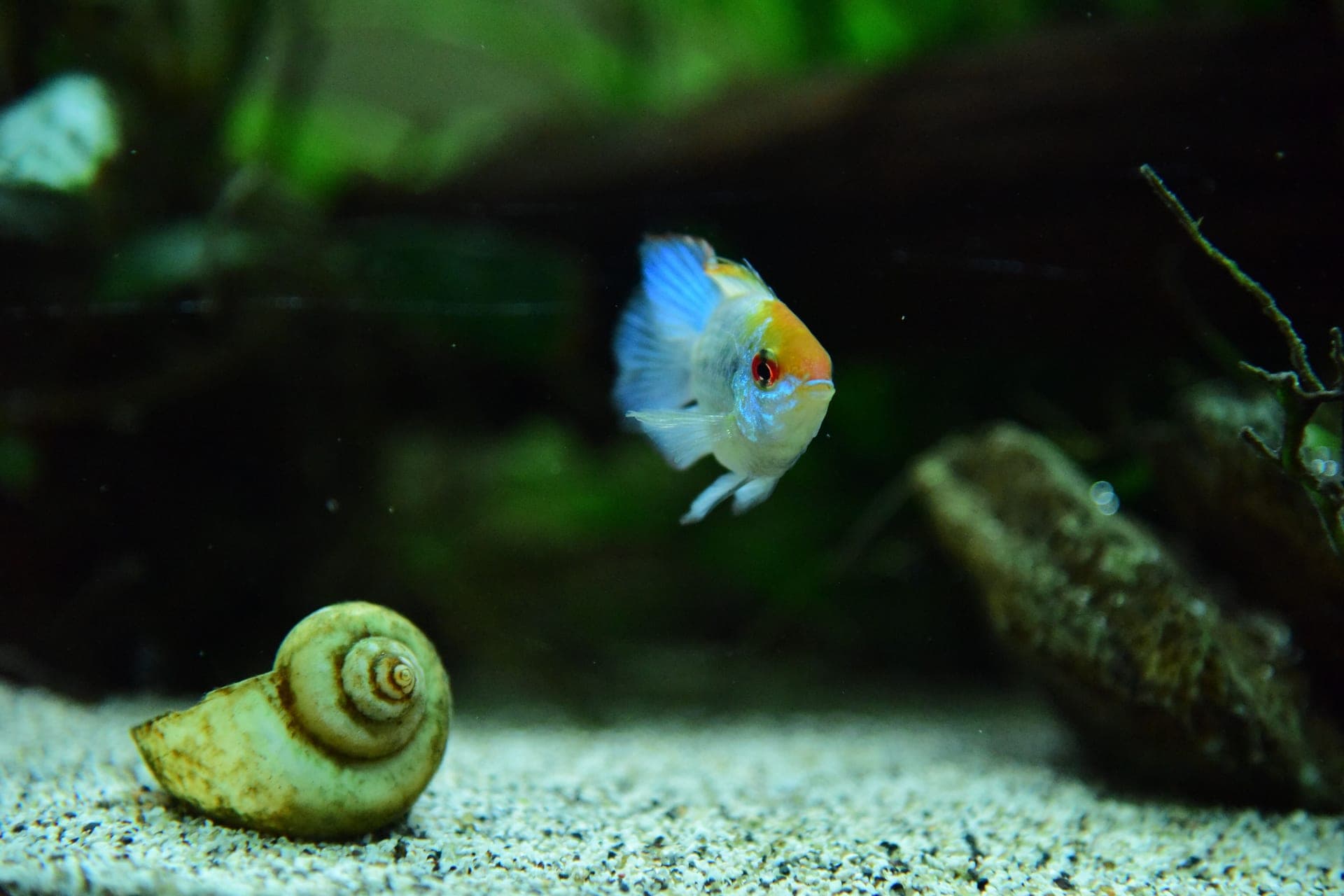
We have not used any of this gear. Every pick below is chosen from published manufacturer specifications and the arithmetic on how we pick, which you can re-run yourself.
You do not have a snail problem, you have a food problem. Pest snails arrive on live plants and then multiply to whatever level the uneaten food in your tank will support, so the fastest honest route is: cut feeding to what the fish finish in about a minute, vacuum the substrate at every water change, and trap or hand-remove the visible snails for two to three weeks while the population falls. Trapping alone does not work, because it removes snails without removing the surplus that replaces them. And do not reach for a chemical snail killer if there are shrimp or ornamental snails in the tank — most are copper-based, and the EPA notes copper is toxic to aquatic organisms at higher concentrations.
Before any of that, there is a question worth asking honestly, because for a lot of readers the answer ends the job here: are the snails actually doing any harm?
Quick picks
What the routine actually needs
| # | Product | Best for | Price |
|---|---|---|---|
| 1 | 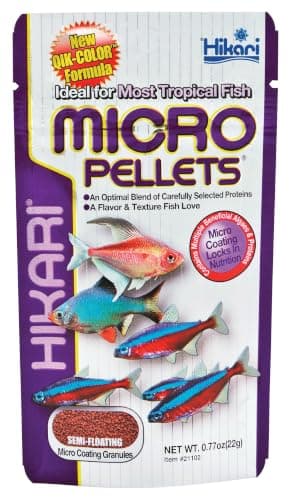 Hikari Tropical Micro Pellets Countable pellets instead of an uncountable pinch of flake. Portion control is what ends an outbreak. | The actual cure, which is not a snail product at all | $5.97 on Amazon #ad How we’re funded · price as of November 3, 2026 |
| 2 | 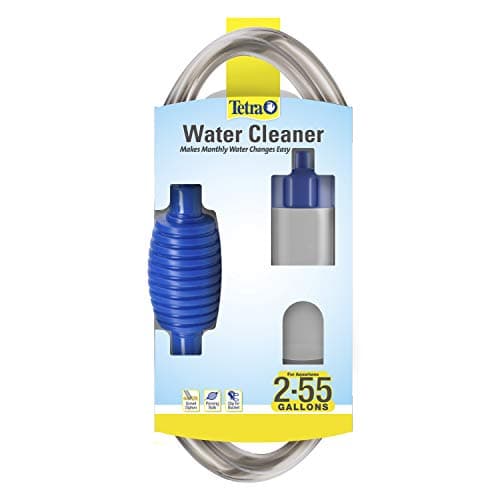 Tetra Water Cleaner Gravel Siphon The substrate is where uneaten food accumulates and where snails feed. Vacuuming it is the single most effective physical step. | Removing the food supply, which lives in the substrate | $10.29 on Amazon #ad How we’re funded · price as of November 3, 2026 |
| 3 | 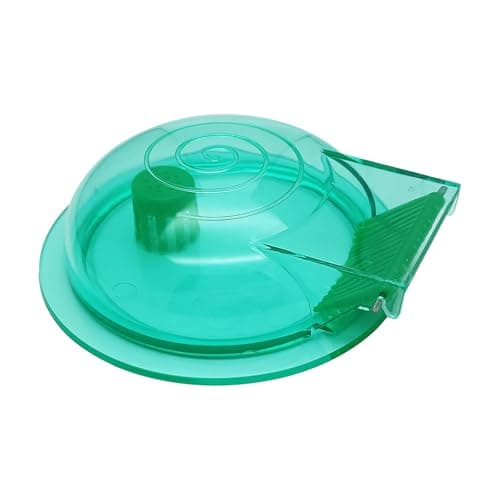 FUATY Aquarium Snail Trap A baited plastic trap that works while you sleep. A routine rather than a cure, and honest about it. | Clearing visible numbers overnight while the food supply comes down | $9.99 on Amazon #ad How we’re funded · price as of November 3, 2026 |
| 4 | 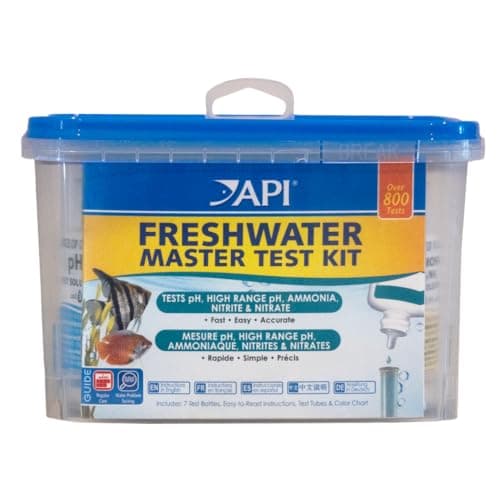 API Freshwater Master Test Kit Over 800 tests. A snail boom and a climbing nitrate reading usually have the same cause. | Confirming the diagnosis instead of guessing at it | $35.98 on Amazon #ad How we’re funded · price as of November 3, 2026 |
| 5 | 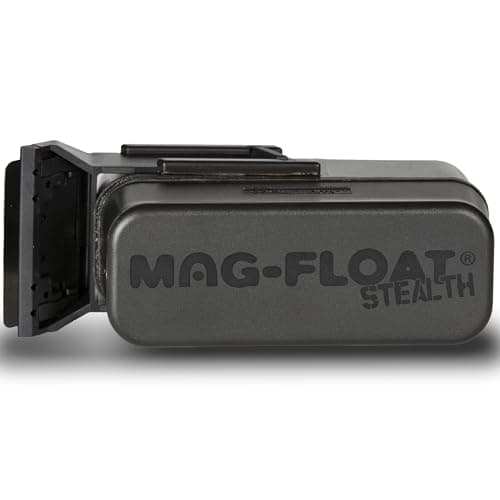 Mag-Float Mag-Float Medium Black Stealth Glass Magnet with Blade A magnetic scraper with a blade. Egg clutches come off glass easily; the point is doing it before they hatch. | Egg clutches on the glass, and the algae that shares their cause | $49.99 on Amazon #ad How we’re funded · price as of November 3, 2026 |
| ! | 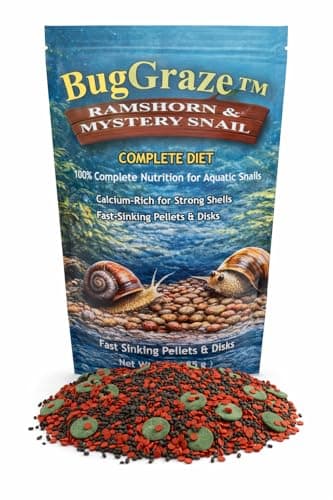 Various Ramshorn and Mystery Snail Complete Diet, calcium-enriched sinking pellets A reasonable food for deliberately-kept mystery snails, and the exact opposite of the treatment here. Skip this one — see why below | Not a tank you are trying to clear | $12.99 on Amazon #ad How we’re funded · price as of November 3, 2026 |
Rows link to the full write-up further down this page. Prices come from the live price layer only; where there is no live figure the button reads “Check price” rather than showing a remembered number.
First: are they a problem, or just visible?
The snails that appear uninvited in a freshwater tank are almost always bladder snails, ramshorn snails or Malaysian trumpet snails. None of them eat healthy plants, none of them harm fish, and none of them are a disease risk to your tank. They eat detritus, uneaten food, dead plant matter and algae.
What they do is multiply visibly, which reads as an infestation. The useful reframe is that a pest snail population is a gauge: it rises when there is surplus food and falls when there is not. A tank with three snails and a tank with three hundred are usually the same tank fed differently.
How we judged the methods
Four criteria, and most popular advice fails the first one. Does it address the cause or only the symptom? — anything that removes snails without removing food is a treadmill. Is it safe for everything else in the tank? — shrimp, ornamental snails and fry are the things most commonly lost to snail treatments. Does it work unattended? — a method that needs you present every evening is a method you will abandon in week two. Is it reversible if you change your mind? — adding a predator is not.
The routine that actually works
- Cut the food first, and be stricter than feels comfortable. Feed once a day, only what is visibly gone in about a minute, and skip a day a week. This is the step that ends the outbreak; everything below is cleanup.
- Vacuum the substrate at every water change, not just the open sand. The detritus between grains is the food supply, and snails and eggs come up the tube with it.
- Trap overnight. Bait a trap, or put a blanched slice of zucchini or cucumber on a saucer after lights-out and lift it in the morning with the snails attached. Discard, repeat.
- Scrape egg clutches off the glass during the weekly clean. They are small, clear and jelly-like, and removing them stops a generation before it arrives.
- Check for anything dead if the bloom was sudden. Behind the filter, under rocks, inside ornaments.
- Keep going for two to three weeks. The population falls as the food does, not as the trapping does, and there is a lag between the two. Stopping at day four because the trap caught twenty is how this becomes a recurring chore.
- Do not try to reach zero. A small, stable snail population is a working part of a clean-up crew. The goal is a number you stop noticing, not an empty tank.
Methods compared, honestly
| Method | Does it address the cause? | Honest verdict |
|---|---|---|
| Feeding less | Yes — this is the cause | The only method that ends it. Free, slow, and the one people skip because it is not a purchase. |
| Substrate vacuuming | Yes, partly | Removes the food supply and a share of the population at the same time. The best physical step. |
| Overnight trap or vegetable | No | Genuinely useful for knocking numbers down while the food comes down. A routine, not a cure. |
| Scraping egg clutches | No | Cheap and worth doing during the weekly clean. Prevents a generation rather than removing one. |
| Assassin snails | No | They work, slowly, and then you have a population of assassin snails instead. We do not link live animals, and it is the least reversible option here. |
| Snail-eating fish | No | Loaches and puffers are sold for this and most outgrow or are wrong for a beginner community tank. Choosing a fish to solve a maintenance problem is how tanks end up overstocked. |
| Chemical snail killers | No | Avoid with shrimp or ornamental snails. Most are copper-based, and a mass die-off of snails also means a sudden ammonia load in a tank that was already over-fed. |
| Tearing the tank down | No | Destroys your cycled filter and substrate to solve a cosmetic problem, and the snails come back with the next plant. |
Our own assessment. The copper caution reflects the EPA's statement that copper is toxic to aquatic organisms at higher concentrations, cited at the foot of this page; it is not a product-specific finding.
Why the chemical route is the wrong first move
Snail-killing treatments sold for aquariums are commonly copper-based, and the EPA's aquatic life page states plainly that copper is an essential nutrient at low concentrations but is toxic to aquatic organisms at higher concentrations, with chronic exposure affecting survival, growth and reproduction. That is a general statement about aquatic organisms rather than a mollusc-specific finding, and it is enough of a reason to be careful in a small closed system containing shrimp.
There is a second problem that has nothing to do with chemistry. A treatment that works kills a large number of snails at once, in a tank whose filter is already handling a surplus of food. Those bodies decay. The result is an ammonia spike arriving a day or two later, in a tank that gave you no warning — which is a considerably worse problem than the one you started with. If you ever do treat, the procedure afterwards is how to lower ammonia in a fish tank fast.

Stopping them arriving in the first place
Pest snails arrive on live plants, as adults hidden in the roots or as egg clutches on the undersides of leaves. They can also come in with a bag of water from a shop tank, or on a used decoration.
- Inspect and rinse new plants under running water, paying attention to the underside of leaves and the base of the roots. This alone catches most of it.
- Quarantine new plants in a bucket or spare container for a couple of weeks if you want to be thorough. It is the same logic as a quarantine tank for fish, with lower stakes and no heater needed.
- Never pour shop bag water into the tank. You are netting the fish across anyway for other reasons — see how to add fish to a new tank.
- Accept that tissue-culture plants are the only reliably snail-free option, and that they cost more. Everything grown in a pot in a shop tank is a possible vector, including the plants on easy live plants for a beginner tank.
- Keep feeding under control permanently. A tank that never carries surplus food never develops a visible snail population in the first place, which is the same discipline that keeps nitrate down and algae off the glass.
That last point is the thread running through this whole page, and it is the same one behind how to get rid of algae in a fish tank and how often to change aquarium water. Snails, algae and a climbing nitrate reading are three symptoms of one habit.
Pick 1
Hikari Tropical Micro Pellets
The actual cure, which is not a snail product at all
This is first because it is the only entry on this page that addresses the cause rather than the symptom.
Pest snails eat what your fish did not. Cut the surplus and the population falls on its own, because there is nothing left to support it. Every trap on this page is a way to pass the time while that happens.
The reason a pellet beats flake here is arithmetic you can actually do. A dozen small pellets is a number you can see and count; a pinch of flake is whatever your fingers did that morning, and it is almost always more than the fish will finish in a minute.
The honest costs. It is a small-pellet food, so it suits small-mouthed community fish and is the wrong choice for a goldfish or anything large. Pellets lose nutritional value once opened, so a big tub is false economy for a small tank. And changing food does nothing on its own — the portion is the variable, not the brand.
| Guaranteed analysis | Crude protein 43% min, crude fat 7% min, crude fiber 7% max, moisture 10% max, ash 17% max |
|---|---|
| First ingredients | Fish meal, krill meal, soybean meal, flaked corn, cuttlefish meal, brewers dried yeast |
| Form | Semi-floating micro pellet that sinks slowly |
| Intended fish | Bettas, tetras, barbs and other small-mouthed tropical fish |
| Water clouding | Hikari states a micro-coating that locks in nutrients and reduces the chance of clouding |
| What it does not do | Hikari's own ingredient list includes the artificial colors red 3 and yellow 5. They are there for the fish's appearance, not its health, and if that matters to you the Fluval pick does not use them. Ash is listed at up to 17%, the highest of the three picks. |
Specs from Hikari Tropical Micro Pellets, Hikari USA product page (guaranteed analysis and ingredients). We have not used this unit.
#ad How we’re funded · price as of November 3, 2026
Pick 2
Tetra Water Cleaner Gravel Siphon
Removing the food supply, which lives in the substrate
The number
A manual siphon into a bucket: the cheapest way to do a proper substrate-vac water change.
A trap catches snails. A gravel vacuum removes the reason there are snails, which is the detritus and uneaten food worked down between the grains where you cannot see it.
It also physically removes a share of the population every time you use it — snails and eggs come up the tube along with the waste, which makes this both the cure and a removal method in the same ten minutes.
The honest costs. You carry the water, which is fine on a 10 or 20 gallon tank and the reason people quietly stop doing water changes on anything larger. There is no flow control other than your thumb. And on a sand-bottomed tank the technique changes — hover rather than dig, which is covered on our sand page.
| Type | Manual siphon into a bucket |
|---|---|
| Cost | The cheapest way to do a proper gravel-vac water change |
| What it does not do | You carry the water. On a 10 or 20 gallon tank that is fine. The moment the tank gets big, it is the reason people quietly stop doing water changes. |
The manufacturer does not publish a full spec sheet for this item, so nothing beyond the figures above is stated. We have not used this unit.
#ad How we’re funded · price as of November 3, 2026
Pick 3
FUATY Aquarium Snail Trap
Clearing visible numbers overnight while the food supply comes down
The number
A baited trap that sits on the substrate overnight, per the Amazon listing. Bait is not included.
Snails find food at night, which makes an overnight bait trap the most efficient manual removal there is: you bait it after lights-out, lift it in the morning, and discard what is inside.
A blanched slice of zucchini or a sinking pellet is the usual bait, and a trap is really just a tidy version of the same trick — many keepers use a vegetable slice on a fork and lift it an hour later.
The honest costs. It catches a fraction of a population per night, not a tank's worth, so expect two or three weeks of it rather than a weekend. No bait is included and no manufacturer specification exists beyond the listing — FUATY is a marketplace brand. It does nothing about the uneaten food that caused the outbreak, which is why it is third on this page rather than first. And it is one more object sitting on the substrate every night.
| Type | A baited plastic trap that sits on the substrate overnight, per the Amazon listing |
|---|---|
| For | Freshwater tanks, per the listing |
| Bait | Not included. Blanched vegetable or a sinking pellet is what goes in it |
| What it does not do | No bait, and no instructions worth the name. It catches a fraction of a population per night rather than clearing a tank, so it is a routine rather than a cure — and it does nothing at all about the uneaten food that let the population grow. FUATY is a marketplace brand with no published specification beyond the listing, so nothing here is quoted from a manufacturer document. It is also one more object sitting on your substrate every night you use it. |
Specs from FUATY Aquarium Snail Trap, plastic snail catcher for freshwater fish tanks, Amazon listing. We have not used this unit.
#ad How we’re funded · price as of November 3, 2026
Pick 4
API Freshwater Master Test Kit
Confirming the diagnosis instead of guessing at it
The number
Over 800 tests per kit, covering pH, high-range pH, ammonia, nitrite and nitrate.
If the argument of this page is right — that a snail population is a food surplus made visible — then the tank should be able to confirm it, and nitrate is where that shows up.
Nitrate is the end product of the nitrogen cycle, so a tank that is being overfed accumulates it faster between water changes. A snail boom alongside a climbing nitrate reading is the same story told twice.
Testing also rules out the alternative explanation worth taking seriously: something died behind the filter or under the hardscape, and the snails are processing it. That shows up as ammonia, not just nitrate.
The honest costs. It does not test hardness, chlorine or alkalinity. It is slower and fiddlier than strips, the nitrate test needs the second bottle shaken hard and then a wait, and the color card is genuinely hard to read between adjacent shades under warm light. Reagents expire.
| Tests | pH, High Range pH, Ammonia, Nitrite, Nitrate |
|---|---|
| Capacity | Over 800 tests per kit |
| Contents | 7 bottles of test solution, 1 color card, 4 glass tubes with caps, holding tub |
| Type | Liquid reagent |
| What it does not do | Does not test hardness, chlorine or alkalinity. It is slower than strips, the nitrate test needs vigorous shaking of the second bottle and a wait, and the color card is genuinely hard to read between adjacent shades. |
Specs from API Freshwater Master Test Kit, Amazon listing; API Freshwater Aquarium Master Test Kit, PetSmart listing. We have not used this unit.
#ad How we’re funded · price as of November 3, 2026
Pick 5
Mag-Float Mag-Float Medium Black Stealth Glass Magnet with Blade
Egg clutches on the glass, and the algae that shares their cause
Bladder and ramshorn snails lay small jelly-like clutches on the glass, on hardscape and on the underside of leaves. Scraping the glass during the weekly clean removes a generation before it arrives.
The same tool does the job it was bought for the rest of the time, which is the honest argument for spending this much: a surplus of nutrients grows algae and snails simultaneously, so one tool addresses the visible half of both.
The honest costs. It is the most expensive item on this page by a wide margin, and a plastic scraper or an old credit card does the glass for almost nothing. A magnet that picks up a grain of substrate will scratch the glass in a single pass, and on acrylic it will scratch regardless. It also only reaches the glass — the clutches on leaves and hardscape still have to be removed by hand or left alone.
| Type | Two-part magnet: you move the outer half, the inner half scrubs |
|---|---|
| Floats | The inner half floats if the magnets separate, so it does not sink into the substrate |
| Size class | Medium, for glass tanks |
| Blade | Includes a scraper blade, which is what removes hardened green spot algae a pad only polishes |
| What it does not do | Magfloat's own site does not publish a glass-thickness table we could load, so none is printed here. Magnets are the easiest tool to ruin a tank with: a grain of sand caught under the pad will scratch glass in one pass, and this one is not sold for acrylic. |
Specs from Mag-Float Medium Black Stealth Glass Magnet Aquarium Scraper Cleaner with Blade, Amazon listing. We have not used this unit.
#ad How we’re funded · price as of November 3, 2026
Skip this
Various Ramshorn and Mystery Snail Complete Diet, calcium-enriched sinking pellets
Not a tank you are trying to clear
The skip entry, and it is a good product read in the wrong context — which is precisely how it gets bought.
People who keep an ornamental mystery or nerite snail on purpose are told, correctly, that a calcium-rich food supports shell growth. Somebody fighting a bladder snail outbreak then finds the same product while searching for snail information and adds it to a tank already carrying more food than its fish can eat.
A snail population is limited by available food. Adding a food formulated for snails raises that limit. If you keep ornamental snails and also have a pest population, feed the ornamental ones a measured amount directly and remove what is not eaten within the hour.
The honest costs of the skip. None as a product, and nothing here says the snails themselves are bad. It is purely a question of which tank you are standing in front of.
| Type | Calcium-enriched sinking pellets formulated for snails, per the Amazon listing |
|---|---|
| Intended for | Ornamental snails kept deliberately — mystery and ramshorn snails |
| What it does not do | This is the entry we tell readers to skip, and only because of where they are reading it. For somebody keeping mystery snails on purpose it is a reasonable product. For somebody trying to shrink a pest snail population it is the opposite of the treatment: a snail population is limited by the food available to it, so adding a food formulated for snails feeds exactly the animals you are trying to reduce. No manufacturer specification beyond the listing. |
Specs from Ramshorn and Mystery Snail Complete Diet aquarium snail food, calcium-enriched sinking pellets, Amazon listing. We have not used this unit.
Questions people actually ask
Frequently asked questions
+ How do I get rid of snails in my fish tank?
+ Where did the snails in my aquarium come from?
+ Are pest snails bad for my aquarium?
+ Will snails hurt my fish?
+ Do chemical snail killers work?
+ Should I get assassin snails or a loach to eat them?
+ How long does it take to get rid of aquarium snails?
+ How do I stop snails coming back?
Where the numbers came from
Sources
- US EPA, Aquatic Life Criteria for Copper — "Copper is an essential nutrient at low concentrations, but is toxic to aquatic organisms at higher concentrations", and chronic exposure can affect survival, growth and reproduction
- US EPA, Aquatic Life Criteria for Ammonia — toxicity and its dependence on pH and temperature
- API Freshwater Master Test Kit, Amazon listing
- FUATY Aquarium Snail Trap, plastic snail catcher for freshwater fish tanks, Amazon listing
Read next
Related on Fin & Filter
How to get rid of algae in a fish tank
Identify the type first — brown dust, green spot, hair, black beard or green water — then change the input that grew it.

How often to change aquarium water
The 25%-weekly default, how nitrate sets your real schedule, and the water change mistakes to avoid.
Easy live plants for a beginner tank
Java fern, anubias and hornwort — why these three, how to plant them correctly, and what they will not do.