Buying guide
The best aquarium fish food
Every one of these publishes a guaranteed analysis, which means for once you can compare foods on printed numbers rather than on packaging adjectives. Here is what those numbers say.
Fin & Filter earns a commission when you buy through the links on this page. It costs you nothing and it does not decide what we rank. How we’re funded.
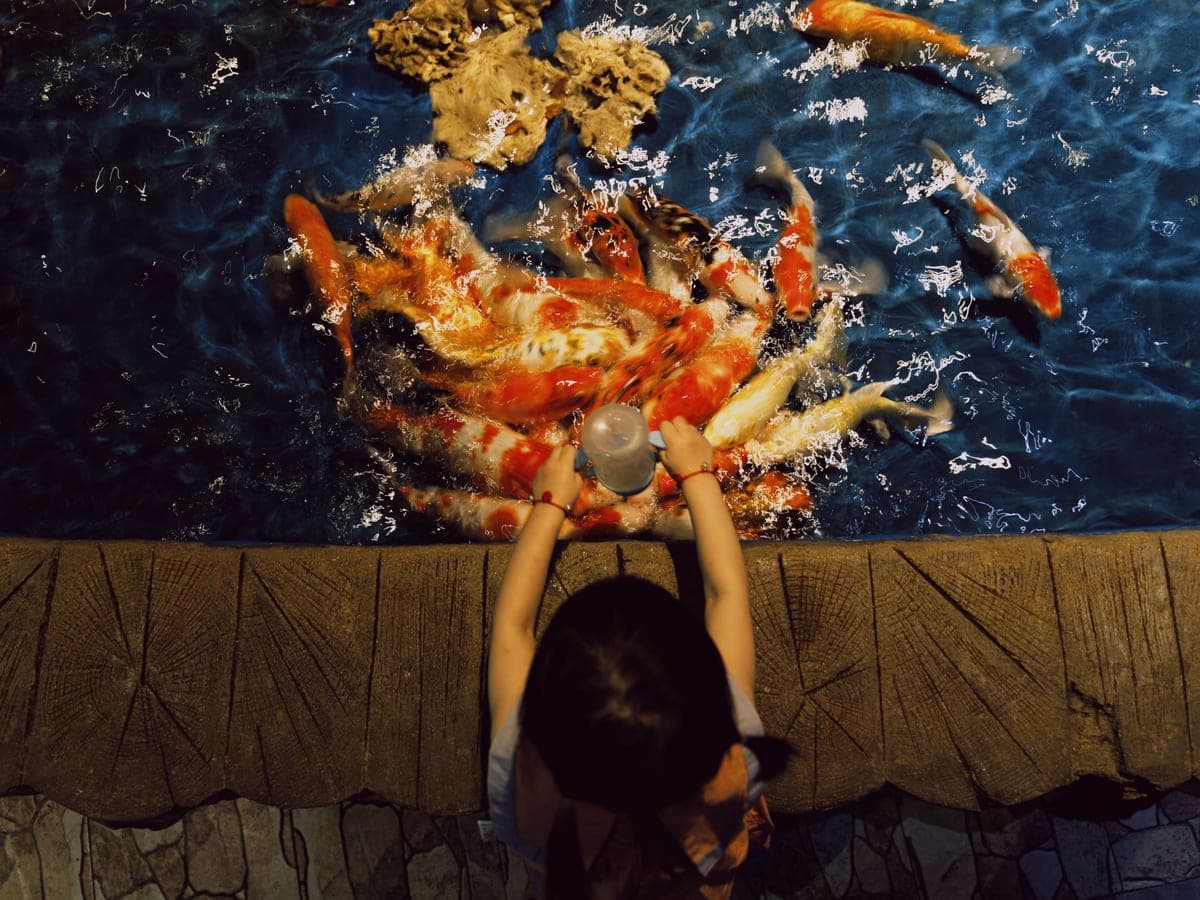
We have not used any of this gear. Every pick below is chosen from published manufacturer specifications and the arithmetic on how we pick, which you can re-run yourself.
For a general tropical community tank, Fluval Bug Bites Tropical is the best-composed staple here: 46% minimum crude protein with insect meal listed first and no artificial colors. TetraMin Plus flakes are an equally competent staple in the format that is easiest to feed without overfeeding, and Hikari Micro Pellets are the pick if you keep small-mouthed or bottom-feeding fish, because they sink slowly. Freeze-dried bloodworms are a treat, not a staple, and their own makers say so.
Fish food is unusual in this hobby: it is one of the very few categories where the manufacturers publish directly comparable numbers. A guaranteed analysis is a regulated statement, so protein, fat, fiber, moisture and ash can be read side by side across brands. That is a much better basis for a decision than the adjectives on the front of the tub.
We have not fed these to fish and are not going to claim otherwise. Everything below comes from each manufacturer's own published analysis and ingredient panel, cited at the foot of the page.
Quick picks
The best aquarium fish food
| # | Product | Best for | Price |
|---|---|---|---|
| 1 | No image Fluval Bug Bites Tropical Formula 46% protein with insect meal listed first, and the only pick here with no artificial colors. | The best-composed staple for a general community tank | |
| 2 | No image Tetra TetraMin Plus Tropical Flakes 46% protein and the highest fat of the three, in the format most community fish take readily. | The default flake, and the easiest to feed correctly | |
| 3 | No image Hikari Tropical Micro Pellets A slow-sinking micro pellet sized for small mouths, and the only pick with artificial colors. | Nano species, bettas, and anything that feeds below the surface | |
| ! | No image Various Freeze-dried bloodworms Not a staple, and the manufacturers say so on their own packaging. Skip this one — see why below | A treat two or three times a week, and nothing more |
Rows link to the full write-up further down this page. Prices come from the live price layer only; where there is no live figure the button reads “Check price” rather than showing a remembered number.
The published numbers, side by side
| Fluval Bug Bites Tropical | TetraMin Plus Flakes | Hikari Micro Pellets | |
|---|---|---|---|
| Crude protein (min) | 46% | 46% | 43% |
| Crude fat (min) | 8% | 11% | 7% |
| Crude fiber (max) | 1.5% | 3% | 7% |
| Moisture (max) | 6% | 8% | 10% |
| Ash (max) | 7% | Not published | 17% |
| First ingredient | Dried black soldier fly larvae | Fish meal | Fish meal |
| Artificial colors? | None stated | Not stated | Red 3, yellow 5 |
| Form | Granules or flakes | Floating flake | Slow-sinking micro pellet |
Quoted from each manufacturer's or retailer's published guaranteed analysis, cited below. A blank means the figure is not published in the sources we could reach, not that it is zero.
Two cautions about reading that table. First, higher protein is not automatically better — it is better for growing and active fish and simply more waste load for a lightly stocked tank of adults. Second, ash is a measure of non-digestible mineral content, so a high ash maximum means proportionally less of the food is usable nutrition, which is the honest mark against the Hikari pick.
How we judged these
Three criteria, applied in this order, and all three are readable off a label before you buy.
- Is the guaranteed analysis published, and how does it compare? Anything that will not tell you what is in it does not make the page. All three picks publish theirs.
- What is the first ingredient? Ingredient panels are ordered by weight, so the first entry is the largest single component. A food led by fish meal or insect meal is closer to what a community fish evolved to eat than one led by a cereal.
- Does the format suit where your fish actually feed? A floating flake is useless to a bottom-dwelling species, and an adult-sized granule is useless to a nano fish. This is the criterion beginners skip and it decides more than the analysis does.
What we did not judge on: palatability, growth rates, or color enhancement. Those require controlled feeding trials, we have not run any, and there is no published data we could cite for a fair comparison. Anyone telling you one flake grows fish faster than another without showing you the trial is guessing.
Pick 1
Fluval Bug Bites Tropical Formula
The best-composed staple for a general community tank
The number
Guaranteed analysis: crude protein 46% min, crude fat 8% min, crude fiber 1.5% max, ash 7% max, moisture 6% max. Fluval states up to 40% black soldier fly larvae.
This is the pick on composition, and the composition is unusual enough to explain. The first ingredient is dried black soldier fly larvae, and Fluval states the food contains up to 40% of it.
Why that matters is not marketing. Most tropical community fish eat invertebrates in the wild rather than processed grain, so an insect-based protein is closer to what the animal is built to digest than a formula led by cereal. It also lands at 46% crude protein with the lowest fiber figure of the three picks at 1.5% maximum and a stated ash maximum of 7%, which is well below the Hikari pick.
Fluval also states no artificial fillers, colors or preservatives, and that is a genuine point of difference here rather than a slogan — one of the other picks on this page lists two artificial colors in its own ingredient panel.
The honest costs. It smells strongly of insect meal, and some people mind that a great deal. It is sold both as granules and as flakes, and the two are not interchangeable for very small mouths, so check which form you are ordering — a granule sized for an adult community fish is simply too big for a nano species. And like every dry food, what is not eaten within a couple of minutes becomes waste rather than nutrition.
| Guaranteed analysis | Crude protein 46% min, crude fat 8% min, crude fiber 1.5% max, ash 7% max, moisture 6% max, L-lysine 0.5% min, DL-methionine 0.5% min |
|---|---|
| First ingredients | Dried black soldier fly larvae, herring meal, potatoes, wheat germ meal, wheat flour, fish protein concentrate, salmon oil, dried kelp |
| Insect content | Fluval states up to 40% black soldier fly larvae, listed first |
| Additives | Fluval states no artificial fillers, colors or preservatives |
| What it does not do | It smells strongly of insect meal, which some people mind. Sold as granules and as flakes, and the two are not interchangeable for very small mouths, so check which form you are ordering. |
Specs from Fluval Bug Bites Tropical Flakes, Fluval USA product page; Fluval Bug Bites Tropical Formula Granules, Chewy listing. We have not used this unit.
Pick 2
Tetra TetraMin Plus Tropical Flakes
The default flake, and the easiest to feed correctly
The number
Guaranteed analysis: crude protein 46% min, crude fat 11% min, crude fiber 3% max, moisture 8% max, phosphorus 1% min.
This is the food most beginners already own, usually as the sample sachet in a starter kit, and it deserves a fair hearing rather than dismissal. It is a competent staple.
The published analysis puts it level with the Fluval pick on protein at 46% minimum and noticeably higher on fat at 11% minimum. Higher fat is not automatically better or worse — it is more energy per flake, which suits active fish and makes overfeeding easier to do. The ingredient panel is led by fish meal, then dried yeast, ground brown rice, shrimp meal and wheat gluten.
Flake is the easiest format for a beginner to feed correctly, and that is a real advantage. It floats, so you can watch every piece being eaten and stop when the fish stop, which is exactly the feedback loop that prevents overfeeding. Sinking foods hide the evidence in the substrate.
The honest costs. Flake goes soggy quickly once wet and then sinks, so anything not eaten in a couple of minutes is waste. The ground brown rice and wheat gluten fairly high in the ingredient list are cereal fillers, which is the specific thing the Fluval pick avoids. And the tub is sized for far more fish than a first tank holds — an opened tub does not stay fresh indefinitely, so buy the smallest one you can.
| Guaranteed analysis | Crude protein 46% min, crude fat 11% min, crude fiber 3% max, moisture 8% max, phosphorus 1% min |
|---|---|
| First ingredients | Fish meal, dried yeast, ground brown rice, shrimp meal, wheat gluten, feeding oat meal, freeze-dried shrimp |
| Form | Floating flake |
| Intended fish | Omnivorous freshwater community species |
| What it does not do | Flake goes soggy and sinks once it is wet, so anything not eaten in a couple of minutes becomes waste rather than food. The tub is sized for far more fish than a first tank holds, and an opened tub does not stay fresh indefinitely. |
Specs from TetraMin Plus Tropical Flakes, That Pet Place listing (guaranteed analysis and ingredients). We have not used this unit.
Pick 3
Hikari Tropical Micro Pellets
Nano species, bettas, and anything that feeds below the surface
The number
Guaranteed analysis: crude protein 43% min, crude fat 7% min, crude fiber 7% max, moisture 10% max, ash 17% max.
The reason to buy this one is physical rather than nutritional: pellet size and sinking behavior. Hikari sells it for bettas, tetras, barbs and other small-mouthed tropical fish, and it is semi-floating — it sits at the surface briefly and then sinks slowly.
That combination solves a specific and common problem. A tank with surface feeders and mid-water or bottom-dwelling fish cannot be fed properly with a floating flake alone, because the fast fish at the top clear it before anything reaches the rest. A slowly sinking pellet feeds every level of the tank on one feeding.
Hikari also states a micro-coating that locks in the nutritional components and reduces the chance of water clouding, which is a real practical benefit — some pellets shed a visible cloud of fines the moment they hit the water, and those fines are pure waste load.
The honest costs, and there are more here than on the other two. At 43% minimum protein it is the lowest of the three, with the highest fiber maximum at 7% and by far the highest ash maximum at 17%. More importantly, Hikari's own published ingredient list includes the artificial colors red 3 and yellow 5. Those are there to make the pellets look appealing to the buyer, not to feed the fish. If that matters to you, the Fluval pick states it uses no artificial colors at all.
| Guaranteed analysis | Crude protein 43% min, crude fat 7% min, crude fiber 7% max, moisture 10% max, ash 17% max |
|---|---|
| First ingredients | Fish meal, krill meal, soybean meal, flaked corn, cuttlefish meal, brewers dried yeast |
| Form | Semi-floating micro pellet that sinks slowly |
| Intended fish | Bettas, tetras, barbs and other small-mouthed tropical fish |
| Water clouding | Hikari states a micro-coating that locks in nutrients and reduces the chance of clouding |
| What it does not do | Hikari's own ingredient list includes the artificial colors red 3 and yellow 5. They are there for the fish's appearance, not its health, and if that matters to you the Fluval pick does not use them. Ash is listed at up to 17%, the highest of the three picks. |
Specs from Hikari Tropical Micro Pellets, Hikari USA product page (guaranteed analysis and ingredients). We have not used this unit.
Skip this
Various Freeze-dried bloodworms
A treat two or three times a week, and nothing more
The skip entry, and it is a skip in a specific sense: this is a perfectly good product being bought for the wrong job. Beginners buy bloodworms because the fish visibly go mad for them, and enthusiasm at feeding time is easy to mistake for nutrition.
The objection is not ours. It is printed on the packaging. Tetra directs that its Bloodworms be fed in conjunction with a primary food such as TetraMin, and retailer feeding guidance across brands is commonly two to three feeds a week alongside a staple diet. No maker sells freeze-dried bloodworms as a complete diet, and none of them publishes the kind of complete guaranteed analysis the three picks above do — because it is a single-ingredient supplement rather than a formulated food.
Fed as the main food it is an unbalanced diet. A fish that will eat bloodworms enthusiastically and its staple food reluctantly is a fish that has learned there is something better coming, which is a training problem you created, and it makes it harder to feed the animal properly for the rest of its life.
Used as intended, it is genuinely useful: a couple of feeds a week, an easy way to condition a fish that is underweight, and the one thing a fussy betta will almost always take. Buy it second, after a staple, and feed only what is eaten within a minute or two.
| What it is | A single-ingredient freeze-dried invertebrate, sold as a supplement rather than a staple |
|---|---|
| Maker's own guidance | Tetra directs that its Bloodworms be fed in conjunction with a primary food such as TetraMin; retailer guidance is commonly two to three feeds a week alongside a staple diet |
| What it does not do | No complete guaranteed analysis of the kind the staple foods publish, because it is not sold as a complete diet. Fed as the main food it is an unbalanced diet, and that is the makers' position, not ours. |
Specs from Tetra BloodWorms Freeze-Dried Fish Food, Chewy listing (feed with a primary food); Hikari Bio-Pure Freeze-Dried Blood Worms, Hikari USA product page. We have not used this unit.
The part that matters more than which food you buy
Overfeeding does more damage in a beginner's tank than any difference between these three products, and it is worth being blunt about that before spending time on ingredient panels.
Uneaten food does not disappear. It decomposes, and decomposing food produces ammonia exactly as fish waste does — which is why an overfeed shows up on a test kit two days later as a reading in a tank that was fine all week. In a small tank the effect is fast enough to kill. This is the single most common route to new tank syndrome in a tank that was otherwise doing well.
- Feed what is eaten in about two minutes, once or twice a day, and remove anything still floating after that.
- Feed less than you think. An adult community fish's stomach is roughly the size of its eye. The portion that looks meanly small is usually correct.
- Watch the food, not the fish. Fish beg permanently and it means nothing. What tells you the portion was right is that none of it reached the substrate.
- A missed day is harmless. Healthy adult fish tolerate a fast far better than they tolerate a week of overfeeding, so going away for a weekend needs no feeder and no block.
- Skip a day after a heavy feed, and consider one fasting day a week for adult community fish.
Storage, which quietly decides how good the food is
Dry fish food degrades after opening, and the vitamins go first. Heat, light and humidity all accelerate it, which makes the shelf above a lit aquarium hood one of the worst places in the house to keep it — and it is where most people keep it.
The practical consequences are simple: buy the smallest tub that covers a few months rather than the value size, keep it closed, keep it somewhere cool and dark, and never tip a scoop back into the tub after it has been near the water. A giant tub bought to save money on a 10 gallon tank is a false economy, which is the same argument we make about the rest of the shopping list on what a first tank really costs.
What to feed depends on what you keep, so if the tank is not stocked yet, start with the hardiest fish for beginners and how many fish in a 20 gallon tank. Live plants have their own requirements and are covered on easy live plants for beginners.
Questions people actually ask
Frequently asked questions
+ What is the best fish food for tropical fish?
+ How often should I feed my fish?
+ Are freeze-dried bloodworms a good staple food?
+ Flakes or pellets for a community tank?
+ Does fish food expire?
+ Can I feed my betta the same food as community fish?
Where the numbers came from
Sources
- Fluval Bug Bites Tropical Flakes, Fluval USA product page (guaranteed analysis, ingredients)
- Fluval Bug Bites Tropical Formula Granules, Chewy listing
- TetraMin Plus Tropical Flakes, That Pet Place listing (guaranteed analysis, ingredients)
- Hikari Tropical Micro Pellets, Hikari USA product page (guaranteed analysis, ingredients)
- Tetra BloodWorms Freeze-Dried Fish Food, Chewy listing (feed with a primary food)
- Hikari Bio-Pure Freeze-Dried Blood Worms, Hikari USA product page
Read next
Related on Fin & Filter
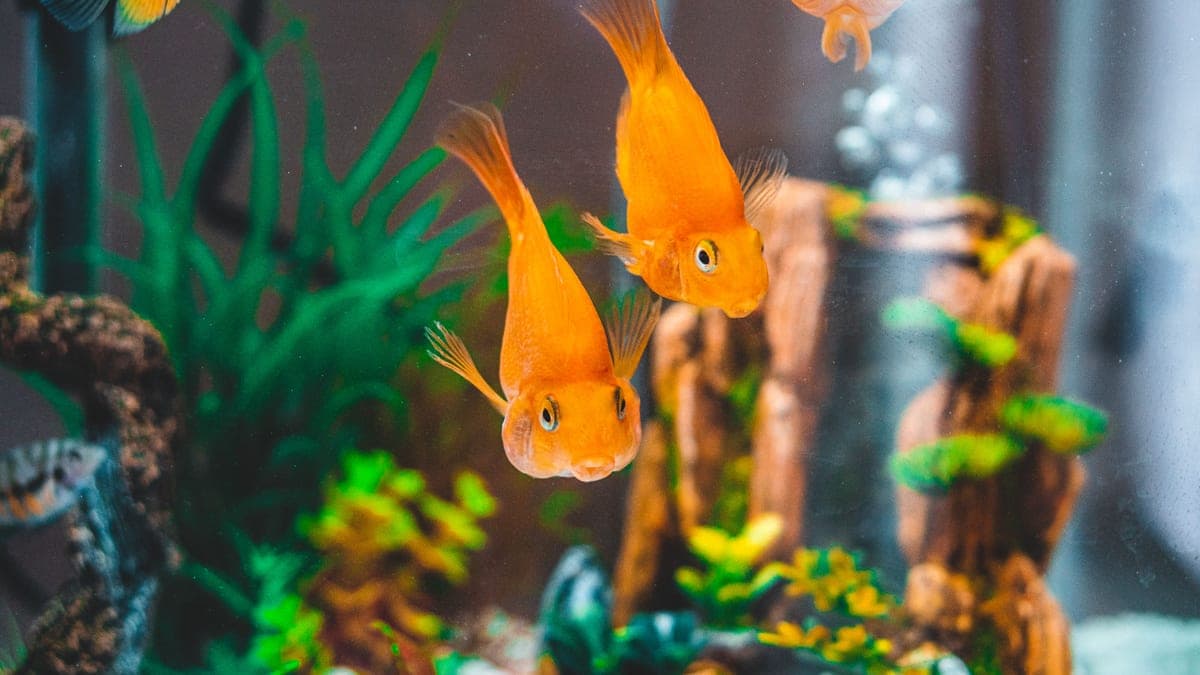
The hardiest fish for a first aquarium
Which species tolerate a beginner's mistakes, what each needs, and the popular fish that should not be first.
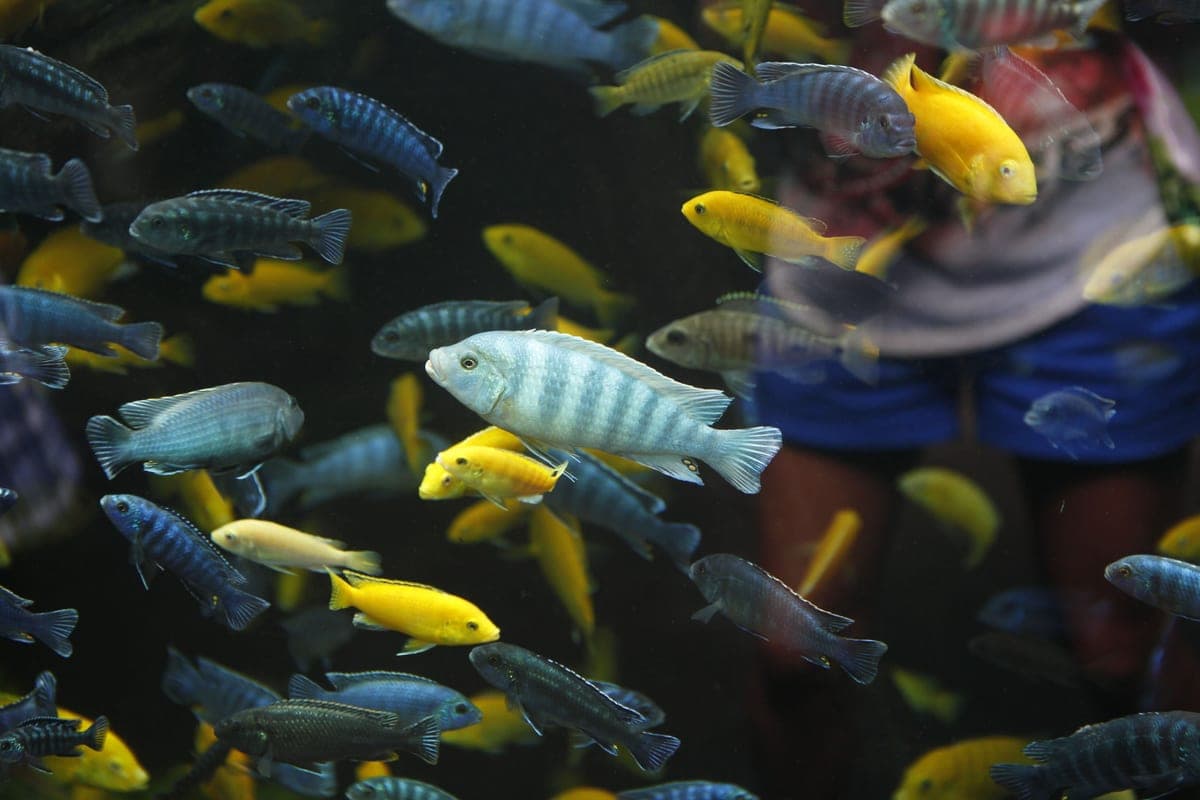
How many fish in a 20 gallon tank?
Why the inch-per-gallon rule fails, the four things that actually decide it, and four worked stocking plans.

Why is my fish tank water cloudy?
Milky, green or brown — what each means, which to leave alone, and why clarity says nothing about ammonia.