Buying guide
The best low-light aquarium plants
Most beginner plant failures are a lighting mismatch rather than a skill problem. These are the species that grow under the fixture that came with the tank.
Fin & Filter earns a commission when you buy through the links on this page. It costs you nothing and it does not decide what we rank. How we’re funded.

We have not used any of this gear. Every pick below is chosen from published manufacturer specifications and the arithmetic on how we pick, which you can re-run yourself.
Java fern, anubias and hornwort are the three that reliably grow under a stock aquarium kit hood with no CO2 and no fertilizer routine. Java fern and anubias attach to wood or rock so your substrate does not matter, and hornwort simply floats. If those three are failing, the fixture is the problem rather than the plant list — and a modest full-length LED is a cheaper fix than a harder hobby.
Most beginner plant failures get blamed on a black thumb and are actually a mismatch: a plant that needs a planted-tank fixture, bought for a tank running the LED strip that came in the hood. The plants below are the ones where that mismatch cannot happen.
Quick picks
The best low-light aquarium plants
| # | Product | Best for | Price |
|---|---|---|---|
| 1 | 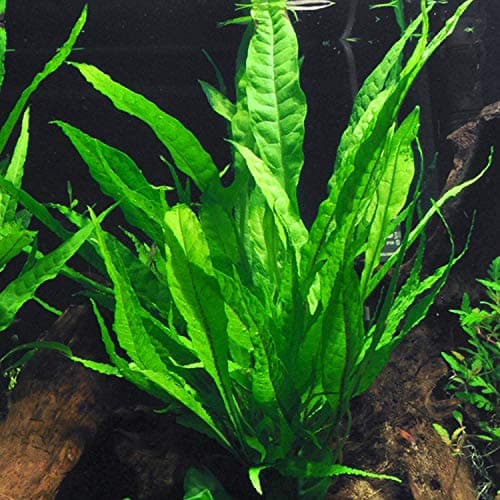 Various Java Fern (Microsorum pteropus), bare root Grows attached to hardscape under almost any light, and needs neither substrate nor fertilizer to survive. | The most forgiving plant in the hobby | $5.99 on Amazon #ad How we’re funded · price as of September 14, 2026 |
| 2 | 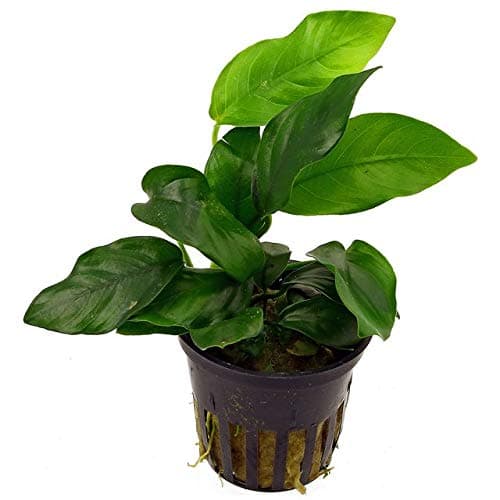 Various Anubias (potted) Thick rigid leaves, grows in shade, and tough enough to survive a beginner's first three months. | Low light plus near-indestructibility | $7.95 on Amazon #ad How we’re funded · price as of September 14, 2026 |
| 3 | 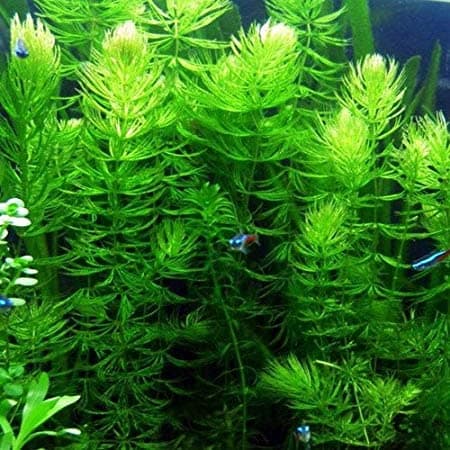 Various Hornwort (Ceratophyllum demersum) Floats, needs no substrate at all, and outcompetes algae for nutrients from the first week. | Fast growth and algae competition without planting anything | $9.97 on Amazon #ad How we’re funded · price as of September 14, 2026 |
| 4 | 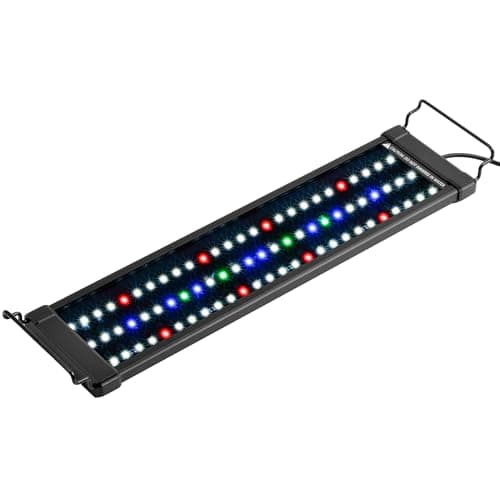 NICREW ClassicLED Plus Aquarium Light, 15W If your fixture genuinely cannot grow java fern, the fixture is the problem — and it is a cheap one to fix. | When the answer is more light rather than easier plants | $31.99 on Amazon #ad How we’re funded · price as of September 14, 2026 |
| 5 | No image Various Beginner live plants (java fern, anubias, hornwort) The practical way to start: several easy species at once, so one failure is not the whole planted tank. | Buying the three picks above as one order | |
| ! | 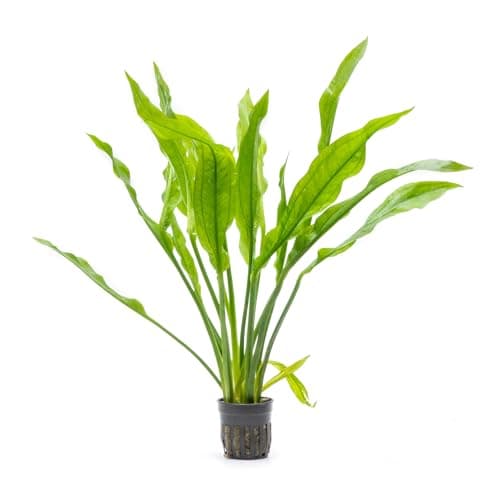 Various Amazon Sword (Echinodorus bleheri) Widely marketed as a beginner plant, and it is the one on this page that actually needs more than a stock hood. Skip this one — see why below | Not a low-light tank, despite how it is sold | $9.99 on Amazon #ad How we’re funded · price as of September 14, 2026 |
Rows link to the full write-up further down this page. Prices come from the live price layer only; where there is no live figure the button reads “Check price” rather than showing a remembered number.
What low light actually means here
The term is used loosely and it is worth pinning down, because it is the specification this whole page turns on.
In practice, for a beginner, low light means the fixture that came with your aquarium kit — a single LED strip in a plastic hood, running six to eight hours a day, with no reflector and no adjustment. That is the real-world condition these plants have to survive, and it is considerably dimmer than the planted-tank setups most plant advice is written for.
| Plant | Grows under a stock kit hood? | Needs substrate? | Speed |
|---|---|---|---|
| Java fern | Yes | No — attaches to wood or rock | Slow |
| Anubias | Yes | No — attaches to wood or rock | Very slow |
| Hornwort | Yes | No — it floats | Fast |
| Amazon sword | Survives, does not thrive | Yes — it is a root feeder | Moderate |
| Carpeting plants | No | Yes, plus CO2 in most cases | Varies |
The pattern: the plants that work for beginners are the ones that do not depend on your substrate.
That last column in the table is the practical insight. Java fern, anubias and hornwort all sidestep the substrate question entirely, which means you can run a planted-looking tank over plain gravel without buying an active soil. If you do want a soil, the options are compared on the best aquarium substrate.
How we judged these
- Does it grow without CO2 injection? Everything here does. Any plant that needs injected CO2 is out of scope for a first tank regardless of how it is labeled.
- Does it depend on the substrate? Plants that attach to hardscape or float are dramatically more forgiving, because they remove a purchasing decision the beginner has usually already made wrong.
- Does it survive a beginner's first three months? That period includes a cycle, a stocking, at least one missed water change and probably an algae episode. A plant that cannot ride that out is not a beginner plant, whatever the label says.
What we did not judge on: growth rate comparisons or light-level thresholds in PAR. Those need measurement equipment and controlled conditions we do not have, and manufacturers of this kind of fixture publish no PAR figures to compare against. We have not grown these under test conditions and do not claim to have. The method is on how we pick.
Pick 1
Various Java Fern (Microsorum pteropus), bare root
The most forgiving plant in the hobby
The number
Sold and listed as a low-light plant. Attached to wood or rock rather than planted, so it is independent of your substrate entirely.
Java fern is the plant to start with, and the reason is that it removes two variables at once. It does not need light beyond what a stock hood gives it, and it does not need a nutrient substrate because it is not planted in the substrate at all.
That second point is the one beginners underestimate. Most plant advice assumes a planted-tank substrate, which is an expensive commitment made before you know whether you enjoy this. Java fern attaches to wood or rock and draws what it needs from the water, so it works over plain gravel, sand or a bare bottom.
It is also physically tough. Broad leathery leaves that most fish will not eat, and a growth habit slow enough that it never needs a trimming routine.
The honest costs. It is slow — genuinely slow, to the point that you will wonder for a month whether it is doing anything. New plants often brown off as they adjust, which looks like death and usually is not. And the rule that kills more java fern than anything else: never bury the rhizome, the thick horizontal stem the leaves grow from. Buried, it rots.
| Light | Low light. Sold and listed as a low-light plant |
|---|---|
| Planting | Attached to wood or rock, never buried. Burying the rhizome in substrate rots it, which is the usual way beginners kill it |
| Substrate | None needed, so it suits a bare-bottom or gravel tank equally |
| Leaf | Broad and soft, which is what makes it a resting surface for a betta |
| What it does not do | Slow. It grows at a pace that tests patience, and a new plant often browns off before it establishes, which looks like failure and usually is not. Bare-root plants arrive without a pot, so you need a way to attach them. |
Specs from Java Fern Bare Root, Microsorum pteropus, low light, Amazon listing. We have not used this unit.
#ad How we’re funded · price as of September 14, 2026
Pick 2
Various Anubias (potted)
Low light plus near-indestructibility
The number
Listed as a low-light aquatic plant. Rhizome-mounted, so like java fern it is independent of substrate.
Anubias and java fern are usually recommended together because they solve the same problem in different shapes — java fern goes tall and feathery, anubias stays low and broad-leaved.
Anubias is the tougher of the two. The leaves are thick and rigid rather than soft, which means fish do not damage them and they hold their form indefinitely. In practical terms it is the plant most likely to still be alive after a beginner's first difficult months.
Very slow growth is the trade and, in a small tank, mostly a benefit: no trimming, no shading, no maintenance task.
The honest costs. Slow growth is exactly what makes anubias leaves a magnet for spot algae — a leaf that sits still for months accumulates it, and in a bright tank you will be wiping leaves by hand. Potted plants arrive in rock wool that needs removing. And the rhizome rule applies here too: bury it and it rots.
| Light | Low light. Listed as a low-light aquatic plant |
|---|---|
| Planting | Rhizome tied to wood or rock, never buried |
| Leaf | Thick and rigid, and tough enough that it is rarely eaten |
| Growth | Very slow, which is why it stays tidy without trimming |
| What it does not do | The slow growth cuts both ways: anubias leaves are a favorite surface for spot algae precisely because they sit still for months. In a bright tank you will be wiping leaves. Potted plants arrive in rock wool that should be removed before planting. |
Specs from Potted Anubias live freshwater aquarium plant, low light, Amazon listing. We have not used this unit.
#ad How we’re funded · price as of September 14, 2026
Pick 3
Various Hornwort (Ceratophyllum demersum)
Fast growth and algae competition without planting anything
The number
Undemanding on light; grows in low light and faster in bright light. Requires no planting — it floats.
The fast plant on a page of slow ones, and it fills a specific gap: the slow growers do almost nothing for nutrient export in their first months, and hornwort does it immediately.
Fast growth is the mechanism. A plant that puts on visible length each week is pulling real quantities of nitrate and phosphate out of the water, which is exactly the resource an algae bloom is competing for. In a new tank, floating hornwort is one of the more effective algae preventatives available, and it costs very little.
It also requires nothing. No substrate, no attachment, no planting. It floats where you drop it.
The honest costs. It sheds needles, particularly after a move or a water-parameter change, and they end up in the filter and the substrate. It grows fast enough to blanket the surface and shade everything beneath it, so it needs thinning rather than admiring. And because it floats, it goes wherever the filter outflow pushes it.
| Light | Undemanding. Grows in low light and faster in bright light |
|---|---|
| Planting | None required. It floats, which is why it needs no substrate at all |
| Growth rate | Fast, which is what makes it useful against algae — it competes for the same nutrients |
| What it does not do | It sheds. Hornwort drops needles, especially after a move or a parameter change, and those needles end up in the filter and the substrate. It also grows fast enough to shade everything beneath it, so it needs thinning rather than admiring. |
Specs from Hornwort Ceratophyllum live aquarium plant, Amazon listing. We have not used this unit.
#ad How we’re funded · price as of September 14, 2026
Pick 4
NICREW ClassicLED Plus Aquarium Light, 15W
When the answer is more light rather than easier plants
The number
15 W across an 18-24 inch span. A standard 10 gallon tank is 20 inches long, so this is the size that fits it.
Included because there is a point at which choosing ever-easier plants stops being the right answer. Java fern, anubias and hornwort will grow under a stock hood. If all three are failing, the problem is probably not the plant list.
A modest full-length LED is an inexpensive fix and it opens up the middle tier of plants rather than just keeping the bottom tier alive. Crucially it is a fixture rather than a project — no CO2, no dosing schedule, no new substrate.
Get the length right, which is the mistake that wastes money here: a standard 10 gallon tank is 20 inches long, so the 18-24 inch model is the one that spans it, not the 12-18 inch unit that looks like the obvious choice.
The honest costs. NICREW publishes no PAR figure, so there is no way to compare it on usable light against a planted-specific fixture, and we will not estimate one. No timer in the box — and adding light without adding a consistent photoperiod is the fastest route to an algae problem. More light with no extra nutrients grows algae, not plants.
| Fixture length | Extendable brackets for 18 to 24 inch tanks, per the Amazon listing title |
|---|---|
| Power | 15 W |
| Why this size for a 10 gallon | A standard 10 gallon tank is 20 inches long, so the 18-24 inch fixture is the one that spans it. The 12-18 inch model in the same line does not |
| What it does not do | No timer in the box, and a light left on manually is the single most reliable way to grow algae. Budget for a plug-in timer. NICREW does not publish PAR figures for this fixture, so we cannot tell you how it compares on usable light to a planted-specific unit, and we are not going to estimate one. |
Specs from NICREW ClassicLED Plus 15W for 18-24 inch tanks, Amazon listing. We have not used this unit.
#ad How we’re funded · price as of September 14, 2026
Pick 5
Various Beginner live plants (java fern, anubias, hornwort)
Buying the three picks above as one order
Worth its own entry because buying a single plant is the common mistake. A tank with one plant in it has one experiment running; a tank with three has three, and something will work.
The beginner-tolerant group is small and well defined — java fern, anubias and hornwort are the core of it, and they cover the three useful positions: attached mid-height, attached low and broad, and floating. Buying across those positions gives the tank structure immediately rather than in a year.
It also hedges the thing you cannot control, which is how the plants arrive. Live plants are shipped, and shipping is hard on them; a plant that arrives in poor condition may not recover regardless of your care.
The honest costs. Live plants need adequate light and a plant that melts in a dark tank adds decaying matter to the bioload rather than reducing it. Some arrive carrying snails or algae, which is a genuine risk of buying live goods. And a tank of struggling plants is worse than a tank with none.
| Why these three | They tolerate low light, need no injected CO2, and are not demanding root feeders |
|---|---|
| Planting note | Java fern and anubias must not be buried; the rhizome rots if you push it into the substrate |
| What it does not do | Live plants can arrive carrying snails, snail eggs or algae. They are also not a filter: plants consume nitrate, but they will not carry the ammonia load of a stocked tank on their own. |
The manufacturer does not publish a full spec sheet for this item, so nothing beyond the figures above is stated. We have not used this unit.
Skip this
Various Amazon Sword (Echinodorus bleheri)
Not a low-light tank, despite how it is sold
The skip entry, and it is the most commonly mis-sold plant in the beginner aisle. Amazon swords sit next to java fern on the same shelf with the same easy-plant label, and they are not in the same category of demand.
The problem is not light alone — swords tolerate moderate light reasonably. It is that they are true root feeders. An Amazon sword wants nutrients in the substrate, which means either a nutrient-bearing planted substrate or root tabs pushed into the gravel on a schedule. In plain inert gravel under a stock hood, it survives rather than grows, and slowly declines over months.
That slow decline is what makes it a bad beginner plant specifically. A plant that dies in a week teaches you something. A plant that fades over four months while shedding leaves into the tank teaches you nothing and adds to your bioload the whole time.
It is a genuinely good plant in the right conditions: a 20 gallon or larger tank, a substrate that feeds it, and a fixture better than the one in a kit hood. Those are all reasonable things to own — they are just not what this page is about.
| Light | Tolerates moderate light; grows faster with more |
|---|---|
| Planting | A true root feeder — planted into substrate, unlike java fern and anubias |
| Size | A background plant. It gets tall, which is the point of it |
| What it does not do | It is the one plant here that genuinely wants a nutrient-bearing substrate or root tabs, so in plain inert gravel it will survive rather than thrive. It also outgrows a nano tank quickly — this is a plant for a 20 gallon and up, not a 5. |
Specs from Amazon Sword Echinodorus bleheri live plant for freshwater aquariums, Amazon listing. We have not used this unit.
The mistakes that kill low-light plants
- Burying the rhizome. The single biggest killer of java fern and anubias. The thick horizontal stem must stay above the substrate. Tie or glue it to wood or rock.
- Leaving the rock wool on. Potted plants ship with roots packed in it. It should come off before planting.
- Pulling plants out because they melted. New plants commonly shed their first leaves adjusting to your water. Wait — most recover from the rhizome.
- Adding more light to fix slow growth. More light without more nutrients grows algae, not plants. If growth is slow and the plant is healthy, that is just what these species do.
- Dosing fertilizer into a new tank. Nutrients added where nothing is growing yet feed algae — see why is my fish tank water green.
- Running the light longer instead of better. A consistent six to eight hours on a timer beats twelve inconsistent hours for plants and is far worse for algae.
If the fixture is what is holding you back, the sizing question is covered on best aquarium lights for a 10 gallon tank. For a betta tank specifically, the plant list narrows slightly around fin safety and resting surfaces — best aquarium plants for a betta tank. And the wider beginner plant list is on easy live plants for beginners.
Questions people actually ask
Frequently asked questions
+ What aquarium plants grow in low light?
+ Do low light plants need fertilizer?
+ Can aquarium plants grow with just the light that came with my tank?
+ Why do my aquarium plants keep dying?
+ Is an Amazon sword a good beginner plant?
+ Do live plants help with algae?
Where the numbers came from
Sources
- Java Fern Bare Root, Microsorum pteropus, low light freshwater aquarium plant, Amazon listing
- Potted Anubias live freshwater aquarium plant, low light, Amazon listing
- Hornwort Ceratophyllum live aquarium plant, Amazon listing
- Amazon Sword Echinodorus bleheri live plant for freshwater aquariums, Amazon listing
- NICREW ClassicLED Plus 15W for 18-24 inch tanks, Amazon listing
Read next
Related on Fin & Filter
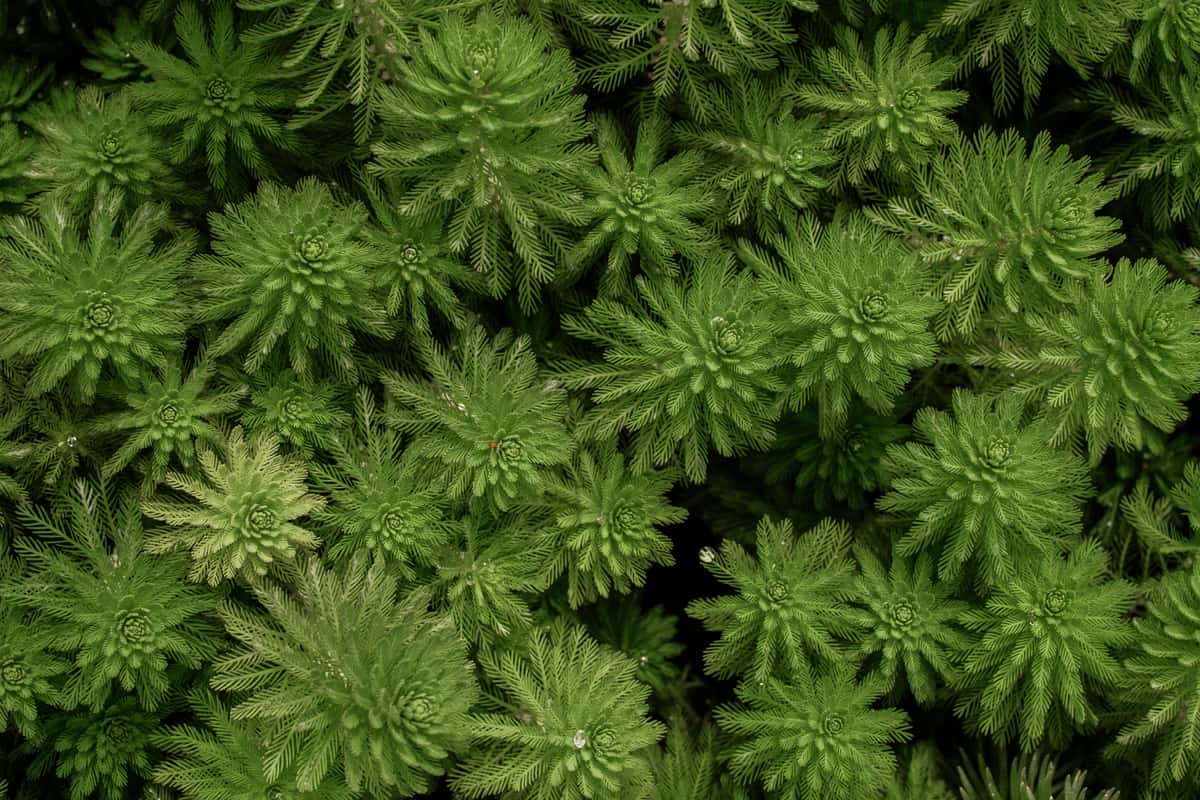
Easy live plants for a beginner tank
Java fern, anubias and hornwort — why these three, how to plant them correctly, and what they will not do.
The best aquarium lights for a 10 gallon tank
Fixture length first, brightness second. What spans a 20 inch tank, what plants need, and why you buy a timer with it.

The best aquarium substrate
Gravel, sand or planted soil, how much a tank actually takes, and the buffering substrate to avoid by accident.